Maradona death trial enters final stages as negligence questions remain
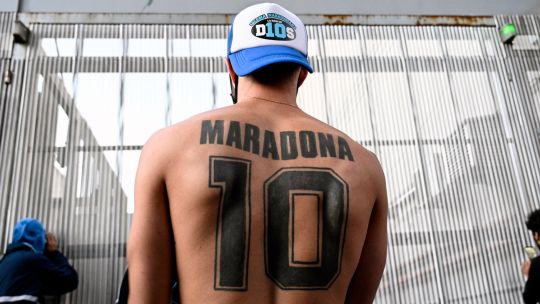
The trial over Diego Maradona's death enters its final stage this week, with a debate still open over whether his tragic death in 2020 was impossible to foresee or the result of medical negligence during his home hospitalisation.
Seven members of his medical team are on trial in San Isidro, north of Buenos Aires, on charges of homicide with dolo eventual – a legal concept meaning they were aware that their actions or omissions could lead to his death.
Maradona’s family and the case’s prosecutors argue that the deterioration in the star’s health that led to his death at the age of 60 from cardiorespiratory arrest and pulmonary oedema was reversible.
"Diego had a treatable illness, the warning signs were there for all to see and what needed to be done was not done," said Félix Linfante and Marcelo D'Angelo, lawyers for one of his daughters, Jana, in a joint statement.
The defendants, though pursuing different strategies, have pleaded not guilty in the trial, which began in April.
‘Abandoned’
The defendants "abandoned Diego Maradona to his fate, condemning him to death", alleged prosecutor Patricio Ferrari during one of the 45 hearings in the lengthy proceedings.
One of the doctors who performed the autopsy estimated that the former footballer had been in agony for "around 12 hours."
The defendants reject the charges. Lawyers for the doctors, in particular, argue that the outcome could not have been anticipated.
The main defendant, neurosurgeon Leopoldo Luque, said Maradona died "from a sudden, acute and unpredictable event.”
From Thursday, the court will hear the closing arguments from the prosecution and defence before issuing its verdict.
"We expect the court to recognise that this death was not a misfortune, but the consequence of specific decisions and omissions," Jana Maradona's lawyers said.
Home hospitalisation
The trial examined the conditions at the rented house in Tigre, 20km north of San Isidro, where Maradona died on November 25, 2020.
The football idol's daughters, who authorised the home hospitalisation order, said they had been misled by the doctors.
"We were promised therapeutic companions, an ambulance and medical equipment provided by the private health insurer. None of that ever happened," the late star’s eldest daughter, Dalma Maradona, told the court.
The appropriateness of hospitalising Maradona at home was also debated.
Dozens of witnesses considered the location unsuitable and highlighted the lack of medical supplies. But some of the defendants maintain that Maradona would not have agreed to remain in a clinic after undergoing neurosurgery on November 3 that year.
Physical condition
Madonna’s deterioration in his final hours sparked heated controversy during the hearings.
The plaintiffs argue that the star had visible oedema and abnormal fluid retention in various organs, which they say indicated untreated heart failure.
Witnesses were divided between those who agreed that the oedema was visible and those who denied it when shown a photograph of 'El Diez' lying dead in the courtroom.
Despite the contradictions, those who entered the room on the day of his death agreed that he was visibly swollen. One witness said the patient was "very swollen," while another described him as "a balloon.”
The defendants
Among the most prominent defendants standing trial are the aforementioned Luque, psychiatrist Agustina Cosachov, psychologist Carlos Díaz and Nancy Forlini, the coordinator of the home hospitalisation on behalf of the Swiss Medical private healthcare company.
"I acted as a neurosurgeon ... I did not make any medical decisions," Luque repeatedly said during the trial, distancing himself from the idol's day-to-day medical care.
Luque and Cosachov have been identified as the people who devised and organised the home hospitalisation.
But Cosachov's defence maintains that her role was limited solely to psychiatric matters.
Forlini, accused of failing to provide appropriate equipment, says she never received requests for the equipment now being demanded from the doctors.
"Nancy needs someone to request the equipment so that it can be authorised, if appropriate, and then to ensure that this is carried out," said her defence lawyer Nicolás D'Albora.
Díaz, meanwhile, is accused of conspiring to isolate the former footballer and prevent him from receiving medical care.
"That is false ... Carlos never had any involvement in medical or nursing matters," said Diego Olmedo, one of the psychologist's defence lawyers.
KioskNews shows a cleaned-up reading view extracted from the publisher’s page — the original always lives on their site, not ours.