Repairing Brexit economic damage should be Burnham’s top priority, business chief says
Repairing the economic damage of Brexit should be the top priority for Andy Burnham as he reconsiders Labour’s red lines on EU membership, the head of one of Britain’s leading business groups has said.
Shevaun Haviland, the director general of the British Chambers of Commerce (BCC), said she welcomed the prime minister reopening the Brexit battle lines despite the uncertainty it could create, arguing that the UK’s current trading relationship with the EU was bad for business.
“We do think it’s right, because of what we know from the evidence of how businesses feel it’s not working,” she said.
Highlighting the continuing economic hit from Brexit, Haviland said more than half of bosses surveyed by the business lobby group believed the deal negotiated by Boris Johnson’s government and enacted in 2021 was not helping them.
“We expected it to be very difficult at the beginning, when [companies] were getting used to the new rules, and then it would sort of get easier as it went to along. But actually, that has not happened,” she said.
Economists estimate the cost to the UK economy has been up to £240bn so far, with national income per head between 6% and 8% lower than it would have been had the UK not left the EU. The Office for Budget Responsibility estimates a long-term hit of about 4% of gross domestic product.
At Labour’s conference in Liverpool last month, Burnham said Brexit had done “more harm than good” as he pledged to reassess Britain’s relationship with the EU. He opened the door to options including fully rejoining the bloc, and this week he said failing to pursue a better deal with the EU would be a “major dereliction of duty”.
In an interview with the Guardian in Norwich alongside the head of the Norfolk Chambers of Commerce (NCC) chief executive, Nova Fairbanks, Haviland said the government had to take into account business frustrations with Brexit.
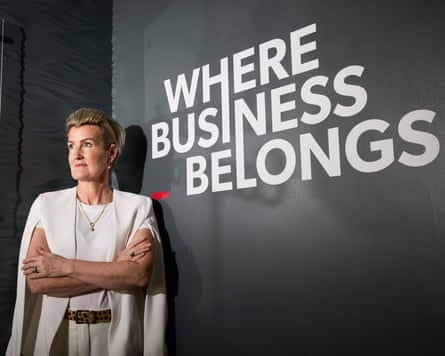
She said the BCC would also consult its 50,000 members, who collectively employ more than 6 million people across the UK, on a range of options for Britain’s relationship, including rejoining the EU.
“We are 10 years since the referendum,” Haviland said. “We would say the language of Brexit needs to move on. That’s gone. What businesses understand is what we had before and what we’ve got now.
“We’re apolitical, it’s not a political question. It is an economic question. So we are going to set out the options, from the where we are to the most extreme. And in consultation with our chambers, and our partners, we will see where people are.”
Fairbanks said it was clear that some Brexit-backing bosses recognised the economic damage. “It would be very interesting to see how many businesses that were very much pro-Brexit are still pro-Brexit, because I’ve certainly not heard any change of heart from those that were against Brexit. I think they are still very much: ‘We need to be closer to Europe.’”
after newsletter promotion
Speaking on the sidelines of an NCC trade fair at the Norfolk Showground, the business leaders said companies were coming under growing pressure from rising energy prices and other effects of the war in the Middle East.
Haviland called on the chancellor, John Healey, to take bold action at this month’s budget to support firms despite concerns at the heart of government about the pressure on the public finances amid jitters in the bond market.
“This rumour about a sort of ‘steady as she goes’ budget, and ‘let’s not upset the apple cart’. Business don’t really want just a ‘steady as she goes’. They want to see some action that will relieve some of those costs that will drive that fly wheel [of the British economy],” she said.
“You can’t just trot along in a crouch position effectively. And surely the markets will be happy to see some spending cuts by the government, and some investment in private-sector growth?”
Haviland called for action on energy bills, business rates and taxes on employment to help companies recruit more young people. “In your energy bill, about 40% of your energy is actually energy. The other 60% is about tax. So the government can get some of that out,” she said.
“The big test for the chancellor is to put his money where his mouth is for business at the budget. Just showing that he genuinely believes that the wealth creators are the job creators – which is business.”
KioskNews shows a cleaned-up reading view extracted from the publisher’s page — the original always lives on their site, not ours.