Targets set, bombs loaded: Why Trump blinked on Houthi strikes
File photo: US President Donald Trump waves as he boards Air Force One, at Joint Base Andrews, Md. (AP Photo)
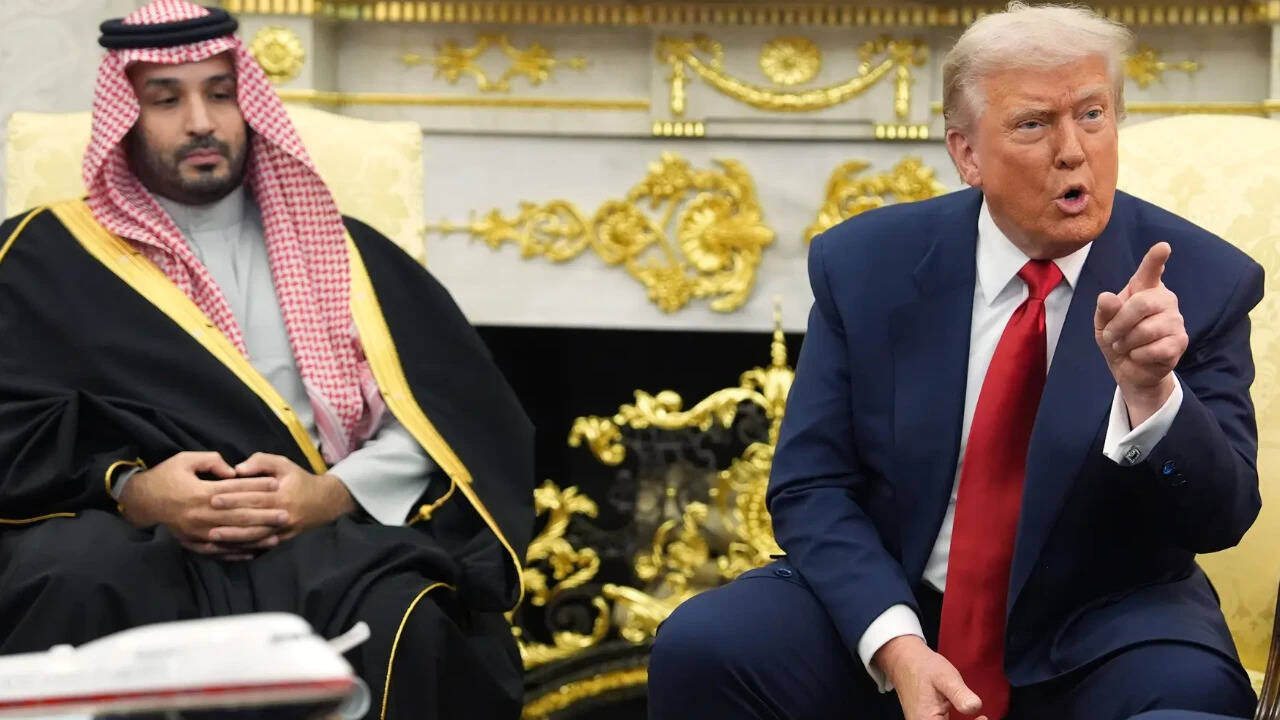
US President Donald Trump had moved to launch airstrikes against Iran-backed Houthis in Yemen after Saudi Crown Prince Mohammed bin Salman (MBS) pressed him to intervene. But Trump abruptly halted the operation before the strikes could begin.A report by New York Times states that Trump had spent nearly two weeks wavering over whether to join Saudi Arabia in its renewed fight against the Houthis. On Wednesday, he told advisers he did not favour strikes. But after MBS called him on Thursday and again urged US military help, Trump reversed course and instructed the Pentagon to prepare airstrikes.According to two people briefed on the attack, Pentagon commanders had created approved target lists, troops were loading bombs onto warplanes selected for the missions and US military was prepared for fresh attacks on the Iranian proxy group.
the wave of attacks was just about to begin.But by Sunday, however, Trump had reversed his decision yet again. The strikes were put on hold, at least for now, even as preparations for the attack had advanced significantly. The White House declined to discuss Trump's deliberations, while a senior administration official said only that the US had a defence agreement with Saudi Arabia and would defend its allies.The sudden U-turn reflects a larger problem for Trump. The Houthis have avoided attacking US ships and have agreed, for now, not to fight the United States.
But they have intensified attacks on Saudi Arabia, leaving Trump under pressure from a key ally that Washington also needs in its wider war against Iran.Saudi Arabia has shown it can use that dependence as leverage. In May, Riyadh effectively blocked a US plan to use American forces to escort commercial oil tankers through the Strait of Hormuz by denying US forces access to its airspace and military bases.The Houthi threat has also expanded beyond Saudi Arabia. The group has attacked Saudi vessels and declared a blockade on Saudi shipping in the Red Sea, while capturing areas near the Bab al-Mandab Strait, a crucial maritime chokepoint.
The developments have raised fresh concerns over global shipping and energy supplies.
Why is Trump hesitating
A new US bombing campaign would risk opening another front while American forces are already stretched by the war against Iran. Several officials and commanders have also questioned whether airstrikes would force the Houthis to back down.The US spent more than 50 days bombing the group in 2025, striking over 1,000 targets and burning through about $1 billion in weapons and ammunition in the first month.
Trump later called a ceasefire, saying the Houthis had promised to stop attacking ships.The Houthis have since rebuilt much of their military capability and are now using artificial intelligence to develop and engineer new missile systems, according to US officials. A renewed US campaign could also prompt the group to resume attacks on American ships and further disrupt shipping through the Bab al-Mandab, adding another pressure point to already unstable energy routes.Trump said Sunday that he remained in “deciding mode” over the larger Iran war. For now, however, the president has stepped back from striking the Houthis, despite having taken the US military to the brink of doing so.
KioskNews shows a cleaned-up reading view extracted from the publisher’s page — the original always lives on their site, not ours.