WHAT WE’RE WATCHING: Landmyn: An explosive local drama about family ties that bind yet threaten to erupt
The first thing you hear, and then vaguely see through the frosted glass, is a small dog. Outside the front door, anxiously barking and sniffing, she wants to be let inside.
Also in view, littering the passageway of whatever home this is, is the detritus of someone’s life, useless bits and pieces, memorabilia and photos strewn on the floor and hastily stuffed into boxes and plastic bags.
From the bathroom, a freshly showered woman emerges and looks towards the yapping dog.
Before you have a chance to start imagining what sort of film this is, though, the rowdy chords of a chaotic, discordant score suddenly kick in, silencing the dog and putting you on high alert as it drowns out any thoughts you might have about where this is all going.
Hold tight, because it’s set to be a bumpy ride.
The film is Landmyn (“landmine”), and what unfolds is rough, raw, rousing. Like that passageway littered with the leftovers of someone’s dishevelled life, it’s laced with memories, some good, many of them wretched and best left in the past.
It’s a film in which tragedy is masterfully interlaced with its opposite. Just like life.
It is comedy, in fact, that drives the next few minutes of screen time. We arrive in a kind of make-believe world: a theatre, where a new play is being rehearsed. The actors, a couple still clinging to their scripts, are performing with melodramatic, over-the-top abandon, unwittingly and charmingly hilarious.
In command of this play-play world is Johan, a work-focused writer-director who pens weird, pretentious plays with titles like Limpopo Golgotha and, more recently, Chalk Ass. Played by the luminous, introspective Ben Albertyn, Johan takes himself very seriously indeed, keeps mental and written accounts of his numerous hurts and traumatic childhood experiences and weaves his complex personal feelings into his various creative projects.
In the scene being rehearsed, mention is made that the man hates his mother. It’s a hurtful accusation – and a clue – that haunts this film. It dares us to consider if and when it’s permissible to cross that line, to go from disliking those we’re meant to love unconditionally to hating them entirely.
The film’s director, Nico Scheepers, considers the terrible calculus of such intense emotions not as some asinine Freudian fantasy, but by showing us precisely how a parent’s toxicity can spread and infect those she’s meant to nurture and care for.
Scheepers, who is also the writer, gives us a story with a simple premise: for the first time in a decade three siblings are getting together under one roof.
What’s meant to be a long-overdue reunion between Johan and his two sisters is thrown into disarray when Colette (Carla Smith), the older sister who lives in Scotland and who has arranged the cushy beach cottage for this winter get-together, casually drops the bomb: their mother, Annatjie, will be joining them.
/file/attachments/orphans/CarlaSmithinLandmyn_NagvlugFilmscopy_801778.jpg "Carla Smith in Landmyn. (Photo: Nagvlug Films)")
As if the air is suddenly sucked from the room, Johan and their youngest sister, Lisa (Dhania Schultz), immediately begin psychically strategising for the metaphoric minefield they’re about to find themselves in. And thus the film takes that beloved institution, the family vacation, and flips the anticipation of a jolly old time entirely on its head.
Scheepers is a fantastic tease. He promises family drama within the idyllic context of a seaside holiday and then rolls out something more akin to emotional terrorism.
In many ways, Landmyn is just as merciless as Scheepers’ first feature, Hen, a grisly horror film with an unspeakable, mysterious, inescapable darkness at its core.
One thing the two films have in common? They’re both about a family being ripped asunder.
In Hen, the annihilation is literal. In Landmyn, the monster is a kind of unassailable toxicity that eats away at its victims slowly over time.
Perhaps in an attempt to defuse any potential eruptions, Colette has also invited their aunt, Annatjie’s sister, played with a beautiful mix of whimsy and pragmatism by Nicole Holm.
She arrives brimming with optimism and love and complaints about the cost of the taxi from the airport. In tow is her son (Juan-Christoff Smith), whose innocence and naïve charm will presumably help mitigate against what’s destined to become a very volatile environment.
But, as predicted, once Annatjie turns up, the cottage quickly transforms into a kind of psychological pressure cooker. Anna-Mart van der Merwe, who evidently took herself to a very dark place in order to embody this character who is simultaneously battered and toxic, lonely and detestable, has described Annatjie as someone who is “running on empty”.
She arrives with all her literal and figurative baggage, including boxes and plastic bags, and that dog who had earlier so desperately wanted to be let inside.
What unfolds is drama on steroids, the result of carefully assembling a cocktail of delicate emotions and trapping them together under one roof. These people can’t escape. Not because there are bars on the windows, but because they are bonded by blood.
The tension exists because of their insufferable need to be the happy family they don’t quite know how to be. Whatever bygone traumas exist, they’re too close to the surface to remain buried. And, people being people, there’s some burning desire to have it out once and for all.
/file/attachments/orphans/Juan-ChristoffSmithCarlaSmithBenAlbertynDhaniaSchultzandNicoleHolmandAnna-MartvanderMerwewithherbacktothecamerainLandmyn_NagvlugFilmscopy_998502.jpg "Juan-Christoff Smith, Carla Smith, Ben Albertyn, Dhania Schultz and Nicole Holm, and Anna-Mart van der Merwe with her back to the camera in Landmyn. (Photo: Nagvlug Films)")
Of course, like all of us who have gone into the fragile environment of a potentially explosive get-together, these six family members presumably carry hope in their hearts that – this time – things will be different. That, this time, the intense niceties of that initial hug hello will somehow endure, that no fights will be picked, no old wounds reopened, that those deep-seated traumas and ancient hostilities will be left in the past.
But that’s not the way life works. And Scheepers has no intention of making comforting entertainment when there are deeper truths he wants to investigate.
The intention of the film is not to placate and mollycoddle, but to confront audiences with completely honest and sometimes brutal insights into just how difficult and toxic families can be. Because, within families, there is no hiding, no avoiding those parts of ourselves we’d like to forget.
There is no mercy, no attempt to provide Annatjie a life jacket. Instead, what Scheepers gives us is access to her most bitter and vulnerable moments. He lets us watch her coming undone. One moment we see her living through the heavy burden of her own self-inflicted misery. In other moments, we watch her calculating the odds of getting away with whatever her next shameful move might be.
In one sequence, the restless Annatjie, unable to sleep, wonders around the cottage, checking in on her sleeping offspring, children she isn’t very good with or kind to when they’re awake. She puts on Lisa’s spectacles and she sniffs one of Johan’s takkies before trying it on, as if attempting to figure out what it might be like to be in his shoes.
The problem is that she has no real capacity to imagine the interior lives of other people. Whether it’s because she is selfish or has built a life entirely focused on her own misfortunes, she has no talent for empathy. She has dug a deep pit of loneliness, despair and denial and can’t resist tumbling into it.
/file/attachments/orphans/Anna-MartvanderMerweinLandmyn_NagvlugFilmscopy_198307.jpg "Anna-Mart van der Merwe in Landmyn. (Photo: Nagvlug Films)")
Scheepers has said that he has no interest in making films that offer audiences relief from reality, and that’s true of Landmyn.
It’s impossible to ignore the fact that we’re all in some way being reflected on that screen. There is simply too much truth up there to not somehow share in the collective shame and discomfort of these characters who know each other well enough to know how best to inflict maximum hurt.
To go with all the misery and heartache, though, the film is also generous with its more overt pleasures. It is intelligent enough to be genuinely funny without resorting to clichés. And it is ballsy enough to confront its audience with a genuinely shocking depiction of the kind of overt racism that persists among so many South African white people.
And there are the infinite tactile, tangible, sensory pleasures of the film: the cast is utterly glorious, the writing is captivating and the cinematography is gorgeous. Within the cottage, the tension is greatly enhanced by the way in which the camera shares the space with the family, making us feel like we’re right there, emotionally trapped with them.
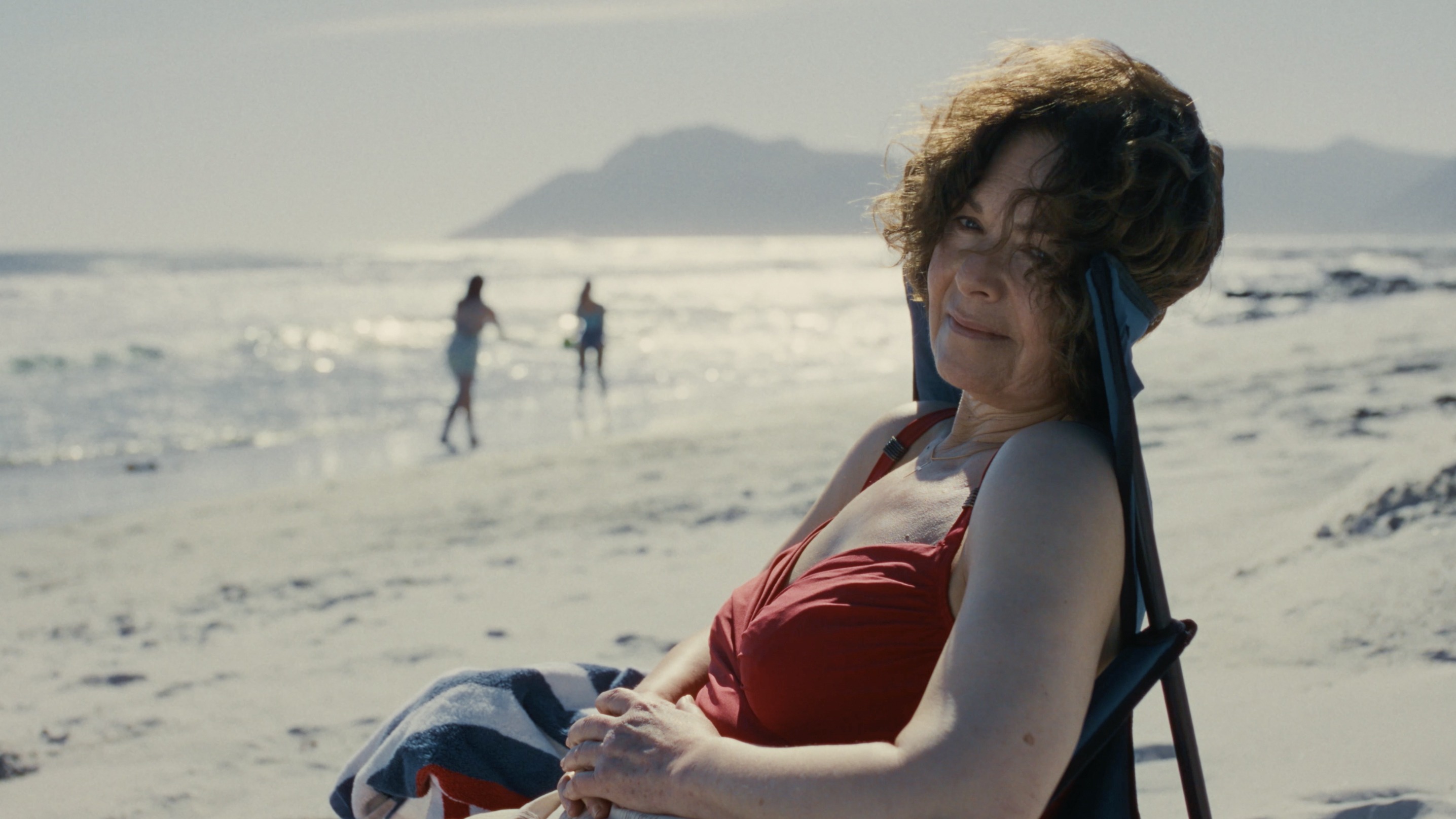
/file/attachments/orphans/LandmynwasshotonlocationontheCapePeninula_NagvlugFilmscopy_316385.jpg "Landmyn was shot on location on the Cape Peninula. (Photo: Nagvlug Films)")
The film’s visual style and its sumptuous shots of the Cape Peninsula coastline are further enhanced by the rousing, high-impact score. The music, composed for the film by Richard Onraet and performed by the Cape Town Philharmonic Orchestra, is powerfully used to distance us from the individual emotions of the characters.
The result is a film that refuses to trick us into caring for the characters. Because, in Scheepers’ cinema of resolute honesty, there is no room for sentimentality.
Though we all imagine ourselves to be the lead character in our own personal movie, the world does not operate that way. And it’s not how this film works either. Rather than being about any one of the characters, it is about the ties – terrible as they are – that bind them. And it is about what it takes to risk letting go.
Despite how deeply Scheepers’ truths cut, his film avoids moral score-keeping. Rather than judging and punishing his characters, or pointing fingers, he allows the film to act as a container for truth: you leave the cinema tender and heartsore and stewing in your own discomfort.
And this troubled, broken family you’ve spent two hours with? They’re just people. Aren’t we all? DM
KioskNews shows a cleaned-up reading view extracted from the publisher’s page — the original always lives on their site, not ours.