8 Perfect Thriller Movies That Everyone Forgot About

Michael Block is a 14 time GLAM Award nominated writer, producer, and host of the podcast Block Talk. Throughout his time in the entertainment industry, he has worked on and off Broadway as a stage manager, written several produced plays, critiqued hundreds of theatrical performances, drag and cabaret shows, and has produced events randing from drag competitoons to variety concerts!
On Block Talk, he interviews nightlife personalities, covers the wide world of entertainment through features, ranking episodes, and recaps ALL of Drag Race, as well as Dragula and Survivor. He has interviewed hundreds of RuGirls that span the globe at DragCon NYC, DragCon LA, and DragCon UK.
In his free time, he makes one-of-a-kind jewelry and gift baskets with his mom. He is a proud member of the LGBTQ+ community.
Sign in to your Collider account
Hollywood has a rich history of offering some of the greatest thrillers of all time. These movies provide high-octane adrenaline rushes through juicy twists and turns that keep audiences utterly enthralled. From psychological dramas to crime mysteries, the genre is the gift that keeps on giving. But for every brilliant masterpiece, a handful of perfect thrillers have been lost to time.
From gritty crime stories to shocking intimate domestic narratives, the eight films on this list are simply tantalizing. Though there are certainly those who found it hard to remember these titles, they’ve largely been forgotten. There’s no time like the present to bring them back to relevance!
'Body Double' (1984)

Directed by Brian De Palma, the neo-noir thriller Body Double pays homage to Alfred Hitchcock’s finest for a juicy story. Struggling actor Jake Scully (Craig Wasson) takes a luxurious house-sitting job at a famous modernist LA home where, using a telescope, he becomes obsessed with watching a beautiful neighbor perform a nightly striptease. Suddenly, he witnesses the neighbor being stalked and then brutally murdered with a power drill by a masked intruder. Desperate for answers, Jake tracks down an adult film star named Holly Body (Melanie Griffith), who was hired as a "body double,” only to learn that it was all a con against him.
Drawing on the voyeurism of Rear Window and the obsession of Vertigo, Body Double is a brilliant tribute toHitchcockian mechanics through a modern ‘80s lens. Using the neon-soaked illusion of Hollywood, De Palma layers in a low-budget vampire film set to remind the audience that it is playing with the nature of acting, reality, and fakery. Juxtaposed to the pristine direction in which De Palma’s camera swoops, rotates, and frames every shot with geometric precision, treating murder and desire as high art, Body Double acts as a twisty, kinky puzzle box.
'Copycat' (1995)

Dropping during the heyday of ‘90s psychological and erotic thrillers, Copycat flips the script on crime dramas. Directed by Jon Amiel, Dr. Helen Hudson (Sigourney Weaver), an agoraphobic criminal psychologist, and San Francisco police detective M.J. Monahan (Holly Hunter) team up to track down a serial killer, Peter Foley (William McNamara), mimicking notorious murderers from the past. As the investigation continues, the killer sets his sights on Dr. Hudson, using her confinement at home to stalk and trap her. An unsettling cat-and-mouse game, Copycat grounds its terror in trauma, intellect, and female resilience.
A smart, layered premise, Copycat isn’t a typical slasher story but an examination of serial killers and their Modus Operandi. With a historical playbook to draw from, it becomes an intellectual chess match in which the police must look back into criminal history to predict the next strike in real time. The film contextualizes the heavy personal toll that it takes to look deep into the mind of a murderer. Weaver and Hunter are simply phenomenal together. Together, their dynamic sidesteps standard male-female action clichés. Weaver delivers raw vulnerability, portraying a woman with PTSD and panic not as a gimmick but as part of her DNA. Hunter brings raw grit and fierce intellect to her underestimated cop. It may not be top of mind, but it’s a film worth exploring.
'Dead Again' (1991)

One might know him from his highbrow dramas, but Kenneth Branagh took a stab at a neo-noir romantic thriller at the height of the genre. Dead Again follows private investigator Mike Church (Branagh), who takes in a mute, traumatized woman with total amnesia, whom he calls "Grace" (Emma Thompson). Seeking answers, they visit an antiques dealer and hypnotist named Franklyn Madson (Derek Jacobi), who experiences vivid past-life regressions, believing she is Margaret Strauss, a talented pianist who was murdered in 1948 or 1949. As Mike and Grace grow closer, they soon wonder if they are the reincarnated souls of Margaret and Roman (Branagh), a composer convicted of the crime and executed in the electric chair.
Unabashedly blending old-school thriller melodrama with bold, expressionistic pulp, Dead Again channels classic black-and-white thrillers with soaring camera movements and a Gothic-infused score that mirrors its characters' psychological states. A truly twisted conclusion, the past-life regression framework turns a typical murder investigation into a time-dripping mystery, pondering if history is bound to repeat itself. Branagh and Thompson have electric energy together in both past and present. The supporting cast is killer, especially the anti-type Robin Williams as Cozy Carlisle, a disgraced, cynical former psychiatrist locked away in an institution. A psychological wonder, Dead Again is a mesmerizing tale.
'Hard Rain' (1998)

Marry a high-stakes heist with an apocalyptic natural disaster, and you get Hard Rain. Directed by Mikael Salomon and written by Graham Yost, the disaster action thriller is set in the small Indiana town of Huntingburg, where torrential rain and a dangerously rising river force the town to evacuate. Armored truck driver Tom (Christian Slater) and his uncle Charlie (Ed Asner) are moving $3 million in cash from local banks when they get stranded in the floodwaters. A ruthless criminal named Jim (Morgan Freeman) and his gang ambush them to steal the money. As Tom hides the bags, the town's greedy sheriff (Randy Quaid) turns corrupt and tries to steal the hidden fortune for himself, locking Tom away. With the help of local Karen (Minnie Driver), Tom escapes only to discover a grander scheme.
A genuine ‘90s zany action gem, the tension is a ticking clock as a three-way cat-and-mouse game keeps the action rising as high as the waters. If you enjoy silly antics that don’t seem plausible, you’ll love watching the villains chase Tom on jet skis directly through the half-submerged corridors of a local high school. Fortunately, the film used massive practical water sets, huge hand-painted backdrops, and immersive stunt work for tangible scale. Freeman does a stellar job going against type as the reasonable and grounded criminal leader as Slater anchors the chaos as an Everyman hero. A product of its time, Hard Rain is a thrill ride as long as you accept it for what it is.
Collider Exclusive · Villain Personality Quiz Which Criminal Mastermind Would Be Your Nemesis? Lecter · Joker · Moriarty · Chigurh
Four of the finest criminal minds ever put on screen. One of them would look at you and see something worth their time. Eight questions decide which one comes for you, why they picked you, and what they would want when they arrived.
🍷Lecter
🃏Joker
♟️Moriarty
🪙Chigurh
01
What would a criminal mastermind notice about you first? Great villains choose their opponents carefully. Something about you got their attention.
02
How do they make first contact? The introduction tells you everything about what is coming next.
03
What do you actually believe about right and wrong? Every nemesis is really an argument about the thing you believe most.
04
What finally gets under your skin? Everybody has a pressure point. Finding yours is the whole plan.
05
They have made their move. How do you fight back? This is the part of the film where the audience finds out who you are.
06
What would they use against you? A good villain never brings a weapon you have not already handed them.
07
What do they actually want from you? The money is never the point. Something else always is.
08
How does it end between the two of you? Eight questions in, this is the one that decides who comes for you.
The Case File Is Complete Your Nemesis Is…
Four criminal masterminds. One of them was always going to be yours. Here is who comes for you, why they picked you out of everyone available, and what they want from the encounter.
Hannibal Lecter
Your nemesis does not want to beat you. He wants to know you completely, and he is patient enough to wait for it. The frightening part is how good the conversation is.
- Lecter is the most dangerous kind of opponent: the one who finds you interesting. He never raises his voice, because he has never needed to.
- You keep a great deal to yourself and you are careful about what you show. That reserve is exactly the door he would knock on.
- The films understood something other thrillers missed. The horror is not the violence. It is being perfectly understood by the wrong person.
- He would be unfailingly polite about all of it. That is the worst part.
The Joker
Your nemesis is not after money, territory or revenge. He is after a demonstration, and you are the person he has chosen to prove his point on.
- The Joker only picks opponents who believe in something. Your decency is not a defence against him. It is the entire reason he showed up.
- He has no plan you can predict and nothing you can take away, which removes every tool you would normally reach for.
- His whole argument is that you are one bad day away from being him, and you would spend the rest of your life proving him wrong.
- He would call it a magic trick. You would call it the worst night of your life.
Moriarty
Your nemesis respects you, which sounds flattering until you work out what it means. He chose you because nobody else was worth his time.
- Moriarty is the original criminal mastermind, the template every later one borrows from: a mind the equal of the hero's, pointed the wrong way.
- You enjoy being the cleverest person in the room. He is counting on exactly that, and he has already built the room.
- This is the rare nemesis who would be genuinely disappointed if you lost badly. He needs the game to be worth playing.
- It ends the way these things always end. Two people, one problem, and only one way down.
Anton Chigurh
Your nemesis has no personal interest in you whatsoever, and that is precisely what makes him unsurvivable. You are not a rival. You are a stop on the way.
- Chigurh does not negotiate, gloat or explain. He arrives, he asks one question, and the answer was decided long before you opened your mouth.
- You trust yourself to handle things. He is the one problem in the world that has no interest in how capable you are.
- No Country for Old Men rewrote the screen villain by removing the thing audiences quietly rely on: the sense that talking might work.
- Call it. He will wait.
'Killing Me Softly' (2002)

Now, as long as you avoid looking at Rotten Tomatoes, Killing Me Softly is perfect for what it is: campy melodrama. Directed by Chen Kaige, the film starts off as a simple meet-cute as American web designer Alice (Heather Graham) drops her stable boyfriend, Jake (Jason Hughes), for a famous, brooding mountain climber, Adam Tallis (Joseph Fiennes). After a swift road to marriage, Alice starts getting anonymous warning letters telling her not to trust her new husband, discovering that multiple women from Adam's past have gone missing or died under mysterious circumstances. The deeper Alice dives into the mystery, the more twisted the result becomes. Based on the 1999 suspense novel by pseudonym author Nicci French, Killing Me Softly is addictive, perfect for its soapy melodrama.
Moving at breakneck speed, Killing Me Softly transitions from a heavy-handed erotic romance into a melodramatic thriller that devolves into a bizarre plot twist that may lead to a hysterical outburst. Yet, going full-tilt on shock value allows the film to unwittingly comment on the heightened dramas of the past. The dramatic deliveries push Fiennes and Graham to the edge, yet it works for the absurd nature of their characters’ relationship. Despite its notorious reputation, viewing Killing Me Softly through a different lens is certainly worth a try. It’s a juicy guilty pleasure for sure.
'One Hour Photo' (2002)

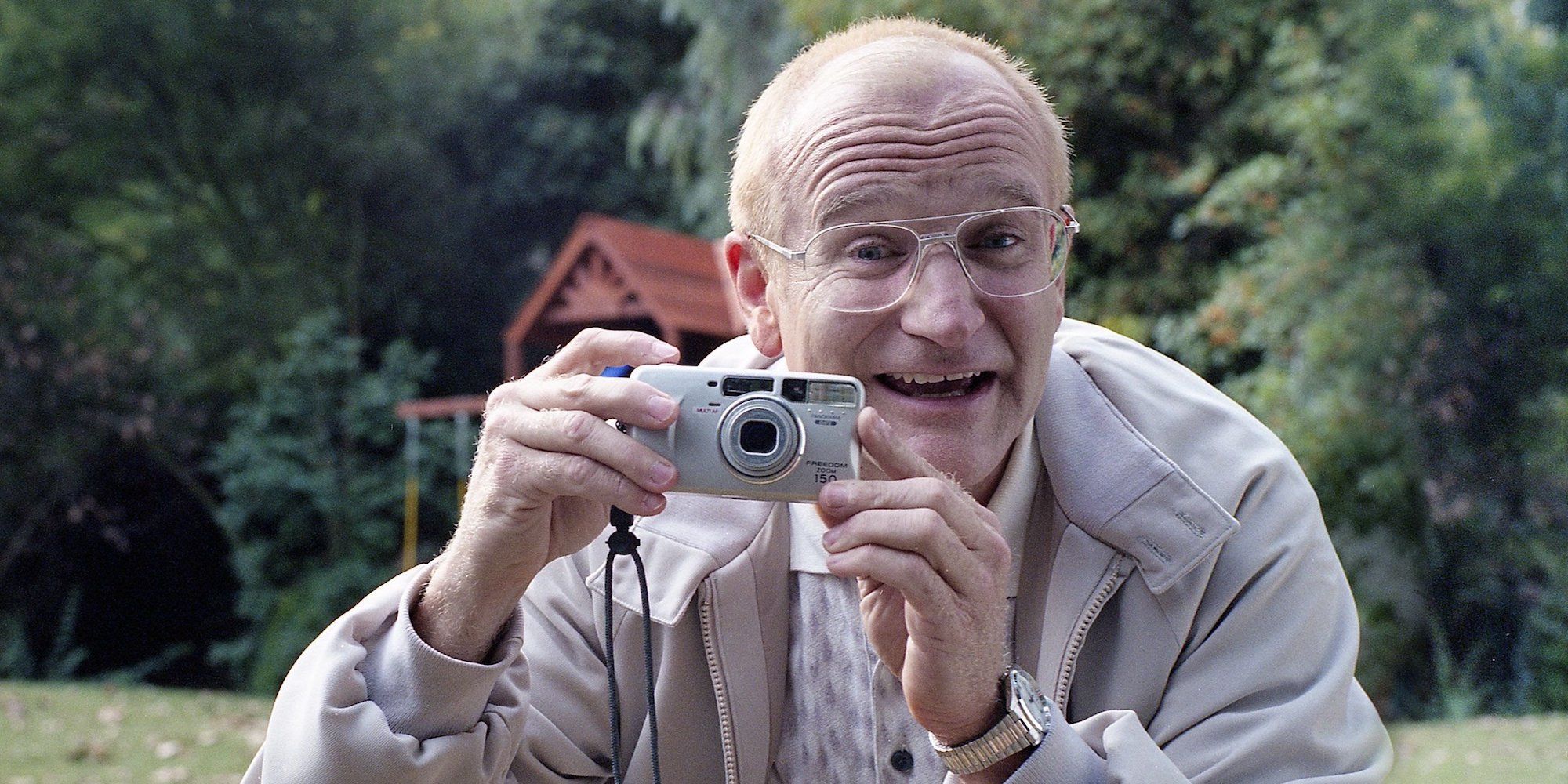
When Robin Williams plays against type, magic happens. Such is the case for the psychological thriller One Hour Photo. Written and directed by Mark Romanek, the story centers on lonely photo lab technician Seymour "Sy" Parrish (Williams) who develops a dangerous, obsessive fixation on the seemingly perfect Yorkin family—Nina, Will, and their young son Jake (Connie Nielsen, Michael Vartan, and Dylan Smith). Sy's fragile fantasy is broken when he develops film that reveals Will is having an extramarital affair, devastatingly losing his grip on reality in the process. One Hour Photo explores the profound psychological toll of extreme loneliness and the desperate human need to belong.
Long before the age of social media, One Hour Photo provided a dissertation on how curated images can create a false fantasy and an unhealthy intimacy with strangers. The film offers a richly unsettling examination of personal obsession and the lengths one goes to maintain an illusion. Stripping away his signature warmth, Williams turns Sy into a gentle yet creepy individual fueled by an underlying psychopathy. Williams helps Sy expose the fragile gap between the smiling snapshots people print and the messy, painful realities hidden behind closed doors. Though it feels like a period piece today, One Hour Photo forces its audience to reconsider those they trust with the intimacy of their lives.
'The Gift' (2015)

When the past makes its way to the present as a long con, that's the definition of pure commitment. Written and directed by Joel Edgerton, the psychological thriller The Gift tells the story of a married couple, Simon and Robyn (Jason Bateman and Rebecca Hall), whose lives are utterly upended by Simon's former classmate, Gordo (Edgerton), who drops by unannounced and leaves them increasingly strange, unwelcome gifts on their doorstep. Moving beyond a simple stalker story, The Gift explores the intensity of how past cruelties can haunt a person, leading to a cruel act of revenge.
A masterclass in suspense and tension, The Gift showcases how lingering resentment never leaves when one party has been hurt so badly. The narrative questions how the permanent scars of the past can ever be healed and how to handle them if they can't. Built around the lens of youthful torment, Edgerton leaves the audience to question who is right and who is wrong. Can actions in the past truly be held against someone? There are no simple answers, as moral ambiguity is the full focus. Rather than lean on shocking revelations and jump scares, The Gift uses escalating tension for a slow-burning wonder. Edgerton's performance as the quietly plotting Gordo is deeply unsettling, as is Bateman, who went against type at the time. Perhaps we have The Gift to thank for his current reign of darkness.
'The Invitation' (2015)

Easily the greatest hidden gem on this list, The Invitation is a masterclass in tension building. Directed by Karyn Kusama, The Invitation follows Will (Logan Marshall-Green) and his girlfriend, Kira (Emayatzy Corinealdi), who attend a dinner party at the home of his ex-wife, Eden (Tammy Blanchard), and her new husband, David (Michael Huisman), two years following the accidental death of Will and Eden's son. As strange guests begin to arrive, Will grows increasingly paranoid as he notices odd behavior and an eerie cheerfulness from his ex. The party becomes a fight for survival as Will realizes that he has walked straight into a grief-healing cult gathering. The Invitation takes a simple story of grief and weaponizes it into a gaslighting nightmare narrative.
Trapping the characters and audience in the lavish Hollywood Hills dinner party, danger lurks around every corner, and no one sees it coming. The Invitation works because Kusama keeps the audience guessing whether Will is in tune with the bizarre, sinister cult or if his grief and paranoia are overtaking him. The movie's central tension revolves around social awkwardness. Will could easily leave and escape the terror, but he's bogged down by fear of being rude or accusing the hosts of foul play. The horror arises as the antagonists are soft-spoken, warm, and unassuming. The Invitation is a meditation on grief, which makes the thriller brilliantly accessible.

The Invitation
- Release Date
- April 8, 2016
- Runtime
- 100 minutes
- Director
- Karyn Kusama
- Writers
- Matt Manfredi, Phil Hay
KioskNews shows a cleaned-up reading view extracted from the publisher’s page — the original always lives on their site, not ours.