Meta Accused Of Bias In Brazil Election As Lula Campaign Raises Concerns
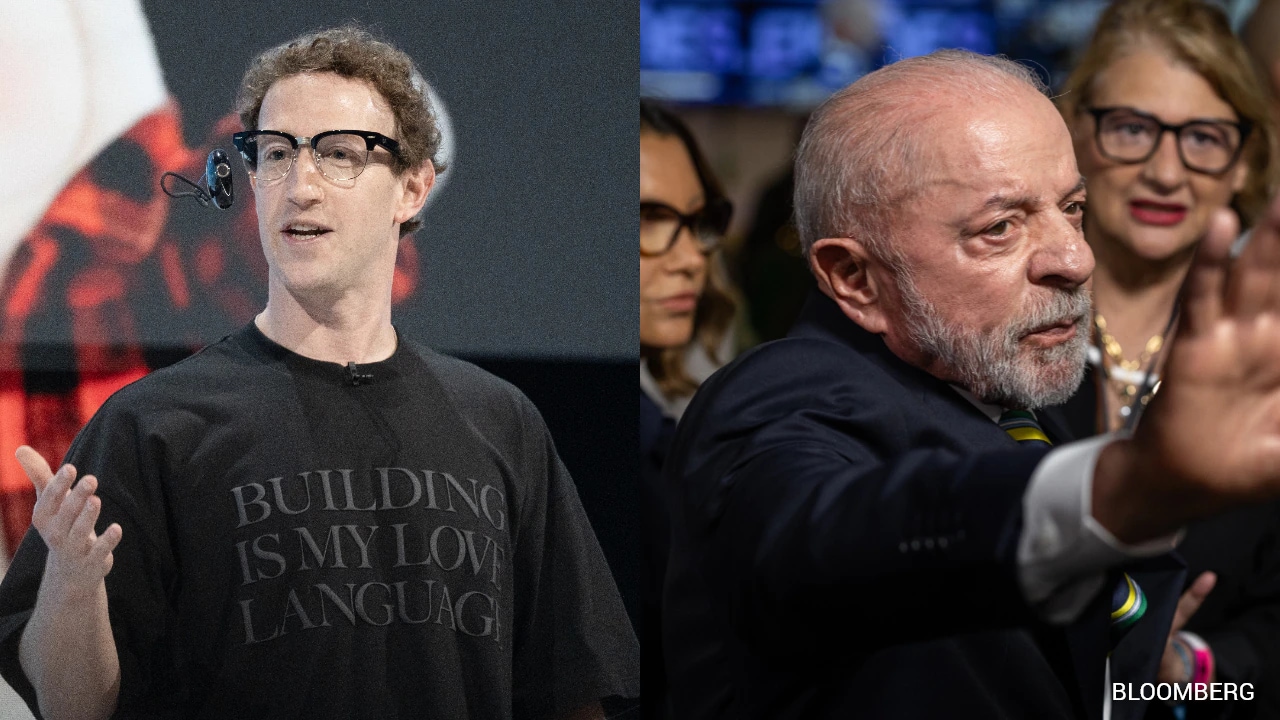
A new villain is emerging in the closing stretch of Brazil's bitterly contested presidential election: Meta Platforms Inc.
The social media giant has been ordered by Brazil's electoral court not to interfere with the distribution of political or election-related content after President Luiz Inacio Lula da Silva's campaign accused it of "repeatedly and systematically" failing to deliver his content to users across its platforms. The United Nations has also called out the company, and even US lawmakers are demanding answers.
The spat with Meta is reopening a fight over the power of social media companies that has been brewing in Brazil for years. It's a deja vu of the clash between Brazilian authorities and Elon Musk over his X platform, which escalated into judges ordering the removal of content and accounts accused of spreading disinformation during the 2022 election and culminated in the service being briefly banned in the country two years ago.
At stake is the outcome of the contest to lead Latin America's largest economy. With Lula and right-wing Senator Flavio Bolsonaro tied in polls ahead of Sunday's runoff, reaching the right audience could be key in defining the result of the election unfolding in one of Meta's most lucrative markets.
Lula - who has attracted more than 10 million supporters to a WhatsApp channel dubbed "Lula's Army" in recent days - has alleged interruptions to his account, restrictions on Instagram posts and unequal audience engagement. His campaign also said Meta AI, the company's generative artificial intelligence tool, is refusing requests to create images related to Lula while generating campaign material favorable to his opponent.
Spokespeople for Meta in Brazil referred to the company's statement on October 16 pushing back against the interference claims and calling the incidents cited by the Lula campaign as unrelated technical problems rather than evidence of political bias. Meta said that it has taken steps to address those issues and that it treats all candidates equally.
But by then it had already become the target of blame for leftists. Lula supporters have protested alleged election interference in front of Meta's Brazil headquarters in Sao Paulo, and in a letter to Chief Executive Officer Mark Zuckerberg, US lawmakers led by Bernie Sanders said they were "deeply concerned about credible reports of Meta platforms restricting or suppressing content."
"We're going to fight this, absolutely. We're going to prove that we can defeat the digital empire," Lula said during a YouTube live Thursday evening. "Meta will have to reinvent itself because it can't think it can keep deceiving humanity forever - it has already done plenty of that."
On Thursday, a judge requested that Meta and X present technical explanations over their role in the election.
Roberta Braga, founder and executive director of the Digital Democracy Institute of the Americas, said that while she didn't believe Meta was intentionally seeking to tip the scales in the election, the company's actions nonetheless have had a disruptive effect.
"Because Meta and Meta products in a country like Brazil are so integral and central to discussions happening around elections, including how the campaigns mobilize and connect with voters, their decision making or lack of decision making or whatever mistakes they make actually do interfere with the electoral process," Braga said.
Meta's role in Brazil's election is especially relevant because in addition to Facebook and Instagram, the company also owns WhatsApp, the messaging app used by more than 90% of Brazilians. Even so, Braga expressed skepticism about whether anything Meta has done in the final stages of the campaign will alter the outcome.
"I don't believe that an account by Lula or an ad by Lula that's taken down, even though it was at a very, very crucial moment of the election, will alter the results of the election," she said. "Polarization is really, really high."
Long Fight
Authorities in Brazil have been at the forefront of the fight against social media disinformation. The Supreme Court has been discussing for years whether it can be held responsible for content posted by users that is hate speech, fake news or offensive.
Lula, meanwhile, has refused to bow to demands from US President Donald Trump over Big Tech regulation and has even shared notes with European leaders. And First Lady Janja da Silva has gone as far as cursing the X owner at a G20 event in Brazil in 2024. "I'm not afraid of you," she said. "F- you, Musk."
The issue is high on Lula's agenda in part because social media was the main driving force behind the 2023 insurrection attempt by supporters of former President Jair Bolsonaro. The coup plot that included plans to kill Lula, his vice president and a Supreme Court justice was widely coordinated over messaging apps.
The battle to keep social media companies from influencing election results isn't limited to Brazil.
European regulators opened an investigation into TikTok's recommendation algorithm amid allegations the platform was manipulated to favor one candidate during Romania's presidential election in 2024. And the European Union imposed new rules governing political advertising on social media, which led Meta to pull political ads altogether from its platforms, saying it'd be too hard to comply.
Like other social media ventures, Meta has shifted its approach toward policing the material on its sites. The company ended third-party content moderation in the US in January 2025, replacing it with user-generated oversight for Facebook and Instagram. The move mirrored the community notes system deployed by Musk's X after the billionaire acquired the platform formerly known as Twitter in 2022.
Those changes coincided with Zuckerberg's decision to join Musk and other Silicon Valley leaders in embracing Trump's return to office. During his comeback bid, Trump called Facebook an "enemy of the people" for removing him from the platform following the January 6 US Capitol insurrection. He now counts Zuckerberg as an ally and recently hosted him at a White House luncheon.
While Trump has yet to back a candidate in Brazil's runoff, as he has done in other elections around the world, he had close ties to Jair Bolsonaro and met with Flavio Bolsonaro in the Oval Office. A victory by Bolsonaro, who has promised to move his country closer to the US, would bolster Trump's attempts to assert Washington's dominance over the Western Hemisphere.
Election Interference
Lula, a holdout against Trump's so-called "Donroe Doctrine" for the region, has long warned of the risk of election interference in this year's vote.
His administration denied visas to two senior US State Department officials earlier this year over concerns they intended to raise doubts about the country's electronic voting system during a planned visit. This week, the Brazilian government accused Argentine President Javier Milei of "unacceptable attempt at foreign interference" after he suggested the leftist leader may try to steal the election.
Lula is unlikely to cast doubt on election results in the event Bolsonaro emerges as the winner on Sunday, though he may partially blame the uneven playing field created by social media companies for his loss, according to a government official, who asked not to be named discussing the matter.
KioskNews shows a cleaned-up reading view extracted from the publisher’s page — the original always lives on their site, not ours.