Truth body on drug war starts with a mother’s tale of woe
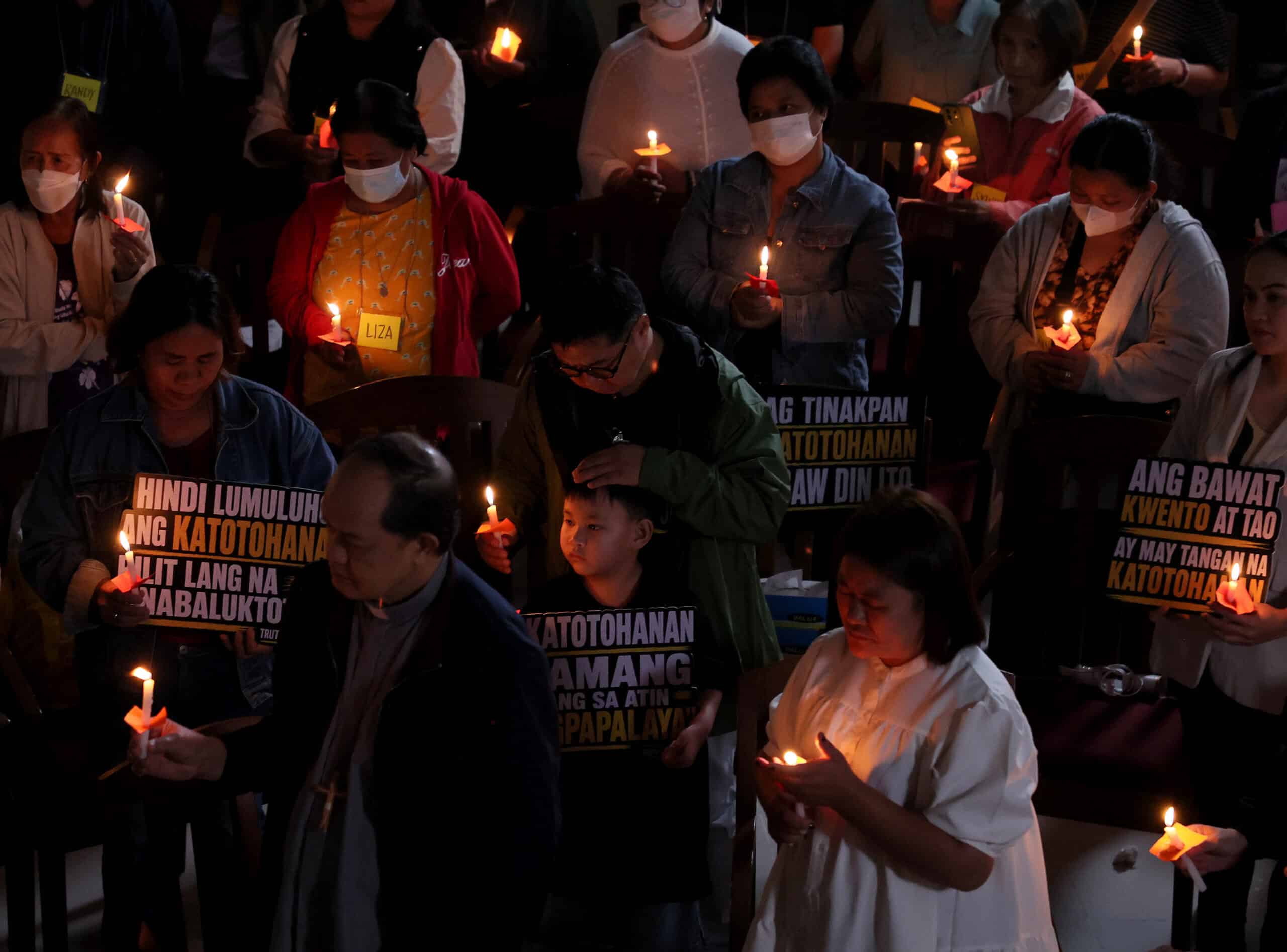

MANILA, Philippines — The nongovernmental Truth Commission inquiry into the drug war killings during the Duterte administration opened its first hearing on Friday with the testimony of the mother of a 19-year-old disabled man, who was shot dead by masked gunmen in 2017 on suspicion that he was peddling marijuana and “shabu” (crystal meth).
The civilian body devoted a three-hour session for Luzviminda Siapo to recount the tragic death of her son Raymart, which happened when she was working in Kuwait as a domestic helper.
On a mission to deliver “healing-based justice” for the victims and their families, the commission is headed by former International Criminal Court (ICC) judge and former Inquirer publisher Raul Pangalangan, who served as moderator in the latter part of Friday’s session.
Article continues after this advertisement
READ: Drug war victims seek court protection amid PNP ‘double-barrel’ policy
FEATURED STORIES
NEWSINFO
NEWSINFO
NEWSINFO
“The victims telling their stories is part of the justice process,” Pangalangan said to explain how the commission could still contribute to the various investigations conducted on the killings, including those done to build the case against former President Rodrigo Duterte in his upcoming ICC trial.
‘I can open more hearts’
“They take charge; they have a sense of ownership over the justice process. And them speaking their voice, them being heard is a conclusion of the justice process,” Pangalangan said.
READ: Drug war killings continue from Duterte to Marcos – watchdogs
Police records said Raymart, a teenager born with clubfoot, was allegedly involved in petty drug dealing.
Article continues after this advertisement
Nearly a decade since his cold-blooded killing, Siapo took the opportunity to tell her account of what happened. “I am not making up (stories) and I’m not lying,” the single mother of two said when asked why she agreed to testify. “I thought, ‘Why not?’ If it means I can open more hearts and minds with my statements.”
The former migrant worker was interrupted in her narration only when the panel members asked clarificatory questions. Pangalangan said these should be “respectful, nonadversarial, trauma-informed and intended only to clarify facts.”
Article continues after this advertisement
Siapo left for Kuwait in 2016, the first year of the Duterte presidency. It was on March 29, 2017, as she was doing her usual household chores, that she learned of her son’s death that same day.
She could not contain her tears as she recounted the time the horrible news reached her. “If he really did something wrong, I hope he was at least given due process,” she said.
Siapo said she was suspicious about the “inconsistencies” of the police investigation, especially the report that her son had a gun. She said no gun was found at the crime scene.
Church counseling
Caritas Caloocan, through the assistance of Caloocan Bishop Pablo Virgilio David, provided care and counseling for Siapo and the families of other drug war victims.
During the hearing, she read a message she prepared for Duterte, part of which expressed the irony in the tragic fate of her son: “Rodrigo Roa Duterte was tagged as the brains (of the war on drugs)—the President that my son looked up to … but he was also the reason for my son’s death without due process.”
Siapo said that she was slowly learning to let go of her rage, but what she ultimately sought was for someone to be held accountable, including those who pulled the trigger.
Her story set in motion the Truth Commission’s independent probe into drug war killings not covered by the ongoing crimes against humanity case against Duterte in The Hague.
If government cares
Duterte, who is set to face trial starting on Nov. 30, is accused of masterminding a brutal antinarcotics campaign that killed around 30,000 suspected drug offenders, according to human rights groups. Official figures put the death toll at over 6,000.
David, the commission’s adviser, said they would prepare a report for Philippine authorities that would be backed by documents, medical findings from experts, and witness accounts.
“We will observe how they deal with it. If this is a government that cares then maybe it’s about time that the justice system works” David said at a press briefing.
The panel also hopes to contribute its findings to the ICC, Pangalangan said. He noted, however, that the commission didn’t want to be limited by the period covered by ICC jurisdiction over the Philippines—from November 2011 to March 2019, before the Philippines withdrew from the Rome Statute, which created the tribunal.
Forensic anomalies
Forensic pathologist Raquel Fortun, one of the commissioners, presented her team’s forensic findings on the remains of Siapo’s son.
She found so many irregularities, including Raymart’s skull that was cut in half and so many of his bones were missing.
Fortun said the official medico-legal report declared that Raymart was “fully nourished,” which did not match further forensic examination.
Asked why they chose Siapo as their first witness, Fr. Flavie Villanueva, a supporter of the commission, pointed to three “unique circumstances” of her son’s case—his mother was overseas, he was a disabled person helplessly gunned down, and a “collateral” victim of the drug war.
Pangalangan said they had a “long debate” over how to pick witnesses and to schedule their sessions.
Your subscription could not be saved. Please try again.
Your subscription has been successful.
“As the cardinal said, we cannot provide a hearing for every victim,” he said. “The oral testimony is valuable, but at the same time (it should be) bolstered by the mass of verified facts, documents,” Pangalangan said, “The challenge is how to reach out to the rest.” /cb
KioskNews shows a cleaned-up reading view extracted from the publisher’s page — the original always lives on their site, not ours.