6 Pulitzer Prize-Winning Books That Became Great Movies

Liam Gaughan is a film and TV writer at Collider. He has been writing film reviews and news coverage for ten years. Between relentlessly adding new titles to his watchlist and attending as many screenings as he can, Liam is always watching new movies and television shows.
In addition to reviewing, writing, and commentating on both new and old releases, Liam has interviewed talent such as Mark Wahlberg, Jesse Plemons, Sam Mendes, Billy Eichner, Dylan O'Brien, Luke Wilson, and B.J. Novak. Liam aims to get his spec scripts produced and currently writes short films and stage plays. He lives in Allentown, PA.
Sign in to your Collider account
There is no guarantee that a great book will also become a great film, as it’s actually seldom that they are equivalent in quality. There has certainly been no shortage of amazing classics of literature, the likes of which everyone had to read in high school, that were absolutely ruined when they were adapted to the screen. This year’s Wuthering Heights is only the most recent example, as Emerald Fennell only adapted half of the novel and seemed to entirely miss the point of what Emily Bronte was trying to say. At the same time, there are also cases in which a mediocre novel is transformed into a great film; Jaws, The Godfather, and Fight Club aren’t necessarily literary classics, but they inspired films that are among the best and most influential of their respective decades.
The Pulitzer Prize is the highest award that can be given to someone in the literary arts, and it has occasionally intercepted those who are also involved with filmmaking. Roger Ebert is among the few film critics to be awarded the prestigious prize, and it was also given to Bob Dylan, who has written many songs for films, including the Academy Award ‘Best Original Song’ winner “Things Have Changed” from the underrated Curtis Hanson dramedy Wonder Boys. It has been more often that Pulitzer Prize winning fiction is adapted to the small screen, as was the case with Park Chan-wook’s version of the Vietnam War spy thriller The Sympathizer, which was made into a 7-part HBO series co-starring Robert Downey Jr. When done right, a great literary adaptation can help to introduce an entire generation to a classic novel by expanding into a new medium.
6 ‘Gone With The Wind’ (1939)

Gone With The Wind is one of the most influential films ever made and still the standard of which contemporary epics look like. Victor Fleming created some of the most imaginative and colorful visual setpieces of his time, and its due to the practicality of the film’s production that it still holds up as well today; most films that flirt with a running time of four hours end up feeling excessive and unnecessary, but Gone With The Wind is so immaculately transporting that these concerns aren’t an issue.
Gone With The Wind was a phenomenon unlike anything else because of the decades it spent in continuous release due to the demand of seeing it on the big screen, which earned it a long run as the highest-grossing film of all-time; today, it is still the biggest film ever when adjusted for inflation, as Avatar and Titanic haven’t quite been able to usurp it. While it came as the third in Clark Gable’s run of appearing in three different films that won the Academy Award for Best Picture, Gone With The Wind is best remembered as being the breakout role for Vivien Leigh, whose performance as Scarlet O’Hara marked one of the first and most important instances of an empowered female character in a Hollywood film.
5 ‘All The King’s Men’ (1949)
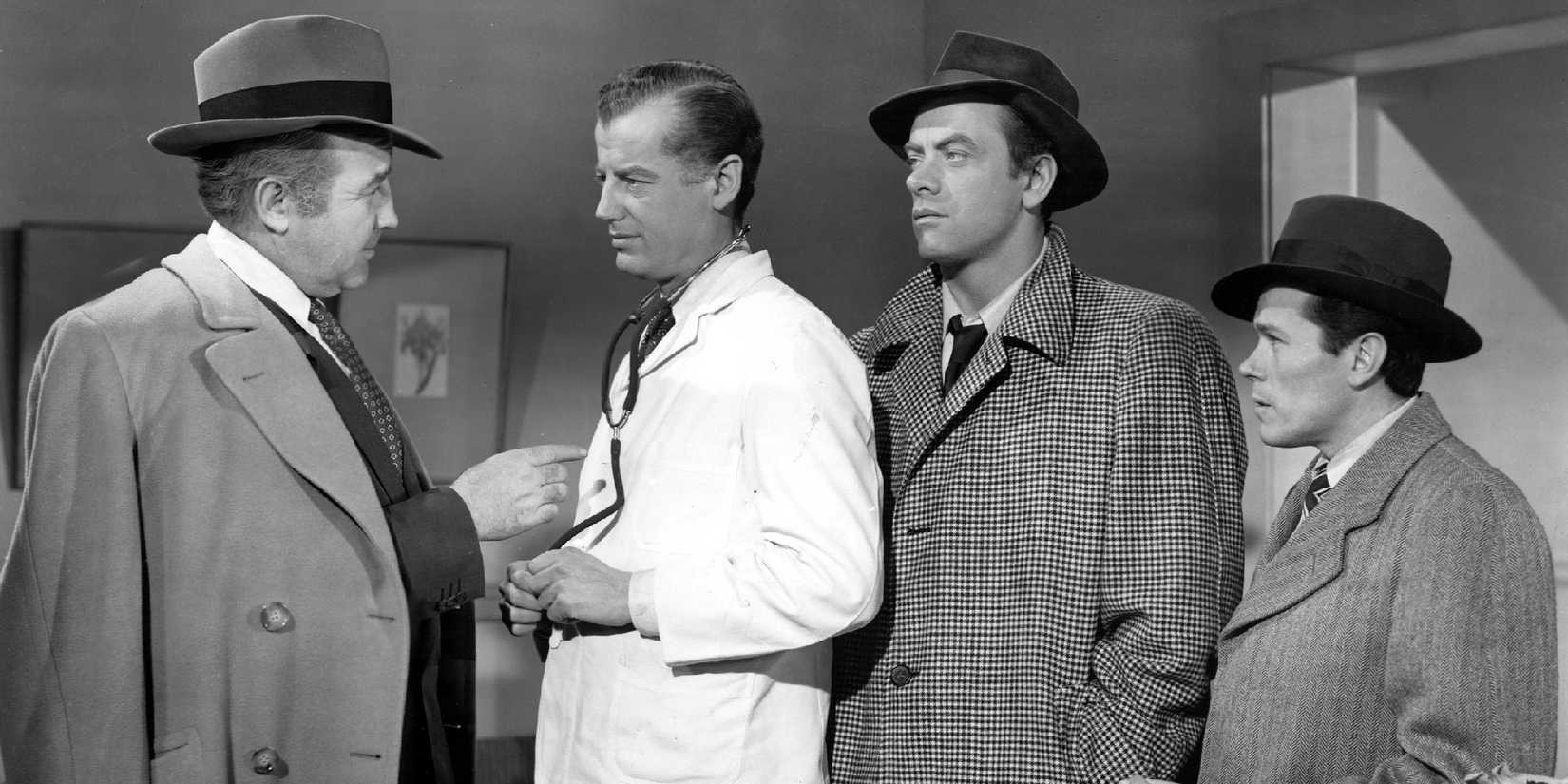
All The King’s Men is an exhilarating and timely story about the abuse of power within the electoral system that warns about the influence of an outsider populist. Although the story is told through the perspective of the journalist Jack Burden (Jack Ireland), it is brought to life thanks to the brilliant performance by Broderick Crawford as the candidate Willie Stark, which won him the Academy Award for Best Actor. The film itself is a Best Picture winner, and one of the more underrated ones at that; while the discussion of the greatest Best Picture winner of the ‘40s seems to start and end with Cabalanca and The Best Years Of Our Lives, All the King’s Men has insightful commentary about the manipulation of the press.
All The King’s Men is a time capsule of its era that feels remarkably present because of how little the political process has changed, despite the development of new technology. It’s not a work of fiction that is easy to adapt, as evidenced by the terrible 2006 remake starring Sean Penn, Jude Law, and Kate Winslet.
4 ‘The Caine Mutiny’ (1954)

The Caine Mutiny is a brilliant work of World War II era military fiction that examines a legal battle that follows the mutiny of soldiers who come to believe that their superior officer has lost his ability to command and needs to be deposed. Although there have been several solid adaptations of the play, including a recent film for Paramount Plus that was the last project of the late great William Friedkin, the best version thus far is a 1954 masterpiece starring Humphrey Bogart.
Bogart is perfectly cast in The Caine Mutiny because he was playing against type as a grouchy, uncontrollable force of chaos; it was shocking to see one of cinema’s most beloved leading men taking on such an unlikable role. Bogart earned an Academy Award nomination for Best Actor, and it's a very impressive performance because he does show some sympathy to a character who is clearly dealing with a debilitating mental illness.
COLLIDERInteractive
Ballot sealed
Movies/Academy Awards/Best Picture
Collider · Best Picture
Which Oscar Best Picture
Is Your Perfect Movie?
Five winners · ten questions · one envelope
Five Oscar Best Picture winners. Five completely different visions of what cinema can be and what it can do to you. One of them is the film made for the way your mind works, and ten questions will work out which. The nominees
2020Parasite
2023Everything Everywhere All at Once
2024Oppenheimer
2015Birdman
2008No Country for Old Men
Reel01 / 10
Question 01 of 10TONE
01 What kind of film experience are you really after? The best movies do not just entertain. They leave something behind.
Keys 1 to 5 or A to E · Enter to advance
Reel02 / 10
Question 02 of 10THEME
02 Which idea grabs you most in a film? Great films are driven by a central obsession. What is yours?
Keys 1 to 5 or A to E · Enter to advance
Reel03 / 10
Question 03 of 10STRUCTURE
03 How do you like your story told? Form is content. The way a story is shaped changes what it means.
Keys 1 to 5 or A to E · Enter to advance
Reel04 / 10
Question 04 of 10VILLAIN
04 What makes a truly great antagonist? The opposition defines the protagonist. What kind of opposition fascinates you?
Keys 1 to 5 or A to E · Enter to advance
Reel05 / 10
Question 05 of 10ENDING
05 What do you want from a film's ending? The final note is the one that lingers. What do you want it to sound like?
Keys 1 to 5 or A to E · Enter to advance
Reel06 / 10
Question 06 of 10WORLD
06 Which setting pulls you in most? Where a film takes place shapes everything: mood, stakes, what is even possible.
Keys 1 to 5 or A to E · Enter to advance
Reel07 / 10
Question 07 of 10CRAFT
07 What cinematic craft impresses you most? Every great film has a signature, the element that makes it unmistakable.
Keys 1 to 5 or A to E · Enter to advance
Reel08 / 10
Question 08 of 10PROTAGONIST
08 What kind of main character do you root for? The protagonist is the lens. Who you follow says something about you.
Keys 1 to 5 or A to E · Enter to advance
Reel09 / 10
Question 09 of 10PACE
09 How do you feel about a film that takes its time? Pace is a choice. Some films sprint. Others let tension accumulate slowly, deliberately.
Keys 1 to 5 or A to E · Enter to advance
Reel10 / 10
Question 10 of 10AFTERMATH
10 What do you want to feel walking out of the cinema? The best films leave a mark. What kind of mark do you want?
Keys 1 to 5 or A to E · Enter to advance
The envelope, pleaseAnd the Oscar goes to
★ Best Picture, 2020 Parasite Bong Joon-ho, 2019 A film that hides its true intentions until the moment it is ready to reveal them.
You are drawn to films that operate on several levels at once, that begin in one genre and quietly, brilliantly migrate into another. Bong Joon-ho's Parasite is a film about class, desire and the architecture of inequality that manages to be darkly funny, deeply suspenseful and genuinely shocking across a single extraordinary running time. Your instinct is for cinema that rewards close attention and punishes assumptions, right up to its devastating final image. From the Collider file
- The first film not in the English language to win Best Picture, in the Academy's 92-year history to that point.
- It took four Oscars in one night: Picture, Director, Original Screenplay and International Feature.
- It won the Palme d'Or at Cannes in 2019 by a unanimous jury vote, the first Korean film to do so.
- The Park family's modernist house was not a location. It was built from scratch on an outdoor lot.
Reads between the lines Loves a reveal Attention to detail
★ Best Picture, 2023 Everything Everywhere All at Once Daniel Kwan and Daniel Scheinert, 2022 A film that refuses to choose between being entertaining and being meaningful.
You want it all, and this one gives you all of it. The Daniels' Everything Everywhere All at Once is among the most maximalist films ever made: action comedy, multiverse science fiction, family drama, existential crisis, and an emotional core that sneaks up on you in the middle of the chaos. You respond to ambition. Being overwhelmed is the design, not the side effect, because the feeling of being crushed by infinite possibility is exactly what the film is about. From the Collider file
- Seven Oscars, including three acting wins for Michelle Yeoh, Ke Huy Quan and Jamie Lee Curtis.
- Michelle Yeoh became the first Asian woman to win Best Actress.
- The visual effects were handled by a team of fewer than ten people, most of them self-taught.
- Ke Huy Quan had all but left acting for two decades before this role brought him back.
Wants everything Big swings Soft center
★ Best Picture, 2024 Oppenheimer Christopher Nolan, 2023 A film about the gap between what we can do and what we should do.
You are drawn to cinema on a grand scale, films that treat history not as a backdrop but as a force, then place their characters inside that force and watch what happens. Christopher Nolan's Oppenheimer sits inside one of the most consequential moments in human history and refuses to look away from it. You want your films to feel important without being self-important, earning their ambition through craft and the gravity of the subject. This one is enormous, complicated, and offers no easy comfort. From the Collider file
- Seven Oscars, including Nolan's first wins for directing and for Best Picture.
- Cillian Murphy and Robert Downey Jr. both took their first Academy Awards for it.
- Kodak engineered a black-and-white 65mm stock that did not previously exist so Nolan could shoot those sequences on IMAX.
- A three-hour, R-rated drama about theoretical physics that passed 950 million dollars worldwide.
Thinks in decades Scale and weight No easy comfort
★ Best Picture, 2015 Birdman Alejandro G. Iñárritu, 2014 A film doing something that probably should not be possible.
You are drawn to films that foreground their own construction, where the how of the filmmaking becomes part of the what it is about. Alejandro G. Iñárritu's Birdman, stitched to appear as one continuous take, is cinema examining itself through the cracked mirror of a fading actor's ego. You respond to formal daring. Michael Keaton's performance and Emmanuel Lubezki's restless camera make something unlike anything else: a film about creativity, relevance, self-destruction and never quite knowing whether your work means anything at all. From the Collider file
- Four Oscars, among them Best Picture and Best Director for Iñárritu.
- Emmanuel Lubezki's win here was the middle of three consecutive cinematography Oscars, after Gravity and before The Revenant.
- Antonio Sánchez's improvised drum score was ruled ineligible for the score category, which caused a minor uproar.
- The long-take illusion was built from a handful of extended shots joined by hidden cuts.
Formally daring Camera as character Ego and art
★ Best Picture, 2008 No Country for Old Men Joel and Ethan Coen, 2007 A film that treats dread as a form of meaning.
You are drawn to cinema that trusts silence, refuses to explain itself, and lets unease do the talking. The Coen Brothers' No Country for Old Men is about the arrival of a new kind of evil: implacable, arbitrary, and indifferent to the moral frameworks we use to make sense of things. It is one of the most tightly controlled films ever made, and that control is the source of the terror. You want your films to haunt you rather than comfort you, and you have no interest in a resolution that would be a lie. From the Collider file
- Four Oscars: Picture, Director, Adapted Screenplay, and Supporting Actor for Javier Bardem.
- Adapted from Cormac McCarthy's 2005 novel, with much of his dialogue carried over intact.
- Carter Burwell's score runs about sixteen minutes and is nearly inaudible by design.
- Roger Deakins was nominated twice that year, for this and The Assassination of Jesse James, and won for neither.
Trusts silence Dread over answers No tidy endings
Ballot tally · your top three
1
2
3
Copied to your clipboard
Ballot counted byCOLLIDERCollider.com · The Awards Desk
3 ‘To Kill A Mockingbird’ (1962)

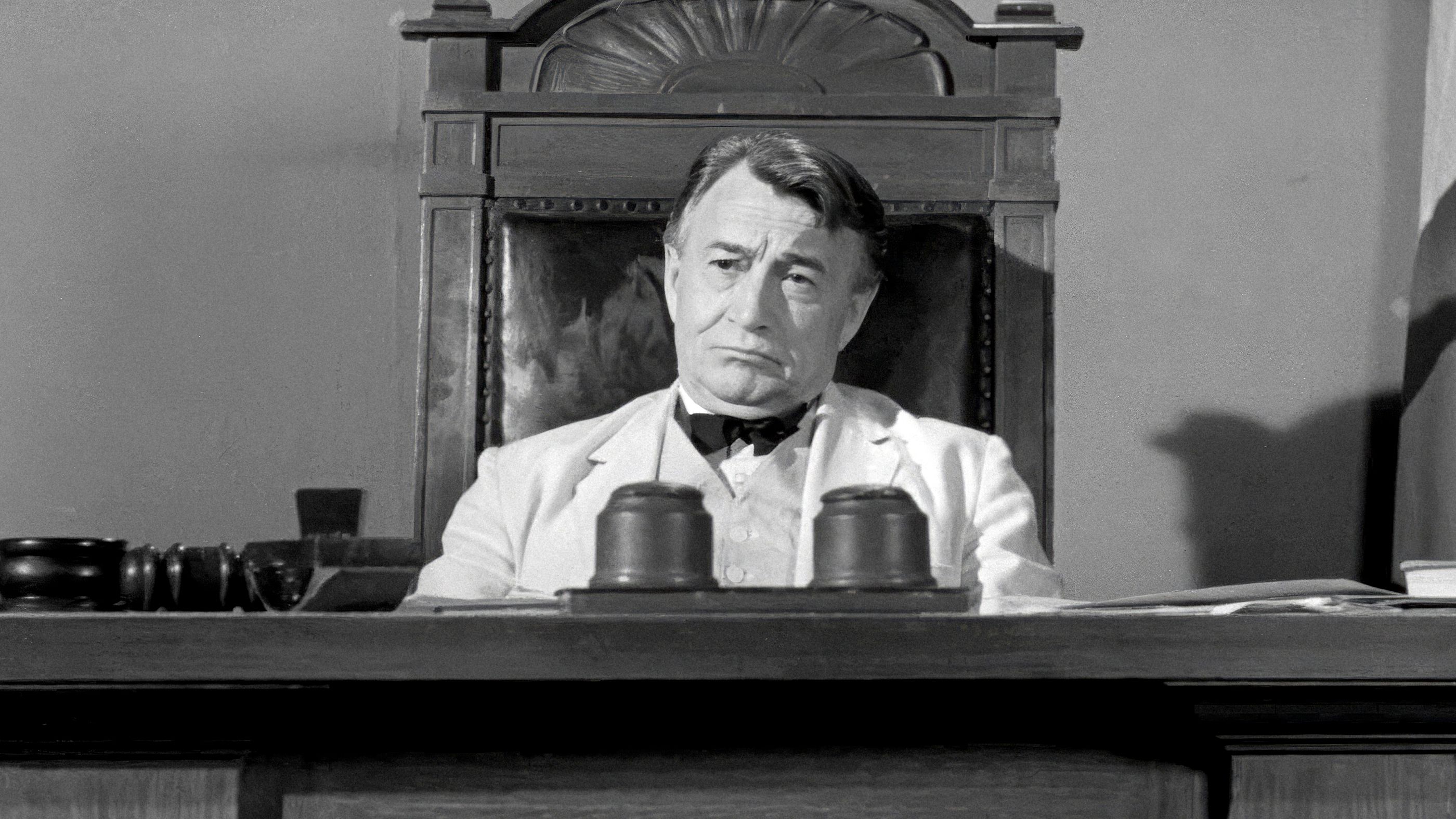
To Kill A Mockingbird is one of the best films of the ‘60s and a perfect adaptation of the novel that replicates many of the passages word-for-word. Although there is a lot to recommend about the film, it is best remembered for the performance by Gregory Peck as Atticus Finch, which both won the Academy Award for Best Actor and was ranked by the American Film Institute as the best movie hero of all-time (beating out Indiana Jones and James Bond).
To Kill A Mockingbird is a powerful coming-of-age story that dovetails into a riveting courtroom drama, with Finch’s final testimony serving as one of the greatest pieces of acting within cinematic history. It says a lot about the film’s lasting power that there hasn’t really been another attempt to readapt To Kill A Mockingbird for the big screen ever since, as perfection can’t be topped.
2 ‘The Color Purple’ (1985)

The Color Purple was a bold film that marked a change of pace for Steven Spielberg, who was trying to be taken seriously after being dinged as a “populist” filmmaker by many of his critics. Although modern critics might dispute the idea of a white filmmaker taking on such an important African-American story, the reality of the situation was that Spielberg was the only filmmaker powerful enough to bring the novel to life in a respectful way, and used the assistance of both Oprah Winfrey and Quincy Jones to ensure that it was authentic as possible. That it was Jones who composed the score, and not John Williams, signified just how much Spielberg was willing to alter his style for the sake of doing the material justice.
The Color Purple features one of the best performances of the ‘80s from Whoopi Goldberg, who became a star overnight. It is a film that has aged well, as most of Spielberg’s work does, because of the singularity of the craftsmanship and the strength of the entire ensemble, including Danny Glover in one of his most underrated performances. Although at the time the film made (negative) headlines for getting eleven Academy Award nominations and losing them all, in hindsight it has aged far better than the year’s actual Best Picture winner, Out of Africa. It’s a film that continues to age well, particularly when compared to the disappointing 2026 musical remake that failed to capture the same complex emotionality and certainly did not become a popular culture juggernaut in the same way that Spielberg’s classic had.
1 ‘The Age of Innocence’ (1993)

The Age of Innocence is a film that no one expected Martin Scorsese to make because it was released right after both Goodfellas (his most celebrated film) and Cape Fear (which was his biggest hit up until that point). Taking a swerve to make a period costume drama wasn’t in the cards, but Scorsese’s love of New York City extended beyond simply making gangster dramas. The Age of Innocence is a thrilling exploration of how wealth can become a cultural prison in which love is denied, and it was critical in being the first of Scorsese’s collaborations with the great Daniel Day-Lewis before they reunited for another New York drama with Gangs of New York. It also featured a standout performance by Winona Ryder, who earned an Academy Award nomination for Best Supporting Actress, which proved that she had graduated into more mature roles after being a popular child star.
The Age of Innocence is also interesting in that it is one of the only one of Scorsese’s films that he personally penned the screenplay for, which has only happened occasionally. Scorsese clearly took the responsibilities seriously, and the result is one of his most underrated films ever, and one that should be used as an example whenever someone makes the ridiculous complaint that he “only makes gangster films.
KioskNews shows a cleaned-up reading view extracted from the publisher’s page — the original always lives on their site, not ours.