Dirt cheap: welcome to the delightful Queensland town that can’t seem to give land away
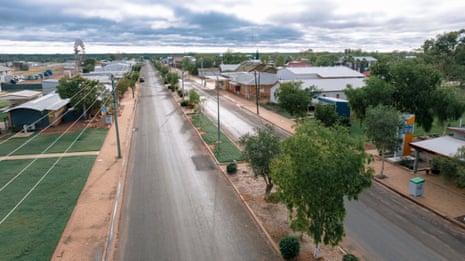
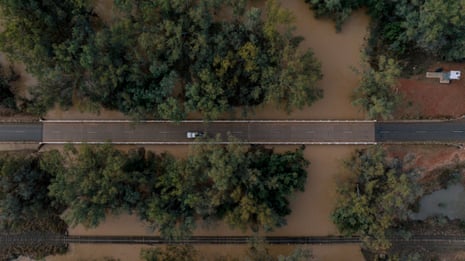
Out the swing doors of either of this town’s two pubs, past the old railway tracks and the one-strip airport, vast plains stretch beyond all horizons. Tin-roofed houses perch on blocks of red dirt and bore-fed lawn near the banks of the broad Bulloo River. The Bulloo is dry most of the year but for clay-coloured billabongs lined by coolabah trees, until it bursts its banks with monsoonal flood waters that drain to ephemeral inland lakes.
Welcome to Quilpie, nearly 1,000km west of Brisbane.

Australia is in the grips of a housing crisis but here in the heart of the outback, this little opal town last week announced “its biggest ever land release”. Seeking to expand its tiny population of just over 500 people, the local council is giving away 62 new residential lots along with a $20,000 grant for those who build a home. But this is not the council’s first attempt at jump-starting its housing market.
When the Quilpie Shire first launched a “free land” giveaway in 2021, within days they generated hundreds of inquiries and headlines across the world. In the end, six blocks of around 1,000 square metres were taken up. The catch? Buyers would be required to build a new house and live there for at least six months.
Free or dirt-cheap land and property giveaways are not unique to outback Australia. From Italy’s €1 houses to Japan’s zero yen akiyas to various “Homesteading 2.0” acts across small-town America, various schemes have captured headlines in their attempts to reverse long-term population drift.
With a median age of 42, a golf course, a bowls club and a welcoming community, on paper Quilpie seems an attractive prospect for anyone struggling to break into the market. Not one but two pubs isn’t bad for a town with the population size of a few apartment blocks.
The then shire council CEO Justin Hancock tempered expectations by telling the national broadcaster in 2021 that if it led to five homes being built in two years, he would consider it a “huge success”.
By this modest target, it failed. Five years on, the metrics are inverted. Two homes have been built.
Had the architects of the Quilpie plan a poster family in mind, it must surely have been the Stennetts.
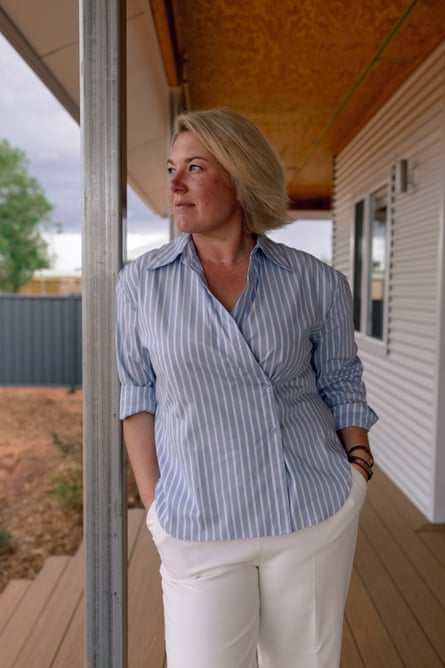
Heather and Matt Stennett snapped up one of the blocks in 2023, after upping sticks from their rental in the Brisbane suburb of Spring Mountain with their four-year-old twin sons. They established a construction company, with ambitions to literally build the neighbourhood up around them. Their family quickly found a home in the community.
“We love it here,” Heather says. “The boys, they’re on motorbikes and horses and fishing and camping. Everyone knows each other. It’s a fantastic community.”
Their vision of a house-building company in Quilpie, however, has “kind of changed”. Because in building their own home, the Stennetts have experienced just how prohibitively expensive it can be to build “out west”.
First, there’s the price to attract labour – and compete with Fifo mining rates. Then there’s the “ridiculous” cost of supplying materials. Not only did the Stennetts build their own home, they bought a prime mover and a trailer and ran freight themselves. Construction costs and materials have shot up across the country since the start of the Covid-19 pandemic, but in Quilpie, more than 950km from the nearest port, those costs have become crippling prohibitive.
“Had we not built it ourselves, and we’d actually paid someone at the going rate, it would have cost us about $1.2m to build our house,” Heather says.
The Stennetts have since pivoted their operations from purely residential builds to primarily commercial and government projects. They also offer “hybrid modular” flat-pack houses tailored to local conditions, including concrete-free foundations that cut out a significant expense.
Heather says this option is “looking really promising”. It was one floated this year as a potential solution to house prospective childcare workers unable to find accommodation. But Heather says significant “challenges” to those chasing the Australian dream remain.
“It’s not a situation where someone can [buy a cheap] block of land and then get a house on it and live happily ever after,” she says. “There is a requirement to have savings … and be a bit flexible with what you want.”
If the Stennetts are the marketable face of Quilpie’s “free land” scheme, it has also been associated with a far more unconventional one.
So-called robot sex expert Prof Adrian Cheok reportedly bought two blocks in 2023 – one for him and his family, the other for his “best friend”: former far-right Queensland senator Fraser Anning.
Despite telling the national broadcaster he was “100% serious” about swapping his homes in Tokyo and Adelaide for Quilpie three years ago, Cheok has since sold at least one of those blocks. The Stennetts were the buyers. Do they plan on building on it?
“No, no absolutely not,” Heather says. “We just wanted more land for the kids to set up motorbike tracks and things like that.”
‘What the hell have I done?’
Australia’s history of block giveaways is long and chequered. One scheme that did deliver on its promise of new homes, though, was in Jandowae.
About 130km up the Warrego Highway from Toowoomba in southern Queensland’s fertile Darling Downs, Jandowae launched a bold bid to revive its fortunes in 2001 by giving away residential blocks for just $1.
Annette Purcival and her husband Norm were living in the New South Wales coastal town of Woy Woy at the time, at a loss after the home they built for themselves in their 20s burned in a bushfire.
“We had to start again in our 40s,” says Norm.
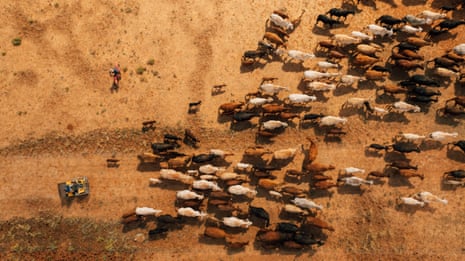
For the Purcivals, Jandowae proved an opportunity to rebuild their life. They bought a $1 block and borrowed a bus to live in while they built a shed. Then lived in the shed while they built a house. All up, it took about two years to make their home.
Meanwhile, a neighbourhood mushroomed up around them. “All our neighbours, in every direction, were [$1] blockies,” Norm says.
Among them was the couple’s eldest daughter, Lauren. Then a single mother, Lauren was living with her parents when they headed north. “I was just 21, just had this baby, I had no idea what I was doing,” she says. So she followed suit. Lauren’s first thought upon arriving in Jandowae a few weeks after she bought a block was: “What the hell have I done?”
Eventually she did an online owner builder course, got a rental in town and chipped away at her vacant land. Lauren saved enough for a small mortgage, met the love of her life and had another son.
It took Lauren and her family 12 years to build their first house. They sold it 18 months ago and bought an acreage closer to Toowoomba, and to Norm and Annette. “Raising those two boys in that little country town was probably the best thing I could have done,” she says.
Both are young men with good trades now, the proud mother says. Her youngest in particular is “a very country boy”, she says. “He’s got a mullet, an old LandCruiser and a work ethic.
“All because I had taken a leap of faith and basically paid a dollar for a bit of dirt in the middle of nowhere,” she says.
Do these places have the right to exist?
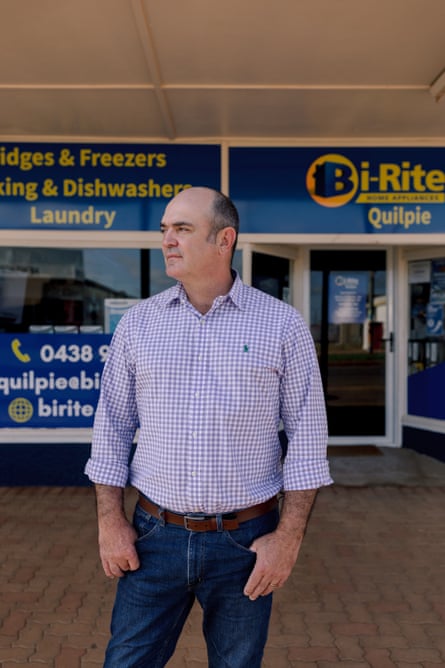
Quilpie’s mayor, Ben Hall, admits that in the short term its unlikely his town can mirror Jandowea. “I’d like everyone to come and build [on the new blocks] tomorrow,” he says. “But I’m a realist.”
Prior to the land giveaway that drew the Stennetts, Hall says, there hadn’t been a new home built in Quilpie in at least 15 years. Rather than 100 people arriving in the short term, he says, even 20 would have “a massive impact on the percentile growth of our community”.
“So let’s be realistic about it,” he says. “Two homes in Quilpie is a great move forward.”
State MP Robbie Katter says it is not just the tyranny of distance and the price of materials and labour that has crippled outback homebuilding, but also a kind of “postcode discrimination”.
Before he represented the western Queensland seat of Traeger, Katter spent 15 years as a property valuer, often travelling out to remote towns like Bedourie, Boulia and Quilpie. He would be tasked with assessing the mortgage security on loan applications to build new homes.
Katter says he would be often unable to point to other recent sales, as required, and when he could they would be at a fraction of the loan being sought. So even if he believed that someone would buy a new home for say, $400,000 in Bedourie or Quilpie, he could not point to evidence in the market – because no bank would finance it in the first place.
“There is … a burning question in there that is never really asked,” Katter says. “Do we think these places have the right to exist in the future – do we want them to exist?”
Katter wears a wide-brimmed leather hat, advocates for firearms and is against abortion and coal royalties. Yet his solution to this circular logic that restricts private funding of new homes in the outback harkens back to the tradition of agrarian socialism. “I’ve always advocated that one of the best policies to address this all is a government bank,” he says.
University of Queensland Associate Prof Elin Charles-Edwards agrees that most of Australia’s remote towns require government intervention far beyond the scope of local councils to reverse dwindling populations. Land giveaway schemes may achieve some success, but usually only “at a pretty small scale”.
The Queensland Centre for Population Research director has studied the massive rural to urban internal migrations that have swept through countries around the world. She has also observed more recent counter migrations – but only to “a selected sort of regional destinations”. Places that are still “within touching distance” of customers or family, of hospitals, high schools and “urban services”. Places such as those around Toowoomba.
So how do the Quilpies turn back the clock against decades of a “steady withdrawal of services”? How will the young families living there now convince their own kids to stick around?
“To see a massive transformation of Australia’s settlement geography, the big driver would have to be transport and connectivity,” the population geographer says.
In the absence of this kind of investment, despite the housing crisis, she says, for most people, there is “sort of a line” beyond which they can or will not cross.
Something reckless
At the start of last year Connor Menzies and Chelsea Bony abandoned the dream of buying a home in their neighbourhood in Brisbane’s southern fringe. Both working and in their 20s, they decided to do “something reckless” instead and headed off with a ute and camper trailer “to see what else was out there”.
Their first stop was to visit Connor’s brother and his family in Quilpie. Flood waters trapped them in town. They witnessed the community rally around one another. Something in them flipped. Within months, both had landed a job in town. Connor, a qualified builder, got a job with the shire, who put them up in a council house. It was, he says, “pretty seamless”.
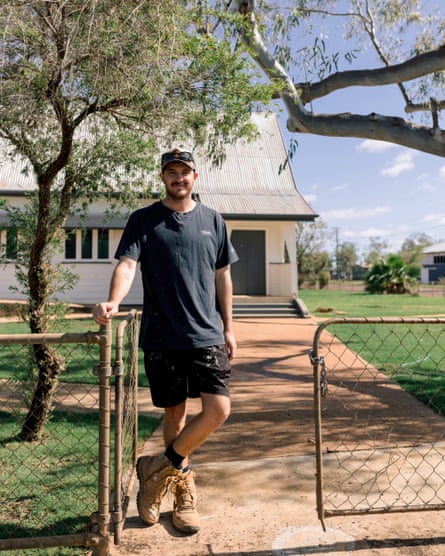
After visiting the pair at Christmas, Chelsea’s parents decided to follow them out west. They bought an old church and subdivided it, to allow the older and younger couple their own homes – after Connor has renovated the old buildings.
Almost a year after heading more than 900km inland, Connor says he and his fiancee have no regrets. “If you can get past the heat and the flies, this is a wonderful place to live.”
KioskNews shows a cleaned-up reading view extracted from the publisher’s page — the original always lives on their site, not ours.