'Treat Yourself' Economy: How Instant Gratification Is Changing Spending

For years, personal finance advice has revolved around a familiar message: spend wisely, save regularly, and avoid unnecessary purchases. But consumer behaviour is changing. Increasingly, people are willing to spend on things that make them happy in the moment, even if they were not part of their original budget.
Be it ordering food instead of cooking, booking a last-minute weekend getaway, buying an expensive coffee or upgrading to a premium experience, small indulgences are becoming a regular part of everyday spending. What was once considered an occasional treat is now turning into a lifestyle choice.
This shift is giving rise to what can be called the 'Treat Yourself' economy, where spending is driven not just by necessity but also by emotions, experiences and the desire for instant gratification.
Also Read | Layoffs Are Rising In Tech, But These Skills Are Helping People Unlock Better Pay
Digital platforms have made this transition even faster. One-click payments, quick-commerce apps, food delivery platforms, easy consumer credit and buy-now-pay-later (BNPL) options have reduced the time between wanting something and actually purchasing it. Consumers no longer have to think too much before making smaller purchases.
Social media has added another layer to this behaviour. Constant exposure to new restaurants, travel destinations, gadgets, fashion trends and premium experiences creates a desire to participate. A purchase that might once have been carefully planned can now happen on impulse.
According to Mukesh Pandey, Founder and Managing Director of Rupyaapaisa.com, the 'Treat Yourself' economy reflects a fundamental change in how consumers approach spending. "The 'Treat Yourself' economy is representative of an important change in consumer behaviour, where the agenda for spending has shifted from being utility-oriented to being based on the desire for instant gratification," Pandey told NDTV.
He pointed out that digitalisation has opened up new opportunities for consumers to spend on everything from food delivery and short trips to premium experiences and everyday luxuries.
The trend is particularly visible among younger consumers. For them, spending is increasingly linked to mood, personal identity and experiences. Buying something is no longer always about owning a product. It can also be about feeling good, celebrating a moment or rewarding oneself after a difficult week.
Pandey believes this behaviour should not automatically be seen as irresponsible spending. Consumers are becoming more conscious of experiences and personal well-being. Small pleasures can offer a sense of happiness amid increasingly demanding lifestyles. However, there is a difference between spending on something that genuinely adds value to life and repeatedly buying things simply for temporary satisfaction.
When Small Purchases Become A Big Financial Burden
The biggest concern with the 'Treat Yourself' economy is not necessarily the cost of an individual purchase. It is the frequency of these transactions.
An occasional Rs 300 coffee or a Rs 500 food delivery order may not appear significant. But when such purchases happen several times a week, the monthly bill can become surprisingly large.
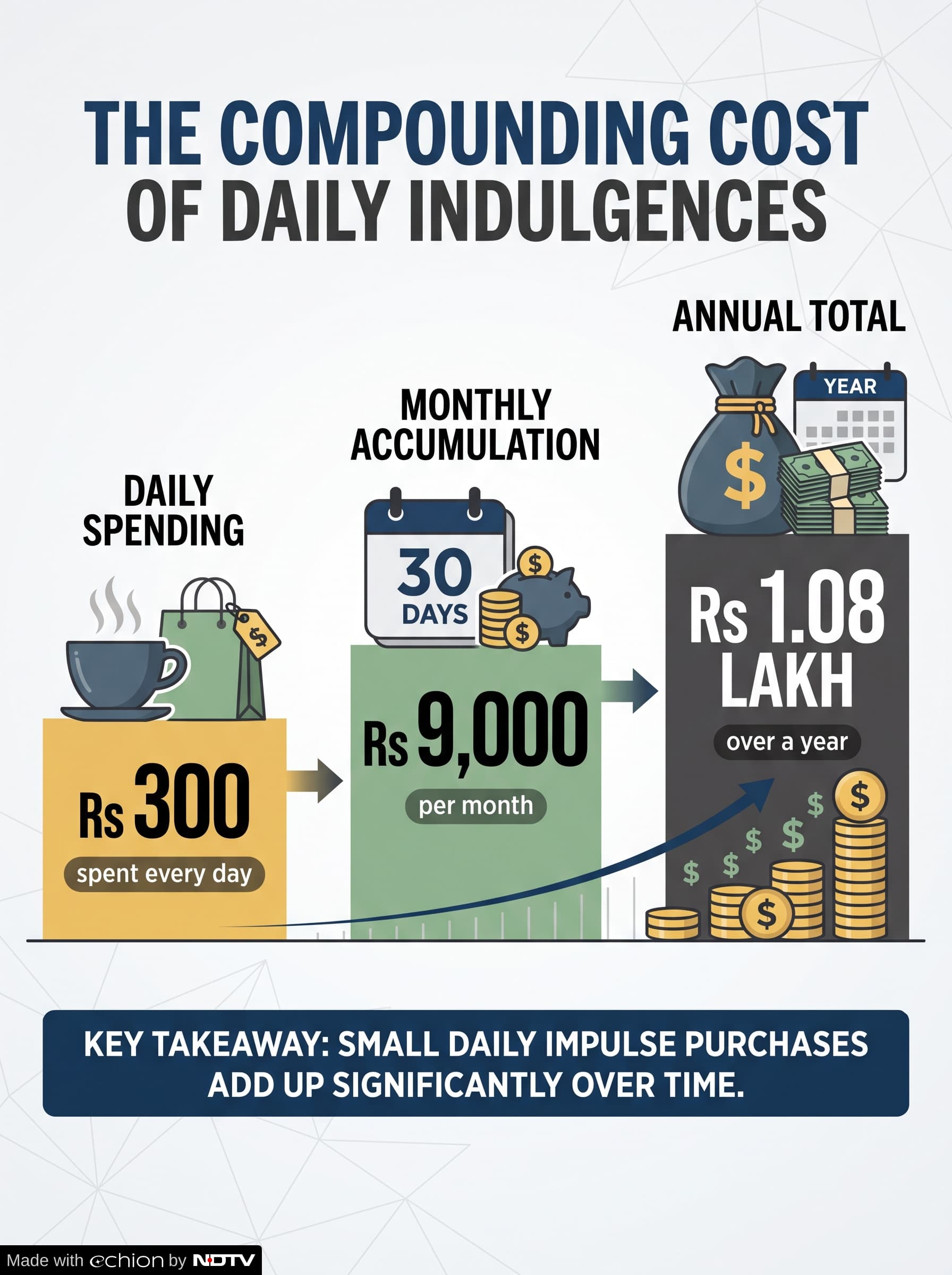
The problem becomes more complicated when easy credit enters the picture. BNPL facilities and credit cards can make purchases feel more affordable because consumers do not have to pay the entire amount immediately. But delaying payment does not reduce the actual cost of a purchase.
Repeatedly using credit for non-essential expenses can also leave consumers with multiple small dues. Individually, these may seem manageable. Together, they can put pressure on monthly cash flows and savings.
Pandey cautioned that easy access to credit can create an illusion of affordability. Consumers need to distinguish between purchases that genuinely improve their lives and those driven purely by impulse.
How To Enjoy Small Luxuries Without Hurting Your Finances
The answer is not to stop spending on things that bring happiness. A personal finance plan that leaves no room for enjoyment can be difficult to sustain. The challenge is to ensure that instant gratification does not come at the cost of long-term financial goals.
One way to do this is to create a separate monthly budget for discretionary spending. This could cover eating out, shopping, entertainment, short trips and other personal indulgences. Once the allocation is exhausted, additional purchases can wait until the next month.
Consumers should also be careful about using credit for lifestyle expenses. If a purchase cannot be comfortably paid for from the monthly income, postponing it may be a better decision than splitting it into instalments.
Another useful habit is to introduce a short waiting period before making non-essential purchases. Waiting for 24 hours before buying something can help distinguish between a genuine requirement and a temporary urge.
Pandey said the important thing is for consumers to understand which purchases have a meaningful impact on their lives and which are simply impulse-driven. Today's happiness should not become tomorrow's financial stress.
KioskNews shows a cleaned-up reading view extracted from the publisher’s page — the original always lives on their site, not ours.