With ‘Kissinger moment’ over, US and China urged to foster new ‘bridge builders’
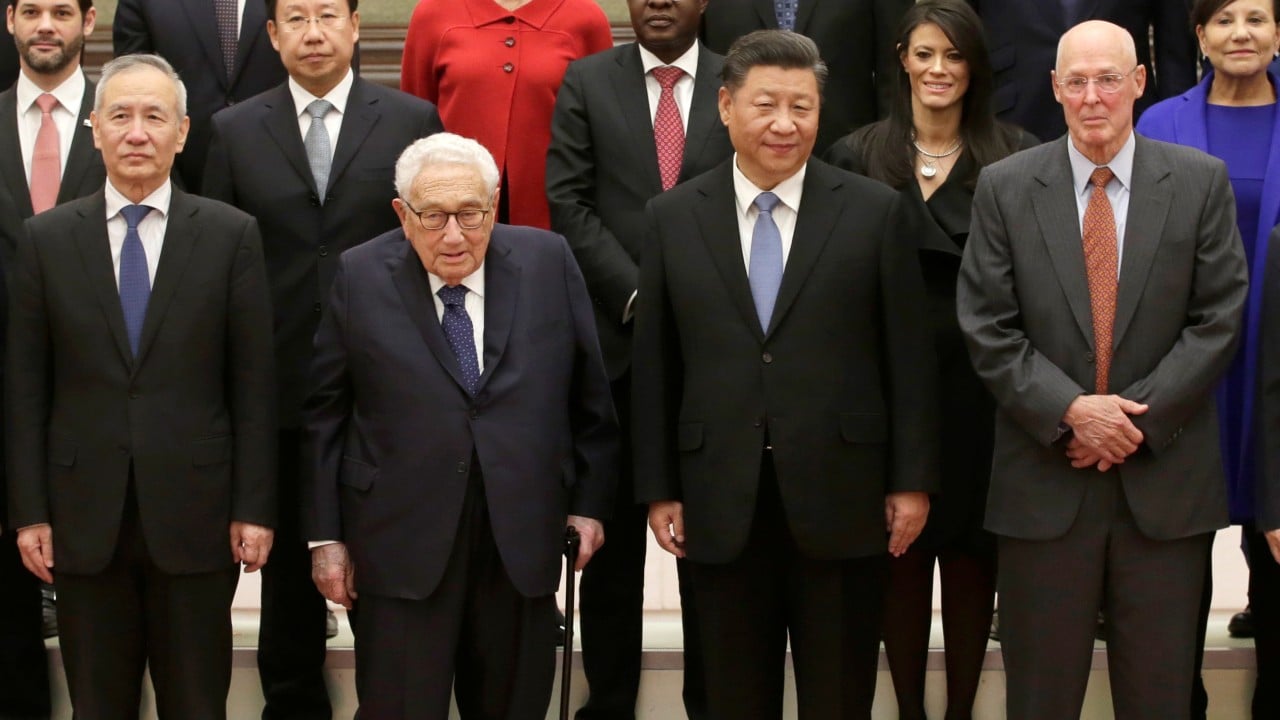
Beijing and Washington have been urged to foster a new generation of talent to bridge gaps between the countries and strengthen people-to-people exchanges amid growing frictions and concerns about a lack of China expertise in the US.
Academics and experts from the two countries gathered in Shanghai on Friday at the China-US Intergenerational Dialogue 2026. They were seeking a new crop of “bridge builders” like Henry Kissinger, the former US secretary of state who helped to engineer the historic rapprochement between Washington and Beijing during the Cold War.
Kissinger – then US national security adviser – made a secret visit to China in 1971 that paved the way for president Richard Nixon’s landmark trip the following year.
The American diplomat remained an active figure in China-US relations, visiting more than 100 times until his death in November 2023. His last trip to China was in July 2023, when he met President Xi Jinping, who welcomed him as an “old friend” of the Chinese people.
02:34
China treats ‘old friend’ Kissinger to a lavish lunch
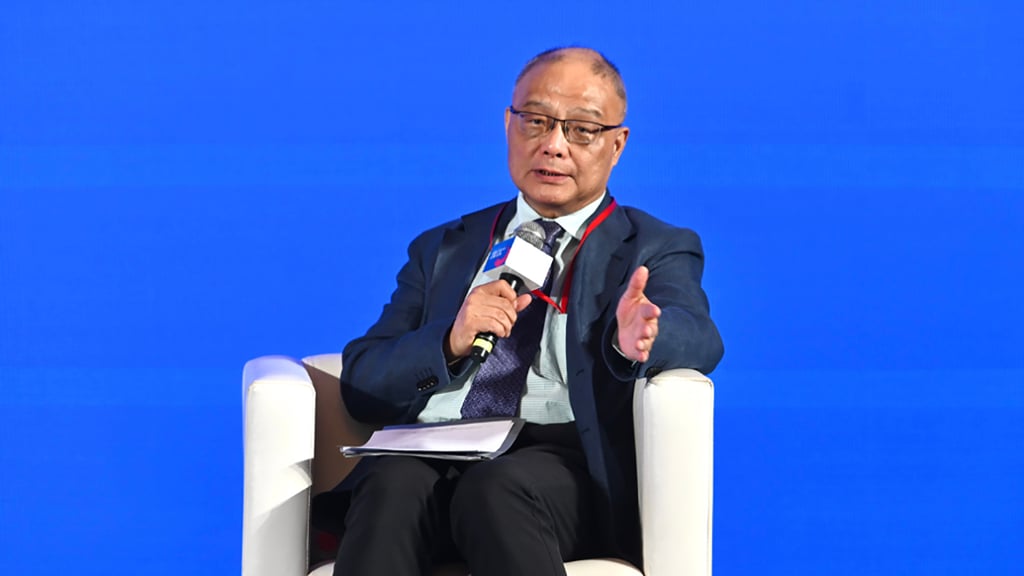
Zhu Feng, a professor of international relations at Nanjing University, said “the Kissinger moment has passed” for China-US relations, but his legacy remained “a profound asset for us to hold in our heart”.
Zhu said the shared strategic interests that brought the two sides together more than five decades ago were unlikely to re-emerge, as those had been driven largely by Washington’s “geopolitical calculation” during the Cold War, when the Soviet Union presented a common challenge for both countries.
“Today, China-US relations are really getting into some sort of new trajectory,” Zhu said, noting that the two countries still viewed each other as strategic competitors.
He called for the two sides to explore new areas of cooperation and build fresh momentum in bilateral ties to create what he described as an “unstoppable linkage” between the two countries.
China-US relations have entered a period of fragile stabilisation after two summits between their presidents this year, after prolonged tensions over trade, technology and security. But frictions remain over tech and security.
People-to-people exchanges between China and the US have faced growing obstacles in recent years as geopolitical tensions, tighter visa scrutiny and national security concerns affect students, scholars and travellers.
Qian Jing, vice-president of the New York-based Asia Society, urged universities, think tanks, media and companies to provide more room and better protections for those who enable people-to-people exchanges between the United States and China.
“A scientist, a journalist, a student participating in an international exchange for the first time needs to know what can be done, how they should do it and who they should seek help from if there is a problem,” Qian said via a video message. “It needs both the US and China to have clear and predictable rules and institutional support.”
“We need to have successors of these bridge builders, and they need to be protected,” Qian said, adding that engagement must continue even though differences would never disappear.
SCMP Plus is a new premium news platform that gives you an
all-inclusive edge to stay ahead on China news.
To access our exclusive content you’ll need to subscribe.
Already a subscriber?
LOG IN
US-China educational exchanges have faced mounting pressure amid growing national security concerns and funding cuts, with several long-standing American government-backed programmes remaining suspended in China and universities facing growing scrutiny over their Chinese partnerships.
The number of American students studying in China for academic credit plunged 85 per cent from 11,639 during the 2018-19 academic year to just 1,749 in 2023-24, according to a report from the Institute of International Education released last November.
Meanwhile, the number of Chinese students in the US fell nearly 29 per cent from its 2019-20 peak to about 266,000 in 2024-25, the report said.
John Quelch, executive vice-chancellor of Duke Kunshan University, said that people needed confidence that they could travel safely between the two countries, receive fair treatment and return home without unexpected obstacles.
“The people who pass across the bridge have to feel confident the bridge is safe to pass across, and know how to pass across the bridge in an orderly, polite, respectful manner,” Quelch said at the Friday event.
“They do not want impediments, unexpected visa restrictions or other bottlenecks. Otherwise, they are afraid to cross.”
KioskNews shows a cleaned-up reading view extracted from the publisher’s page — the original always lives on their site, not ours.