Ilocos Norte: In Marcoses’ ‘political project,’ loyalty is not blind

- In the 2025 elections, the Marcos family secured all major political positions in Ilocos Norte, including governor, vice governor, and congressional seats, continuing their long-standing political dominance since 1991.
- Despite a history of human rights violations during Ferdinand E. Marcos's dictatorship, many Ilocanos maintain strong support for the Marcos dynasty, influenced by a 'loyalist mentality' that intertwines regional identity with political allegiance.
- While the Marcoses face minimal opposition, particularly from younger voters who challenge the traditional loyalty, their political influence remains robust, as evidenced by consistently high vote margins in local and national elections.
This is AI-generated. Read the article for full context. Report any errors.
Editor’s note: This is part of a Rappler series on Filipino families that have held political power for generations. The series traces how they built their influence, where it is strongest, and how it has endured over time. Each profile examines family ties, political networks, business interests, and roles in local and national government.
In the 2025 elections, the following emerged as winners in Ilocos Norte, home province of President Ferdinand “Bongbong” Marcos Jr.:
- Governor: Cecilia Araneta Marcos, the President’s first cousin-in-law;
- Vice governor: Matthew Marcos Manotoc, the President’s nephew, son of Senator Imee Marcos;
- 1st District congressman: Sandro Marcos, presidential son;
- 2nd District congressman: Angelo Marcos Barba, the President’s first cousin;
- Laoag City (the capital) mayor: Bryan Alcid, a Marcos-backed construction contractor.
In fact, every local election since they returned in 1991, the Marcoses managed to crawl back to power in their erstwhile bailiwick, and never stopped. In 1992, Bongbong Marcos was elected representative of the 2nd District of Ilocos Norte. In 2022, he became Philippine president. In between, the Marcoses eventually sidelined the Fariñases and began to capture every major post in the province. Proof: look at the list above.
Easily then, political observers revert to the old, tired characterization of Ilocanos as blind “Marcos loyalists.” The province’s political dynamics, including voter behavior, is not as simple as that.
Not spared of human rights violations
Under the dictatorship of president Ferdinand E. Marcos, father of the incumbent, the Human Rights Violations Victims’ Memorial Commission (HRVVMC) recognized over 11,000 complaints from 75,000 complainants. Amnesty International, a human rights organization founded in 1961, estimated that 70,000 people were imprisoned, 34,000 were tortured, and over 3,200 were killed from 1972 to 1981.
Ilocos Norte, Marcos Sr.’s birthplace, was not spared during his brutal regime. Using the HRVVMC database, University of the Philippines professors Reidan Pawilen and Berniemack Arellano created an atrocity map of Northern Luzon. It showed 22 recognized victims in Ilocos Norte, excluding other degrees of abuses, such as involuntary exile or torture.
Still, the province remained largely supportive of the Marcos dynasty. And it’s not just regionalism, according to social science scholars.
A “loyalist mentality” is a significant factor in understanding steadfast support for political figures, according to Athena Charanne Presto, a doctoral researcher in sociology at the Australian National University (ANU). This is the argument in her research, “A Loyalist Mentality? Political Support, Collective Memory, and Social Media Engagement with the Marcos Legacy.”
Presto defines “loyalist mentality” as a “deeply ingrained regional loyalty and collective identity that often translates into unwavering political support.” She said the “loyalist mentality” is much deeper than regionalism, because it is not the kind of support based solely on material gains; it is also what resonates with voters on an emotional level.
ALSO ON RAPPLER
- [OPINION] Marcos necropolitics and alternative politics in Ilocos Norte
- Abadillas, Ablans, Naluptas of Ilocos Norte: Where are they now?
- It’s Marcos versus Marcos in Ilocos Norte
- All’s well in Marcos family? Remains to be seen in 2025 polls
Another study conducted by social scientists from the United Kingdom corroborates this definition, stating that loyalism can be seen as an “expression of culture, reflection of national identity, and the articulation of shared social and economic experiences.”
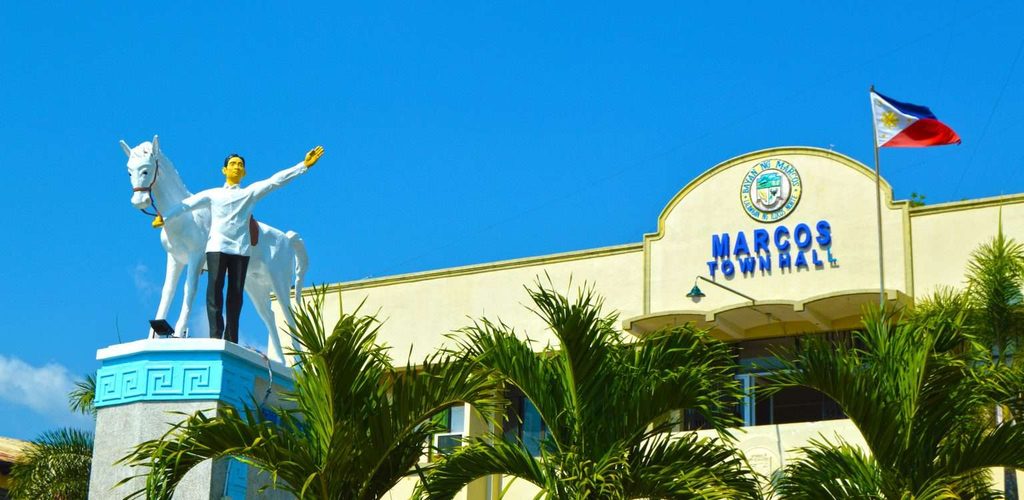
Leonardo Tejano, an assistant professor at the Mariano Marcos State University, described Ilocos Norte as a “Marcos political project” in an article in the Northern Dispatch.
Tejano explained how the Marcos name became synonymous with progress in Ilocos Norte when Marcos Sr. provided land and livestock to the people, and established a university and hospital to enable Ilocanos to acquire education and healthcare without migrating to Manila.
“When everything around you serves as a constant reminder of the Marcos family, it becomes difficult to separate their legacy from your own life,” Tejano said in the article.
ANU’s Presto argued that Ilocano voters, through their collective memory of the Marcos regime in the Ilocos region, are not necessarily “uninformed or manipulated.” Instead, their political choices are made within their social context, where “supporting the Marcoses is framed as a marker of true Ilocano identity, while criticizing the Marcoses is often seen as a betrayal.”
“This means that while some Ilokanos may unquestioningly support the Marcoses, others consciously do so because it aligns with their community values or identity,” Presto said in her research article.
Political project in progress
When the Marcoses were elected to the House of Representatives and the Senate, they pushed for bills that would benefit their home province.
During Marcos Jr.’s term as Ilocos Norte representative in the 9th Congress (from 1992 to 1995) and the 14th Congress (from 2007 to 2010), he authored several local bills, seeking infrastructure development, to establish a special economic and free port zone, and to build an agro-industrial high school.
Imee, who was first elected to the Lower House as the 2nd District representative of Ilocos Norte in 1998 and served three consecutive terms until 2007, also authored several local bills seeking local infrastructure in the province.
When elected as senator in the 15th Congress and 16th Congress (from 2010 to 2016), Marcos Jr. helped transform the province into a major tourist destination in Northern Luzon through infrastructure development.
Marcos Jr. filed Senate Bill No. 3201, which sought to create the Laoag International Port Authority to promote international air traffic in the region.
When he was governor in 2005, the province attracted the private enterprise that built the Bangui Windmills that has since been highlighted as a showcase of infrastructure and alternative energy development.
Under his presidency now, Marcos Jr. continues to support Ilocos Norte through government aid for farmers and fisherfolk and during typhoons. Support for recovery under the COVID-19 pandemic continues as well.
Increasing support
Tejano said Ilocanos believe in “what they can physically witness.” Thus, the continued support for the Marcos dynasty.
“This belief helps explain why no Ilocano, regardless of political leanings, can deny witnessing the Marcoses’ care, or ‘panangilala.’ This perception of care has benefited various members of the family as they pursued government positions,” Tejano said.
This support is further amplified when Ilocos Norte consistently ranks among the “least poor provinces” in the Ilocos Region. According to poverty incidence data from the Philippine Statistics Authority, poverty incidence in Ilocos Norte gradually decreased, from 17.7% in 2006 to just 0.5 in 2023.
As poverty was alleviated, the Marcoses won local elections with either increasing or stable margins:
- In 2016, Imee Marcos won as the lone nominee for Ilocos Norte governor, gaining 278,298 votes.
- In 2019, Matthew Marcos Manotoc and Mariano Marcos II won as governor and vice governor, respectively. Both gained over 200,000 votes compared to their counterparts, who only gained around 15,000 to 28,000 votes.
- In 2022, Manotoc was reelected as governor with 261,000 votes against former longtime governor Rudy Fariñas, who only gained 94,000 votes.
- In 2025, Cecilia Marcos won the governorship with 299,000 votes, against Joy Butay’s 14,000, while Manotoc ran unopposed for the vice governor position.
Marcos Jr. also saw increased support in the province for his campaign for national positions. In 2016, when he ran for vice president, he gained 297,853 votes or 78.63% of the voter population. In 2022, when he ran for president, he gained 356,221 votes, or 82.06% of the voter population.
Small opposition
Despite overwhelming success in Ilocos Norte, the Marcoses are not without opposition, however small.
In the 2016 national elections, former vice president Leni Robredo only gained 3,696 votes, or 0.98% of the voter population. Despite losing again in the 2022 presidential elections, her vote count still increased to 10,043, or 2.31% of the voter population.
Some dissenters in the province publicly campaigned against the Marcoses during the 2022 presidential elections, especially targeting new youth voters.
Presto noted that, during the conduct of her study, a small number of young Ilocanos actively contested the “loyalist mentality” primarily due to access to education outside of the Ilocos Region and exposure to diverse perspectives mainly through political platforms on social media.
As poll numbers showed, however, this “awan ti Solid North” (there is no Solid North) sentiment has yet to gain ground in the Marcos family’s stronghold. – Rappler.com
Jose Emmanuel Thayer is a fourth-year BA Communication student at the University of the Philippines Baguio and an alumnus of the Aries Rufo Journalism Fellowship of Rappler for 2025.
KioskNews shows a cleaned-up reading view extracted from the publisher’s page — the original always lives on their site, not ours.