"Witch Hunt": Congress MP On His Dismissal As Professor From JNU
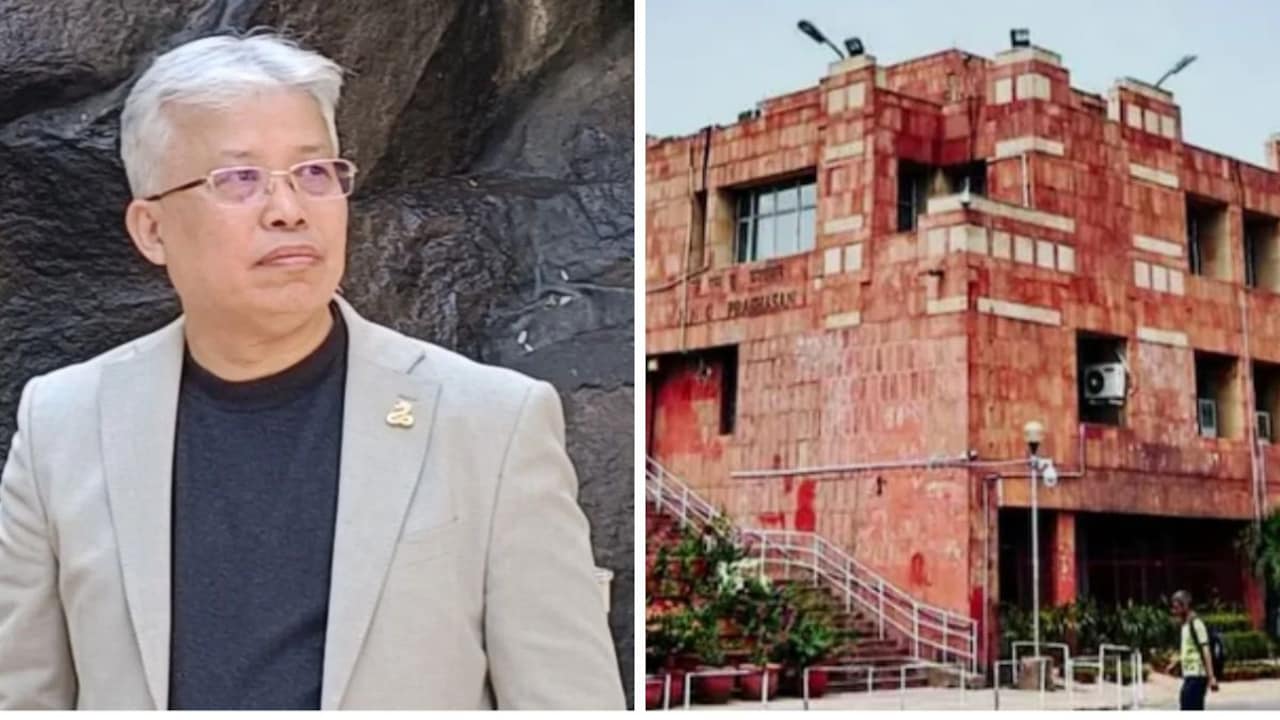
Congress Manipur MP Angomcha Bimol Akoijam, who was sacked as a professor from Jawaharlal Nehru University (JNU), has termed his dismissal a "witch hunt", alleging violations of statutory confidentiality requirements and university regulations, and warned BJP and RSS leaders in Manipur against what he described as politically motivated attempts to silence him.
Addressing the media in the presence of Congress workers, including Th Brinda and Popilal, Akoijam questioned the procedure followed by JNU in dismissing him from service with immediate effect on October 9 and announced that he would challenge the decision through legal and political means. At the centre of his objection was his assertion that he had not received the Internal Committee's inquiry report or its findings and recommendations before learning about the dismissal through media reports.
He questioned how the university could issue the order without providing him access to the findings and an opportunity to challenge them under the prescribed regulations.
The dismissal order, signed by JNU Vice-Chancellor Santishree D Pandit, cited the Internal Committee's findings and recommendation of major punishment, stating that the university had followed due process. Akoijam disputed the procedure, arguing that the sequence of events raised serious questions about compliance with the university's regulations.
Questions timing of dismissal, appeal procedure
Akoijam said the Internal Committee's findings and recommendations were reportedly submitted on October 9, the same day the university issued the dismissal order. He questioned whether the prescribed procedure had been followed, particularly regarding the opportunity available to the parties to appeal against the committee's findings.
Referring to Regulation 8 of JNU's rules, he said the regulations provide 30 days for the parties concerned to appeal against the findings and recommendations. He also cited Rule 8(6), which, according to his interpretation, provides for a show-cause notice requiring a response within 10 days in the circumstances covered by the provision.
Akoijam maintained that he had not received the inquiry report and questioned how he could exercise his right to challenge the findings without access to the relevant documents.
His allegations raised questions about the procedure followed in the dismissal, although the precise application of the cited provisions and whether they were violated would require examination of the university regulations and the complete inquiry record.
Alleges breach of POSH Act confidentiality
The Congress MP also accused the JNU vice-chancellor of breaching Section 16 of the Sexual Harassment of Women at Workplace (Prevention, Prohibition and Redressal) Act, 2013, which provides for confidentiality concerning the identities of the parties and information relating to proceedings under the law.
Questioning what he described as selective application of the law, Akoijam argued that the confidentiality requirement should apply equally to everyone, irrespective of their identity or background.
He also criticised media coverage of the allegations, referring to what he described as a trial by media and questioning the conduct of outlets that reported on the matter before, in his account, the prescribed process had been completed.
The allegation against the vice-chancellor remains Akoijam's claim, and its legal validity would depend on the circumstances of the disclosure and the applicable provisions.
Akoijam escalated his criticism by directly warning BJP and RSS leaders in Manipur to "back off", alleging that political opponents were exploiting the controversy to intimidate him.
He accused the BJP-led government of undermining constitutional institutions and the rule of law, describing the action against him as politically motivated. He also questioned the conduct of political leaders in Manipur whom he accused of following directions from Delhi rather than standing up for the interests of the state.
Distinguishing between those who yield to political pressure and those who defend Manipur's interests, Akoijam said he would not "retreat in the face of what he described as injustice".
He said he had received messages of support from former students across the country, from Kashmir to Kanyakumari, and maintained that people from different backgrounds recognised what he described as a witch hunt.
Invoking his late parents and the traditional deity Ibudou Pakhangba, Akoijam denied the allegations against him and said he was prepared to fight the matter through lawful means.
"I will fight till I die for my land and my people," he said, insisting that the controversy would not force him to back down.
Akoijam further said he would pursue legal remedies and contest the matter politically, expressing confidence that the alleged procedural violations would be exposed in the days ahead.
The dismissal has brought together two distinct disputes: JNU's disciplinary action following an inquiry into sexual harassment allegations, and Akoijam's challenge to the procedure adopted by the university and the disclosure of his identity.
While JNU's order states that the dismissal followed due process and was based on the Internal Committee's findings, Akoijam maintained that he was not provided the report and that the prescribed safeguards were not followed. The immediate question is whether the university's actions complied with the applicable rules.
KioskNews shows a cleaned-up reading view extracted from the publisher’s page — the original always lives on their site, not ours.