Fourteen years after genocide, Yazidis may see stability in Iraq - analysis

Fourteen years after ISIS invaded the Sinjar region of Iraq and targeted the Yazidi minority in a genocidal campaign, the group may finally see some stability in northern Iraq.
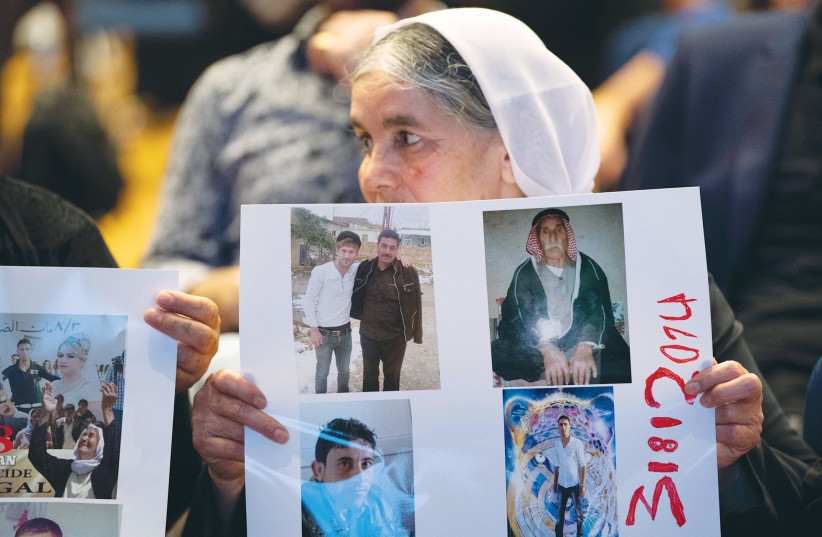
Yazidis are one of several minority groups in Iraq, and most live in the Sinjar region of northern Iraq and in some towns in the Kurdistan Regional Government’s governorates. In August 2014, ISIS invaded Sinjar and massacred thousands of Yazidis. ISIS also kidnapped thousands and sold them into slavery. It was one of the most horrific crimes that ISIS committed.
Sinjar, which Yazidis also call Shingal, was liberated in November of 2015. Sinjar refers to the entire region, including a long mountain and a city with the same name. Numerous Yazidi villages and towns to the north and south of the mountain.
During the genocide, many Yazidis fled to the mountain, and many were also saved by the Kurdish People’s Protection Units (YPG) in Syria, who helped open a corridor for them to flee. Since then, many of the group have lived in IDP camps in the Kurdistan region or slowly made their way back to poverty-stricken livelihoods in Sinjar.
The Yazidi region was largely abandoned by Iraq. In 2017, the Kurdish Peshmerga, who had helped liberate the area from ISIS, were pushed out by Iraqi federal troops and by Iranian-backed militias of the Popular Mobilization Forces. The Yazidis remained, but they were divided.
Some Yazidis targeted by Turkey after joining PKK-linked group
Some Yazidis had joined the Shingal Protection Units (YBS), a group that is linked to the Kurdistan Workers’ Party (PKK). As such, the Yazidis found themselves in the crosshairs of Turkey, which views the PKK as a terrorist group.
Now things are changing again. Rudaw, a Kurdish media outlet, noted on October 24 that Murad Ismael, a Yazidi activist and Iraqi lawmaker who has spent many years seeking to help his community, said on Saturday that members of the Shingal Protection Units (YBS) would be integrated into several Iraqi security institutions, including the police, rejecting suggestions that all fighters would join the Shiite-dominated Popular Mobilization Forces (PMF).
This matters because, for several weeks, there has been talk of a deal between Baghdad and the YBS to integrate the group into the security forces. The goal of Iraq is to rein in all the independent militias in Iraq. This also includes disarming the Iranian-backed militias. However, those groups are stronger and more influential. The Yazidis are a group that Iraq feels it can work with and possibly have a model for integrating an independent armed group into the security forces.
However, there is some controversy about how the group might be integrated. If it is integrated as a brigade within the PMF, concerns remain about how it might operate. The report indicates that the YBS integration will be more multi-layered.
Ismael's remarks followed Iraqi Prime Minister Ali al-Zaidi's Friday interview with state media, where the leader said the YBS would be integrated into the PMF as part of an agreement to restore federal control over Shingal (Sinjar), Rudaw reported.
“The integration process is not limited to the PMF, only a portion of it, with part of it being integrated into the police and part of it into other security structures,” said Ismael of the plan.
It now remains to be seen how quickly the integration process will happen. Ismael appeared to indicate that it will begin in the next several days. Iraq has said it wants the other militias integrated by June 2027. According to Rudaw, Ismael said he expected members of the YBS's all-female force to be integrated into the Iraqi Interior Ministry's Community Police.
This matters because it mirrors a similar process on the other side of the border with the Syrian Democratic Forces. This mostly Kurdish group is integrating into the Syrian security forces. As a result, a swath of Iraq and Syria is now changing. This will allow stability and investment on both sides of the border.
Region in dire need of investment
The region is badly in need of investment. This includes basic infrastructure, as well as schools and other facilities. It has been badly neglected for many years. Part of the neglect has been due to the uncertainty of what might come next. Yazidis have been wary of returning in the past unless they feel that ISIS and its supporters will be prevented from returning.
At the same time, the different armed groups, such as the YBS and also Iranian-backed militias, make it impossible for investment to flow into the area, or for people to feel that stability will return.
The decision by Baghdad to seek to normalize the situation in Sinjar and work on security is important. The issue now will be whether the details of the agreement lead to change. Iraq has successfully revived Mosul, which is between Sinjar and the Kurdistan Region. That large city of 2 million people was once occupied by ISIS until it was liberated in 2017. Now, it’s possible that the stability in Mosul might radiate out to Sinjar.
KioskNews shows a cleaned-up reading view extracted from the publisher’s page — the original always lives on their site, not ours.