[Korea travels] In dakgalbi’s hometown of Chuncheon, tradition meets reinvention
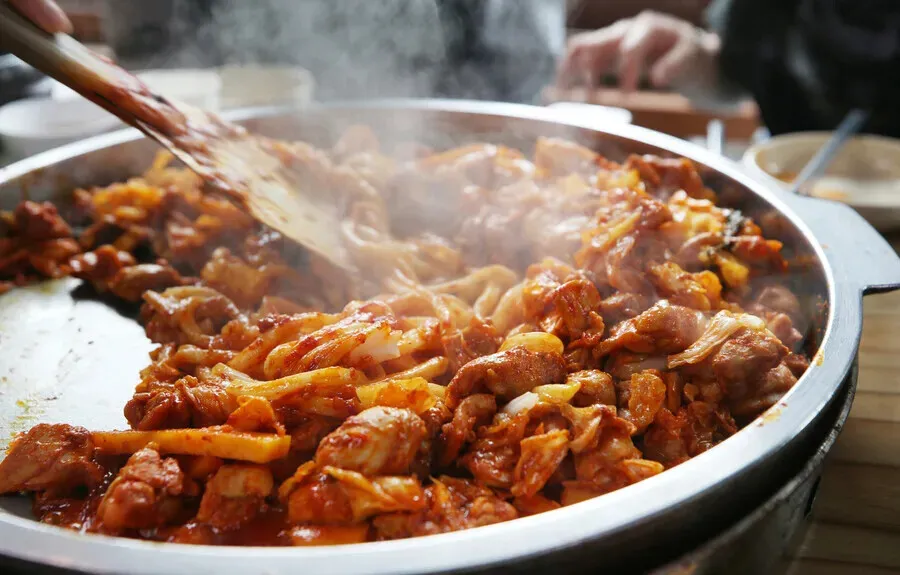
Chuncheon’s signature dish, dakgalbi, has continued to evolve since it first emerged in the 1960s. This version is cooked without added oil at Chuncheon Aeni Dakgalbi. (Park Mee-hyang/Hankyoreh)
In Chuncheon, Gangwon Province, dakgalbi is more than a local specialty — it is part of the city’s identity. But how did this mix of chicken, cabbage and gochujang become a beloved Korean classic in this eastern city?
A research report commissioned by Chuncheon City Hall titled “Chuncheon Dakgalbi: Identity and Industrialization” dates the history of the famous dish back to the 1960s. It originated as a seasoned dish made by carefully preparing chicken, which was cheaper than pork or beef, and grilling it on a wire grill atop a well-maintained coal briquette drum.
Accounts on its origins vary. One theory says that while residents of Hongcheon County in the province were the first consumers, the chickens were sourced from Chuncheon. The story goes that workers at a poultry farm in Chuncheon decided to try making dakgalbi themselves after seeing the simple recipe.
Another origin claim says an elderly man from the Jeolla provinces invented the dish.
In an interview with the Hankyoreh, Woo Jung-dong, who was secretary-general of the city’s dakgalbi association in 2010, said, “Dweji galbi (pork ribs) were a hit in Chuncheon during the 1960s, but the rising price of pork led to the emergence of dakgalbi, which was marinated in the same seasoning as dweji galbi.”
What is indisputable is that the dish was created by the late Kim Yeong-seok and his wife. A 2011 report in the daily Kangwon Domin Ilbo said Kim, who moved from Damyang County, South Jeolla Province, to Chuncheon and ran a pork rib restaurant, invented the dish when the price of pork rose. He filleted whole chickens, marinated them in gochujang chili paste and grilled them over charcoal.
Wonjo Sutbul Dakbulgogi (Original Charcoal-grilled Chicken Bulgogi), the restaurant he opened in 1961, still runs today. The operators are known to be former employees, not Kim’s relatives.
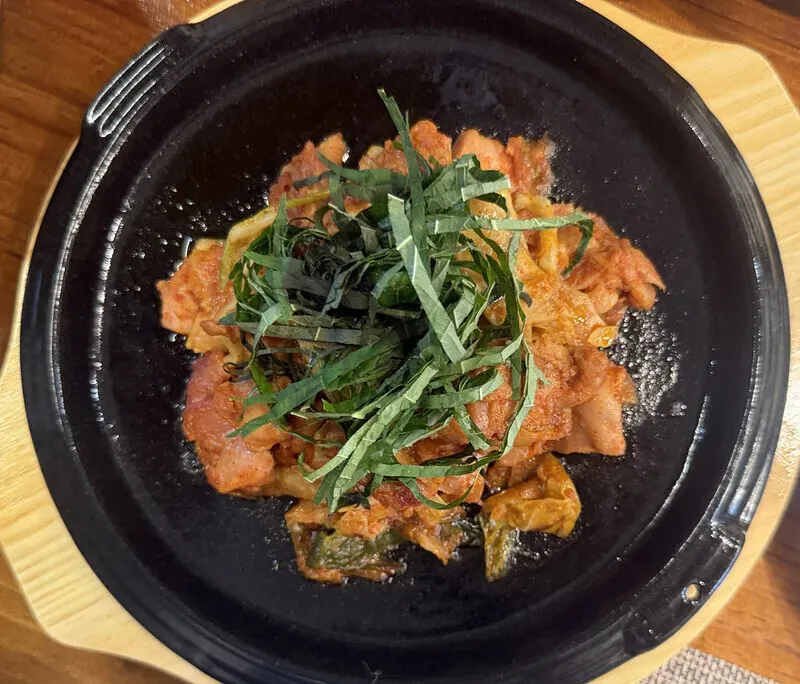
At Hosoo Brewery, where most dishes, including oi-seon (stuffed cucumber), are delicately seasoned, even the dakgalbi is mild rather than spicy. (Park Mee-hyang/Hankyoreh)
In the 1970s, the traditional wire grill was replaced by a cast-iron griddle. The dish evolved into a bigger meal with the addition of ingredients like vegetables and enjoyed rising popularity in Chuncheon among two cash-strapped groups: soldiers on leave and university students.
Parties marking the start and end of a semester shifted their favored venue from Chinese restaurants to dakgalbi joints. This meant more rushed to open restaurants serving this dish, leading to its fame today.
In the bustling downtown Chuncheon neighborhood of Joyang lies Myeongdong Dakgalbi Street. Sinbuk Dakgalbi Street emerged in the nearby town of Sinbuk as more travelers began using National Highway 46 during the 1980s and ‘90s.
Onui Dakgalbi Street is close to key transit hubs like the highway Chuncheon Interchange, Namchuncheon Station and Chuncheon Intercity Bus Terminal. This area is expected to form part of the K-Chicken Belt, a project spearheaded by the Ministry of Agriculture, Food and Rural Affairs and the Korean Food Promotion Institute, alongside other notable spots such as Kyochon 1991 Road in Gumi, South Gyeongsang Province; Suwon Chicken Street in Suwon, Gyeonggi Province; and the traditional gueom chicken of Jeju Island made with chicken native to Jeju.
Changing times drive the evolution of food, as even gochujang began to take on a different character at each establishment. Among the vegetables added to dakgalbi, cabbage has a firm grip on the top spot. Rice cakes and sweet potatoes remain popular staples since their introduction in the early 1990s.
So what does dakgalbi look like today? A food entrepreneur has one answer.
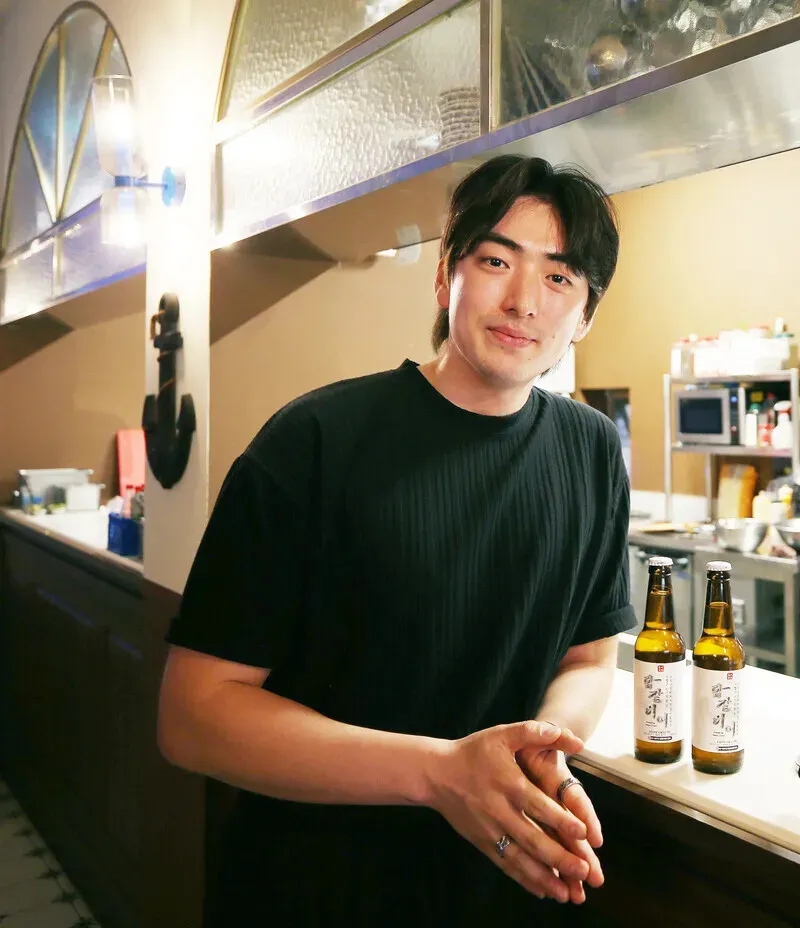
Ahn Hong-jun, founder of Gamja Island Chuncheon. (Park Mee-hyang/Hankyoreh)
“I want to create a gourmet experience based on agricultural produce from the area,” Ahn Hong-joon, 31, told the Hankyoreh on Sept. 10 at his craft beer startup Gamja Island in Chuncheon’s Toegye neighborhood.
Around 2021, he launched the business with his college pal Kim Kyu-hyun after being inspired by an entrepreneurship course he took as a student.
The two chose “potato utilization,” referring to a signature ingredient of Gangwon Province, as the theme for their project and named their team “Gamja Island” — gamja, of course, being Korean for spud.
“It’s a name we came up with for fun, but it does have a meaning,” Ahn said. “We compared Gangwon Province to a potato and thought it looked like an island.”
“About 30% of the potatoes produced are discarded because of poor shape and the proportion of those processed is also low,” he added. “We started this venture to make use of these potatoes that would’ve otherwise been thrown away before achieving their value.”
Both partners were both born and raised in Gangwon, thus possessing a deeper understanding of the region than others. They studied brewing techniques and created products with potatoes as the key ingredient such as “potato beer.”
As their brand took off, they launched an agricultural startup. Ranging from games using potatoes to a “potato currency,” the fun initiatives they introduced received high marks from their peers.
Furthermore, pop-up stores they opened at a leading department store in Seoul and in the capital’s trendy Seongsu neighborhood proved to be a great success.
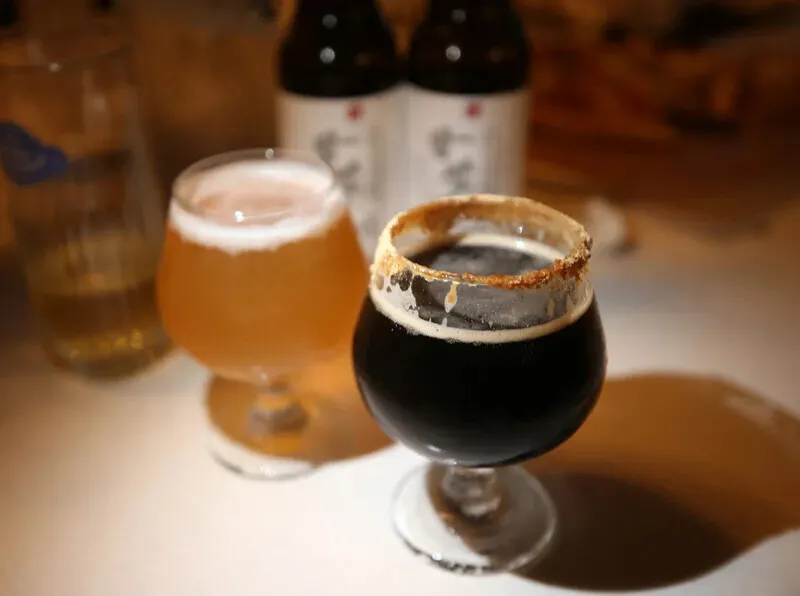
Sweet red bean beer and a variety of other brews sold at Gamja Island Chuncheon. (Park Mee-hyang/Hankyoreh)
While their indigenous agricultural product was initially potatoes, a specialty of their area, they added Chuncheon dakgalbi to broaden the gourmet experience. Their concoctions include a dakgalbi beer to pair perfectly with the dish and dakgalbi pizza.
Their company offers one-of-a-kind beers not available elsewhere like those flavored with corn, carrots, sweet red beans, cherry tomatoes and cucumbers, which are sure to pique curiosity. Dakgalbi-eo (330 ml) has an alcohol by volume content of 4.7% with a moderate body and refreshing taste.
Their dakgalbi pizza is topped with dakgalbi and well-coated in spicy sauce, giving the impression of eating chicken wrapped in bread. Defying the expectation of awkwardness, this combination is amusing, which perhaps is not the ultimate standard in gastronomy but nonetheless an effective hook to draw people.
More fun is found in the building and the cute merchandise it displays. “This used to be a church,” Ahn said. “We did face challenges at first after some questioned why we were selling alcohol in a former church building.”
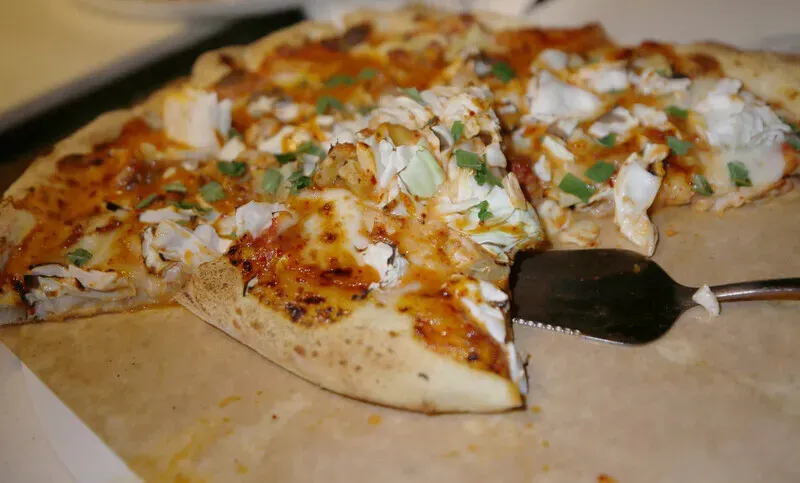
Dakgalbi pizza at Gamja Island Chuncheon, topped with cabbage, spicy dakgalbi sauce and chicken. (Park Mee-hyang/Hankyoreh)
If Gamja Island ignited a revolution in dakgalbi, Chuncheon Ani Dakgalbi opted for a more modest change. This place was originally named Hyunam Makguksu (cold buckwheat noodles) run by Shin Jung-ok, 76, who has been making charcoal-grilled dakgalbi for over half a century.
This restaurant is now run by the founder’s son-in-law. The dakgalbi served here on a large iron griddle is prepared with no extra oil. While most dakgalbi joints in Chuncheon use oil to fry the chicken, this place uses only the moisture from the vegetables.
The owner said, “I wanted to create dakgalbi that’s easy on the stomach.”
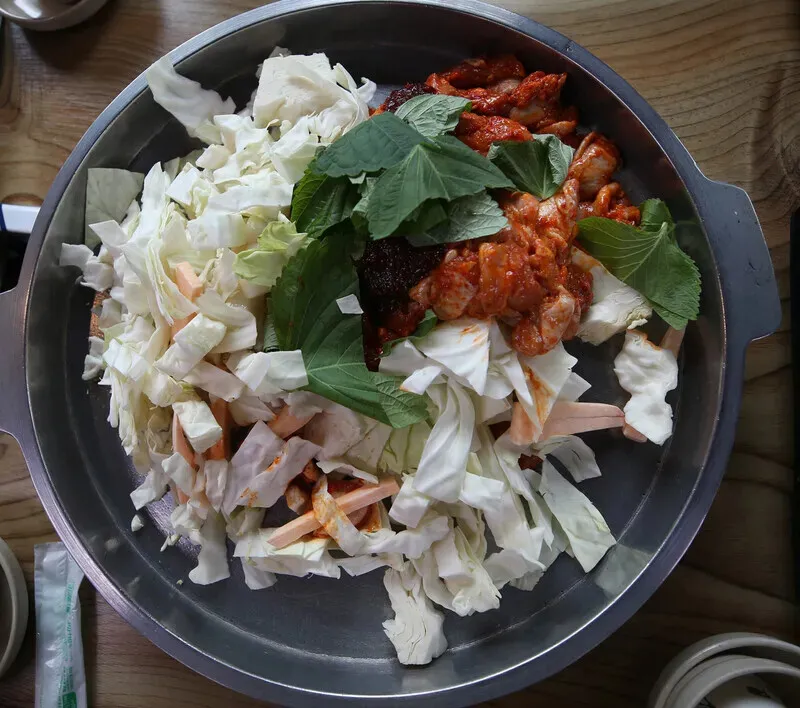
Dakgalbi cooked without added oil at Chuncheon Aeni Dakgalbi. (Park Mee-hyang/Hankyoreh)
Others have used different approaches toward Chuncheon dakgalbi by stressing health over taste. One is Choi Kyung-ja, 57, who runs Hosoo Brewery, which is also a reservation-only restaurant serving Korean cuisine.
She immersed herself in research, perusing historical texts as well as the recently published “Juansang Found in Old Cookbooks,” which sheds light on the culture of juansang, or a traditional table set with alcoholic beverages and accompanying snacks, based on 15 cookbooks of Joseon Dynasty (1392-1910) cuisine.
On Sept. 10, Choi prepared a meal after demonstrating the brewing process, with dishes all crafted from ingredients produced in Chuncheon like steamed eggplant, wheat pancakes, boiled octopus, vegetable-stuffed pumpkin rolls in a reinterpretation of the traditional wolgwachae, or stir-fried zucchini and vegetable dish, jeon (pan-fried fritters), oiseon (stuffed cucumber) and pumpkin flower dumplings.
Dakgalbi was also on the table, though its mild spiciness was a bit puzzling.
“Chuncheon-style dakgalbi is too spicy and intense,” she said, adding that she wanted a version that wasn’t. Every dish she served was light and pure in a true masterclass in simple flavors.
But can a restaurant survive in today’s highly competitive dining market by serving food steamed, tossed or seasoned so lightly? Under her culinary philosophy that “food comes from nature, Choi said she wants to minimize seasoning and salt to allow the natural flavors of the ingredients to shine through.
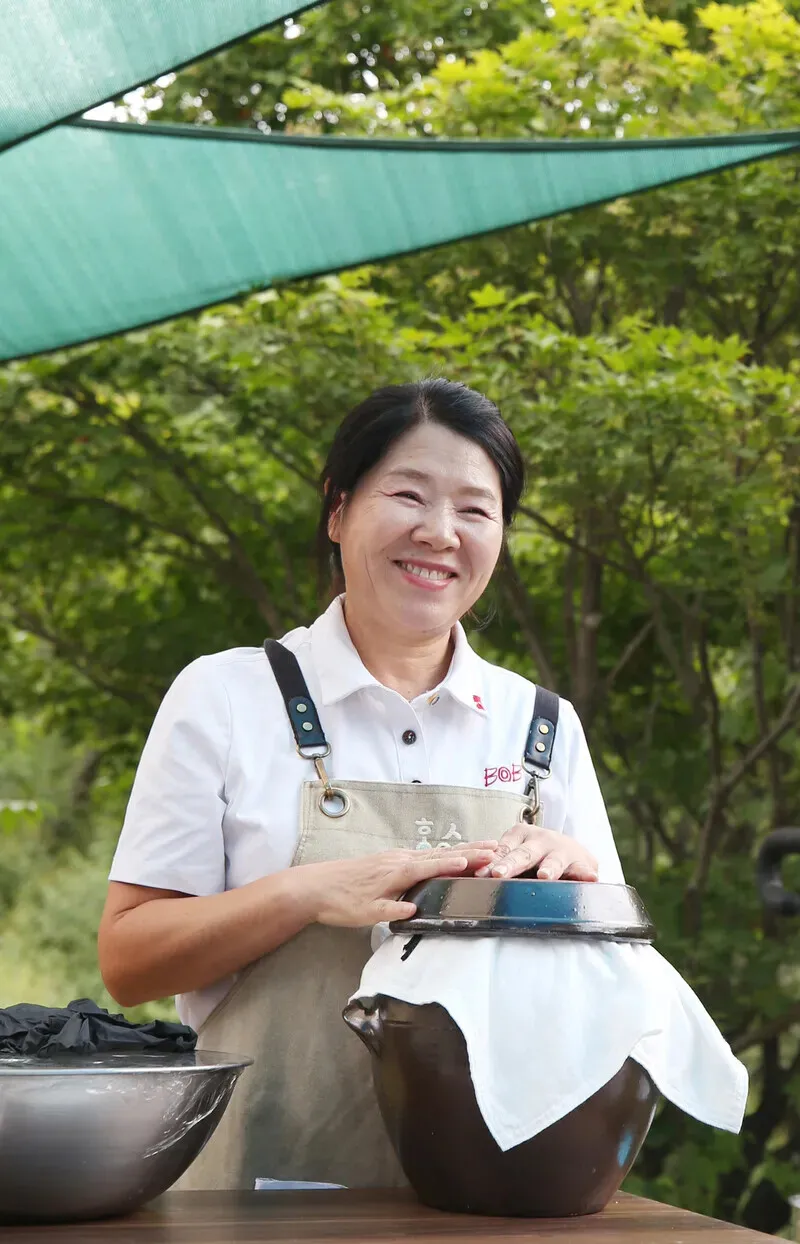
Choi Kyung-ja, owner of Hosoo Brewery, which operates as both a brewery and a reservation-based Korean restaurant. (Park Mee-hyang/Hankyoreh)
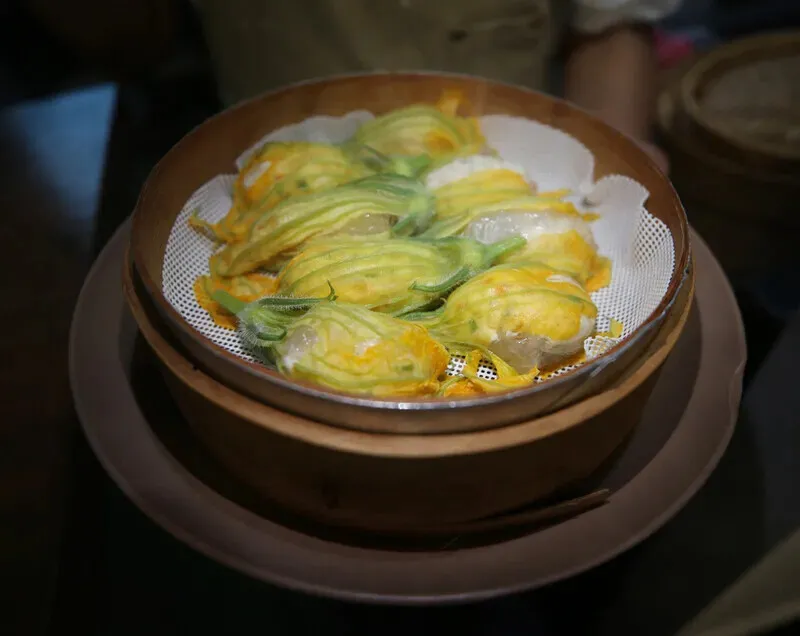
Plump pumpkin flower dumplings at Hosoo Brewery, a house specialty. (Park Mee-hyang/Hankyoreh)
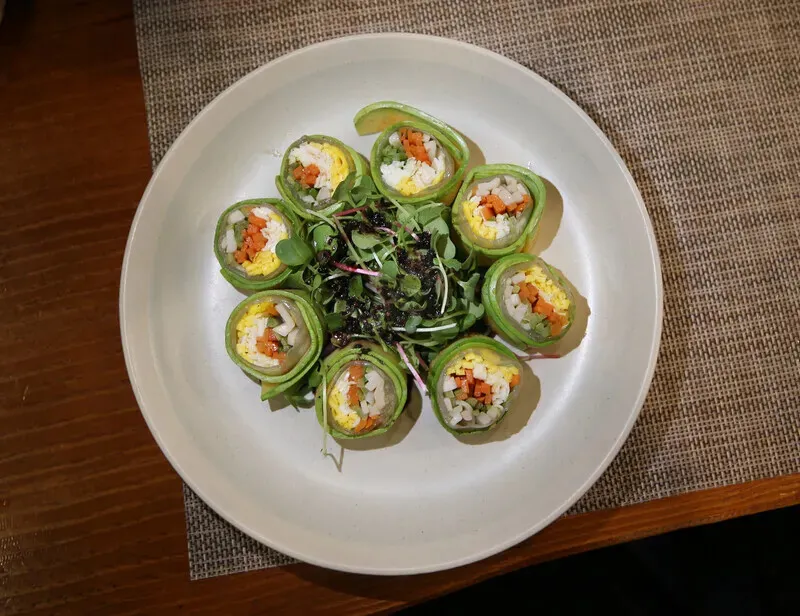
Pumpkin and vegetable rolls at Hosoo Brewery, a modern reinterpretation of wolgwachae, a traditional Korean dish. (Park Mee-hyang/Hankyoreh)
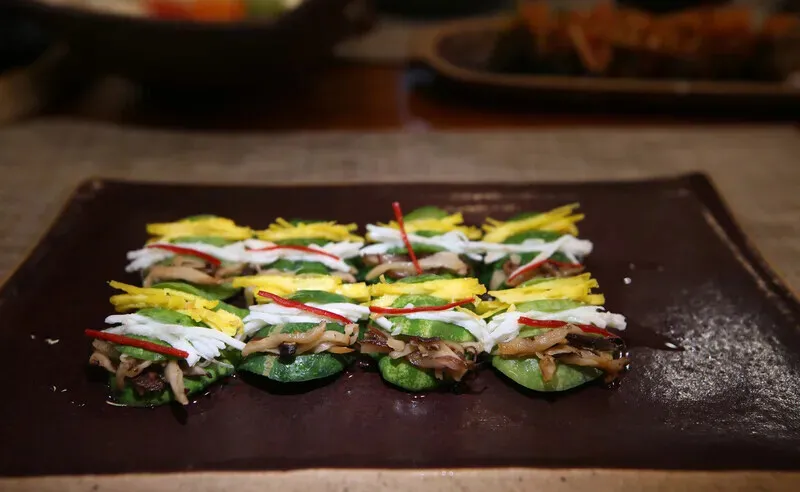
Oi-seon (stuffed cucumber) at Hosoo Brewery. (Park Mee-hyang/Hankyoreh)
Like her, another person has made a brewery the centerpiece of the gourmet travel experience in Chuncheon: Jisiul Brewery CEO Yoo So-young, 58.
Originally a tea expert, she regularly hosts tasting events. She opened one by saying, “Hwa Jeon Il Chwi (花前一醉) means ‘getting tipsy in the presence of flowers.’“
Hwa Jeon Il Chwi is an alcoholic beverage brand she created. Yoo served hwajeon, or traditional flower-topped rice cakes, to complement the drinks. Her brand covers six types of alcoholic beverages like takju (unfiltered rice wine), yakju (refined rice wine) and distilled spirits, with varying rates of alcohol by volume.
Last year, Jisiul was selected for a “visiting brewery” program of the Ministry of Agriculture, Food and Rural Affairs and Korea Agro-Fisheries & Food Trade Corp. The initiative searches for and designates outstanding breweries in the provinces and links them to regional tourism.
Jisiul earned high marks for creating beverages using only rice, water and nuruk (traditional fermentation starter) through time-honored traditional methods.
“After sending all my children off to college, I wanted to give liquor I’d brewed myself as a gift to my father, who loves alcohol,” Yoo said on how she began brewing. She opened a brewery in 2020.
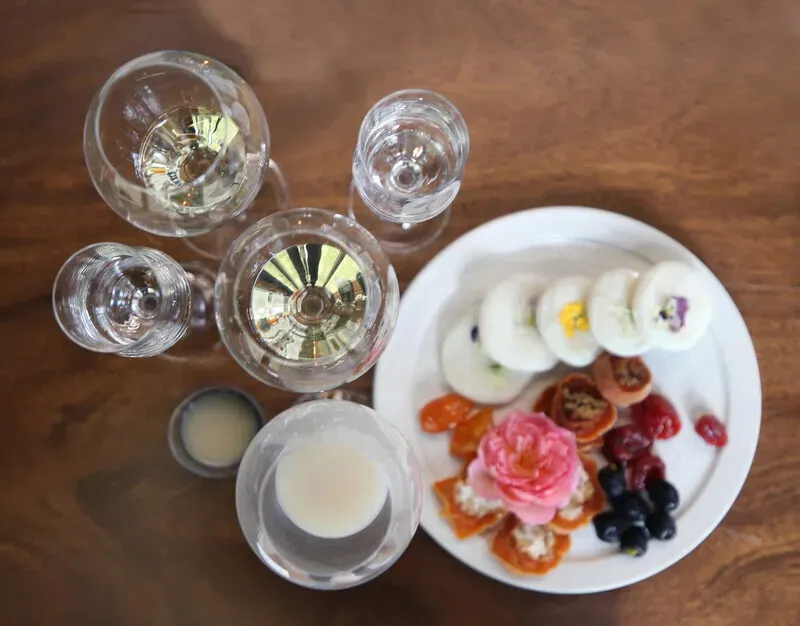
Jisiul Brewery offers tastings of a range of traditional Korean liquors, including yakju (clear rice wine) and takju (unfiltered rice wine), under its Hwajeon Ilchwi brand. (Park Mee-hyang/Hankyoreh)
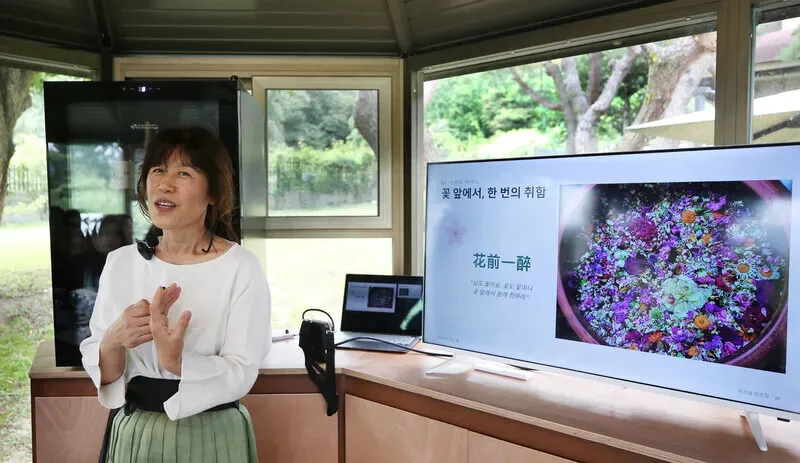
Yoo So-young, owner of Jisiul Brewery, explains the liquors she makes during a tasting session. (Park Mee-hyang/Hankyoreh)
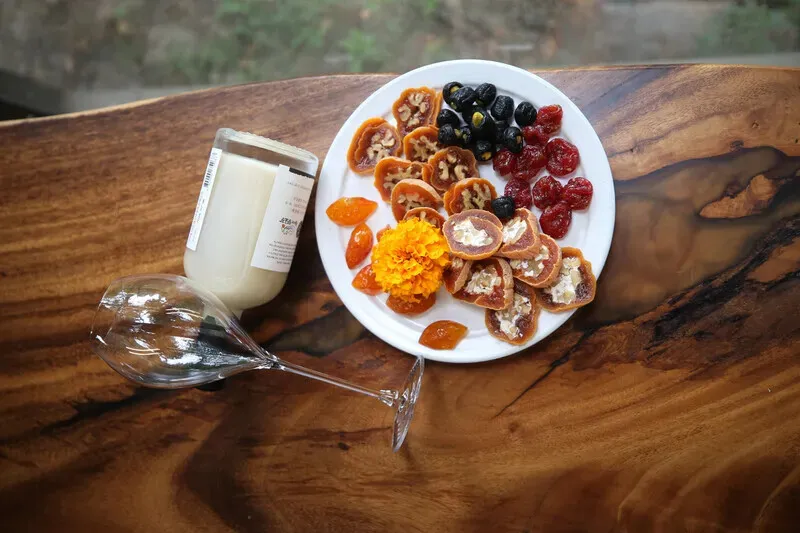
An assortment of traditional Korean jeonggwa (candied fruits and roots) and liquors made by Yoo So-young, owner of Jisiul Brewery. (Park Mee-hyang/Hankyoreh)
Attendees seemed to enjoy themselves while snacking on traditional treats such as candied olives prepared by the host, as well as mingling with others. The true essence of Chuncheon dakgalbi also lies in eating together, as unique gatherings to eat the food are held throughout the city.
Riding Chuncheon-bound train to eat dakgalbi
A new tourism initiative offers visits to Jisiul Brewery, Gamja Island and Hosoo Brewery with a lightly seasoned meal and a reimagined version of Chuncheon dakgalbi in one go.
In collaboration with Chuncheon City Hall, Korail Tourism Development has launched the package tour Chuncheon K-Chicken Belt with two options. Chuncheon Haru Hansang is a single-day trip with five course options.
The package options include Bapsang (a culinary tour featuring Korean dining and local ingredients), Myeonsang (a noodle-focused tour featuring makguksu, or buckwheat noodles), Sulsang (a tour combining Chuncheon’s traditional liquor, dakgalbi and local attractions), Nolsang: Family (hands-on activities such as sweet potato harvesting and dessert making), and Nolsang: Couples and Friends (a date-style itinerary linking Jade Garden, cafes and fusion dakgalbi dishes).
The packages will be available for one day only, on Oct. 16, during the 2026 Chuncheon Makguksu and Dakgalbi Festival. A special ITX-Cheongchun train will also operate for the occasion.
KioskNews shows a cleaned-up reading view extracted from the publisher’s page — the original always lives on their site, not ours.