Forget Black Mirror & Severance, This 16-Episode Masterpiece Nails Existential Sci-Fi


Dhruv is a Lead Writer in Screen Rant's New TV division. He has been consistently contributing to the website for over two years and has written thousands of articles covering streaming trends, movie/TV analysis, and pop culture breakdowns.
Before Screen Rant, he was a Senior Writer for The Cinemaholic, covering everything from anime to television, from reality TV to movies.
After high school, he was on his way to become a Civil Engineer. However, he soon realized that writing was his true calling. As a result, he took a leap and never looked back.
When it comes to delivering pure existential sci-fi, Black Mirror and Severance would probably be considered the top shows from recent years. Given how both sci-fi series are packed with unsettling explorations of reality, identity, and free will, it is hard not to consider them masterpieces. However, there is one relatively obscure but brilliant sci-fi show that takes existentialism to a whole different level.
Created by Craig Silverstein and based on a series of short stories by Ken Liu, Pantheon, on the surface, is a cyberpunk conspiracy thriller. Although it is not as well-known as shows like Black Mirror and Severance, it has a solid cult following and boasts a perfect 100% critical score on Rotten Tomatoes. Its acclaim can partly be attributed to its creative animation style and voice acting.
However, the show's true appeal lies in its portrayal of singularity. In its early moments, it sets up a rather simple story where it unfolds in a world where mind-uploading technology is about to be adopted by the masses. With this story setup, though, the show turns into a mind-bending story about the large existential implications of achieving technological singularity and how it challenges our understanding of everything.
Pantheon Is An Overlooked Existential Sci-Fi Masterpiece

Driven by the "Ship of Theseus" paradox, Pantheon initially explores the horrors of uploading one's consciousness. It shows how even after a person awakens in the cloud with the same memories and quirks as their physical self, they are seemingly nothing like their biological original. With this, it prompts one to question whether human evolution is worth it if it strips away one's humanity.
Almost reminiscent of Severance's innies and outies, Pantheon also explores how a cloned character is completely raised in a simulation to be able to replicate the genius of his original counterpart. This becomes an existential exploration of free will, walking through the character's journey of defining his own moral compass despite being coded to be someone else.
Similar to one of the most harrowing episodes from Black Mirror, "Be Right Back," Pantheon also walks through the story of a grieving daughter and wife. They struggle to process the demise of David Kim. However, when he returns as uploaded intelligence, they are forced to wonder whether he is merely a digital echo of their inability to process their grief.
Pantheon originally premiered on AMC+, but it is now available for streaming on Netflix in the U.S.
In its two-season runtime, Pantheon also does not shy away from expanding its vision to an international geopolitical scale before going completely cosmic with its stakes. It highlights how Uploaded Intelligence is ultimately weaponized by nations, leading to a chilling Cold War. In its final arc, the show takes an existential look at the Simulation hypothesis by exploring the long-term implications of its central ideas.
Before Pantheon's ending credits start rolling, the sci-fi series leaves viewers with many questions surrounding the importance of having a finite life span and the existence of true meaning in the face of uncertainty.
Despite Being Wildly Mind-Bending, Pantheon Feels Realistic
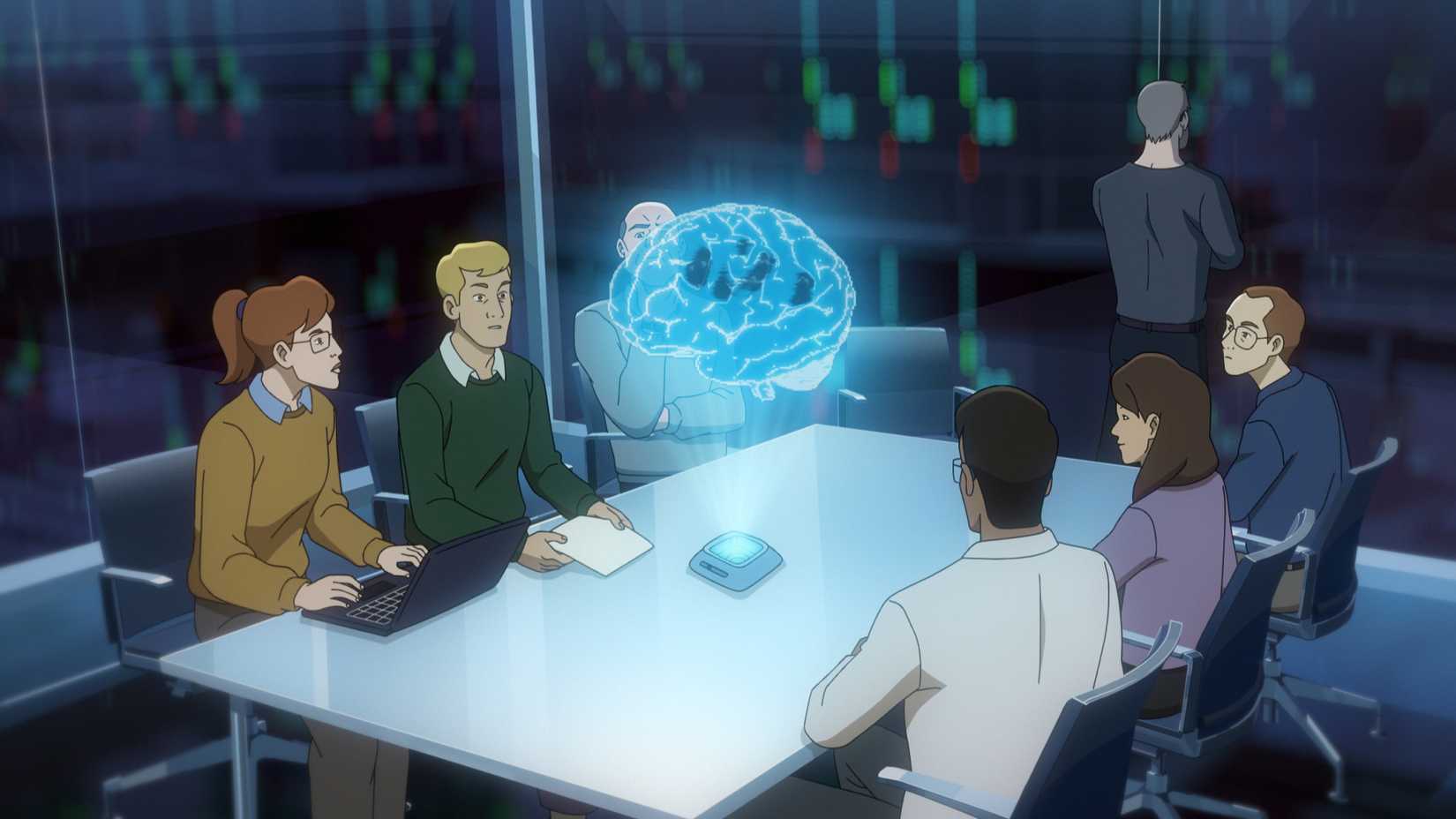
Pantheon's narrative eventually spirals into wildly fantastical developments focusing on everything from god-like entitites to Dyson spheres. Surprisingly, though, even in these moments, the show feels incredibly grounded and relatable. Even when it expands its vision to cosmic scales, it never forgets the sociological and existential roots of its drama.
Even its portrayal of imaginative and bizarre technology is made to look familiar through recognizable interfaces. Meanwhile, even its 2-D dimensional animation style ensures that when its sci-fi ideas become a little too extreme, its visuals remain tangible. Without explicitly naming certain characters, Pantheon cleverly parallels them with real tech billionaires.
With this, the sci-fi show even becomes a critique of Silicon Valley's transhumanist culture.
It also features real-world pop culture references and even features nods to other popular sci-fi works like Frank Herbert’s Dune and William Gibson’s Neuromancer. It is unfortunate that Pantheon never got to last as long as shows like Severance and Black Mirror. Even with two seasons, however, the sci-fi show is undoubtedly a masterpiece.
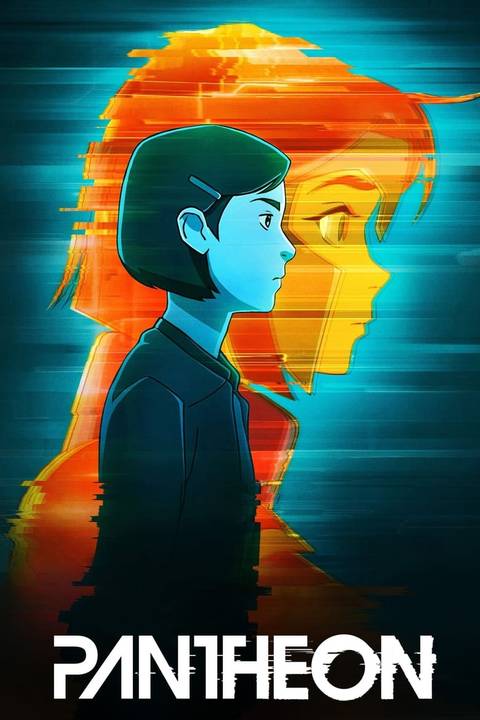
Pantheon
- Release Date
- 2022 - 2025-00-00
- Network
- Prime Video, AMC+, HIDIVE
- Cast
- Arthel Neville, Daniel Dae Kim, Madhur Jaffrey, Paul Dano, Tunde Adebimpe, Neil deGrasse Tyson, Raza Jaffrey, Katie Chang, SungWon Cho, Julian Lerner, Blaze Freeman, Rosemarie DeWitt, Aaron Eckhart, Taylor Schilling, Ron Livingston, Chris Diamantopoulos, Samuel Roukin, Odeya Rush, Maude Apatow, William Hurt, Michael Kelly, Ajay Mehta, Jacob Sartorius, Krystina Alabado, Magnus McLain
- Directors
- Melchior Zwyer, Ed Tadem, Micah Gunnell, David Dwooman Woo, Mari Yang
- Writers
- Michael Taylor, Scott Gunnison Miller
- Producers
- Chris Prynoski, Craig Silverstein, Ben Kalina, Antonio Canobbio, Shannon Prynoski, Albert Kim, Andy Parker
- Seasons
- 2
KioskNews shows a cleaned-up reading view extracted from the publisher’s page — the original always lives on their site, not ours.