How Beijing’s South China Sea stance benefits from a rare joint warning to the ICC
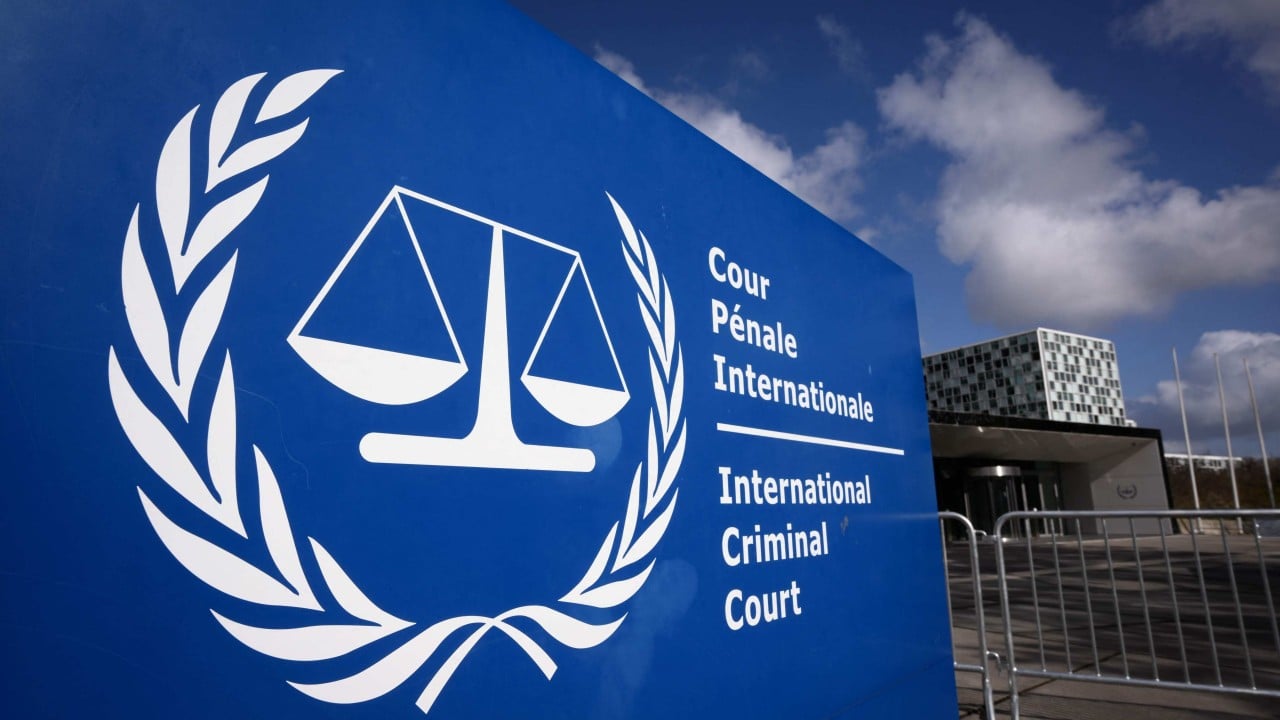
A rare consensus reached by China, Russia and the US that challenges the authority of international judicial bodies matters for Beijing’s rejection of a 2016 arbitration ruling on the South China Sea, according to analysts.
The joint declaration issued after the unprecedented trilateral summit between Chinese President Xi Jinping, Russian President Vladimir Putin and US President Donald Trump on Thursday said the three leaders “recognised that the principle of state consent and respect for immunities of state officials are of paramount importance”.
It also urged the International Criminal Court (ICC) and “other similar bodies” not to “abuse their jurisdiction”.
For Moscow and Washington, the stakes are immediate: Putin faces an ICC arrest warrant, while the US has long resisted the court’s authority over American personnel and allies.
02:48
Xi, Trump and Putin meet for historic trilateral summit at Shenzhen Apec meeting
Yet for China, which is not a party to the 1998 Rome Statute that established the ICC, the careful wording could cover a range of international legal mechanisms.
Most notable among these is the arbitral tribunal established under the United Nations Convention on the Law of the Sea (Unclos), which in 2016 issued a ruling on the South China Sea that went against Beijing’s position.
On Friday, Chinese foreign ministry spokesman Guo Jiakun said Beijing supported international judicial institutions playing a constructive role, but he issued a warning.
“No international judicial institution should violate the principle of state consent or abuse its jurisdiction,” Guo said, adding that such institutions should “avoid politicisation and double standards”.
The reference to the ICC came amid escalating tensions between the Netherlands-based international court and both Russia and the US.
In 2023, the court issued arrest warrants for Putin and a Russian official over what it called the unlawful deportation of Ukrainian children. Additional warrants brought the total number of wanted Russian officials to six.
Last month, the Trump administration imposed sanctions against the ICC itself and earlier authorised asset freezes and visa bans on court officials investigating US personnel or allies, including Israel, whose outgoing Prime Minister Benjamin Netanyahu faces an ICC arrest warrant over the Israel-Gaza war.
In 2020, the US imposed sanctions on ICC officials in retaliation for the court’s investigation into alleged war crimes in Afghanistan.
From China’s perspective, the declaration’s phrase “other similar bodies” primarily refers to the South China Sea arbitral tribunal and “extends to any international institution claiming jurisdiction over sovereignty and territorial disputes”, according to Wang Jiangyu, a law professor at City University of Hong Kong.
While Washington has long supported the tribunal that issued the 2016 ruling, the Trump administration’s hostility towards the ICC has created an opportunity for tacit alignment, Wang said.
“In essence, the US has semi-explicitly accepted China’s position in opposing the jurisdiction of the South China Sea arbitral tribunal,” Wang added.
The ruling in question dates to 2013, when Manila launched an arbitration case under Unclos. The tribunal at The Hague ruled in 2016 that Beijing’s claims to historic rights and resources across most of the South China Sea were invalid.
Beijing boycotted the proceedings and has maintained that the tribunal lacked proper jurisdiction because the dispute concerned territorial sovereignty, which it said was outside the scope of Unclos.
Beijing further cited its 2006 declaration under Article 298 of Unclos that excludes disputes concerning maritime delimitation from compulsory arbitration.
Bao Yinan, an associate research fellow at the Hainan-based Huayang Centre for Maritime Cooperation and Ocean Governance, said China, Russia and the US shared concerns that some countries bypassed the state consent principle and harmed the interests of others, citing the Chagos Archipelago as a precedent.
In 2019, the International Court of Justice issued an advisory opinion, finding that Britain should cede the archipelago to Mauritius. Although such opinions lack binding force, Britain signed a 2025 treaty agreeing to transfer sovereignty. Ratification has since stalled amid US opposition, leaving the handover incomplete.
“The case demonstrated how smaller states could circumvent state consent by seeking non-binding opinions that impose enormous political and public opinion pressure,” Bao said.
“The world’s most powerful states have begun jointly limiting the jurisdiction of international organisations, with mutual understanding and tacit support, posing challenges to the decades-long trend of regulatory globalisation,” Wang added.
But some analysts cautioned against reading too much into the trilateral declaration’s practical impact.
According to Ma Bo, an assistant director at the Collaborative Innovation Centre of South China Sea Studies at Nanjing University, the document that emerged lacked binding legal force and used deliberately vague language.
“The US administration will not take this declaration too seriously when handling South China Sea policy and relations with the Philippines in the future,” Ma said.
09:58
Will Batanes become the next South China Sea flashpoint?
Washington’s South China Sea stance showed little sign of softening under Trump, who provided security guarantees while partners such as Japan, the Philippines and Australia shouldered greater defence burdens, he added.
Lucio Pitlo, president of ThinkSea Consulting, a Manila-based think tank, said Beijing might cite the trilateral consensus to highlight American acceptance of rejecting “similar bodies” and their decisions, such as the 2016 ruling.
“By specifying the ICC and not others, Washington may still leave some room for ambiguity,” Pitlo said. “However, China may call this out as double standards.”
In recent years, Philippine officials have floated the idea of initiating a second arbitration against Beijing, with a scholar saying this month that Manila was preparing the necessary legal documents.
Chen Xiangmiao, a research fellow at China’s National Institute for South China Sea Studies, dismissed suggestions that the declaration would significantly alter Washington’s support for Manila’s legal challenges.
US backing would continue, though the extent would depend on the strength of evidence provided, Chen argued.
“The US has always applied international law selectively. It applies the law when the law serves American interests and discards it when it does not,” Chen said.
Bao cited Trump’s domestic political pressures as another factor.
“Trump urgently needs China’s support in any foreign policy achievements,” he said. “If the Philippines were to launch a second arbitration now, positive coordination from China would be impossible [and] something the Trump administration could not afford.”
KioskNews shows a cleaned-up reading view extracted from the publisher’s page — the original always lives on their site, not ours.