Israel deepens Somaliland ties with first ambassador, testing Horn of Africa balance
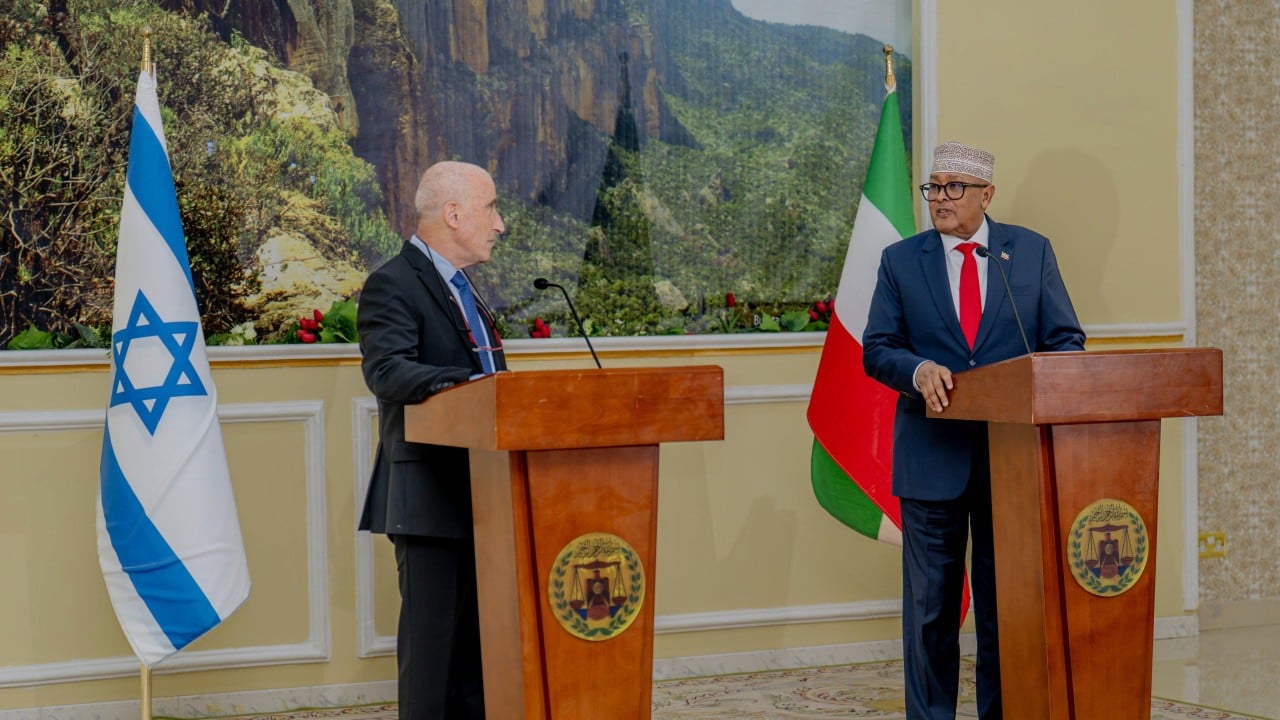
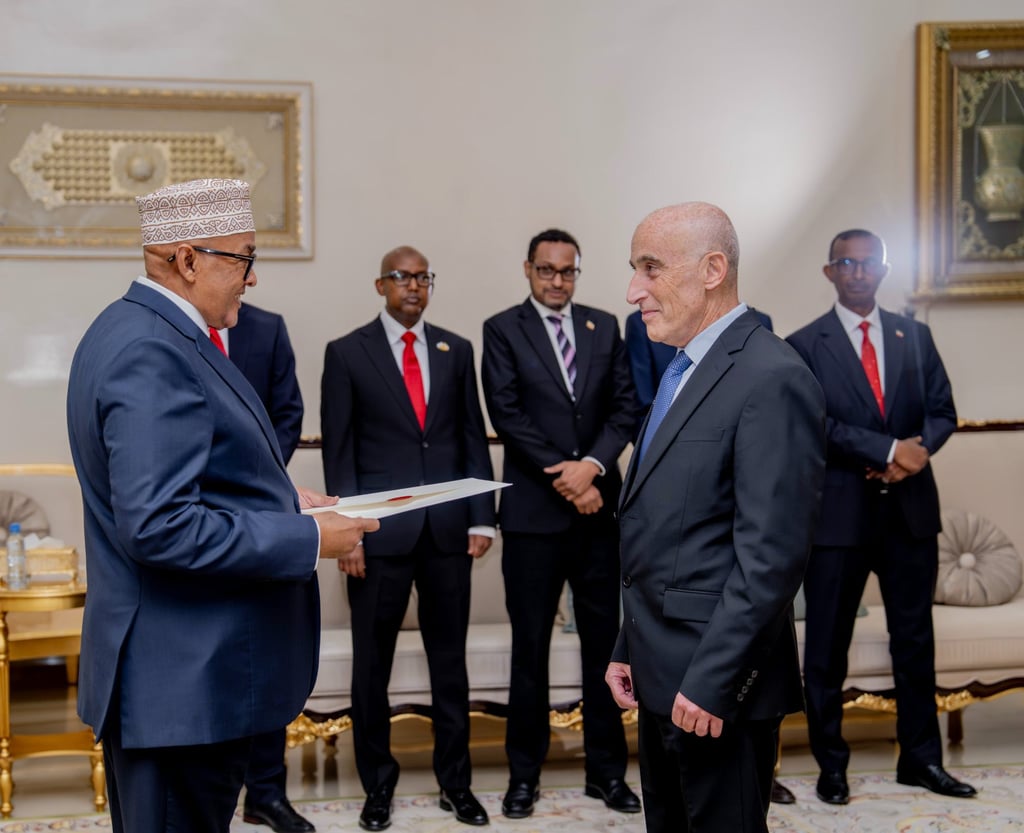
Last week, Somaliland, a breakaway region that declared independence from Somalia in 1991, welcomed its first ambassador from Israel.
Diplomat Michael Lotem presented his credentials in Hargeisa, while officials laid the cornerstone for an Israeli embassy. The ceremony, announced by Israel’s foreign ministry on Sunday, formalised a relationship that began with mutual recognition in December.
Somalia, the African Union, Arab states and China strongly oppose the move, reaffirming Somaliland as Somali territory. Beijing has been particularly vocal, viewing recognition as separatism, a breach of its one-China principle and a threat to its naval presence in Djibouti.
Somaliland, whose main port, Berbera, sits just a few hundred kilometres from the Bab el-Mandeb Strait, a narrow waterway that carries about 10 to 12 per cent of global trade, is now set to shape the balance of tension in the Red Sea and Horn of Africa.
Last month, Beijing and Djibouti jointly reaffirmed Somalia’s territorial integrity, opposing recognition of Somaliland and objecting to its cooperation with Taiwan. They also stressed the importance of freedom of navigation in the Red Sea and Bab el-Mandeb Strait.
Somaliland maintains mutually supportive ties with Taiwan, which Beijing considers part of China and has not ruled out using force to bring under its control. Most countries, including Israel and the US, do not recognise Taiwan as an independent state. However, Washington is opposed to any attempt to take the self-governed island by force and is committed to supplying it with weapons.
Samir Bhattacharya of the New Delhi-based Observer Research Foundation noted that China’s concerns extended beyond its opposition to separatism.
“The Bab el-Mandeb Strait, linking the Red Sea to the Gulf of Aden, is a critical chokepoint for Chinese trade and energy flows under the Maritime Silk Road,” he wrote in a December 2025 commentary.
Beijing has repeatedly described the route as a “jugular vein” for global commerce.
China’s first overseas military base, established in neighbouring Djibouti in 2017, was built “precisely to protect these interests and ensure a sustained Chinese security presence near this chokepoint”, he added.
For most of the past three decades, Somaliland’s strategic location attracted interest from a handful of commercial and security players but carried little diplomatic weight. Israel’s recognition changed that.
In a report to the US Congress in June, the State Department said Somaliland’s strategic location near Yemen and the Bab el-Mandeb Strait positioned it as a potential partner on shared security interests.
The report said it was also geographically positioned to potentially aid efforts to monitor and counter violent extremist organisations, particularly connections between Houthi fighters and al-Shabab, al-Qaeda’s largest and wealthiest affiliate.
The United States Africa Command had regular engagements with Somaliland authorities and was exploring areas for potential cooperation, it said.
Israel’s move comes after years of attacks on Red Sea shipping by Yemen’s Iran-backed Houthis, rising tensions between the US, Israel and Iran, and growing concerns over two key maritime chokepoints: the Bab el-Mandeb Strait and the Strait of Hormuz. The latter has been severely restricted by Tehran since the US and Israel launched their war against Iran in February.
An Israeli presence near Berbera could potentially help monitor Houthi activity along the shipping corridor. But it could also draw Somaliland more directly into the wider regional conflict.
Federico Donelli, a researcher affiliated with the University of Trieste in Italy and the Washington-based Wilson Centre, said the recent developments could “establish precedents for the international recognition of contested territories”.
He said that even without further countries recognising Somaliland or having a substantial Israeli security presence on the ground, the move could have “far-reaching implications for the regional balance of power and the evolving security dynamics of the Red Sea and Horn of Africa”.
Donelli noted that Somaliland’s “strategic value primarily derives from its geographical position along the Gulf of Aden, close to the Bab el-Mandeb Strait and Yemen’s coastline”, while the port and airport at Berbera could support maritime surveillance, intelligence gathering and a better understanding of security developments in the region.
However, he cautioned against confusing this strategic potential with evidence of an established Israeli military presence or formal access to facilities – greater strategic importance did not automatically mean greater security.
“For Somaliland, the main risk is becoming more directly exposed to regional rivalries. The recognition could increase its visibility to the Houthis and other anti-Israeli actors, potentially generating security threats and political pressure,” he said.
Donelli also said the move could make it harder for Gulf states and other regional players to maintain shipping security and stability. “The recognition risks adding another layer to existing regional rivalries,” he said.
Any disruption or rise in tensions near the Bab el-Mandeb Strait would put further pressure on a shipping route already affected by Houthi attacks and the wider Iran-related conflict and could extend to commercial shipping and energy supplies.
The implications also differed across the region, according to Donelli, who said Turkey was concerned about the impact on its strategic partnership with Mogadishu and its broader interests in Somalia, while Egypt viewed the development through the lens of its tensions with Ethiopia and regional rivalry in the Horn of Africa.
01:57
Somaliland opens representative office in Taiwan, deepening recently established ties
He said Saudi Arabia was focused on maintaining stability along the Red Sea and preventing further escalation, and the United Arab Emirates faced a more complex calculation because of its economic and strategic interests in Berbera, particularly its investment in port infrastructure.
“The main concern is not necessarily an immediate escalation into proxy conflicts, but the growing overlap between local political disputes, external security interests and competition over maritime access and strategic infrastructure,” he said.
Looking ahead, Donelli said further recognition by other countries could not be ruled out, but was unlikely to follow automatically. Most governments would have to weigh potential strategic benefits against the diplomatic costs of challenging Somalia’s territorial integrity and the African Union’s position on existing borders.
“The most plausible trajectory is one of bilateral consolidation accompanied by continued diplomatic contestation,” he said.
KioskNews shows a cleaned-up reading view extracted from the publisher’s page — the original always lives on their site, not ours.