The 10 Greatest Psychological Thriller Opening Scenes, Ranked

William likes watching movies and writing about those movies. Anything else is minutae.
Sign in to your Collider account
Psychological thrillers offer a special kind of thrill for audiences. All thrillers, or the good ones at least, put us on the edge of our seats and make us whiten our knuckles, but psychological thrillers go a little deeper. They get under our skin and then rattle around in our brains days later. Maybe it’s because they put us in a room with a character we can’t or don’t want to understand, or maybe it’s because they show us a dark side of ourselves we simply don’t want to acknowledge.
The greatest psychological thriller opening scenes often begin mysteriously. They might show us something violent or disturbing without any context; they might put us in the point of view of an unreliable narrator whose mind is unstable, or they might just scare the metaphorical crap out of us. The greatest psychological thrillers often come from filmmakers in full command of the medium, manipulating sound and visuals to elicit a specific audience response. It can be disconcerting to be in the hands of such a mad person, but it’s also hard not to be impressed. That’s what makes these ten openings the greatest.
10 'Copycat' (1995)

A severely underrated '90s serial killer thriller, Copycat may not have elevated the genre in the same way as classics like Seven and The Silence of the Lambs, but it's still an effective and disturbing psychological thriller with incredible performances. The plot concerns a copycat serial killer who mimics the murders of the most notorious serial killers. To try and understand the killer, the police consult with a famous criminal psychologist, who suffers from severe agoraphobia and never leaves her apartment. In the film's terrifying opening, we find out why.
Helen Hudson (Sigourney Weaver) is an expert on serial killers, whose work becomes a little too personal when one, named Daryll Lee Cullum (Harry Connick Jr.), attacks her after she gives a lecture at a university. It's an intense scene that throws the audience right into the thick of its violence. Weaver plays terrified tremendously well, and Connick Jr. proves he is much more than just a crooner as the psychotic killer. Copycat has long been overshadowed by other, more popular serial killer thrillers, but it's got more than enough juice to recommend it, especially in its opening scene.
9 'The Machinist' (2004)

Another underrated psychological thriller, The Machinist is best known for Christian Bale's weight loss to play the lead role. Bale plays Trevor Reznik, the titular machinist who suffers from severe insomnia and becomes increasingly paranoid due to a series of bizarre events that suggest some larger conspiracy around him. The film unsettles with its dark visuals and surreal atmosphere, which begins with its very first scene.
Starting near the end of his dark journey, the film opens with Trevor rolling a body into a rug and attempting to dispose of it. Much like watching Norman Bates try to get rid of Marion Crane's car in Psycho, the film builds tension as Trevor struggles to dump the body in the ocean and is confronted by a witness, whom he also seemingly kills. The Machinist lets us know that Trevor is on a collision course with murder from its first frames, and director Brad Anderson knows how to keep everything on a disorienting tilt.
8 'The Stepfather' (1987)

Similar to The Machinist, the disturbing domestic psychological thriller The Stepfather begins with a dark harbinger of things to come. It's also similar in that it features a completely committed lead performance. Terry O'Quinn plays the titular stepfather, a man so obsessed with making the perfect family that he's willing to kill for it. Directed by Joseph Ruben and written by crime novelist Donald E. Westlake, the film is a violent satire of Reagan's America. In the era of Jason Voorhees and Freddy Krueger, the scariest villain of all is the Stepfather.
The film opens on a quiet street in a quiet suburb. In one of the houses, a man washes blood off himself, shaves his beard, and changes his clothes. As he exits the house, we see the rest of the family butchered, with their blood splashed across the walls. It's a haunting opening scene that hangs over the rest of the film. Once he's found a new family to infiltrate, we know that with every passing minute, the Stepfather is one step closer to carrying out the same violence.
7 'Black Swan' (2010)
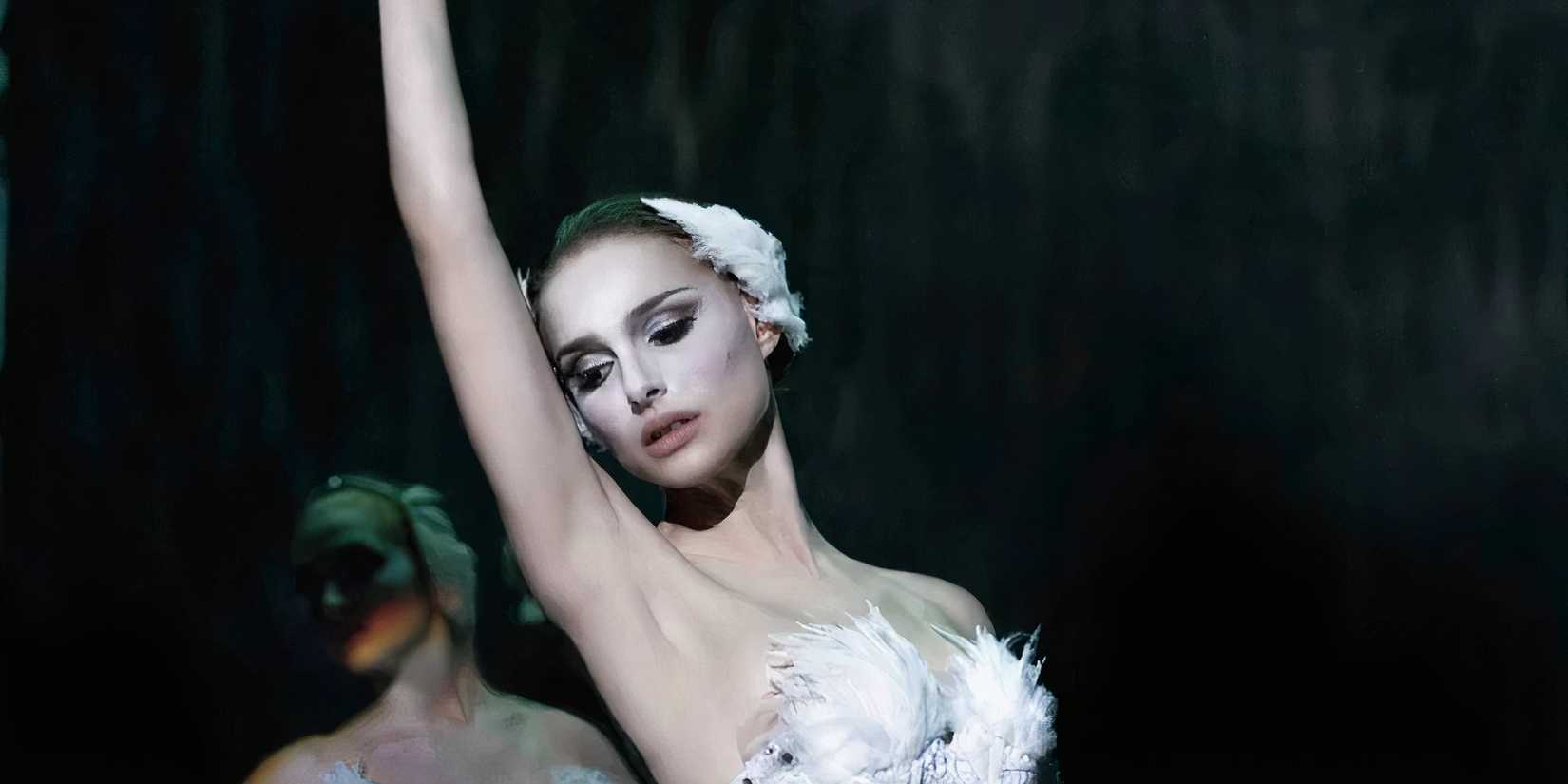
Black Swan sets a dark mood with its opening scene, but does it in a more abstract manner. As a film set in the world of ballet and focusing on a dancer whose obsession with portraying the titular character in a performance of Tchaikovsky's Swan Lake causes her to lose her grip on reality, there's both beauty and bloodshed. It exists at the intersection of art and suffering, and crosses over with the supernatural concept of doppelgängers, all through the bravura, Oscar-winning performance by Natalie Portman.
Much of the controversy surrounding Darren Aronofsky's film concerned the amount of real dancing done by Portman versus her double, Sarah Lane. Who did what dancing isn't immediately apparent in the film's ballet sequences, which are expertly staged, including the first one that opens the film. Portman and her double dance as the beautiful Princess Odette before coming under the spell of the evil sorcerer Rothbart. It's a beautifully choreographed and shot sequence that immediately sets the tone for the film, and while the footwork may not be all hers, the emotions on her face are all Portman.
Collider Exclusive · Oscar Best Picture Quiz
Which Oscar Best Picture
Is Your Perfect Movie?
Parasite · Everything Everywhere · Oppenheimer · Birdman · No Country
Five Oscar Best Picture winners. Five completely different visions of what cinema can be — and what it can do to you. One of them is the film that was made for the way your mind works. Ten questions will figure out which one.
🪜Parasite
🌀Everything Everywhere
☢️Oppenheimer
🐦Birdman
🪙No Country for Old Men
01
What kind of film experience do you actually want? The best movies don't just entertain — they leave something behind.
02
Which idea grabs you most in a film? Great films are driven by a central obsession. What's yours?
03
How do you like your story told? Form is content. The way a story is shaped changes what it means.
04
What makes a truly great antagonist? The opposition defines the protagonist. What kind of opposition fascinates you?
05
What do you want from a film's ending? The final note is the one that lingers. What do you want it to sound like?
06
Which setting pulls you in most? Where a film takes place shapes everything — mood, stakes, what's even possible.
07
What cinematic craft impresses you most? Every great film has a signature — a technical or artistic element that makes it unmistakable.
08
What kind of main character do you root for? The protagonist is the lens. Who you choose to follow says something about you.
09
How do you feel about a film that takes its time? Pace is a choice. Some films sprint; others let tension accumulate slowly, deliberately.
10
What do you want to feel walking out of the cinema? The best films leave a mark. What kind of mark do you want?
The Academy Has Decided Your Perfect Film Is…
Your answers have pointed to one Oscar Best Picture winner above all others. This is the film that was made for the way your mind works.
Parasite
You are drawn to films that operate on multiple levels simultaneously — that begin in one genre and quietly, brilliantly migrate into another. Bong Joon-ho's Parasite is a film about class, desire, and the architecture of inequality that manages to be darkly funny, deeply suspenseful, and genuinely shocking across a single extraordinary running time. Your instinct is for cinema that hides its true intentions until the moment it's ready to reveal them. Parasite is exactly that — a film that rewards close attention and punishes assumptions, right up to its devastating final image.
Everything Everywhere All at Once
You want it all — and this film gives you all of it. The Daniels' Everything Everywhere All at Once is one of the most maximalist films ever made: action comedy, multiverse sci-fi, family drama, existential crisis, and a genuinely earned emotional core that sneaks up on you amid the chaos. You are someone who responds to ambition, who doesn't want cinema to choose between being entertaining and being meaningful. This film refuses that choice entirely. It is overwhelming by design, and its overwhelming nature is precisely the point — because the feeling of being crushed by infinite possibility is exactly what it's about.
Oppenheimer
You are drawn to cinema on a grand scale — films that understand history not as a backdrop but as a force, and that place their characters inside that force and watch what happens. Christopher Nolan's Oppenheimer is a film about the terrifying gap between what we can do and what we should do, told with the full weight of one of the most consequential moments in human history behind it. You want your films to feel important without feeling self-important — to earn their ambition through sheer craft and the gravity of their subject. Oppenheimer does exactly that. It is enormous, complicated, and refuses easy comfort.
Birdman
You are drawn to films that foreground their own construction — that make the how of the filmmaking part of the what it's about. Alejandro González Iñárritu's Birdman, shot to appear as a single continuous take, is cinema examining itself through the cracked mirror of a fading actor's ego. You respond to formal daring, to the feeling that a film is doing something that probably shouldn't be possible. Michael Keaton's performance and Emmanuel Lubezki's restless camera create something genuinely unlike anything else — a film that is simultaneously about creativity, relevance, self-destruction, and the impossibility of ever truly knowing if your work means anything at all.
No Country for Old Men
You are drawn to cinema that trusts silence, that refuses to explain itself, and that treats dread as a form of meaning. The Coen Brothers' No Country for Old Men is a film about the arrival of a new kind of evil — implacable, arbitrary, and utterly indifferent to the moral frameworks we use to make sense of the world. It is one of the most formally controlled films ever made, and its controlled restraint is what makes it so terrifying. You want your films to haunt you, not comfort you. You are not interested in resolution if resolution would be dishonest. No Country for Old Men is honest in a way that most cinema never dares to be.
6 'Fight Club' (1999)

David Fincher knows how to start a thriller right. From the opening crime scene of Seven to the lover's lane murder of Zodiac to the close-up of a woman's head in Gone Girl, the notoriously meticulous director knows where to put his camera. Fincher is also one of the few directors who knows how to use CGI to enhance the camerawork as well, most apparent in Panic Room, where shots move through and into spaces that no physical camera could fit. Still, the most extreme example comes from the opening of his darkly comic psychological thriller Fight Club.
An essential Gen X film and definitive cult classic about toxic male rage in the late '90s, Fight Club is ostensibly about two men who find purpose in forming an underground group for men who feel the need to express themselves through violence. However, it goes into some much darker places. It begins in complete darkness, with the camera floating inside the fear center of the brain of the Narrator (Edward Norton) before pulling back and out through a bead of sweat and to the back of the gun that fills his mouth. It's an iconic opening to one of Fincher's most iconic films.
5 'Memento' (2000)

Christopher Nolan's Memento puts us into the head of its protagonist in a less literal way than Fight Club. The film tells its neo-noir plot of a man named Leonard (Guy Pearce) seeking revenge for the murder of his wife in reverse order, mimicking Leonard's anterograde amnesia. He can't make new memories, and each scene begins without him, or us, knowing what occurred before it. It's a brilliant storytelling technique that was an omen for what Nolan's career would become, and it all starts with an opening that literally runs in reverse.
The film opens with a shot of a Polaroid showing a bloody murder. As the Polaroid slowly begins to fade, we quickly understand that time is moving in reverse. The scene continues to play out in reverse as we watch Leonard take the photo, see the blood run back, the casing jump into the gun, and the bullet exit the back of his victim's head. We know what we're watching, but we don't know who or why yet. All of that will become clear by the end of the movie, which is actually just the beginning.
4 'Get Out' (2017)

Jordan Peele's satirical psychological horror thriller Get Out took aim at the notion of a post-racial America and white liberal racism with killer precision. It brilliantly subverts tropes and breaks down racial discrimination through allegory and foreshadowing. We know long before Chris (Daniel Kaluuya) gets to his white girlfriend's parents' house that something sinister awaits him. We don't know exactly what, but the film's opening scene has us primed through its brilliant subversion of suburban horror.
The suburbs are a popular setting in horror films, though the horror has historically come from an intrusive force, like Michael Myers in Halloween. Peele scratches even deeper into the racist history behind these neighborhoods. Suburbs were built on racist policies and practices, designed to keep Black families out of them, and that unwelcome tension is all over the opening of Get Out as Andre (LaKeith Stanfield), a Black man, walks through a neighborhood at night. He's uncomfortable, and his discomfort is proven valid when he's abducted into a car by a masked assailant.
3 'Blue Velvet' (1986)

The darkness of the suburbs is territory that David Lynch knows well. The surrealist director begins his most essential film, Blue Velvet, with a scene that looks past the dreamy facade of suburbia to the crawling darkness that's just underneath the surface. Like Peele, Lynch understands inherent evil, but he's a very different kind of filmmaker. Where Get Out begins with a standard scene of suspense that's subverted through race, Blue Velvet starts with a more surreal montage.
As the titular song by Bobby Vinton plays, Lynch opens the film on a singularly peaceful image: red roses set against a white picket fence and a blue sky. Then it transitions to a series of images that epitomize white suburban Americana. The shots wouldn't look out of place in an ad for insurance, but then it takes a turn. A man watering his lawn suffers an attack and falls to the ground dead. Then the camera tracks through his lush green lawn, the music fading and an unsettling sound building as we come upon a swarm of writhing beetles. Lynch knows there's something dark and decaying underneath every idyllic surface, and he doesn't mind shoving it in our faces.
2 'Taxi Driver' (1976)

Just as Lynch finds power in simple images of the suburbs, so does Martin Scorsese with the streets of New York City. The filmmaker is synonymous with the city, acutely aware of its darkness. In the beginning of Taxi Driver, that darkness is on full display. The surface has cracked open, and the darkness has come spilling out onto the streets. It's an evocative opening that tells you everything you need to know about the setting of the film and the mindset of its lead character.
New York in the '70s was a notoriously dangerous place, with rampant corruption, violent crime, and urban decay. It was also a place of incredible creative growth and cultural birth, inspiring millions of artists like Scorsese, who puts the ugly side of the city on display. In the opening of Taxi Driver, it looks less like a city and more like hell bubbling up to the surface, as a taxi rolls through a cloud of steam as Bernard Hermann's ominous score plays. Then we see the lights of the city, and the people, and we immediately understand it's all of this from the perspective of Travis Bickle (Robert De Niro), seeing his warped view of the city and how he regards it all.
1 'When a Stranger Calls' (1979)

For all the ominous imagery, thematic resonance, and eerie atmosphere conjured up by all the previous openings featured on this list, they can't quite compare to an opening that scares the hell out of you. It's an opening so good that most people forget that there's an entire movie that happens after it. When a Stranger Calls was inspired by the urban legend of the babysitter and the man upstairs, which director Fred Walton had previously turned into a short film before expanding it to feature length with a plot that extends beyond the babysitter.
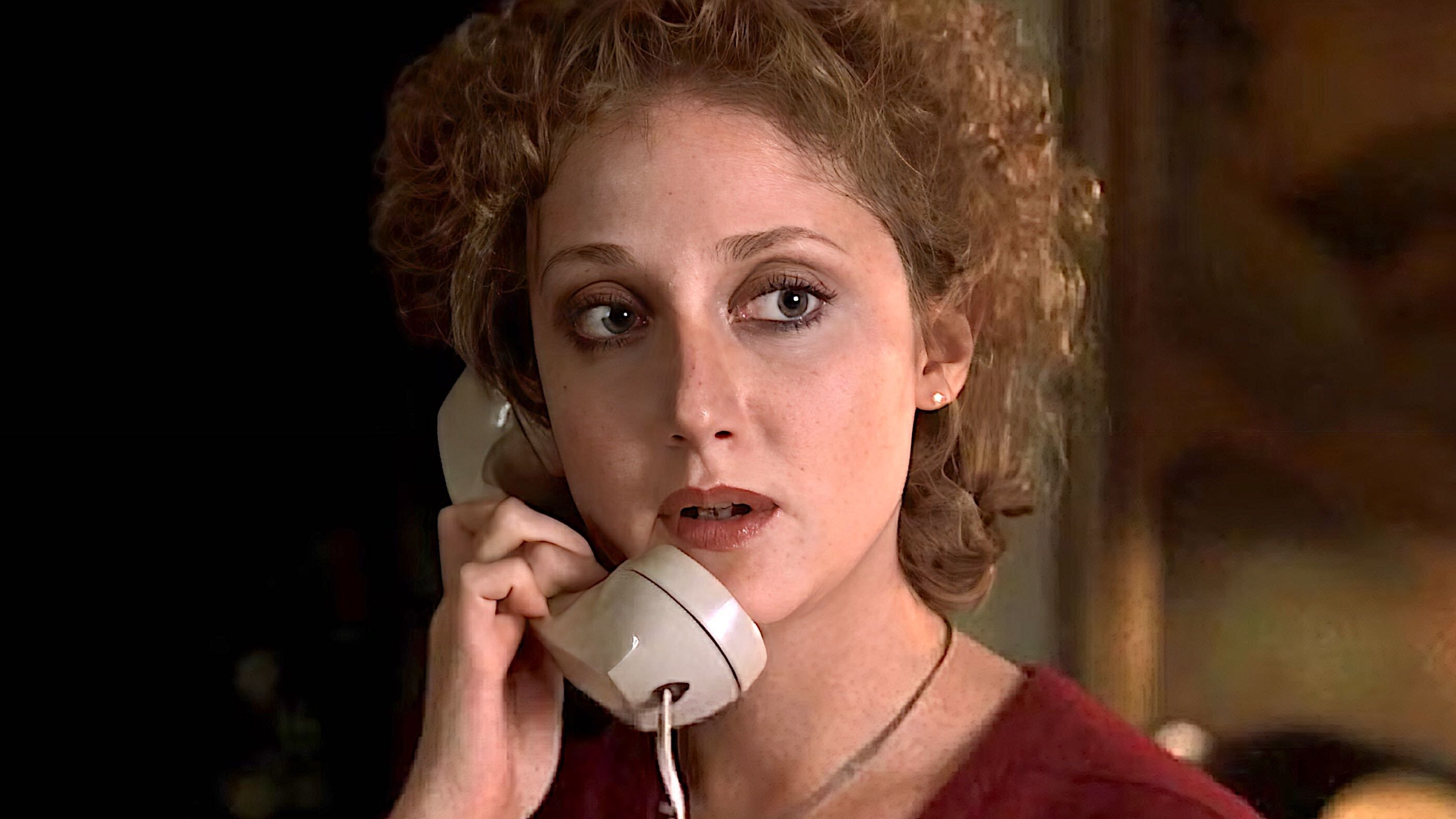
The extended opening scene of the film contains the entirety of the urban legend, where a babysitter named Jill (Carol Kane) receives phone calls from a disturbed man who repeatedly asks her if she's checked on the children sleeping upstairs. The twist comes when the police get involved and tell Jill that the calls are coming from inside the house. Even if you've heard the story a thousand times, or seen it play out in other movies, there's nothing quite as effective as how it plays out in When a Stranger Calls.

When a Stranger Calls
- Release Date
- August 24, 1979
- Runtime
- 97 minutes
- Director
- Fred Walton
- Cast
- Carol Kane, Charles Durning, Colleen Dewhurst, Tony Beckley, Rutanya Alda, Carmen Argenziano, Kirsten Larkin, Ron O'Neal, Heetu, Rachel Roberts, Michael Champion, William Boyett, Joseph Reale, Ed Wright, Louise Wright, Carol Tillery Banks, Dennis McMullen, Wally Taylor, John Tobyansen, Richard Bail, Steven Anderson, Lenora May, Randy Holland, Trent Dolan, Frank DiElsi
- Writers
- Fred Walton, Steve Feke
KioskNews shows a cleaned-up reading view extracted from the publisher’s page — the original always lives on their site, not ours.