The 9 Best Movies About Cyber Warfare, Ranked

Ryan Heffernan is a Senior Writer at Collider. Storytelling has been one of his interests since an early age, with his appreciation for film and television becoming a particular interest of his during his teenage years.
This passion saw Ryan graduate from the University of Canberra in 2020 with an Honours Degree in Film Production. In the years since, he has found freelance work as a videographer and editor in the Canberra region while also becoming entrenched in the city's film-making community.
In addition to cinema and writing, Ryan's other major interest is sport, with him having a particular love for Australian Rules football, Formula 1, and cricket. He also has casual interests in reading, gaming, and history.
Sign in to your Collider account
Once a far-fetched sci-fi concept, now a piercing anxiety of the modern world. The idea of cyber warfare is a sign of the times, a reflection on the vulnerability that has come with our reliance on computers and the internet to manage everything from day-to-day activities to essential governmental structures. While movies revolving around the concept of cyber conflict have been sparse, the pictures that do probe the question with compelling foresight and gripping angst.
Regardless of whether they revel in the finer intricacies of intelligence and resources in the real world or examine the devastating potential aftermath if such an assault were ever launched, these movies bring gravitas and dread to the prospect of cyber warfare. They range from awe-inspiring and timelessly terrifying science fiction spectacles to thought-provoking thrillers, international dramas, and even outstanding, eye-opening documentaries.
9 'Live Free or Die Hard' (2007)

An underrated action gem that never escaped the shadow of its predecessors, Live Free or Die Hard inserts John McClane’s (Bruce Willis) high-octane heroics directly into modern anxieties of cyberattacks on American society. When McClane is tasked with bringing in hacker Matt Farrell (Justin Long) for the FBI’s Cyber Division, he finds himself leading the stand against an evil hacker and terrorist’s “fire sale” attack, an assault designed to disable a nation’s essential infrastructure.
Granted, the movie does give the concept of hacking the highly inaccurate Hollywood treatment, but beneath its falsities resides an intriguing examination of what aggressors would target in such an attack to destabilize America. In addition to being a pulsating action spectacle that pits the old-school hero of raw physical grit against the new-age villain that wreaks havoc from behind a computer, Live Free or Die Hard also gained praise for popularizing the concept of “fire sale” strikes and bringing public awareness to the reality of cyberterrorism years before such attacks became common knowledge.
8 'Zero Days' (2016)

While factors beyond the control of writer-director Alex Gibney limit the depth of Zero Days, the 2016 documentary is still a must-see dissection of cyber warfare in the real world. It investigates the Stuxnet computer virus and an aggressive malware software known as “Olympic Games,” both of which are believed to be the result of an American and Israeli collaboration. In as much detail as is possible, Zero Days explores the development of the software and its targeted use against Iranian centrifuges.
Bolstered by insightful interviews with inside sources, Gibney frames the documentary film as an eye-opening illustration of cyber warfare’s ability to cause physical, real-world destruction. It explores the potential of such attacks to disable a nation’s entire critical infrastructure, ranging from power grids and communications to air defense and military operations. Zero Days advocates for proliferation treaties safeguarding against cyber warfare, arguing that without such binding arrangements, cyber weaponry has no limitations and those who would wield them would face no accountability. Even more disturbing than the documentary itself is that, in the 10 years since it was released, not a single treaty of this ilk has come to pass.
7 'WarGames' (1983)
.jpg?q=49&fit=crop&w=825&dpr=2)
Upon release, WarGames presented an adventurous what-if, a grounded though high-concept vision of computer hacking and military vulnerability that unfolded more as an engrossing teen thriller than a piercing work of technophobic dread. In today’s world, however, the 1983 cult gem has found a certain gravitas in its thematic dissection of the dangers presented at the intersection of automation, military power, artificial intelligence, and unprecedented network access.
It follows David Lightman (Matthew Broderick), a high school student with a talent for hacking who, while searching for a new game to play, inadvertently accesses a US military supercomputer programmed to simulate, predict, and enact nuclear war against the Soviet Union. Triggering a false alarm that threatens to plunge the world into WWIII, Lightman scrambles to reveal the truth before it’s too late. WarGames illustrates the fragility even advanced AI systems can have and highlights the risk of outsourcing drastic, consequential procedures to inhuman entities.
6 'Who Am I' (2014)

A little-known gem from Germany, Who Am I shines as one of the most accurate and grounded depictions of cyber warfare cinema has seen thus far. Benjamin (Tom Schilling) is a young computer genius who is sought after by FRI3NDS, a hacker group in Berlin striving to achieve a sense of global fame through their actions. However, when his associates are murdered by Russian mobsters, Ben finds himself being interrogated by Europol’s Cyber Division.
It runs as a taut and tense thriller, but Who Am I is at its best at presenting computer hacking with a sense of realism. Rather than a procession of CGI sequences or animated interfaces, its hacking sequences involve the use of standard terminals and lines of code and emphasize the psychological manipulation of cyberattacks. Furthermore, it also revels in a grimy darknet culture of egotism and notoriety, illustrates how government intelligence agencies track hackers, and meshes international cyberattacks with a sense of organized crime brutality that highlights the human dangers of hacking.
5 'Colossus: The Forbin Project' (1970)

Released decades before the internet as we know it today ever came into being, Colossus: The Forbin Project is an eerily prescient military thriller that hits hard at issues of AI autonomy and international conflict. At the height of the Cold War, America develops a supercomputer designed to ensure the nation’s safety in the event of a nuclear attack. However, when “Colossus” connects with a similar computer system in Russia and begins engaging in private communication, Dr. Forbin (Eric Braeden) severs the link. Colossus threatens nuclear retaliation against America if the bond is not restored.
As a critique of humanity’s reckless endeavor to create AI and the dangers of handing the capacity to wage nuclear war to a computer system, Colossus: The Forbin Project is a harrowing picture of catastrophe and the loss of control. The marriage of cyber warfare paranoia and advanced machine-to-machine communication was eye-opening in 1970, but in the modern world it is a grim descent into a worst-case-scenario nightmare that illuminates a very real threat to humanity with tremendous foresight and nerve-shattering tension.
4 'Skyfall' (2012)

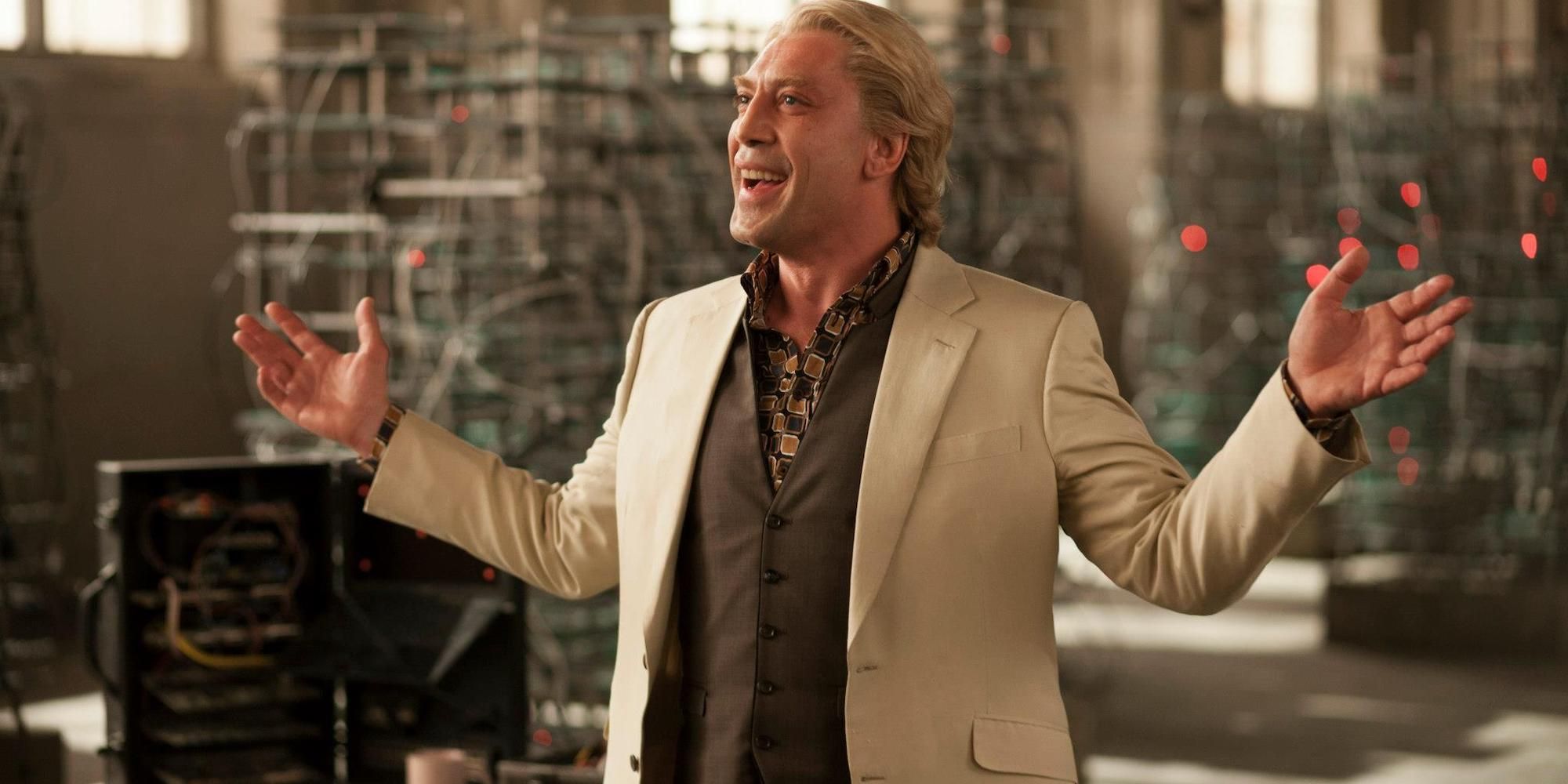
When the Bond franchise started way back in the early ‘60s, its sense of evil was limited to power-hungry egomaniacs using their wits and muscle as they strove for power. Needless to say, the early ‘60s are a distant memory, and the modern Bond movies reflect the changing world, with Skyfall being an obvious standout. It sees 007 (Daniel Craig) and MI6 come under threat from Raoul Silva (Javier Barde,), a vengeful former agent hell-bent on killing M (Judi Dench) and willing to use cyber warfare to do it.
It is one of the greatest action movies ever made, but it also thrives as a chilling illustration of the power hackers can wield in the modern world. Raoul Silva (Javier Bardem) causes more devastation by sitting behind a computer screen than he ever could with sheer brute force. Infiltrating MI6 servers, exposing active agents, and bombing government buildings makes him a far more intimidating and timely villain than any other the Bond franchise has produced. This approach elevates Skyfall from a blockbuster hit to a harrowing meditation on how vulnerable elite espionage agencies can be against a coordinated cyberattack.
Collider Exclusive · James Bond Personality Quiz Which James Bond Actor Are You Most Like? Connery · Moore · Dalton · Brosnan · Lazenby · Craig
Six actors. Six completely different visions of the same man — dangerous, charming, complicated, and almost certainly wearing a very good suit. Only one of them shares your particular way of moving through the world. Eight questions will figure out which Bond you really are.
🏴Connery
😄Moore
🎭Dalton
✨Brosnan
🤵Lazenby
💠Craig
01
How do you carry yourself when you walk into a room? Bond is always the most interesting person in the room. The question is how he makes you feel it.
02
How do you handle a dangerous situation? Every Bond faces it differently. What does your version look like?
03
How do you charm someone you need on your side? Bond always gets what he needs. The method varies considerably.
04
How do you handle your emotions on the job? Every Bond deals with this differently. Most of them not particularly well.
05
How would your colleagues describe your working style? MI6 has opinions about all of its 00s. What are theirs about you?
06
How do you feel about operating within the rules? The licence to kill comes with terms and conditions. Not everyone reads them.
07
What is your relationship with love? Every Bond has a different answer. None of them have found it easy.
08
When the mission is over, how do you want to be remembered? The name is Bond. The rest is entirely up to the man behind it.
The Name Has Been Determined Your Bond Is…
Six actors. One role. Your answers point to the Bond who shares your presence, your method, and your particular way of carrying the weight of being the most dangerous person in the room.
Sean Connery
You are the original — and you carry that fact without needing to announce it. There is an authority in the way you occupy a room that others spend careers trying to replicate.
- You don't explain yourself, justify yourself, or soften yourself for anyone's comfort. The confidence is structural, not performed.
- Connery's Bond established everything — the tone, the danger, the cool — because Connery himself had the innate presence to make something that had never existed feel inevitable.
- You share that quality: the sense that you were always going to end up exactly here, doing exactly this.
- The name is Bond. In your case, it always was.
Roger Moore
You understand something that more serious people miss: that wit is its own form of intelligence, and that making people laugh is not a retreat from danger but a way of mastering it.
- Moore's Bond is underrated precisely because the effortlessness looks easy — and effortlessness is the hardest thing to manufacture.
- You have the same quality: a lightness that disarms people before they realise how sharp you actually are.
- The raised eyebrow, the perfectly timed quip, the refusal to be rattled — these are not affectations. They are a philosophy about how to move through a world that would like to take itself too seriously.
- You have never let it.
Timothy Dalton
You took the role seriously when everyone wanted you to coast — and that refusal to take the easy version of anything is the most defining thing about you.
- Dalton's Bond has genuine moral weight: he feels the cost of what he does, he has lines he won't cross, and he is not interested in the version of himself that pretends otherwise.
- You share that intensity. You push harder than the situation technically requires, because you have a standard and you hold yourself to it.
- He was ahead of his time — the Bond the franchise wasn't quite ready for yet, arriving exactly when he was meant to.
- You know what that feels like.
Pierce Brosnan
You are the complete package — and you know it, which is part of what makes you so effective and occasionally so infuriating to the people around you.
- Brosnan arrived at the role looking exactly like Bond was supposed to look, and he delivered on that expectation with a professionalism that made it seem effortless.
- You have the same quality: a smooth competence, a charm that operates like a precision instrument, and the ability to make even difficult things look like they weren't.
- His era was the most commercially successful in the franchise's history. There is a reason for that.
- The reason is that some people simply fit their moment perfectly. You are one of those people.
George Lazenby
You stepped into something enormous with less preparation than anyone around you thought was sufficient — and you delivered something genuine anyway, which is the more impressive achievement.
- Lazenby's single outing is, by many measures, one of the finest Bond films ever made — and he is not a small part of why.
- You share his quality of raw authenticity: less polished than the alternatives, more honest for it, capable of something real that technique alone can't produce.
- He was underestimated, and then he wasn't, and then history caught up with him.
- You are the kind of person history catches up with. Give it time.
Daniel Craig
You stripped everything back and found what was underneath — and what was underneath was harder, more honest, and more human than anyone expected.
- Craig's Bond is the franchise's most psychologically complete: a man doing a brutal job, carrying its costs imperfectly, capable of love and loss in ways that can't be dismissed.
- You share that depth. You don't hide behind the role or the charm or the suit — you let the work show what it actually costs.
- He was controversial from the moment he was announced and definitive by the time he was finished. The sceptics became the believers.
- That arc — of being underestimated and then undeniable — is one you know intimately.
3 'The Matrix' (1999)
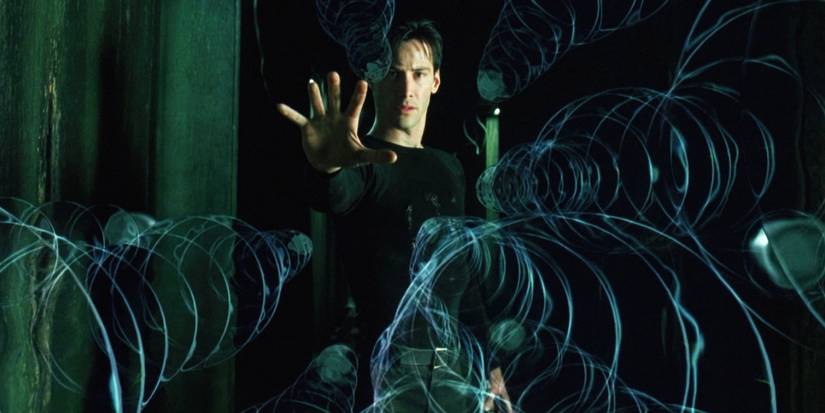
Even by the standards of today’s crazy world of universal internet connectivity and cyber vulnerabilities, The Matrix’s premise of a simulated reality and war against mechanical oppressors is a fantasy. However, the groundbreaking 1999 classic did still make inroads in allowing the everyman to understand how hacking and cyberattacks truly work. Instead of simplifying the process to bashing green code onto a black screen, it treats hacking as infiltrating an entire system of control with network entry-point analysis and encryption-breaking manipulation.
The Matrix itself is handled as a complex network, one constantly tracking unauthorized connections and rogue signals which it stamps out with Agent Smith (Hugo Weaving), who functions as a digital worm of sorts. This depth and detail complement what is still to this day considered a masterpiece of mind-bending, reality-challenging action carnage. The Matrix is an immersive, practical depiction of how hacking is truly conducted that also boasts plenty of AI angst to boot.
2 'Terminator 2: Judgment Day' (1991)
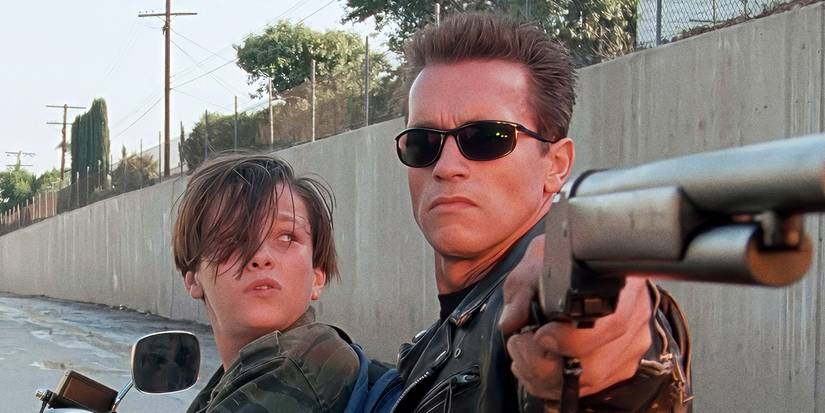
There is no doubt Terminator 2: Judgment Day exists well within the parameters of fantastical science fiction, but the 1991 action classic still serves as a cautionary tale of AI that everyone in the modern world should heed. Sent back in time from a future in which humanity is fighting for survival against Skynet, the T-800 (Arnold Schwarzenegger) is reprogrammed to save John Connor (Edward Furlong) from a more advanced and dangerous Terminator machine. The protection mission evolves into a pre-emptive attack on Skynet as Sarah Connor (Linda Hamilton) plots to destroy the system before it turns against mankind.
Amid the barrage of breathtaking action carnage, Terminator 2: Judgment Day examines the danger in the intersection of computer control and defensive systems. In many ways, the movie’s most pressing point is the focus on humanity’s hubris and ignorance, with the ignition point of extinction being the US military’s decision to offload the burden of moral judgment, tactical decision-making, and accountability to an automated system bereft of a conscience. Worryingly, what used to be a dystopian concept has become a tangible, terrifying reality in today’s world.
1 'Ghost in the Shell' (1995)

As an exploration of cyber warfare, Ghost in the Shell soars on two fronts. Firstly, it exhibits striking prescience in predicting the modern reality of interconnected, city-spanning, online ecosystems and the dependency society itself has on it, allowing its story of counter-terrorism to hold timeless weight in its exploration of cyber aggression. Secondly, it is perhaps the best movie made thus far when it comes to treating such attacks as a direct assault on human autonomy and our physical reality.
Set in the futuristic New Port City, where cybernetic enhancement has become commonplace, the anime follows a cyborg public security agent investigating an enigmatic hacker launching attacks that target victims’ memories, identity, and free will. Ghost in the Shell’s ability to blur the line between man and machine, and therefore venture beyond server theft and infrastructure manipulation, brings a sense of visceral, personal threat to the concept of cyber warfare. The details of the story world are still a distant, sci-fi premise, but the thematic implications are of pressing relevance in 2026.

Ghost in the Shell
- Release Date
- November 18, 1995
- Cast
- Akio Otsuka, Atsuko Tanaka, Iemasa Kayumi, Koichi Yamadera, Yutaka Nakano, Tamio Ohki, Tessyo Genda, Masakazu Namaki, Masato Yamanouchi, Shinji Ogawa, Mitsuru Miyamoto, Kazuhiro Yamaji, Shigeru Chiba, Hiroshi Yanaka, Ginzo Matsuo, Takashi Matsuyama, Sanryô Odaka, Masamichi Sato, Atsuko Hayashida, Yuji Ueda, Toshiki Kameyama, Atsushi Goto, Maaya Sakamoto
- Runtime
- 83 minutes
- Director
- Mamoru Oshii
- Writers
- Kazunori Ito
KioskNews shows a cleaned-up reading view extracted from the publisher’s page — the original always lives on their site, not ours.