China’s CXMT unveils ‘key progress’ on chip structure pursued by Samsung, SK Hynix
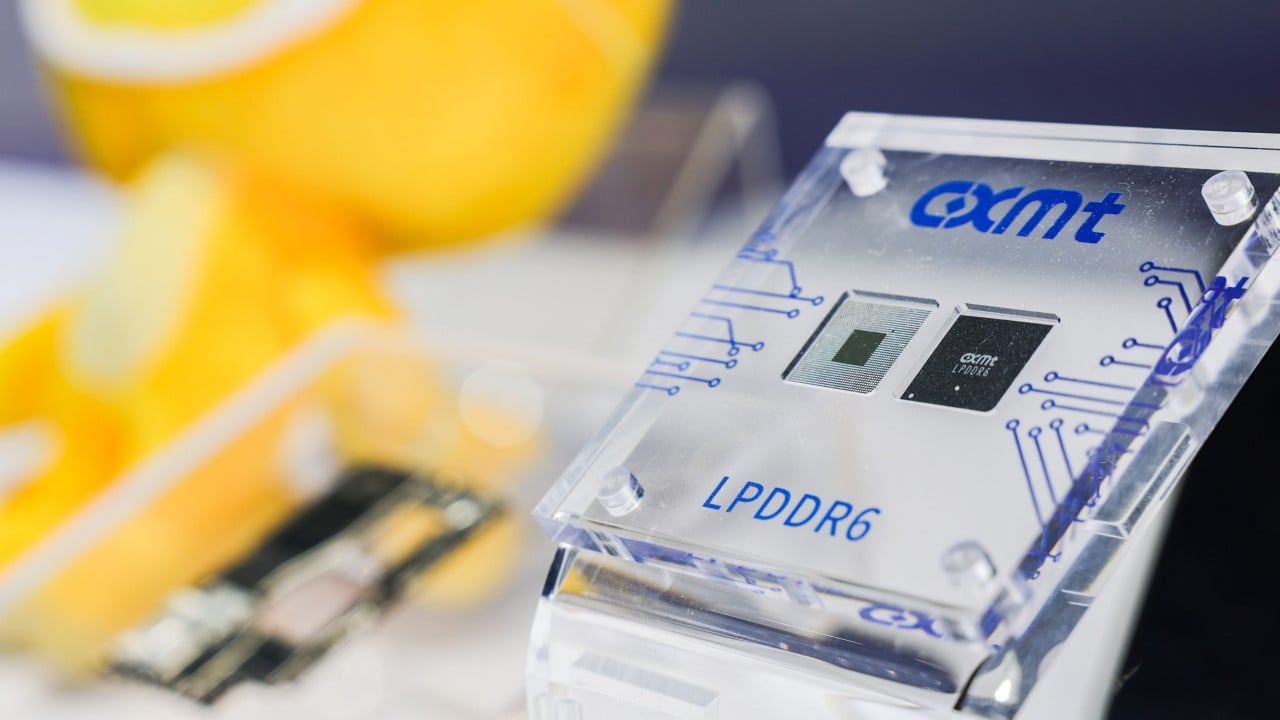
China’s memory chip giant ChangXin Memory Technologies (CXMT) has reported “key progress” in a new structure that rivals Samsung Electronics and SK Hynix are also working on to boost memory density.
CXMT planned to roll out a new server-memory product based on the structure by the end of 2026, president Cao Kanyu said at an industrial event in Shanghai over the weekend, according to a company statement.
At the centre of the development is the “4F square” design, in which each memory cell occupies an area of four square F, with F representing the minimum line width of a semiconductor. The structure enables higher storage density by fitting more cells onto a single chip.
For now, mainstream commercial dynamic random-access memory (DRAM) uses a 6F square-cell structure.
The world’s leading DRAM producers are all pursuing the technology.
SK Hynix unveiled its 4F square road map in 2025, while Samsung, according to a report by South Korean media outlet The Elec in April, planned to mass-produce sub-10-nanometre DRAM based on the new design by 2028.
CXMT said the core of its 4F square design was its proprietary Vertical Surrounding Gate (VSG) transistor, which used a vertical gate architecture to address current leakage while significantly reducing unit area and increasing storage density.
The shift from the mainstream 6F square structure to 4F square represents a fundamental transition from horizontal to vertical transistor channels.
Because existing manufacturing flows could not be adapted to the new structure, CXMT had to redesign key processes to optimise the performance-to-power ratio, the company said.
The memory giant, based in Hefei, capital city of the central Chinese province of Anhui, expects to release a new generation of DDR5 RDIMM by the end of the year. Designed for enterprise-grade servers, the new memory module will incorporate the advanced technology.
CXMT did not disclose detailed specifications or a launch date.
The firm said the server product required higher levels of endurance and compatibility than consumer memory products. It must support round-the-clock uninterrupted operations, withstand voltage fluctuations and pass hundreds of compatibility tests with central processing units and motherboards from different manufacturers.
Since listing on the Shanghai Stock Exchange’s Star Market in July, CXMT has made several moves to showcase its technological muscle.
Last month, it said its fifth-generation DRAM manufacturing platform, known as G5, had entered mass production, marking another step in narrowing the gap with global industry leaders.
Founded in 2016, the company said it had been researching the 4F square architecture since its inception and had published more than 300 related patent families, surpassing both domestic and overseas peers.
KioskNews shows a cleaned-up reading view extracted from the publisher’s page — the original always lives on their site, not ours.