Bonfires, busses, and grocery store pickup: Raising independent kids, the Israeli way - opinion
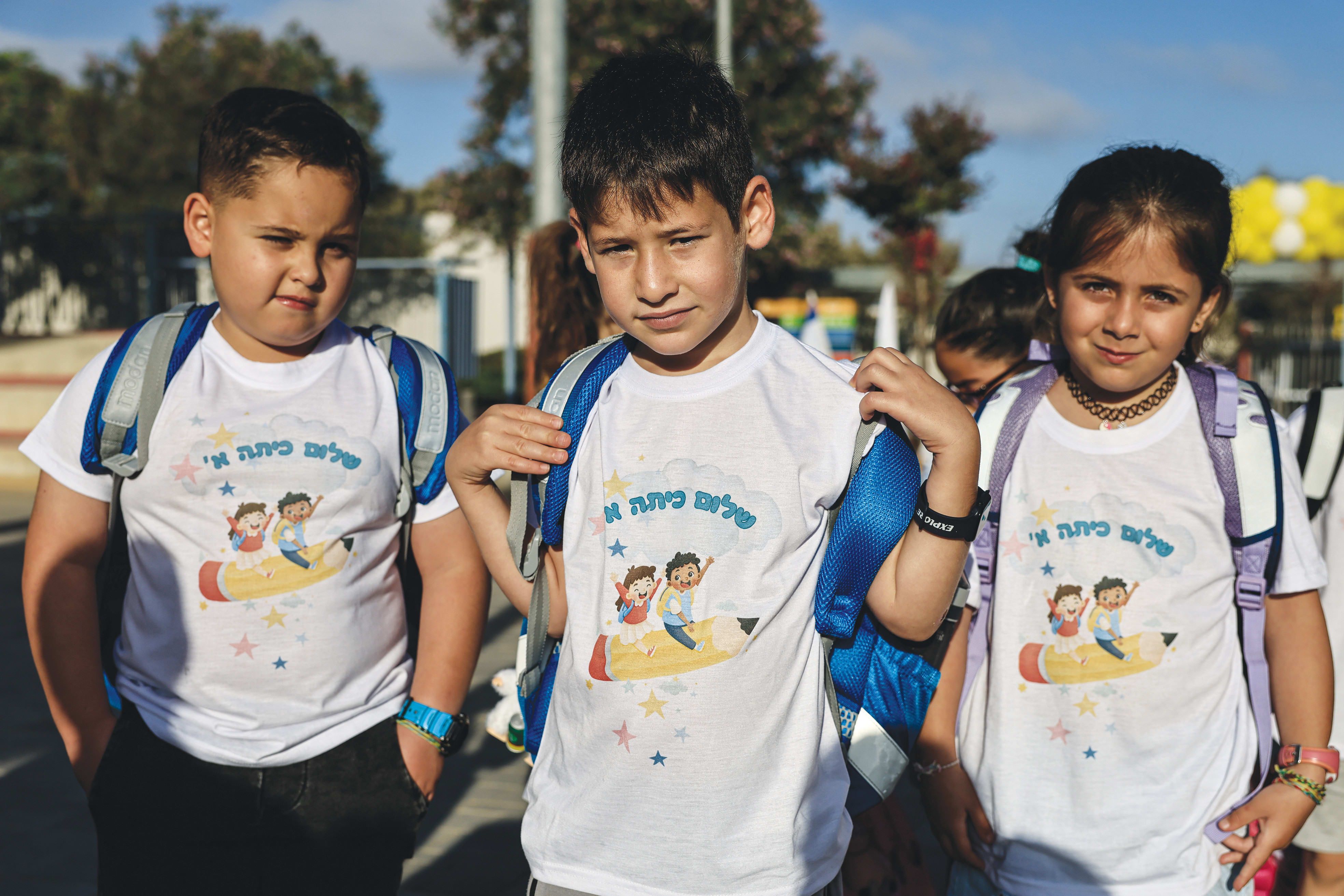
The WhatsApp group for my son’s snif (youth group) can best be described as digital chaos. Messages fly back and forth at a rate that makes it almost impossible to keep up. But one message has lingered with me, long after it was written.
My son was in third grade – his first year in the youth group – and it was Lag Ba’Omer. A bonfire had been arranged, and the madrich (group leader) had sent all the details, except for the pick-up time. Naturally, as the night progressed, a parent asked what time we should pick up the children, and the madrich responded. 1 a.m.
I stared at my phone, wide-eyed. One in the morning? He was eight years old! A third grader. Surely there had been a typo. Perhaps he meant 11 p.m. Perhaps midnight, at a stretch. But one in the morning?
Let’s add to the mix that this was a 15-year-old youth group leader who was confidently organizing a bonfire for a group of eight-year-olds, with a pickup time that would have been ambitious for a New Year’s Eve party. And apparently, it was all perfectly reasonable.
Welcome to parenting in Israel.
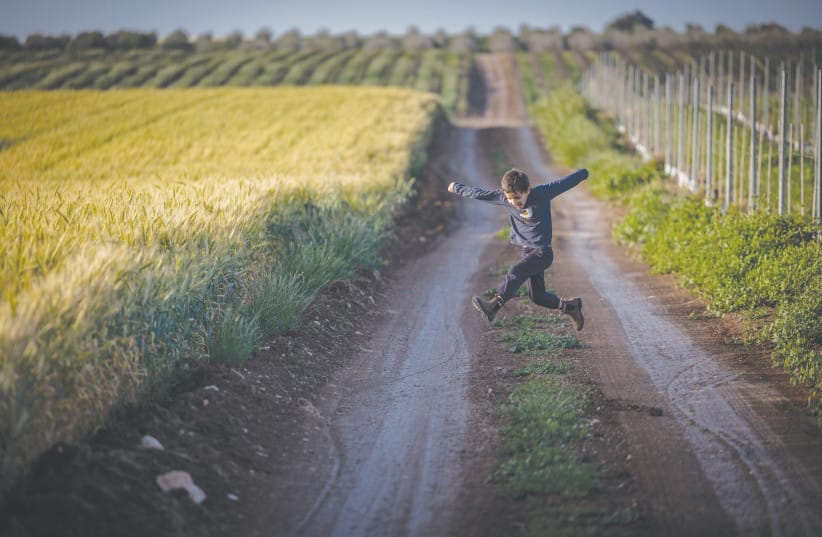
THERE ARE MOMENTS when I look at my children and wonder when, exactly, they became so Israeli. More so, there are moments when I wonder when I became the kind of parent who is comfortable with things that would once have seemed completely unthinkable.
In Israel, there are certain things you’ll regularly see children doing that you’d be unlikely to see anywhere else.
Take public transportation. In many places, the idea of a first grader taking a public bus alone would be enough to prompt a call to child services to ensure all is stable in the family unit. But here in Israel, it’s commonplace to see a first grader waiting at a bus stop alone, a backpack almost as big as their body, a cellphone in their pocket and a Rav-Kav (bus card) in hand, ready to go.
Gan (kindergarten) pickup by older siblings is one of my favorite things to watch: nine-year-olds collecting their four- or five-year-old siblings, holding their hand to cross the roads and “safely” return home.
Those same nine-year-olds can often be found alone at the supermarket check-out (self-serve, mind you!), picking up some last-minute ingredients for their parents.
Or take Shabbat afternoons. Third graders head out to meet friends, go to youth group meetings, wander between houses, and roam the streets of the neighborhood with a freedom that can be both wonderful and mildly unnerving.
Then there are the youth group adventures. Eight-year-olds head off on overnight trips and sleep outdoors under the stars.
They return with a sparkle in their eyes and backpacks that release an unmistakable whiff of bonfire smoke, stuffed with a dusty sleeping bag, wet towels, dirty clothes, and a generous helping of the actual ground they slept on.
There may even be a few empty smoked tuna cans amid the mix, remnants of their feast over the fire.
By 14, children are planning trips up north to camp by the Kinneret, with friends, backpacks, and a level of independence that can leave parents oscillating between pride and panic.
The list goes on and on.
Individually, each of these things might pass as reasonable. Together, they reveal something about growing up in Israel: children are often given responsibility earlier, trusted to manage more, and introduced to the world beyond their front door at a surprisingly young age.
And the strange thing is how quickly it starts to feel normal.
Raising children in Israel can be a big adjustment
FOR THOSE OF US who grew up outside of Israel, raising children here can involve a big adjustment. We arrive with our own experiences (think: being chauffeured to school, friends’ houses, and the mall till age 14!) and assumptions about what children should be allowed to do.
When I first encountered this side of Israeli parenting, I was genuinely aghast. I couldn’t understand how parents allowed their children so much independence at such a young age. At times, if I’m honest, it felt perilously close to neglect.
I wondered whether this was really a parenting philosophy at all, or simply a practical necessity in a society where both parents worked long hours, and families had to find ways to make things function. I certainly didn’t see it as an ideal to aspire to, but rather as a last resort when there was no other option.
Then I began to watch the children around me and slowly started to lean into it.
I remember the first time I sent my oldest child to the local makolet (convenience store) on her own. She was nine years old. I was standing over the stove, frantically trying to get dinner on the table, when I realized we were out of tomatoes – the main ingredient for the sauce I was planning to serve.
Dinner time was fast approaching; the kids were hungry and already nagging me, my baby crawling over my feet. The thought of bundling up all four kids and dragging them out to the store with me was more than I could face.
So I handed my nine-year-old my credit card, told her exactly which tomatoes to buy and where to find them in the store, and sent her on her way. She didn’t even have a cellphone.
Ten minutes later, she was back, tomatoes in hand, her eyes gleaming with pride. She had gone to the shop, found what I needed, paid for it, and made it home, all by herself. Dinner was saved, the children were fed, and she (and I!) had discovered something rather wonderful: she could do it.
Since that day, something in me shifted; I began to wonder whether these Israeli parents were onto something.
Children are shaped by the independence they are given
OVER TIME, I’ve noticed that something much bigger is happening here than a difference in parenting styles. Israeli children aren’t simply given more independence. They are shaped by it.
As I watch my children grow, and see the confidence with which they navigate the world, I have begun to understand what this culture of independence offers them.
They learn to trust themselves. They learn to figure things out, to take responsibility, to manage the unexpected. They discover that they are capable of more than they might have imagined, and they learn that the world is not just somewhere their parents take them, but somewhere they can navigate for themselves.
And then, at 18, many of these teenagers enter the army, where they may be expected to make decisions under pressure, look after others, and take on responsibilities that would seem remarkable for someone so young in many other countries.
Of course, a few years of taking buses alone and runs to the makolet won’t prepare anyone for what military service demands. But I do wonder whether those early experiences help lay some of the groundwork.
When you’ve spent years being trusted to find your way, solve problems, and take responsibility for yourself, perhaps stepping up when something bigger is asked of you feels a little less unfamiliar.
I see glimpses of this in my own children. I see the pride that comes from managing something independently, the resourcefulness when things don’t quite go to plan, and the growing confidence that they can figure things out for themselves.
These are small things, but perhaps that’s precisely the point. Independence doesn’t appear overnight at 18. It’s built, little by little, through the expectations we set and the opportunities we give our children to meet them.
I’m not saying I’ve stopped worrying. I still have my moments, and I suspect the snif WhatsApp group will keep providing plenty of material.
Nor have I become quite so Israeli that I can look at a 1 a.m. pick-up time for an eight-year-old without raising an eyebrow.
But I’ve come a long way from the parent who looked at these things and thought, I would never do that.
Granted, I waited until fifth grade before allowing my oldest child to take the public bus alone. But today, sending my third grader to the makolet to pick up a few ingredients for dinner feels entirely ordinary, and honestly, rather liberating.
And while I still keep an eye on the arrangements when older siblings collect the younger ones from gan, I no longer find the idea quite so extraordinary.
Watching my children grow more confident, resourceful, and willing to figure things out for themselves has changed how I think about what it means to protect them. I still want to keep them safe. But I’m beginning to understand that protecting them and preparing them for life are not always the same thing.■
KioskNews shows a cleaned-up reading view extracted from the publisher’s page — the original always lives on their site, not ours.