Amid the Xi-Trump clamour, can Apec revive the business of cooperation?
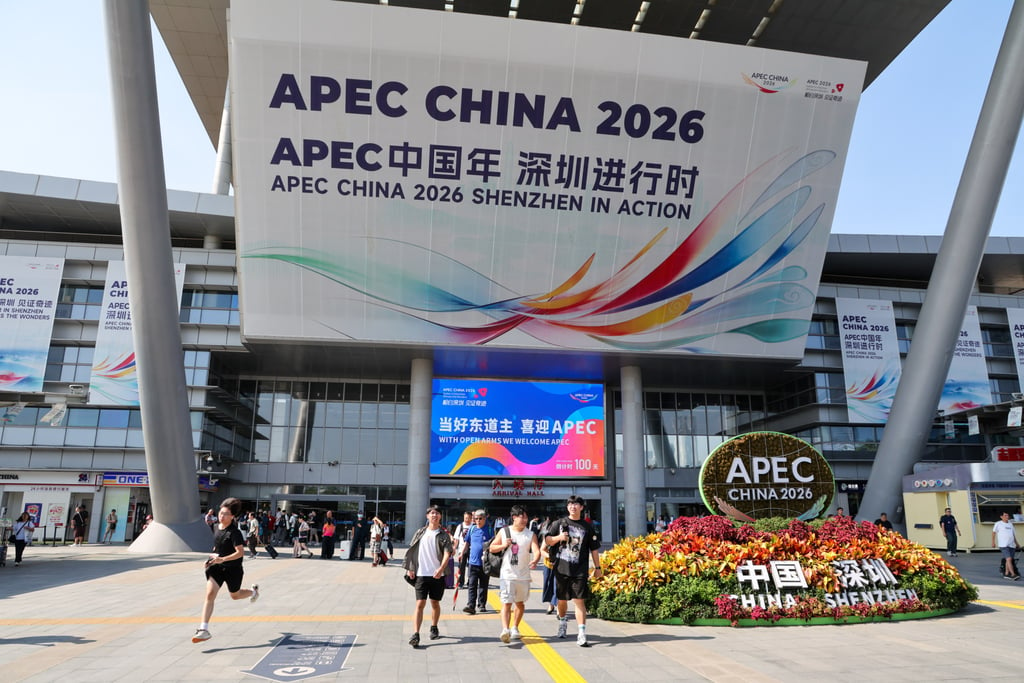
The 33rd Asia-Pacific Economic Cooperation (Apec) summit will be held in Shenzhen from November 18 to 19. The venue is not accidental. Forty years ago, this was a border town of rice fields and duck ponds; it is now where a good part of the world’s electronics are designed and built, and the showcase of China’s “reform and opening up”.
The event’s theme, “Building an Asia-Pacific Community to Prosper Together”, puts openness, innovation and cooperation at the centre. US President Donald Trump has confirmed he will attend, so coverage will be dominated by his meeting with Chinese President Xi Jinping on the sidelines. I would rather ask a less photogenic but more important question: can 21 economies still sustain a working habit of cooperation?
This will not be easy. Since the Xi-Trump summit last year in Busan, South Korea, the United States and China have maintained a truce in the tariff and export-control war, and both sides have been careful not to test it. Meanwhile, The Taiwan Strait remains tense, and the US and Japan have just finished their Keen Sword military exercises. Friction continues in the South China Sea. North Korea keeps firing missiles.
What has changed is that rivalry has moved to within many of the region’s institutions. Semiconductors, rare earth minerals and artificial intelligence (AI) have been turned into instruments of pressure while undersea cables and shipping lanes are now counted among the front lines.
Apec’s own record suggests that economic cooperation can promote security. The forum became a leaders’ summit in 1993, not long after the Cold War ended, and was the first Asia-Pacific framework to bring together governments that agreed on almost nothing else. Interdependence grew under “open regionalism” and held up three decades of relative peace despite no one signing a formal peace agreement. That foundation is being eroded now. Economics is being securitised, and countries are sorting themselves into blocs.
This is why a rather unglamorous forum deserves defending. When channels of contact close, the logic of power fills the space. Apec is one of the few platforms where trade officials, chief executives and academics still meet every year to work on shared problems in a tense region. It could be seen as the last pipe still running.
Nobody writes poems about plumbing, but when the pipes fail, the water stops. Because Apec’s business is economics, the threshold for sitting at the table is lower than in talks about sensitive military questions. No summit agreement will restrain a confrontation at sea. What keeps an incident from becoming a crisis is the repeated, unremarkable practice of cooperation.
Three principles would help Apec play that role. Openness comes first, and here it means more than tariff cuts. It means predictability: rules clear enough that no member has to guess another’s intentions.
Inclusiveness is second. As long as Apec is organised around the US and China, it will trail behind their competition instead of buffering it. Looking past that pair is what allows smaller economies to be heard.
Third comes routine contact. Extending the agenda into non-traditional security grounds, whether technology risks, maritime safety or disaster response, gives members practice at managing shared dangers, and practice is what keeps a conversation alive when politics turns bad.
Shenzhen is a concrete example of this argument. Openness and connectivity turned a fishing village into a world-class innovation city in four decades. The summit can help build four things atop that legacy.
First, the understanding reached by the two presidents on building “constructive strategic stability”, as well as the channel for preventing AI-related incidents that goes with it, should be opened to other economies. Developed properly, it could become a mechanism for giving advance notice of red lines on export controls and market access, which is worth more than another communique.
Second, start with problems that carry no ideology. AI governance, supply-chain early warning, cable protection, maritime safety and climate change do not require agreement on first principles.
Third, use the channels that governments cannot. The Apec CEO summit brings in some 1,000 business and political representatives, and Track 1.5 dialogues gather scholars who can say things officials cannot. Apec has long benefited from these informal routes. It should use them deliberately rather than as decoration for the official programme.
One factor, however, can undo all of this: instability on the Korean peninsula, the region’s most serious security problem. North Korean leader Kim Jong-un is said to be pursuing a strategy that fuses nuclear with conventional forces. Pyongyang’s nuclear programme stopped being a peninsula-only issue some years ago. With US-North Korea contact being floated around the summit, regional leaders should put peaceful coexistence on the Korean peninsula on the agenda and turn the discussion into a doctrine rather than a talking point.
01:36
Kim Yo-jong criticises Japan’s Tomahawk missile test, warns of ‘additional military options’
If the peninsula is left off Asia’s map of cooperation, it will export instability to Apec members and beyond. Cooperation needs concrete guidelines attached to it so a provocation in the North cannot shake the whole structure.
That is the case for a “Shenzhen Initiative” to revive Apec’s cooperative habit. It should aim at norms and incident-prevention mechanisms, not photo opportunities. Looking away from North Korea’s nuclear and missile programmes would leave the region unable to guarantee the one thing its people worry about most.
Shenzhen should be the place where the Asia-Pacific remembers how to cooperate and where the choice not to fight becomes a habit. Whether this happens depends on whether a mechanism can be built to contain the instability that comes out of North Korea. That is the cooperation – and the security strategy – this region needs.
KioskNews shows a cleaned-up reading view extracted from the publisher’s page — the original always lives on their site, not ours.