Dad gives daughter cooking tips from prison: How Project HOPE helps inmates bond with family
SINGAPORE – His instructions to his daughter, 15, were clear – add the rice to the dish only at the end of the cooking process.
“Fai” (not his real name), 46, reminded her to add black pepper and butter to the mix.
But father and daughter were not standing next to each other in their kitchen.
Fai, 46, was seated in an empty room in Changi Prison Complex, while his child was in school.
Fai, who is serving a prison term of 10 years and four weeks for financial crimes, was speaking to his daughter on Oct 22 via a video call on a tablet, thanks to Project HOPE.
It is an initiative between the Singapore Prison Service (SPS) and the Ministry of Education that helps incarcerated parents stay involved in their school-going children’s lives through quarterly video calls.
Project HOPE began in 2020, and now has 134 inmates and 186 children from 79 schools partnering SPS in the project.
In April, Home Affairs Minister K. Shanmugam said in written replies to Parliamentary questions that a 2017 SPS study found that about one in five incarcerated parents had at least one child who offended.
Fai, who spent an hour talking to his daughter about her exam results and home cooked food, said he was aware his children could go astray because of his absence.
He said: “I’m concerned that teenagers with parents who are not around will feel there’s no one to talk to (about their problems).
“Although I’m not around, I can still give my moral support (via Project HOPE), so that they are not lost.”
Fai, who was incarcerated in 2025, has so far made his third video call to his daughter, who will be taking her N-level examinations next year.
He is determined that his daughter and son, 17, will not commit crimes, given the statistical reality of intergenerational offending.
The study – which examined a 10-year cohort of drug offenders admitted between 2008 and 2017 – also found that these children tended to come into contact with the criminal justice system at a younger age than their parents.
Similarly, then Second Minister for Home Affairs Josephine Teo said in 2024 that more support will be given to prison inmates and their families to cut the risk of intergenerational offending.
Teo had spoken at the International Corrections and Prisons Association Annual Conference, adding that a 2019 study by the SPS found that 22 per cent of children with drug-abusing parents had committed offences.
Other than Project HOPE, inmates also maintain family connections via e-letters and prison visits.
Yi Shuqin, correctional rehabilitation specialist (CRS) from SPS’ family and peer intervention branch, said: “We believe having continued connection between inmate parents and their children not only helps with the emotional well-being of the child, but it’s also a way for inmate parents to work towards their commitment to rehabilitate and reintegrate into society.”
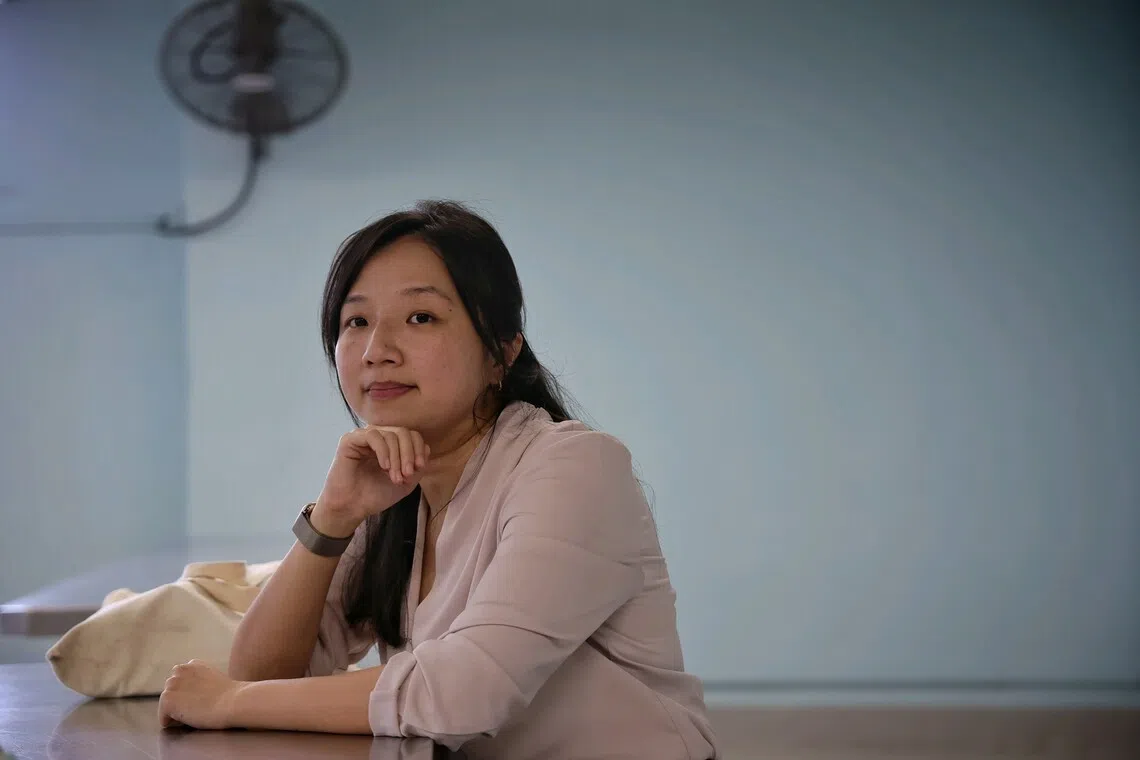
Yi Shuqin, CRS from SPS’ family and peer intervention branch, said that some children may take more time to start conversations because they are still angry with that parent.
ST PHOTO: KEVIN LIM
Yi said while some children are ready to reconnect with their incarcerated parents, others may take more time to start conversations because they are still angry with that parent.
For Fai, he is aware any fights or disputes with another inmate could end his participation in Project HOPE, with a possible suspension of the video calls.
He has promised himself to not leave the family again and to take them on a holiday.
Fai said: “I have missed their milestones like school exams, proms and graduations. I want to be there for their polytechnic graduation.”
KioskNews shows a cleaned-up reading view extracted from the publisher’s page — the original always lives on their site, not ours.