Ganga Water Treaty About To Lapse, Dhaka Makes Tough Demand From India
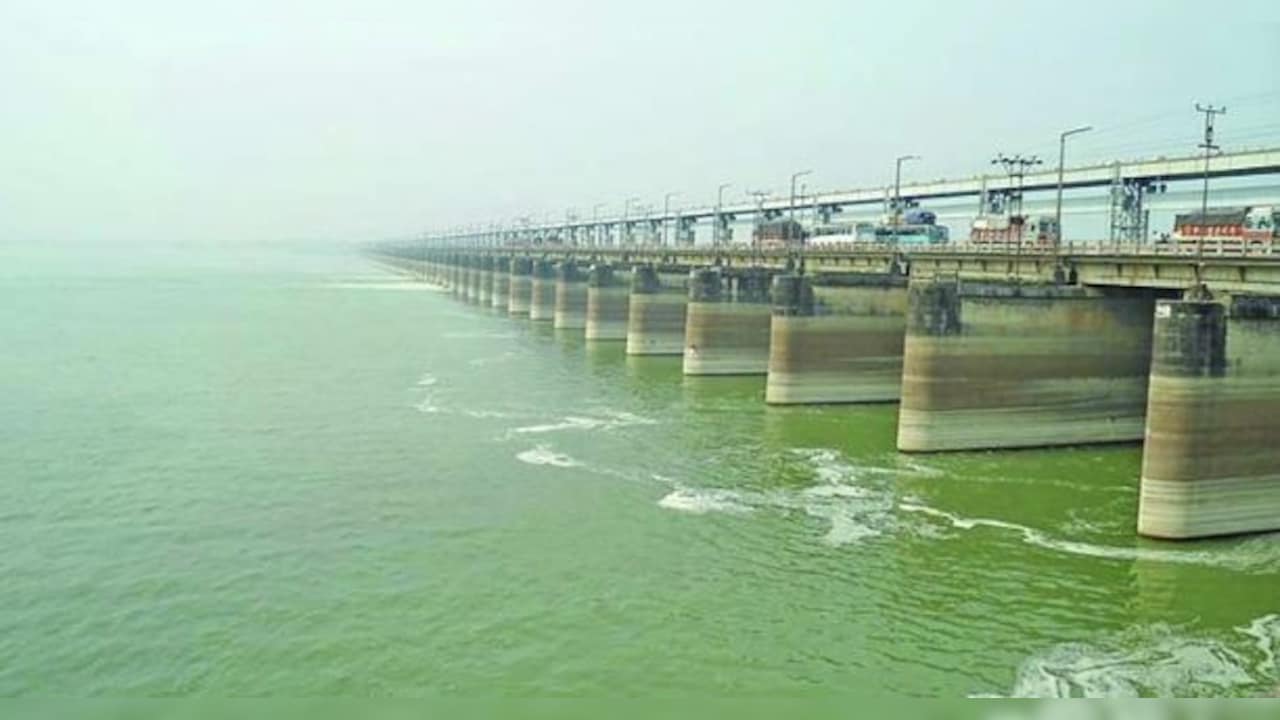
The Ganga Water Treaty between India and Bangladesh is likely to lapse as Bangladesh remains adamant on a guarantee clause in the treaty before it is renewed. But even if the treaty lapses, Bangladesh does not have to worry too much about sharing of Ganga waters.
Bangladesh wants to start formal negotiations on a guarantee clause and the country has written to India about it. India has concern on the issue.
The foreign ministry said India is not going beyond the established bilateral mechanisms when it comes to talks on the Ganga Water Treaty.
"On the Ganga Water Treaty, as I have said before, there is an established mechanism for this purpose, for discussion between India and Bangladesh. You have the Joint Rivers Commission which looks into all cross-boundary rivers issue, including the Ganga," Ministry of External Affairs Spokesperson, Randhir Jaiswal said.
"The expiry of the 1996 Ganga Water Treaty would technically remove the existing treaty-based framework for sharing and monitoring the waters of the Ganga at Farakka, but it in no way means that India acquires an unrestricted or unilateral prerogative over the river's waters. There is an important distinction between the expiry of a bilateral treaty and the disappearance of international obligations.
Even in the absence of a specific treaty, the broader principles of international watercourse law, including equitable and reasonable utilisation, cooperation and the obligation to exercise due diligence to prevent significant transboundary harm, remain relevant," Uttam Kumar Sinha -- a leading scholar and commentator on transboundary rivers, climate change and the Arctic -- told NDTV.
"India, as a responsible upper riparian state, has every reason to uphold these principles. Its commitment to them should not be contingent on the continuation of any single treaty. In other words, a lapse/expiry would create a legal and institutional vacuum in the specific arrangements governing water sharing, but not a situation in which India becomes free to act without regard to Bangladesh," Sinha, a Senior Fellow at the Manohar Parrikar Institute for Defence Studies and Analyses told NDTV.
Under its existing water-sharing formula, the Ganga Water Treaty of 1996 signed between India and Bangladesh dictates that water is allocated every 10 days based on the flow recorded at Farakka point.
When the flow is 70,000 cubic feet per second (cusecs) or less, the two countries share it equally. If the flow ranges between 70,000 and 75,000 cusecs, Bangladesh receives 35,000 cusecs, with India taking the rest.
When the flow reaches 75,000 cusecs or more, India receives 40,000 cusecs and Bangladesh gets the rest.
There is an additional clause in the treaty that states that between March 11 and May 10 each year, both countries would receive a guaranteed 35,000 cusecs of water in alternate three 10-day periods.
The current treaty does not have a guarantee clause but it has an emergency provision. Article II(iii) states that "in the event flow at Farakka falls below 50,000 cusecs in any 10-day period, the two governments will enter into immediate consultations to make adjustments on an emergency basis, in accordance with the principles of equity, fair play and no harm to either party".
That makes the need for a guarantee clause less significant as water flow patterns have changed over the years.
Bangladesh is now demanding a guaranteed water-flow provision in a new Ganges water-sharing agreement as the 1996 treaty expires on December 12. No formal negotiations have started on its renewal or replacement with a fresh treaty.
With less than three weeks remaining before the treaty expires, authorities in Bangladesh said Dhaka is ready for negotiations with New Delhi and wants a stronger agreement to safeguard its fair share of Ganges water, particularly during the dry season when river flows decline.
Bangladesh's says its priority is to restore a guarantee clause similar to the one included in the 1977 water-sharing agreement, ensuring that Bangladesh receives a minimum amount of water even when the Ganges flow falls significantly.
Bangladesh's Water Resources Minister Md Shahid Uddin Chowdhury Anee told Bangladesh Sangbad Sanstha (BSS) that Bangladesh wants to secure its legitimate share of the river's water through a new agreement.
"Restoring a guarantee clause, similar to the one in the 1977 agreement, is a priority for Bangladesh. We are ready to hold talks with India and hope to reach a long-term and mutually acceptable solution," he said.
"India should be open to a sharing mechanism, but it should not accept an unconditional fixed-volume guarantee. There are three reasons. First, India has legitimate domestic requirements. The Ganga is not merely a transboundary river; it is central to the economic, agricultural and ecological interests of several Indian states. West Bengal's concerns about the Bhagirathi-Hooghly system and Kolkata port, as well as Bihar's concerns about river morphology,
sedimentation and flooding, cannot be overlooked. Any agreement must be politically and technically sustainable within India's federal structure," Sinha told NDTV, explaining India's concerns on a demand for a guarantee clause.
Signed on December 12, 1996, the Ganga Water Treaty provides for monitoring water flows at the Farakka Barrage in India and the Hardinge Bridge point in Bangladesh from January 1 to May 31 each year.
The 1977 Agreement on the Sharing of the Ganga Waters at Farakka included a minimum-flow safeguard for Bangladesh. The 1996 Treaty adopted a different arrangement.
Article XI provides that India will release at least 90 per cent of Bangladesh's calculated share under the agreed formula in specified circumstances. This is not the same as an unconditional guarantee of a fixed volume throughout the dry season, Sinha explained.
Experts point out that India stands to gain nothing by denying Bangladesh its fair share but current realities have to be taken into consideration before agreeing to a guarantee clause.
"The question is not whether Bangladesh should receive assurances. It is what kind of assurance is hydrologically realistic and politically sustainable. A fixed minimum guarantee of 35,000 or 40,000 cusecs, irrespective of actual availability, would be problematic. River flows are not constant. They are influenced by rainfall, upstream withdrawals, changing climatic conditions and increasing domestic requirements on both sides. These have changed substantially since 1996," Uttam Kumar Sinha said.
KioskNews shows a cleaned-up reading view extracted from the publisher’s page — the original always lives on their site, not ours.