10 Greatest Horror Movie Sequels That Outshine Their Originals

Senior Music Editor at Screen Rant, Sarah's love of sound and story drive the beat. A globetrotting brand whisperer and award-winning journalist, she’s built cross-cultural narratives around the world—but music has always been her true north. She launched DJ Mag North America, successfully introducing the iconic UK brand to the U.S. market. Previously, she carved a space for EDM inside the pages of VIBE, blending electronic and hip-hop culture long before it was trendy.
Horror franchises have a habit of continuing long after their best ideas have run out. For every sequel that expands a great premise, several simply bring the killer back, increase the body count, and hope audiences will not notice that most of the tension disappeared somewhere around movie three. The genre's endless appetite for reboots and reinventions proves starting over is always an option too.
Occasionally, though, the sequel is where everything clicks. A filmmaker understands what audiences responded to the first time, a larger budget finally does justice to the concept, or the follow-up takes a risk the original could not. Some horror franchises needed movie two to discover what they were supposed to be.
"Better" does not necessarily mean scarier. Filmmaking, performances, originality, influence, and how successfully a sequel expands upon its predecessor all count. Plenty of horror sequels are better than their reputations suggest, but these movies go further. There is a genuine case that each represents an improvement on the original.
The first movies deserve credit for opening the door. These 10 walked through it and found something better waiting on the other side.
Smile 2

The first Smile turned a simple image into an extremely effective horror hook: strangers wearing impossibly wide grins moments before something terrible happens. Parker Finn's 2024 sequel keeps the curse but trades therapist Rose Cotter for Naomi Scott's Skye Riley, a global pop star preparing for a comeback after addiction, injury, and public scandal.
Celebrity turns out to be the perfect environment for the Smile Entity. Skye already lives surrounded by people watching her, judging her, and expecting a performance no matter how she feels. Scott throws herself into that breakdown so completely that her work belongs among horror performances worthy of awards attention. The original found a great monster. Smile 2 finds a much stronger world for it to invade.
Evil Dead II

Calling Evil Dead II a conventional sequel remains complicated. Sam Raimi begins by rapidly reworking the events of The Evil Dead before continuing Ash Williams' nightmare, almost as though he received a second chance to make the same idea after figuring out what was missing.
The answer was Bruce Campbell. Ash transforms from fairly ordinary horror survivor into chainsaw-wielding physical-comedy hero while Raimi pushes possession, gore, and slapstick together until distinguishing one from another becomes pointless. There is a reason 1987 remains one of the great years in horror history. The first Evil Dead is an ingenious low-budget horror movie. Evil Dead II is where the franchise discovers its personality.
The Purge: Anarchy

The original Purge has an enormous premise and spends most of its runtime inside one affluent family's house. Once a year, virtually every crime becomes legal for 12 hours, yet audiences see surprisingly little of what that actually means outside one home.
The Purge: Anarchy fixes the problem immediately by opening the front door. Frank Grillo's Leo Barnes moves through Los Angeles during Purge Night alongside strangers caught outside when the sirens sound, revealing how radically the event affects different parts of the city. James DeMonaco did not need to reinvent his premise. He simply needed to finally show audiences the movie they imagined when they first heard it.
Bride Of Frankenstein

James Whale's 1931 Frankenstein helped define Universal horror, so surpassing it should have been close to impossible. Four years later, Bride of Frankenstein gave Boris Karloff's Monster considerably more room to become a character rather than simply a creature pursued by frightened villagers.
The Monster learns to speak, experiences friendship, and reveals how deeply he wants companionship. Whale also grows stranger and funnier behind the camera, aided enormously by Ernest Thesiger's wonderfully eccentric Dr. Pretorius. Elsa Lanchester has remarkably little screen time as the Bride herself, yet created one of horror cinema's defining images. Frankenstein created an icon. Its sequel discovered how tragic he was.
Terrifier 2

Damien Leone's first Terrifier established Art the Clown as a memorably horrible new slasher villain, with David Howard Thornton turning silence, mime, and extreme violence into a surprisingly distinct personality. The movie surrounding him was much thinner.
Terrifier 2 gives Art something the original desperately needed: an opponent audiences actually care about. Lauren LaVera's Sienna Shaw becomes a genuine final girl rather than another potential victim, while the movie grows stranger and more ambitious without abandoning the practical gore that built Art's reputation. The sequel is excessive in almost every respect, including its runtime, but it turns a memorable killer into the center of an actual franchise.
Dawn Of The Dead

Arguing against Night of the Living Dead feels almost unreasonable considering George A. Romero's 1968 movie essentially established the modern zombie. Dawn of the Dead earns the argument anyway by showing just how much further Romero could take the idea with a larger canvas.
Moving the apocalypse into a shopping mall gives the survivors an ingenious fortress while handing Romero an obvious target for his satire. The zombies multiply, the gore gets more elaborate, and consumer culture continues almost automatically after society has collapsed. Night changed horror history. Dawn takes that invention and builds an entire world around it.
Friday The 13th Part VI: Jason Lives

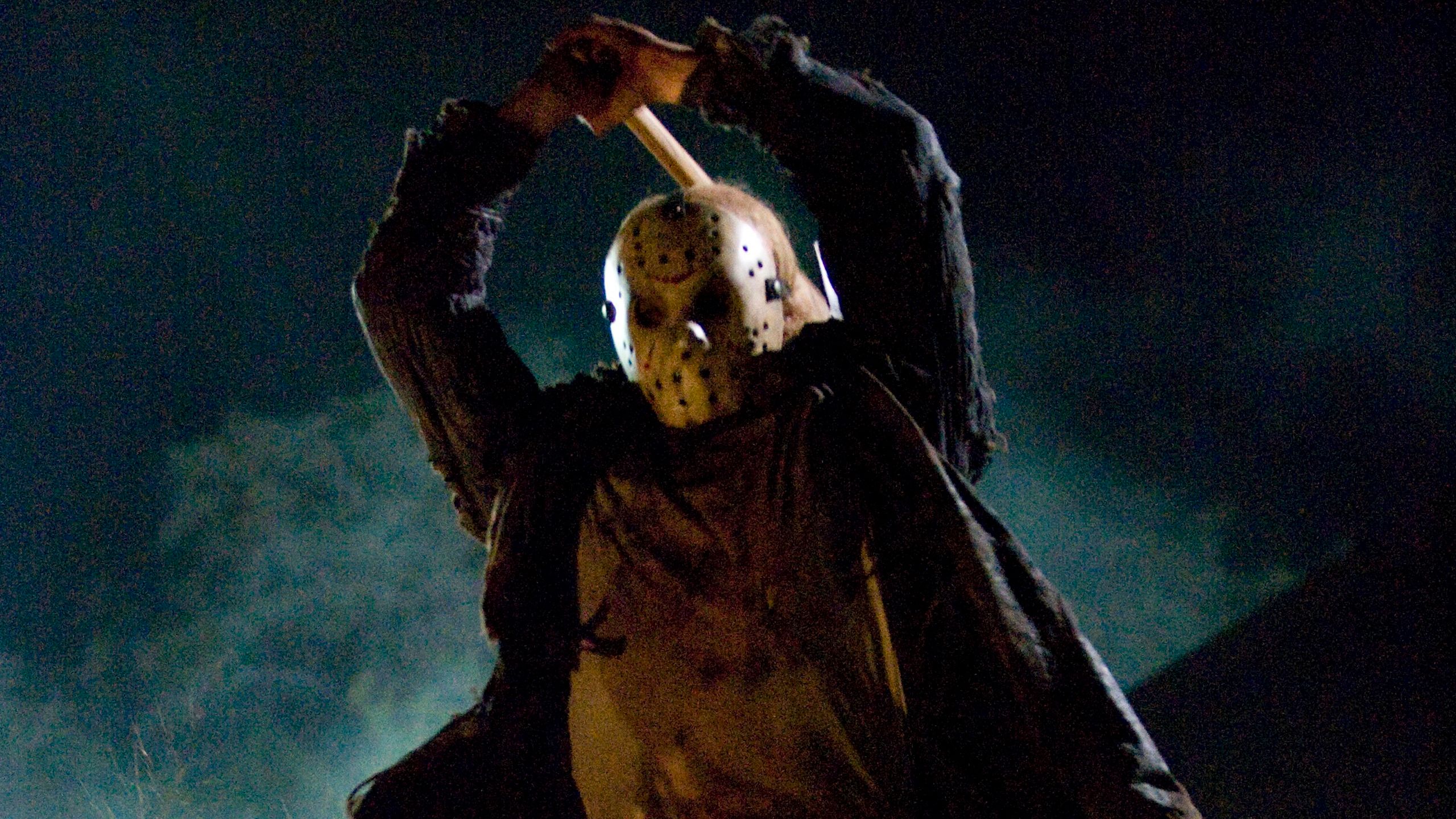
The original Friday the 13th is important to slasher history, but it does not even contain the version of Jason Voorhees that most people now associate with the franchise. Five movies later, the series had killed Jason, replaced him, and reached the point where pretending any of this was realistic seemed increasingly silly.
Writer-director Tom McLoughlin made the smart choice with 1986's Jason Lives: bring Jason back with lightning, make him explicitly supernatural, and let the movie have a sense of humor. The franchise would become one of several horror series that grew considerably sillier over time, but here that shift works. Jason Lives finally understands that Jason is no longer merely a killer. He is the attraction.
The Devil's Rejects

Rob Zombie's House of 1000 Corpses introduces the Firefly family through a barrage of color, editing tricks, grotesque imagery, and general sensory assault. There are memorable ideas everywhere, although the movie sometimes seems determined to throw all of them at audiences simultaneously.
The Devil's Rejects strips much of that away. Sid Haig, Bill Moseley, and Sheri Moon Zombie take Captain Spaulding, Otis, and Baby onto the road, where Zombie replaces psychedelic horror with the dirtier feel of a 1970s exploitation movie. The simpler approach makes the Firefly family considerably more disturbing because there is less visual noise separating viewers from them. The first movie introduced these monsters. The sequel made them memorable.
V/H/S/2

The first V/H/S had the perfect setup for a horror anthology. Different filmmakers could use found footage however they wanted, with no need to sustain a single concept for feature length. Unsurprisingly, the results were uneven.
V/H/S/2 tightens the formula and contains the segment that remains the franchise's benchmark. Gareth Evans and Timo Tjahjanto's "Safe Haven" sends a documentary crew into an Indonesian cult compound before escalating from uncomfortable to utterly deranged. Elsewhere, "A Ride in the Park" lets audiences experience a zombie outbreak from the zombie's perspective. The first film proved the format worked. Movie two showed how inventive it could become.
Aliens

Ridley Scott's Alien is already close to untouchable, which makes Aliens perhaps the hardest argument on this list. James Cameron wisely avoids trying to repeat it. Ripley returns to LV-426 with Colonial Marines, bigger weapons, and enough Xenomorphs to transform the intimate terror of the first movie into a full-scale nightmare.
More creatures do not make the Xenomorph less frightening. Watching heavily armed soldiers discover how little their firepower matters may actually make the species seem more dangerous. Ripley's relationship with Newt also gives Sigourney Weaver the emotional center of the movie, while the Alien Queen expands the mythology without explaining away what made the creatures terrifying.
Cameron's sequel sits at the intersection of action, horror, and the kind of ambitious science fiction that can grow considerably more celebrated over time, much like several sci-fi movies now considered masterpieces. Whether Alien or Aliens is technically the better movie may never be settled. What makes Aliens extraordinary is that the question is even worth asking.
KioskNews shows a cleaned-up reading view extracted from the publisher’s page — the original always lives on their site, not ours.