The 10 Most Hopeless Thriller Movies of All Time, Ranked

Diego Pineda has been a devout storyteller his whole life. He has self-published a fantasy novel and a book of short stories, and is actively working on publishing his second novel.
A lifelong fan of watching movies and talking about them endlessly, he writes reviews and analyses on his Instagram page dedicated to cinema, and occasionally on his blog. His favorite filmmakers are Andrei Tarkovsky and Charlie Chaplin. He loves modern Mexican cinema and thinks it's tragically underappreciated.
Other interests of Diego's include reading, gaming, roller coasters, writing reviews on his Letterboxd account (username: DPP_reviews), and going down rabbit holes of whatever topic he's interested in at any given point.
Sign in to your Collider account
Often, the best part about cinema is the escapism it provides. A lot of times, we turn to stories in order to provide mental rest and temporary relief from the stress of everyday life, and movies are usually among the best possible ways to find that kind of entertainment. However, if there's one genre that can get away with being absolutely bleak, cynical, and downright hopeless, it's thriller films.
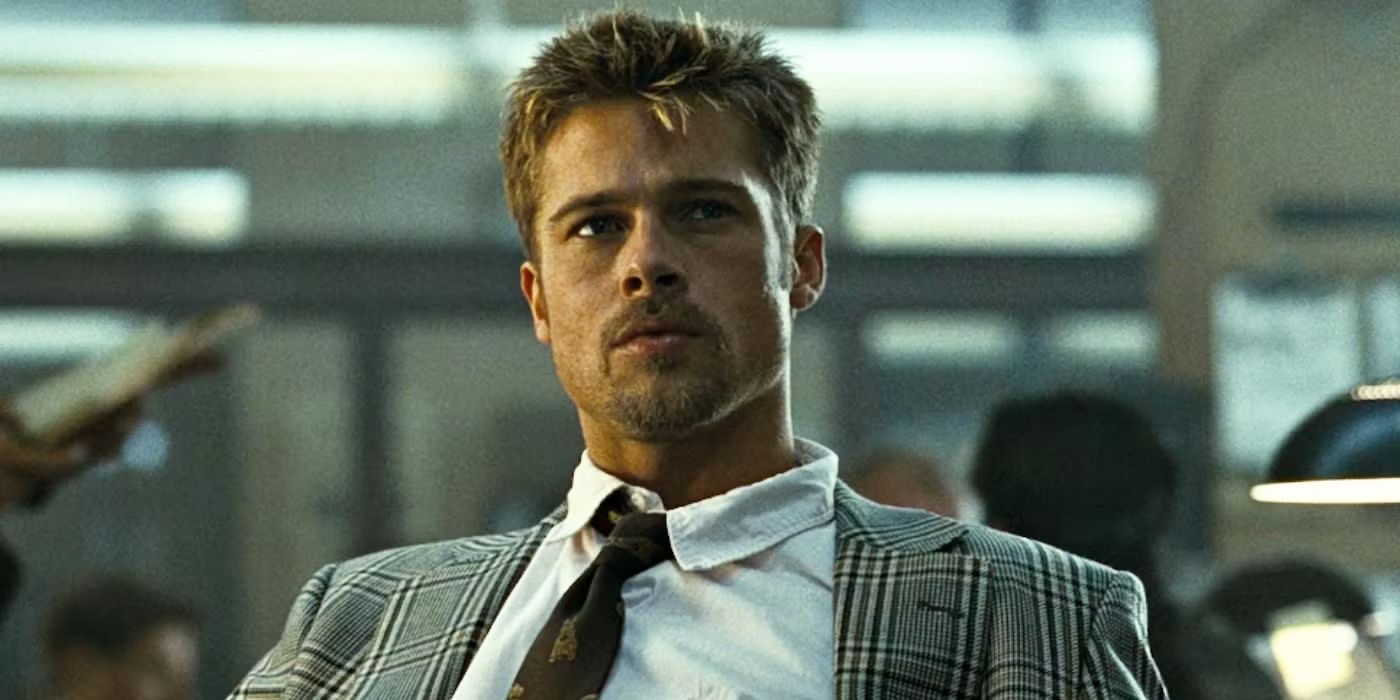
Whether it's an action thriller like Oldboy, a crime thriller like Se7en, or any other sort of movie that's all about building suspense and tension, many of the greatest thriller movies of all time just so happen to be absolutely hopeless movies. Narratively, aesthetically, and in terms of how their characters' spirits are usually crushed beyond repair, these are films which refuse moments of relief or victory that make their heroes—or even the audience—feel like there's any sort of escape from the darkness of the world. Suffering, punishment, and futility are the order of the day here.
There are spoilers ahead for each entry mentioned!
10 'I Saw the Devil' (2010)
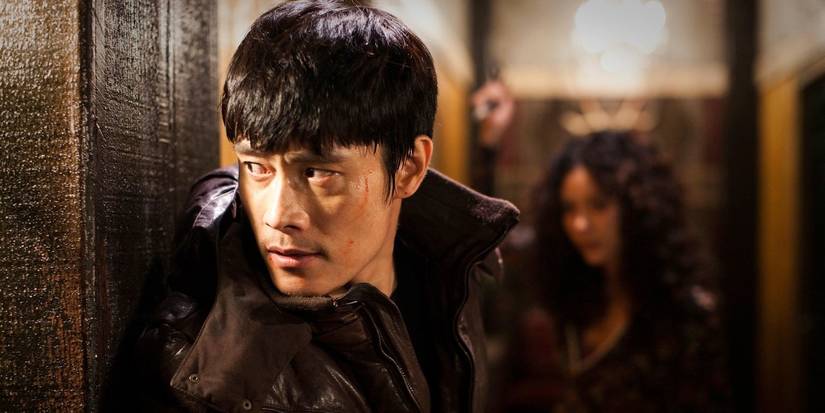
No one does thriller cinema quite like South Korean filmmakers, and few South Korean thrillers are better than Kim Jee-woon's I Saw the Devil. It's one of the best ultraviolent action movies of all time, about a secret agent who embarks on a brutal quest for vengeance after a sadistic serial killer brutally murders his pregnant fiancée. As far as 21st-century revenge thrillers go, it doesn't get much more engaging than this.
Denies audiences the kind of hopeful emotional catharsis that comes with a lot of the greatest revenge movies of all time.
Compelling though I Saw the Devil may be, however, it denies audiences the kind of hopeful emotional catharsis that comes with a lot of the greatest revenge movies of all time. Indeed, where many revenge thrillers follow a somewhat predictable arc where the protagonist eventually either succeeds in their quest or learns to forgive and forget, I Saw the Devil subverts that trope in the darkest of ways. Our protagonist catches his fiancée's killer pretty early into the film, torturing him and planting a tracking device on him in order to spark a sadistic game of cat-and-mouse. It's dark, it's tragic, and it's devoid of any kind of satisfaction.
9 'Arlington Road' (1999)

Starring Jeff Bridges, Tim Robbins, and Joan Cusack, Mark Pellington's Arlington Road is one of those forgotten '90s thrillers that have aged like fine wine. In it, a grieving university professor becomes dangerously obsessed with proving that his seemingly ordinary new neighbors are actually domestic terrorists planning a lethal attack.
While most Hollywood thrillers tend to assure audiences that justice will prevail and the hero will eventually expose the truth, Arlington Road offers a masterful dismantling of every element of hope that its narrative may have seemed to have on the surface. Not only do the villain and his terrorist cell succeed here: their plan actually works perfectly without a single hitch, destroying the hero in the process. It's an absolutely haunting story where evil thrives, gets to rewrite history as a whole, and then walks away unscathed.
8 'No Country for Old Men' (2007)
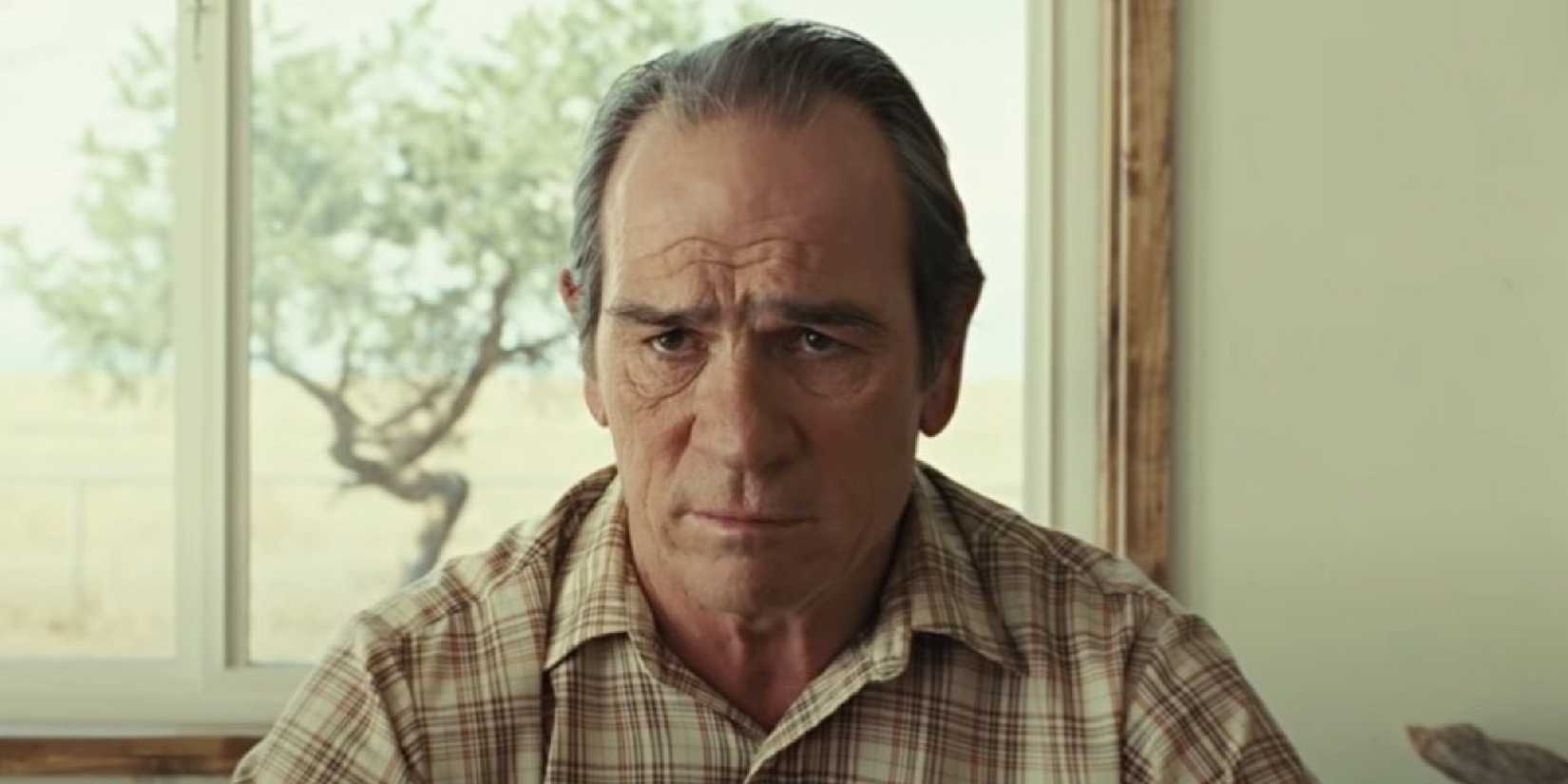
Based on a 2005 novel that Cormac McCarthy actually initially envisioned as a screenplay, No Country for Old Men may very well be Joel and Ethan Coen's best work to date. Part neo-noir, part neo-Western, it follows a man who stumbles upon a drug deal gone wrong and $2 million dollars in cash, sparking a violent cat-and-mouse chase with a ruthless hitman and an aging local sheriff trying to make sense of the bloodshed.
It's one of the bleakest thrillers of all time, perhaps even better than the already-perfect McCarthy book it's based on. Its level of philosophical depth is in no means opposed to the nihilism and cynicism with which the Coens approach the narrative, illustrating the meaninglessness of fate and the arbitrary nature of death. What hope could there possibly be in a thriller whose main antagonist is the terrifying Anton Chigurh?
Collider Exclusive · 8 Questions · 2 Minutes Which Coen Brothers Movie Would You Thrive In? Lebowski · O Brother · Fargo · No Country
Nobody writes people like the Coen brothers. The decent ones. The talkers. The ones who stopped trying years ago. And the ones who can already see how bad this is going to get. Four films, four completely different ways of handling trouble. Eight questions decide which one you would actually walk out of.
🎳Lebowski(1998)
🎸O Brother(2000)
❄️Fargo(1996)
🪙No Country(2007)
01
A bag of money lands in your lap. What happens next? Every Coen film starts roughly here. It never goes smoothly.
02
Somebody is being completely unreasonable with you. How does it go? Coen dialogue is mostly people failing to understand each other.
03
What is your actual relationship with work? Everyone in these films is either working far too hard or not at all.
04
Long drive, bad weather, nobody else on the road. How are you? There is always a drive in these films. It is never a good drive.
05
You are offered a shortcut that is not quite legal. This is the moment where the Coens find out who you really are.
06
The plan has fallen apart completely. What is your move? In a Coen film the plan always falls apart. That is the genre.
07
Which of these sounds most like something you would say? Nobody writes a line quite like the Coens. Which one is yours?
08
How does your film end? Eight questions in, this is the one that decides your movie.
The Verdict Is In Your Coen Film Is…
Four films, four completely different ways of handling money, trouble and other people. This is the one you would survive, why it suits you, and what it would cost you to be there.
The Big Lebowski
You have quietly arranged your life so that very little can get to you, and a surprising number of people find that infuriating. You would be completely at home here.
- The Dude is the only person in the film with no ambition, and the only one who comes out the other side undamaged. That is not an accident.
- You do not chase things. You let situations arrive and you deal with them at your own pace, which is a genuine skill however lazy it looks.
- This is a full crime plot happening around a man who mostly wants his rug back, and that is exactly the energy you would bring to it.
- Everything goes wrong. You abide. The film ends.
O Brother
You talk your way through life and it works far more often than it should. Give you a bad situation and an audience and you will find a way out of both at once.
- Everett never has a plan that survives contact with reality. He has something better, which is the ability to keep talking until a new one turns up.
- You are the optimist in the group, the one who makes a ridiculous idea sound reasonable at two in the morning.
- This is the warmest film the Coens have made. It is a chase, a comedy and a musical at once, and nobody in it is quite beyond saving.
- You would end up famous entirely by accident, and act like you planned it all along.
Fargo
You would survive Fargo because you are the only kind of person who does: patient, decent, and completely unimpressed by anybody trying to be clever.
- Marge Gunderson solves the whole case by being polite, thorough and unhurried while everybody around her panics. That is the entire argument of the film.
- You do the boring parts of the job, which is precisely why you would notice the thing everyone else walked straight past.
- Fargo is about ordinary greed causing enormous damage, and about one person who simply refuses to be corrupted by any of it.
- You would go home at the end of it, have dinner, and sleep perfectly well.
No Country
You do not expect the world to be fair and you stopped being surprised about it a long time ago. That clear-eyed quality is exactly what this film asks for.
- No Country is the Coens at their coldest: a film where being smart, fast and careful might still not be anywhere near enough.
- You plan for the worst, you keep your own counsel, and some part of you is already working out the exit.
- Llewelyn Moss is competent, prepared and resourceful, and the film is honest about whether any of that is ever sufficient.
- You would see it coming. Whether that helps is the one question the film refuses to answer.
7 'Se7en' (1995)
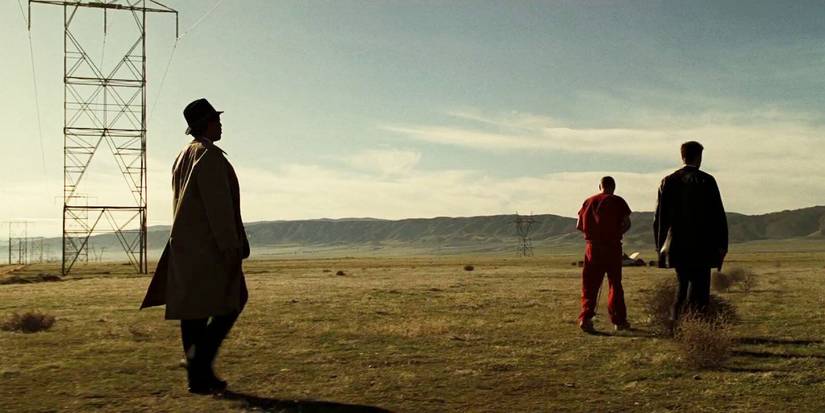
After the all-around failure that was Alien 3, David Fincher desperately needed to deliver a hit in order to be taken seriously as a filmmaker before his reputation was forever tarnished. His answer to that problem was Se7en, perhaps the single darkest film ever to make over $300 million dollars at the box office. It's about two homicide detectives, one a retiring veteran and the other an idealistic rookie, who are hunting down an elusive serial killer basing his murders on the seven deadly sins.
One of the most iconic and downright perfect thriller movies of all time, Se7en proved to be nothing short of a career-defining directorial triumph for Fincher. Though studio executives initially wanted screenwriter Andrew Kevin Walker to make changes to the ending in order to make it more hopeful, that hopelessness was precisely the quality that drew Fincher to the project. From beginning to end, Se7en remains so grim, violent, and deeply cynical that it makes it impossible not to start rethinking about one's own views of humanity.
6 'The Road' (2009)
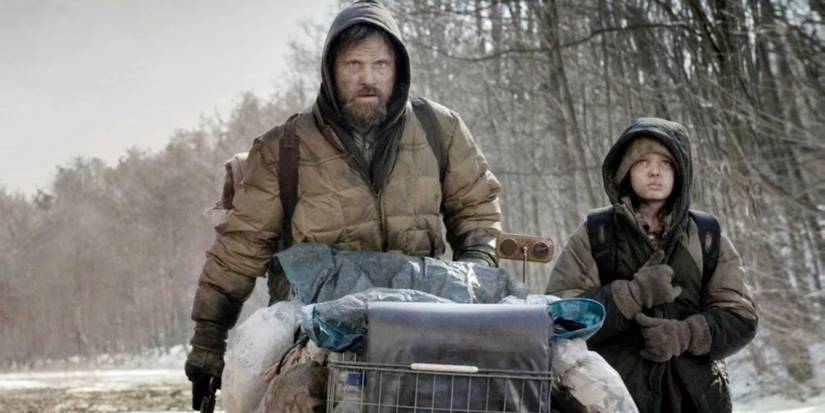
Yet another exceptional film based on an equally exceptional Cormac McCarthy novel, John Hillcoat's The Road is easily one of the heaviest adventure movies of all time. Adapting a Pulitzer Prize recipient for the big screen can never be anything short of a titanic task, but Hillcoat did so marvelously with a film that's every bit as potently bleak and hopeless as McCarthy's source material.
The post-apocalyptic subgenre of thriller cinema tends to be among the darkest, most hopeless varieties of thriller films, but The Road nevertheless feels unparalleled in how it depicts survival in a decaying world as more of a punishment rather than an act of heroism. The world is truly beyond repair in The Road, and humanity has collapsed into monstrosity. Survival is a burden, death feels dangerously alluring, and Hillcoat ultimately keeps refusing to offer the audience any escape from the grueling reality of the narrative's cold world.
5 'Oldboy' (2003)

Based on the Japanese manga Old Boy by Garon Tsuchiya and Nobuaki Minegishi, Oldboy is yet another piece of evidence that no one approaches thriller filmmaking quite like South Korean auteurs. It's arguably Park Chan-wook's magnum opus, even though it's so brutal and unforgiving in its approach to action, plotting, and character work that it's definitely not fit for all kinds of cinephilic palates.
As exceptional as it is from top to bottom and from beginning to end, Oldboy is also among the most disturbing non-horror movies of all time, but those with the stomach for it are in for a hell of a ride. What is initially presented as a gritty, exhilaratingly violent revenge story gradually transforms into something far more horrifying, until the gut-wrenching reveals of the third act that show our protagonist was actually never the one in control. After the darkness of everything that transpires in those final few minutes of the story, nothing else seems to matter anymore.
4 'Cure' (1997)

In Kiyoshi Kurosawa's Cure, a Tokyo detective starts investigating a wave of gruesome murders committed by ordinary citizens, only to find that they're all connected to an enigmatic amnesiac using hypnosis to unleash people's darkest repressed impulses. Through such a premise, Kurosawa delivers one of those thriller movies that are a masterclass in suspense.
Indeed, this J-horror masterpiece achieves its harrowing effect by building a slow-burning sense of tension that forces the audience to confront a question that's never comfortable to confront: What would it take to push them into violence? It's a simple enough premise, but one that Kurosawa approaches through such overwhelming dread and darkness that any illusion of hope you might have had going in is crushed well before the credits roll.
3 'Chinatown' (1974)

Made from a Robert Towne screenplay that's easily among the greatest screenplays in the history of cinema, Chinatown fittingly happens to be one of the best films to have come out of the New Hollywood film movement. Set in 1937 LA, it follows a private investigator who's hired to expose a marital infidelity, but it leads him to uncover a dark web of corruption, theft, murder, and incest.
As explosive as its premise may make it sound, however, Chinatown is actually one of those great noir thrillers that are quietly intense, until all of that subtle tension boils over in one of the most hopeless third acts in the history of mainstream Hollywood cinema. Whereas most detective films have the detective protagonist gradually find the answer to a mystery, Chinatown only sees its dark mystery get bigger and bigger, until it becomes too hopeless for any one man to handle.
2 'The Mist' (2007)

There are very few filmmakers who are better at adapting Stephen King's work than Frank Darabont, and even though The Mist is far from being the director's best Stephen King movie to date, it's nevertheless an absolutely phenomenal psychological horror thriller. Its story follows a group of local townspeople who are trapped inside a Maine supermarket after a mist filled with violent creatures suddenly appears.
It may seem like a straightforward enough premise on paper, but Darabont executes it in such a way that the horror and panic never go away. What cements The Mist as one of the saddest Stephen King movies ever, however, is its downright cruel ending. There is no sense of catharsis or satisfaction in watching our hero mercy-kill his family, only to be rescued and see the mist disappear right as he runs out of bullets to take his own life.
1 'Funny Games' (1997)

The legendary German-born Austrian filmmaker Michael Haneke has always consistently critiqued how violence is neatly packaged by the media and consumed as entertainment. The peak of his commentary on the issue came with the original Funny Games, one of the most subversive psychological thrillers of all time, about an affluent family who's trapped and tortured by a pair of sadistic young men in their own lakeside vacation home.
Though Haneke keeps the vast majority of the violence and torture off-screen, what makes Funny Games such a disturbing and hopeless movie is that the director makes the audience directly complicit in the violence. Through its meta framing, the movie seems to be mocking us for having any hope that the family will somehow be okay, while simultaneously asking us why we'd watch a film like this and expect to be "entertained" in the first place. Almost 30 years later, it's still hugely effective.
KioskNews shows a cleaned-up reading view extracted from the publisher’s page — the original always lives on their site, not ours.