Policy blocks giving disability pension to outboarded military cadets: Centre to SC
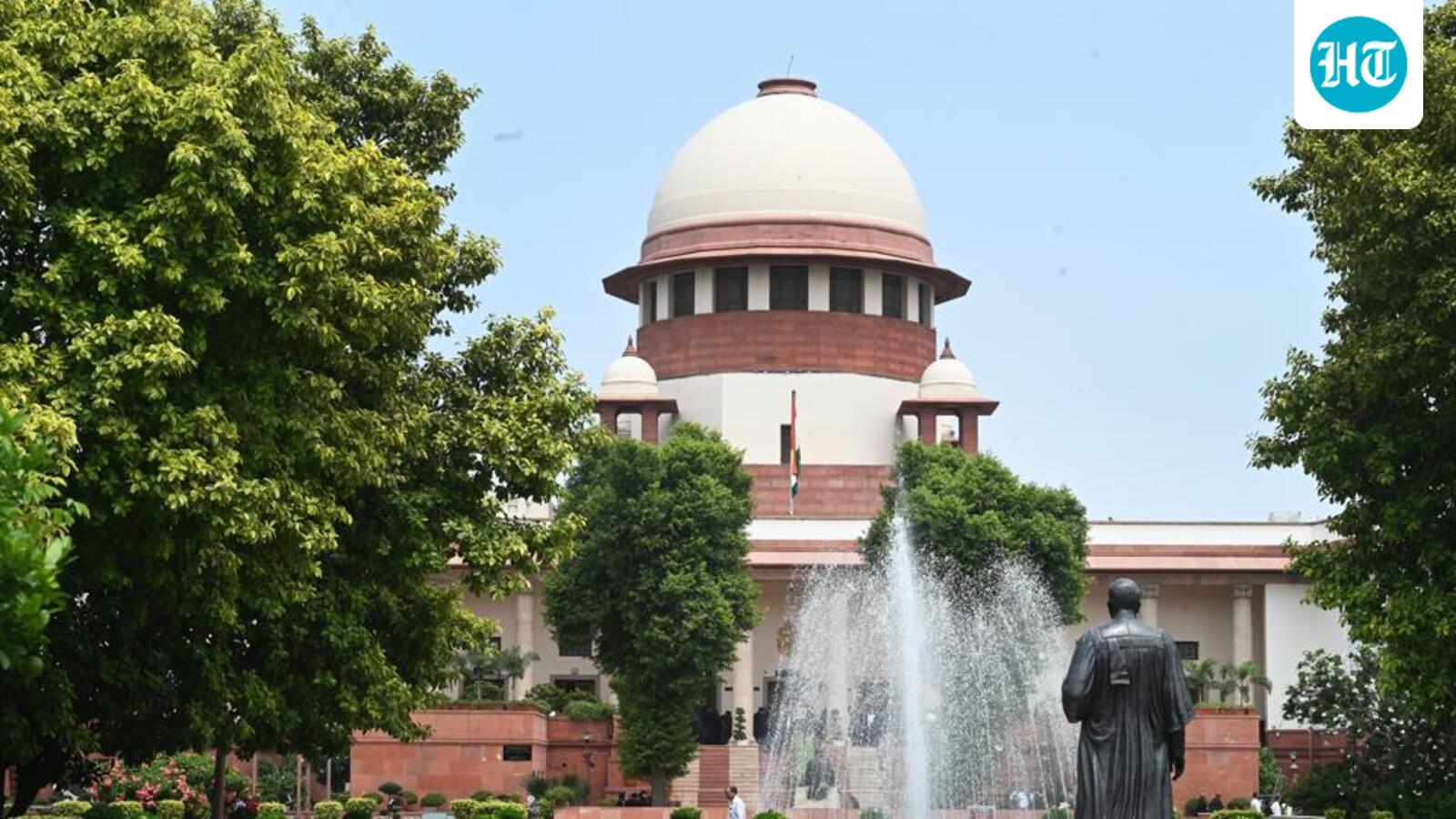
The Centre has told the Supreme Court that there are “policy constraints” in granting disability pension to military cadets who were boarded out on disability grounds. But is said that such cadets will be supported through professional courses for skill development to enable their resettlement in life.
The response filed on Monday came in a matter where the court took suo motu cognizance of a news report last year highlighting the plight of military cadets boarded out on medical grounds. These cadets do not get disability pension and are denied ex-servicemen status, which would have let them get jobs under this category. On August 4, the court asked the Centre to consider a scheme for rehabilitating them and to reconsider their objection for granting disability pension.
The response was filed by the Ministry of Defence on Monday and said that the Directorate General of Resettlement (DGR), which functions under the Department of Ex-Servicemen Welfare (DESW), had on August 25 prepared a draft action plan of “Skill Training of Disabled Boarded Out Cadets”.
This envisages introduction of short-duration, structured orientation modules of eight to 10 weeks to facilitate the transition of these disabled cadets from military training environments to “corporate and administrative ecosystems”. The courses designed are commensurate to their educational qualification, medical fitness and aptitude and are under four broad heads: graduate, non-graduate, technical and non-technical.
The Centre has already proceeded ahead with this plan as multiple memorandum of understanding (MoU) have been signed with leading universities and colleges across the country to enable lateral entry to cadets to enable their integration into the courses with minimal or no loss of academic time.
A bench of justices BV Nagarathna and R Mahadevan took the response on record and posted the matter for further hearing on October 7. The court was assisted by amicus curiae and senior advocate Rekha Palli, who was not present during the hearing on health grounds.
The amicus had urged the court that these cadets should be entitled to “ex-servicemen” benefits while referring to a 2015 recommendation made by Sabharwal Committee, led by Lt Gen Mukesh Sabharwal (retd) who suggested that such cadets boarded out on medical grounds be provided ex-servicemen status. The court in its August 4 order had asked the Centre to reconsider this decision in light of the recent proceedings begun by the court.
The Centre said that this issue was considered on two previous occasions in 2011 and 2022 and rejected. It said, “It is respectfully submitted that DESW on September 1, 2022, had expressed non-feasibility with regards to the proposal for grant of disability pension to ex-cadets boarded out during training due to policy constraints.”
Palli told the court that the outboarded cadets receive an ex-gratia which is not comparable to the amounts paid to a soldier or a trainee officer. She pointed out that a recruit with 20% disability ends up getting a minimum of ₹18,000 per month while a cadet who is entitled to a higher pay on being commissioned as an officer, gets only ₹12,000 as ex-gratia, which is pittance compared to over ₹36,000 that a paramilitary officer Group A rank gets.
The court even referred to the Rights of Persons with Disabilities (RPwD) Act which allows the appropriate government to earmark a minimum 4% posts of the total number of vacancies in the cadre strength in each group of posts meant for persons with benchmark disabilities of more than 40%. It asked the Centre whether the disabled cadets could be considered for disabilities below 40%.
On this aspect, the Centre said that the same would not be feasible. It said, “If the limited reservation vacancy were open to a person with minor or temporary impairment (below 40%), the quota would easily be filled up by individuals who face relatively few systemic and structural barriers.”
Since the initiation of suo motu proceedings by the top court, such cadets have been included under the Ex-Servicemen Contributory Health Scheme (ECHS ). The Centre had informed the court that each year roughly 40 cadets are boarded out due to injury during training at the National Defence Academy, Indian Military Academy, Officers Training Academy and their total numbers do not exceed 700. Such cadets receive an ex-gratia of ₹9,000 per month that may extend to 16,000 for 100% disability, besides attendant charges of ₹6,750 per month.
In addition, the three wings of the defence forces have their insurance schemes that propose various scales of payment including for cadets undergoing training. It provides ₹1.25 crore for death, ₹25 lakh for 100% disability that gets proportionately less depending on the scale of disability, and ₹50,000 for injury certified to be less than 20%.
KioskNews shows a cleaned-up reading view extracted from the publisher’s page — the original always lives on their site, not ours.