Iran vows not to back down after US rejects its Hormuz proposal
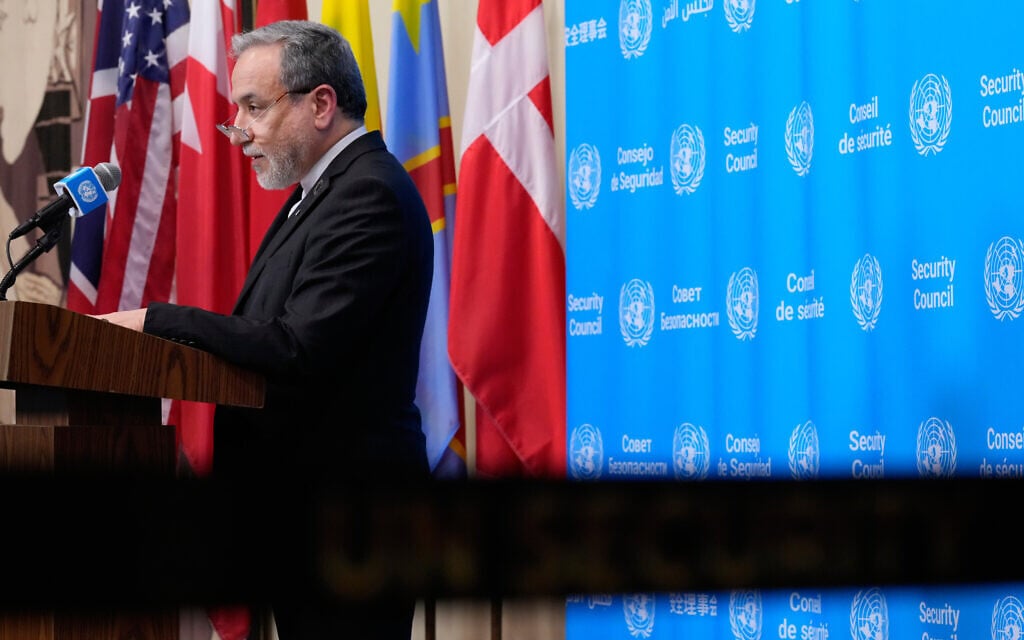
Iran stood firm Sunday on its conditions for reopening the Strait of Hormuz, after US President Donald Trump rejected its proposal, which had created some optimism around the prospect of breaking the war stalemate.
The waterway is key to the world’s energy supply and is now central to the conflict between Washington and Tehran, which was triggered nearly seven months ago with massive strikes on Iran.
Iran’s plan called for a cessation of all hostilities in the Middle East, including in Lebanon, according to Foreign Minister Abbas Araghchi, and fulfilling conditions in the ceasefire deal that fell apart months ago.
0:00 / 0:00
Promoted: Theatron Hotel and Residences

That agreement, which dissolved during fighting over Hormuz, called for the release of frozen Iranian assets, the lifting of sanctions on Iranian oil and an end to a US naval blockade.
“Our conditions are clear, and any move toward reopening the Strait of Hormuz is contingent upon these conditions being fulfilled. We will not back down from them,” Araghchi said on Sunday, state broadcaster IRIB reported.
Get The Times of Israel's Daily Edition by email and never miss our top stories
By signing up, you agree to the terms
“We have never closed the door to diplomacy or negotiations, but at the same time, we have never backed down from our rights.”
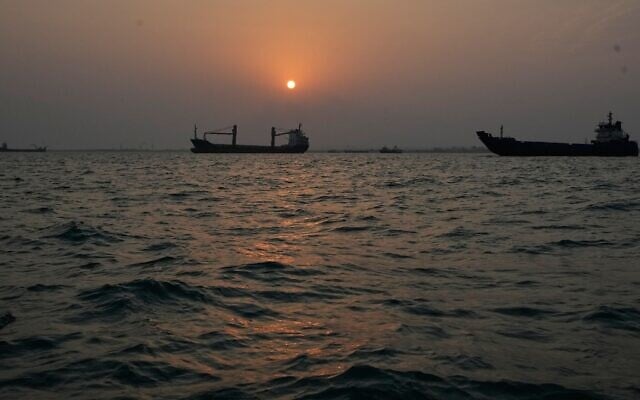
Iran announced a new proposal last week at the UN General Assembly in New York, saying it had been transmitted to the Americans via Qatari mediators. Trump on Saturday rejected the plan and argued that desperation was driving the Iranians’ push for an agreement on the key waterway.
“They want to make a deal where they open the Strait immediately because they’re losing so badly,” he told reporters. “They want to make a deal and I think that’s fine. I like making a deal too.”
Araghchi said on Sunday that the Iranians “saw the first reaction from the US president, but so far, nothing has been conveyed to us by the mediators.”
“We are waiting for the mediators to convey the definitive positions to us, and we will make a decision based on them,” the foreign minister added.
‘Tool for pressure’
Washington and Tehran signed a memorandum of understanding in June that aimed to end the war, reopen the strait and launch talks on Iran’s nuclear program.
But the deal broke down shortly afterward, when Iran fired on commercial ships in Hormuz that it accused of deviating from its approved route through the waterway.
In contrast to before the war, Iran now demands ships obtain authorization before passage, citing security and sovereignty reasons.
Ships that refuse to comply are regularly targeted, while the United States sporadically bombs Iranian coastal areas in retaliation.
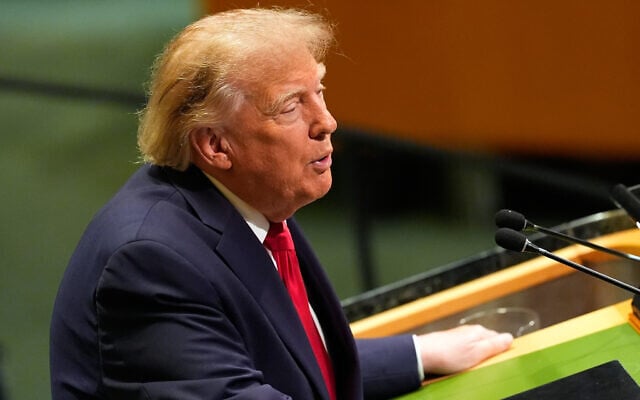
The US has imposed an economic blockade on Iran to put pressure on Tehran to stop Iranian attacks on vessels in the Strait, which have drastically reduced shipping through the area even as Trump repeatedly asserts that the US controls the waterway.
In New York, Iranian President Masoud Pezeshkian met with UN Secretary-General Antonio Guterres, according to his office, and said: “Iran has not walked away from the negotiating table but, given past experiences, it no longer trusts the United States.”
Araghchi said at the UN: “Iran has conveyed to the United States, through Qatar, a concrete seven-day plan. If the necessary conditions are met, the strait can be reopened, and normal maritime passage restored within seven days.”
“The choice now rests with the United States. Iran does not accept coercion, threats or intimidation, and Iran will not surrender its sovereign rights under pressure,” he added.
Pezeshkian says no faith in US as partner
Pezeshkian told Al Jazeera that Qatar and Pakistan are still mediating between Washington and Tehran, but that his country has lost faith in the US as a negotiating partner.
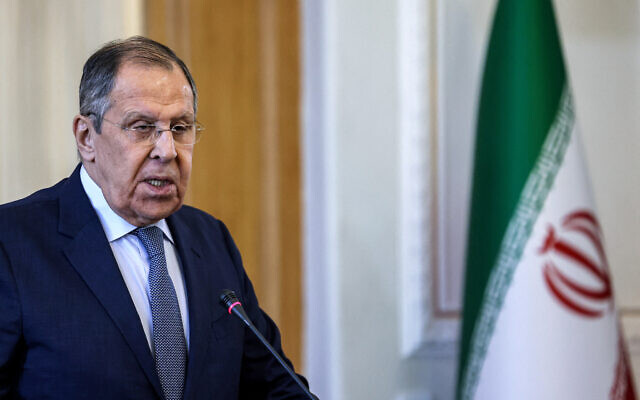
“We no longer have faith in Washington after the attacks and sanctions that have followed all negotiations,” Pezeshkian said in a Saturday interview. “Qatar and Pakistan are currently mediating between Iran and the US and are conveying our messages to Washington.”
The talks are based on the short-lived memorandum of understanding that the US and Iran signed in June and that later fell apart over disputes about the Strait of Hormuz, according to Pezeshkian.
“Solving the crisis around the strait is possible only through negotiations, not through use of force,” he said, adding that security will be achieved through regional cooperation, and that “we don’t need a regional policeman.”
“We’ve withstood the US-Israeli attacks, and will continue to stand firm,” he said.
FULL INTERVIEW: Iranian President Masoud Pezeshkian sat down with @margbrennan to discuss the Strait of Hormuz, the path for ending America’s war in Iran and what comes next for U.S.-Iran relations. Watch "Face The Nation" this SUNDAY at 10:30 a.m. ET for more. pic.twitter.com/t6cpUw3tYL
— Face The Nation (@FaceTheNation) September 26, 2026
In a separate interview with CBS, Pezeshkian said Tehran was ready for talks on its nuclear program and other issues, but would not accept “bullying or coercion,” and repeated the claim that development of such weapons is forbidden to the Islamic State on religious grounds.
Asked if he is prepared to invite Trump to Iran for direct negotiations, Pezeshkian appeared to rule out the possibility, saying the US attacks, which in the early stages of the war decimated the Iranian leadership, “made people extremely upset.”
US seeks to isolate Iran economically
Meanwhile, US Treasury Secretary Bessent said Saturday that he had sent envoys around the world to pressure countries to economically isolate Iran, hailing new restrictions targeting the country’s airlines and banks.
“At my direction, teams were dispatched across the globe to engage with countries and demand action against the Iranian regime,” he wrote on X. “These efforts are delivering results.”
Following the launch of Operation Economic Outcast, @USTreasury imposed targeted financial measures against banks and aviation service providers. At my direction, teams were dispatched across the globe to engage with countries and demand action against the Iranian regime.
These…
— Treasury Secretary Scott Bessent (@SecScottBessent) September 26, 2026
Bessent noted that Turkey and Oman have halted incoming flights from private carrier Mahan Air, while the United Arab Emirates has stopped all flights by Iranian airlines.
Dubai, the UAE’s commercial hub, is a major destination for Iran’s carriers, with multiple daily flights, a large Iranian community and close business links.
Bessent also highlighted new banking restrictions.
On Wednesday, the UAE central bank blocked transactions to and from Iran by branches of Iran’s Bank Melli, accusing it of violating laws on money laundering, terrorism and arms proliferation.
Last week, Turkey revoked the license of Iran’s Bank Mellat, a semi-private financial entity that has been subject to Western sanctions for years.
A Wall Street Journal article shared by Bessent said Jonathan Burke, the Treasury’s assistant secretary for terrorist financing, traveled across the Middle East and Europe over two weeks to push the plan to impose what Bessent called “economic D-Day” on Tehran.
US Treasury has held discussions with more than 50 countries, the Journal reported.
KioskNews shows a cleaned-up reading view extracted from the publisher’s page — the original always lives on their site, not ours.