How much sugar is in these 'sugar-free' Starbucks protein drinks? As much as a candy bar, claims lawsuit
Starbucks has been sued by U.S. consumers who said the coffee chain falsely advertised eight protein beverages as "sugar-free" because they contain lactose, a naturally occurring sugar in milk.
U.S. lawsuit says coffee chain falsely advertised eight protein beverages as 'sugar-free'
Natalie Stechyson · CBC News
·

Listen to this article
Estimated 5 minutes
The audio version of this article is generated by AI-based technology. Mispronunciations can occur. We are working with our partners to continually review and improve the results.

It's fair to say you probably have some idea what you're in for, sugar-wise, when you order a pumpkin spice latte or caramel macchiato from Starbucks.
But what should you expect if you're ordering a drink that's labelled "sugar-free?"
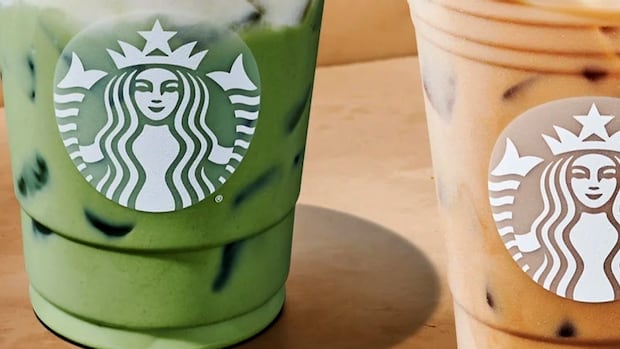
That's the question behind a proposed U.S. class-action lawsuit that claims the coffee chain falsely advertised eight protein beverages as "sugar-free," when they actually contain between 13 and 21 grams of sugar per venti-size serving due to the naturally occurring sugar in milk.
The lawsuit, filed Friday in a Seattle federal court and viewed by CBC News, accuses Starbucks of trying to capitalize on "the protein craze" and nutritional preferences of customers.
"By naming its beverages 'Sugar-Free,' Starbucks makes a specific, quantitative and verifiable claim about the nature of these beverages. Consumers rely upon such claims when deciding to purchase such products," the lawsuit says
"The 21 grams of sugar contained in a venti Sugar-Free Caramel Protein Matcha is roughly equal to five teaspoons of sugar. This is almost as much total sugar as is contained in a standard Kit Kat bar."

A screen grab of an Instagram post by Starbucks from Oct. 23, 2025, that advertises some protein beverages as sugar-free. (@Starbucks/Instagram)
A spokesperson for Starbucks told CBC News Wednesday they believe the lawsuit's claims have "no merit."
"Starbucks has consistently and clearly provided information about its protein beverages, sugar-free options, customization choices and nutritional content ... and we intend to vigorously defend ourselves," the spokesperson said.
So, are the drinks sugar-free, or not? Is the labelling misleading? And is it just U.S. drinks, or Canada, too?
Let's take a closer look at the lawsuit and what we know.
What are the drinks in question?
The lawsuit lists eight protein beverages that Starbucks labels as sugar-free:
- Sugar-free vanilla protein latte.
- Sugar-free caramel protein latte.
- Sugar-free vanilla protein matcha.
- Sugar-free caramel protein matcha.
- Iced sugar-free vanilla protein latte.
- Iced sugar-free caramel protein latte.
- Iced sugar-free vanilla protein matcha.
- Iced sugar-free caramel protein matcha.
Each item is available on both U.S. and Starbucks Canada websites under "protein beverages." And while the eight drinks are listed under a "no added sugar options" heading, each beverage currently has "sugar-free" in its title.
Starbucks launched the beverages in September 2025, citing statistics claiming that "71 per cent of Canadian consumers want to eat more protein." In a news release at the time, Starbucks noted its new protein drinks will be "available unsweetened or sugar-free and are designed to support customers looking to add protein to their order."
WATCH | Coffee chains cash in on protein craze:
Coffee chains look to cash in on protein’s popularity
September 2, 2025|
Duration
2:01
Starbucks will soon follow Tim Hortons as the latest coffee chain to offer additional protein in its caffeinated drinks, a move experts say is likely to benefit profit margins more than customers’ health.Are they sugar-free, or not?
No, each beverage contains sugar — anywhere between 13 and 21 grams per venti-size serving. At the higher end, that's about equivalent to the grams of sugar in a KitKat or Coffee Crisp chocolate bar, according to Health Canada.
When you click through the individual drinks on the company website, Starbucks lists nutritional information for each "sugar-free" protein beverage, including the grams of sugar by size. A venti iced sugar-free vanilla protein latte, for instance, is listed as containing 13 grams of sugar, and a venti sugar-free caramel protein matcha has 21 grams of sugar.
As the lawsuit points out, "the sugar-free products all contain milk, which contains lactose, a naturally occurring sugar."
Whey up: Protein powder prices soar as global demand grows
Is it unprofessional to bring iced coffee to a job interview? Gen Z is being dragged for it
If it's natural sugar, what's the issue?
The issue isn't where the sugar comes from, but the sugar-free labelling, the lawsuit argues.
"Despite knowing that Sugar-Free products contain milk, and knowing that this milk contains lactose, and knowing that this lactose is a sugar, and despite actually classifying this lactose as a sugar, Starbucks nonetheless calls these beverages 'Sugar-Free,'" the lawsuit says.
"Starbucks calls these beverages 'Fugar-Free' because it knows that consumers rely on such representations when deciding what products to purchase."
What are the consumer protection laws?
U.S. federal law prohibits Starbucks from using "sugar-free" to describe beverages containing more than 0.5 grams of sugar per 12-ounce serving, the complaint said. Even if the sugar comes from milk.
Similarly, in Canada, for something to be labelled as sugar-free, the food must contain less than 0.5 grams of sugars per reference amount and serving of stated size, according to the Food and Drug Regulations.
WATCH | Are the new labels on Canadian foods visible enough?:

Are the new labels on high fat, sugar and sodium foods visible enough?
January 1|
Duration
1:59
New nutrition symbols are now mandatory for many packaged goods in Canada. They indicate if the product is high in saturated fat, sugars or sodium. But some experts worry they’re not obvious enough to make a difference.In both countries, there's a difference between labelling something as "sugar-free," like Starbucks has done with the protein drink names, or as having "no added sugars," which is how Starbucks also describes the drinks in the nutritional information because it uses sugar-free syrups.
Lactose is listed as a sugar in both Canada and the U.S.
Food producers are regularly sued for alleged false advertising, including in dozens of recent cases challenging "sugar-free" or "zero sugar" claims for products containing a sugar substitute known as allulose.
What happens next?
The complaint seeks unspecified damages for false advertising and violations of various state consumer protection laws. It also seeks to have the lawsuit certified as a class action and demands a trial by jury "on all issues so triable."
The lawsuit was filed on behalf of three individual consumers who bought Starbucks's sugar-free protein drinks in California, New York and Washington.
Consumers avoid sugar for various reasons, including health-related issues such as diabetes, Steve Berman, a co-founder and managing partner of the Seattle-headquartered firm that filed the lawsuit, said in a news release.
"And for many, a staunch mislabeling like this is significant," Berman said.
“Beverages with this much sugar are like drinking a candy bar.”
ABOUT THE AUTHOR
Natalie Stechyson has been a writer and editor at CBC News since 2021. She covers stories on social trends, families, gender, human interest, as well as general news. She's worked as a journalist since 2009, with stints at the Globe and Mail and Postmedia News, among others. Before joining CBC News, she was the parents editor at HuffPost Canada, where she won a silver Canadian Online Publishing Award for her work on pregnancy loss. You can reach her at natalie.stechyson@cbc.ca.
KioskNews shows a cleaned-up reading view extracted from the publisher’s page — the original always lives on their site, not ours.