Arunachal face-offs continue despite India-China talks: ITBP chief
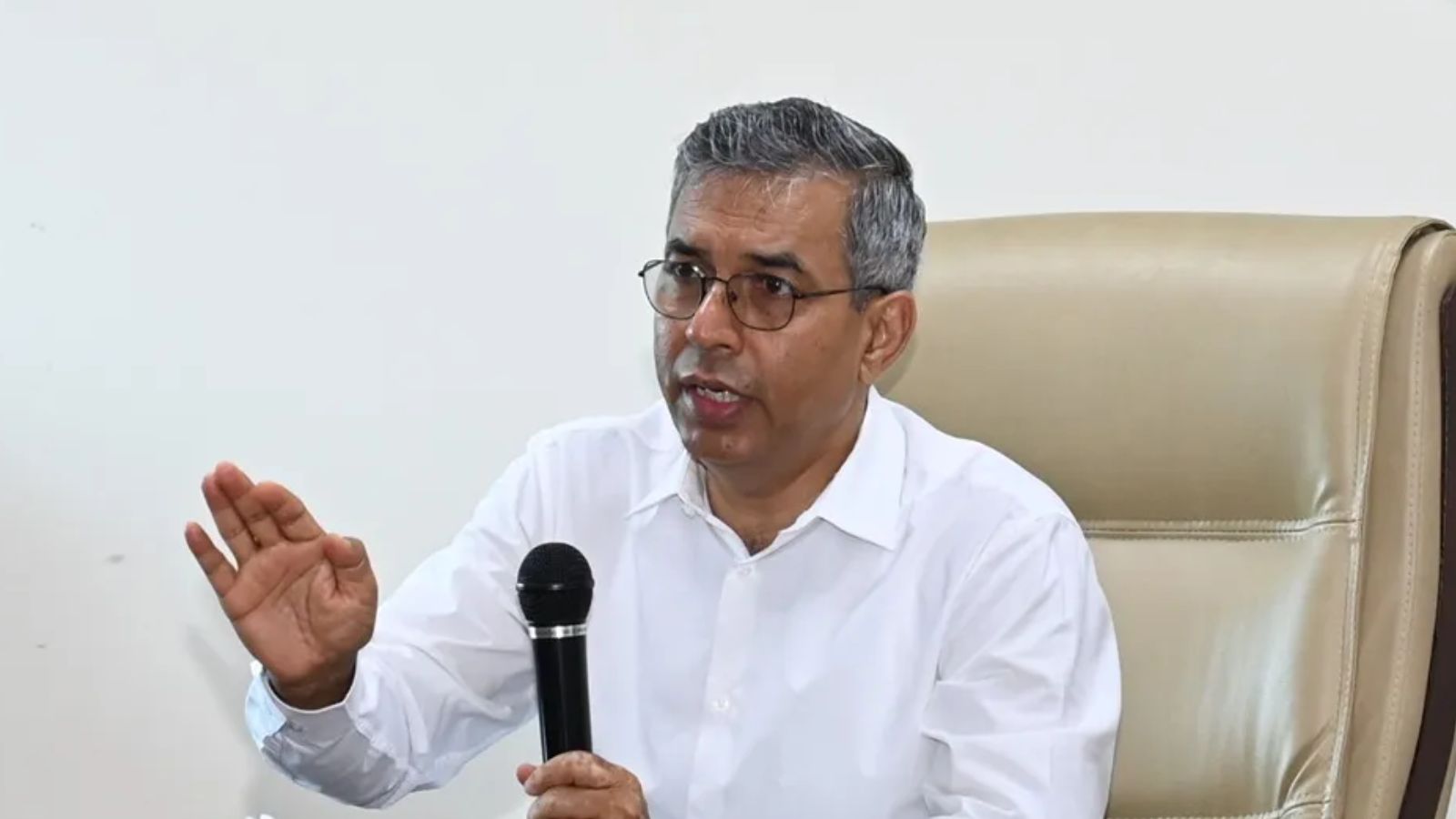
Over a month after India and China held talks amid reports of tensions in Arunachal Pradesh’s Taksing area, ITBP Director General Shatrujeet Kapur Thursday admitted for the first time that face-offs occurred at multiple locations in the state and that the situation persists.
On September 6, the Corps Commander-level talks were held at the Wacha-Damai border meeting point on the Indian side to address ongoing issues along the Line of Actual Control (LAC) in the area.
The Indian Express was the first to report Corps Commander-level talks, following multiple meetings between local commanders on both sides in recent weeks to resolve issues.
According to sources, Indian troops continue to be deployed in large numbers in the area to prevent any escalation.
Situation in Arunachal Pradesh
While Kapur did not name China, he praised the Indo-Tibetan Border Police’s Shaurya Commando teams for handling the situation in Arunachal Pradesh.
“In the past few days, a situation arose where face-offs happened at several locations in Arunachal, and it still continues,” Kapur said while speaking at the annual felicitation ceremony for ITBP personnel in Rajasthan’s Alwar.
“Our newly raised Shaurya commandos are doing great work. Recently, a situation arose in Arunachal Pradesh where face-offs took place and are still ongoing. There, our Shaurya Commando teams played an exemplary role. As everyone knows, the ITBP was raised as a mountain guerrilla force, and we were given border guarding duty along China in 2004. We should not abandon our exact mandate,” he said.
Story continues below this ad
Earlier, the Congress had demanded that Prime Minister Narendra Modi and Home Minister Amit Shah clarify reports that China had prevented Indian troops from patrolling certain areas of Arunachal Pradesh.
“After Galwan, now Arunachal Pradesh? Disturbing reports suggest that China is attempting to push further into areas in Arunachal Pradesh, an inalienable part of our nation. This demands immediate answers from the Modi Government,” the party said on X.
Looking ahead
The ITBP director general said they are pursuing a major modernisation drive focused on developing a specialised high-altitude combat force distinct from the Indian Army, upgrading ageing weapons, building underground shelters at border outposts and expanding drone and anti-drone capabilities.
“We do not need guerrilla warfare in current days; a specialised high-altitude mountain fighting force is being set up, which will be different from the Army,” Kapur said,
Story continues below this ad
“As of now, we have formed one Shaurya Commando team in every battalion, and two more have been constituted, so that there will be a full company in every battalion. Soon, we will have one full battalion of Shaurya commandos and our operations wing is working on this. This battalion will become our elite battalion and will get a special identity in our force for high-altitude operations,” he said.
Speaking about weapons, Kapur said ITBP personnel over 50 know the weapons they use are the same as when they joined the force. “We are using the same old weapons; there have been some changes in weaponry, but they are all the same. There is a need for modernisation and we have made a big provision for it in our scheme.”
Kapur said underground shelters were key to new forms of warfare. “As per new warfare, anyone standing on the ground can be targeted easily. In such hot war situations, there is a need to build underground shelters on a larger scale. As a pilot project, all companies have started building underground structures at their BOPs (border outposts), and I hope it will turn out well and will act as permanent defences,” he said, adding that it would protect them in any war situation.
The ITBP DG said drones are a way even a small country can challenge a big one. “We saw how Ukraine challenged a superpower like Russia. The war was supposed to be over in a few days, but 10,000 to 15,000 Russian soldiers are being killed; they are suffering. Look at Iran – how, without even a navy, it challenged America with the help of drones,” he said.
Story continues below this ad
“We have to move towards drones and anti-drone systems. We spent 70 per cent of our Rs 400 crore modernisation funds on drones. There is one drone platoon in all border guarding battalions. We have started training drone pilots, and we are making drones in-house. Out of another modernisation scheme of Rs 3,500 to Rs 4,000 crore, Rs 1,000 crore has been earmarked for drones,” he added.
KioskNews shows a cleaned-up reading view extracted from the publisher’s page — the original always lives on their site, not ours.