The Guardian view on Britain’s new chancellor: his purpose must be to protect living standards | Editorial
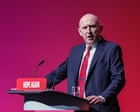
In his first speech to Labour party conference as chancellor, John Healey offered prudence with a purpose in a speech stylistically redolent of his former boss Gordon Brown. Mr Healey made fiscal credibility the condition for his goal of turbocharging apprenticeships for young people, funding for unions to reskill workers and spending on defence to create manufacturing jobs. The speech’s imagery was canny: miners, shipyards and submarines give “reindustrialisation” a recognisable Labour history. He also faced the future with a clever line about British workers “harnessing AI, not being outrun by it”. His message was that the “politics of hope” will be earned through “fiscal discipline, good work and through strong industries”.
The new Labour chancellor sounded like New Labour when he claimed that it was “not progressive to allow a bigger and bigger benefits bill”. What was lacking was a plan for care work, public services and the energy transition. Mr Healey clearly has a story about the supply of properly trained workers and another one about revitalising industry, but he offered little explanation of how enough good jobs will be created across the wider economy. Labelling a defence contract “industrial renewal” does not prove it is the best use of state capacity.
Worldwide economic shocks and trade tensions, Mr Healey warned, are being felt hard at home – from prices at the pump to monthly mortgage payments. Andy Burnham offered the public “breathing space” when he entered Downing Stree – with a £150 warm‑home discount for 6m low-income households and an electricity VAT cut worth £45 for bill payers. But with no end in sight to the war on Iran and the resulting disruption to the strait of Hormuz, that will not be enough. Energy bills are forecast to rise by as much as 26% in January. One projection sees a typical household’s bill jump by £442 to £2,165. Petrol is at its highest price since the summer of 2022, while diesel is approaching its all‑time high.
What was left unsaid by Mr Healey was far more important than what was said. He made no promise of additional support for individuals and businesses in the forthcoming budget. But with a price shock imminent, surely this is the real purpose behind his prudence. Mr Healey has tied his hands with his predecessor’s fiscal rules. The self-imposed restraint limits the chancellor’s ability to respond to an energy shock.
According to City economists, Mr Healey has only around half the £24bn headroom that the Treasury had earlier this year. Fuel duty is set to start rising from January – but leaving it at current levels until the end of this parliament would cost roughly £3.6bn. In June, the Trades Union Congress proposed covering two-thirds of households with targeted help that would cost £6bn. Such schemes would use up most of the headroom, even before offering business reliefs.
Mr Healey is choosing the size of the buffer as his test of credibility. But he must also protect living standards. Having criticised Tory austerity in his speech, it’s hard to see how he could announce large-scale departmental cuts. The size of the headroom that the chancellor is prepared to tolerate will determine whether his budget looks like taxing to fund a modest energy rescue package, or borrowing for a larger one.
KioskNews shows a cleaned-up reading view extracted from the publisher’s page — the original always lives on their site, not ours.