INQUEST HALTED: Biko family welcomes indefinite inquest postponement ‘with heavy hearts’
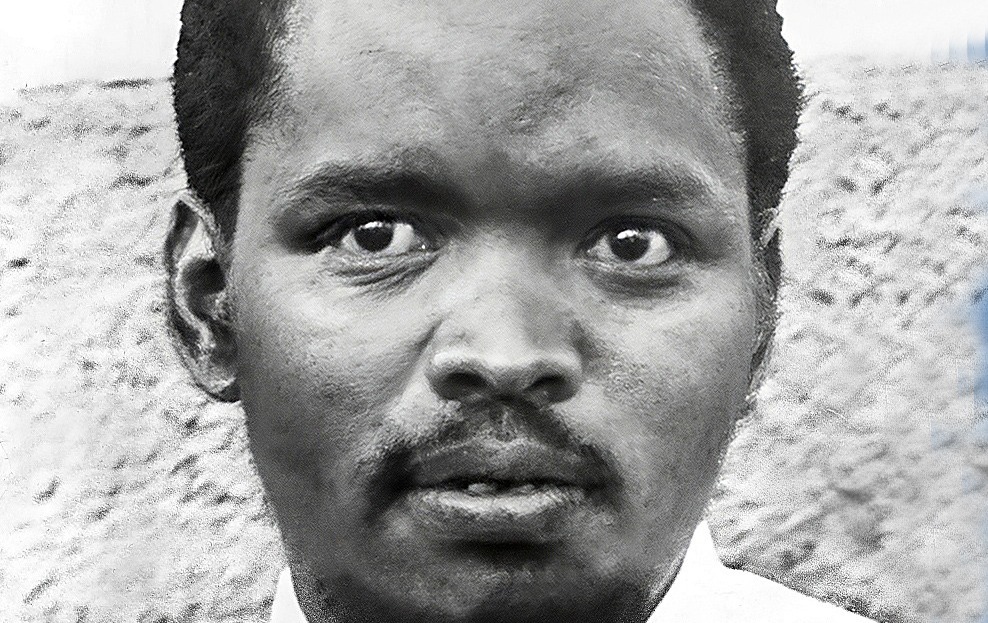
The sons of anti-apartheid stalwart Steve Biko have welcomed a court ruling indefinitely halting the reopened inquest into their father’s death, but said they did so with heavy hearts.
Gqeberha High Court Judge Jannie Eksteen granted the Biko family’s urgent application for a postponement on Wednesday. Advocate Dali Mpofu SC submitted the application on Tuesday, 8 September 2026.
The decision follows an earlier setback for the family when inquest judge Isaac Madondo dismissed their application for a postponement on 26 August.
/file/attachments/2993/12AV_00007446_600204.jpg "SOUTH AFRICA: Biko Steve having a smoke with Mamphele Ramphele. Circa 1970s. (Photo by Gallo Images/Daily Dispatch)")
The application was brought after the family’s legal representative, Ngqiqo Sakhela, argued that they needed more time to, among other things, work through a voluminous historical record, including documents from the original 1977 inquest that were in Afrikaans, and to properly prepare their case.
Evidence heard during the reopened inquest had exposed gaps in the historical investigation, including missing documents and the deaths of witnesses who could potentially have shed light on what happened to Biko while he was in police custody.
Speaking after Eksteen’s judgment, Biko’s eldest son, Nkosinathi, said the family remained deeply concerned about delays, but was equally concerned about the possibility of a process that was merely performative.
“We are very concerned about delays to a matter of this nature. But we are also concerned about having a performative process. We have been through that,” he said.
The leader and founder of the Black Consciousness Movement died in apartheid police custody in Pretoria on 12 September 1977, at the age of 30, after being detained by security police in Makhanda on 18 August 1977 alongside Peter Jones.
The original inquest, held in November 1977 shortly after his death, accepted the police version that Biko sustained his fatal head injury during a “scuffle” with officers at state Security Branch headquarters in what was then Port Elizabeth.
But the reopened inquest has brought that account under renewed scrutiny. Forensic pathologist Dr Shakeera Holland told the inquest court that the gruesome and violent injuries documented during Biko’s original autopsy appeared to have been sustained at different times, rather than during a single incident.
Former Security Branch officers Daniel Petrus Siebert and Jacobus Johannes Oosthuysen Beneke, the two surviving people identified as persons of interest, have also given evidence that has raised questions about the events surrounding Biko’s detention and interrogation.
Siebert acknowledged that several officers wrestled with Biko during an interrogation at the Security Branch headquarters in Gqeberha on 6 September 1977.
Yet Siebert said he could not say whether that incident caused the head injury that ultimately killed Biko, nor could he say that it was the only occasion on which Biko had been assaulted.
/file/attachments/orphans/Kyran-BikoInquest4_103353.jpg "Steve Biko and Nontsikelelo’s children, Nkosinathi (in blue jacket) and Samora Biko, at the High Court in Gqeberha on 9 September 2026. (Photo: Kyran Blaauw)")
Nkosinathi said the family had already begun taking steps to help investigators reconstruct the evidence and strengthen investigations to get to the bottom of his father death.
“I have already directed the team at the Steve Biko Centre to help develop a data centre so that all of the material we have can again be revisited by the investigating officer to try and plug the gaping holes,” he said.
The family has also approached institutions such as the SABC, which holds extensive archives relating to the Truth and Reconciliation Commission (TRC), in an effort to locate material that could assist the investigation.
Nkosinathi said the family believed the evidence already presented showed that the surviving former Security Branch officers were now offering versions that needed to be tested against what they had previously said.
“We were all shaking our heads in the process, but we know what they said at the TRC and we know what they said at the first inquest.”
He said the family’s immediate objective was to ensure that the investigation was sufficiently robust to allow the inquest to examine those different versions.
He added that the process needed to account for what he described as a “third version” now emerging from the surviving officers.
The family has indicated that it wants Siebert recalled to give evidence.
/file/attachments/orphans/Kyran-BikoInquest_249371.jpg "Former Security Branch captain Daniel Petrus Siebert (left), a person of interest in the death of Black Consciousness Movement leader Steve Biko in September 1977, testified on Friday at the reopened inquest into Biko’s death. (Photo: Kyran Blaauw)")
Nkosinathi said he hoped Wednesday’s judgment would make it possible for such an application to be considered by the inquest court.
“We seek to recall Siebert and we hope that with this decision, the inquest court can favour such an application,” he said.
He stressed that the family did not want evidence already given to disappear from the record.
“We will certainly recall him and you will have heard that we have run this application on the notion that whatever they have attested to be kept on record. So that we work with that and not lose that testimony,” he said.
Judge Madondo previously warned that only two of five eyewitnesses were still available and that further delays could result in witnesses dying or memories fading.
Several people connected to Biko’s detention and medical treatment have already died. Among them was Gabriel Ndlovu, a former detainee who worked in the hospital section of Pretoria Central Prison and whose affidavit was read into the inquest after his death earlier this year.
For the family, however, the answer is not simply to push ahead because time is running out.
“Time is everything for this process,” Nkosinathi said. “For reasons that we know, including age and so forth. But it has always mattered to us to have a process driven by rigour and the intent to account to this nation on the issue of the murder of Steve Biko.”
/file/attachments/2997/Photo5_440847_422706.jpg "A mural in Gqeberha of Black Consciousness Movement founder Steve Biko. (Photo: Klaas Kingma)")
His younger brother, Samora Biko, described the reopened inquest as a daunting process for the family and said Wednesday’s ruling was important because it created an opportunity to slow proceedings down sufficiently for the evidence to be properly examined.
“The process itself has been really daunting for us,” Samora said.
“Let’s not speed up the process so as to get an outcome,” he said. However long it takes us to go through the motions, then so be it. But we really welcome the ruling that was made this morning.”
For Nkosinathi the judgment did not amount to a moment of celebration.
“This is not about win or lose,” he said. “We welcome this decision with heavy hearts. It was not necessary to have come here because even the inquest court recognises that it is actually now running aground for the very same matters we raised that have been confirmed here.”
And on Saturday, 12 September – the 49th anniversary of Biko’s death – his family will mark his life at a series of commemorative events.
Nkosinathi said the day would include a wreath-laying ceremony at Biko’s grave in Qonce (formerly King William’s Town), a memorial lecture at Nelson Mandela University in Gqeberha and services at churches around the country.
“Usually it’s also the time that we witness thousands of South Africans on their social pages celebrating his life,” he said.
“And legacies live when they live in people’s hearts. So for us that is very meaningful.” DM
KioskNews shows a cleaned-up reading view extracted from the publisher’s page — the original always lives on their site, not ours.