Gatchalian: Collective action needed to build on PH gains in PISA

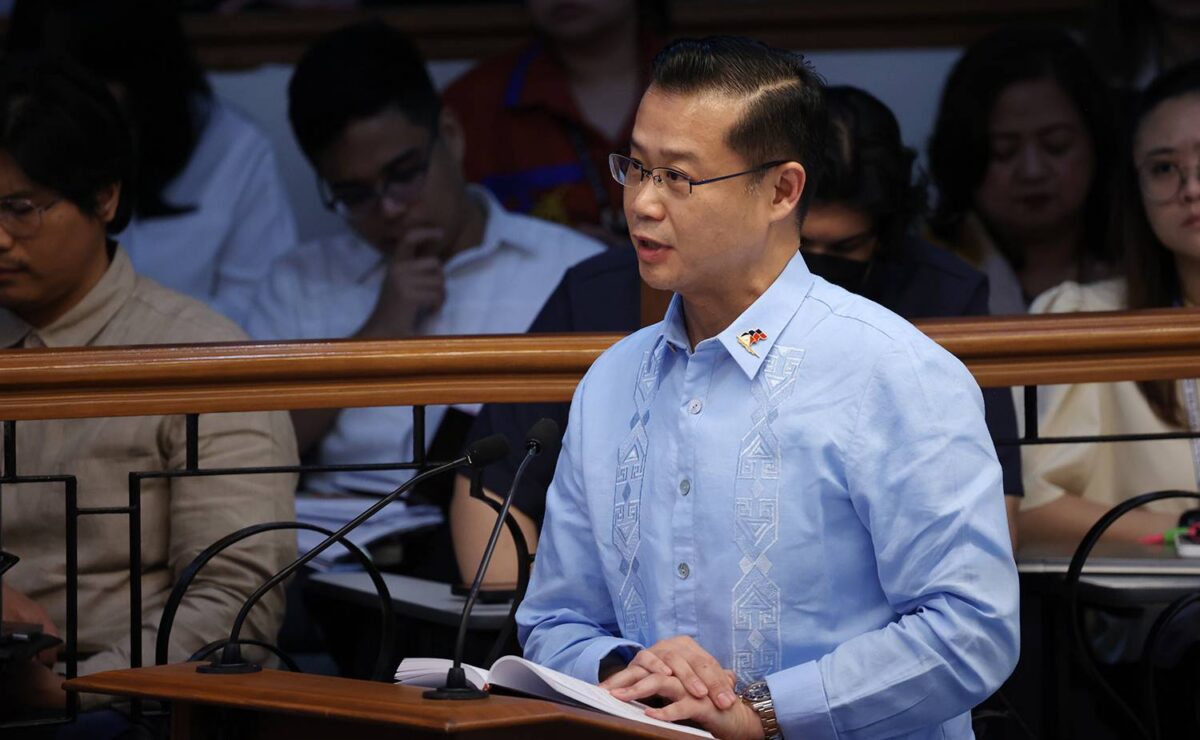
MANILA, Philippines — Senate President Sherwin Gatchalian on Wednesday called for a reassessment of the country’s education policies despite its improved performance in the 2025 Programme for International Student Assessment (PISA).
Gatchalian said the latest PISA results underscore the need for collective effort and collaboration to address the country’s education crisis.
READ: PH improves rank in international education assessment
Article continues after this advertisement
READ: Dy credits teachers for PH rise in global student performance
“This is an opportunity to build a system that will strengthen education for the benefit of millions of Filipinos in the years to come,” he said, emphasizing the importance of equipping Filipino children with the skills necessary to understand the world.
The Philippines recorded its highest PISA scores in science, mathematics, and reading in 2025, following its lowest point in 2018, its first year participating in the assessment, and minor shifts in 2022 after the pandemic.
The Organization for Economic Co-operation and Development also recognized the Philippines as the fastest-improving country in reading over the past decade, with its score increasing from 24% to 31%. Science improved from 23% to 32%, while mathematics rose from 16% to 21%.
Sen. Joel Villanueva also recognized that the country’s improvement in PISA scores must encourage the government to remain focused on investing in teachers, particularly in teacher education and training, and on providing schools with further resources, even after achieving substantial results.
Article continues after this advertisement
“The latest PISA results should give us hope, but they should also give us urgency. Let us use this improvement as a springboard for bigger and more meaningful reforms,” he said.
Villanueva then commended the Department of Education for its improved scores across its three domains, noting the hard work of teaching personnel and the people behind EDCOM II, or the Second Congressional Commission on Education, a reform aimed at addressing the country’s learning crisis.
Article continues after this advertisement
“The results of PISA 2018 that exposed the learning crisis in the country were the main trigger for the establishment of EDCOM 2 in 2022… it is only fitting that we recognize and honor EDCOM II, especially the dedication and excellence of our Executive Director Dr. Karol Mark Yee. His leadership and unwavering hard work have exceeded our expectations and have been key to ensuring that reforms in our education sector have a clear, rapid, and meaningful direction,” he said.
Developed in 2022 in response to the learning crisis reflected in the 2018 PISA results, EDCOM II helped reform the country’s education sector rather than offer single solutions or isolated hearings within the system.
Your subscription could not be saved. Please try again.
Your subscription has been successful.
EDCOM II also enabled the advancement and expansion of reforms in the basic education system, including the Excellence in Teacher Education Act, the Expanded Career Progression System for Public School Teachers, and the Academic Recovery and Accessible Learning Program. — Martina Nieyandra Calica. Inquirer.net trainee.
KioskNews shows a cleaned-up reading view extracted from the publisher’s page — the original always lives on their site, not ours.