Netflix's 7-Episode Gothic Horror Miniseries Is So Good, It Deserves a Second Look

Kelcie Mattson is a Senior Features author at Collider. Based in the Midwest, she also contributes Lists, reviews, and television recaps. A lifelong fan of niche sci-fi, epic fantasy, Gothic horror, elaborate action, and witty detective fiction, becoming a pop culture devotee was inevitable once the Disney Renaissance, Turner Classic Movies, BBC period dramas, and her local library piqued her imagination.
Rarely seen without a book in one hand and a cup of coffee in the other, Kelcie explores media history (especially older, foreign, and independent films) as much as possible. In her spare time, she enjoys video games, amateur photography, geeking out over music, and attending fan conventions with her Trekkie family.
Mike Flanagan is in the business of empathy. Film and television's leading purveyor of terror understands that the best horror anchors itself in the personal. It's a genre that projects collective fears onto metaphorical monsters, and the most lingering nightmares emerge from the horrors of being human in a world shaped by human cruelties. Whether it's generational trauma or familial grief, Flanagan's character-driven dramas use the fundamental shape of a classic ghost story to its maximum effect — they dazzle with atmospheric visuals and emotionally devastate.
Midnight Mass, his third collaboration with Netflix, might as well be considered a miracle. After several failed attempts to bring his long-term passion project to life, Flanagan settled for sneaking the title into his films as an inside joke about "the best project I'll never make." Midnight Mass was always as personal as a profusely bleeding wound; the writer-director shaped the concept around his small-town Catholic upbringing and his experiences with alcoholism and sobriety. In 2021, the seven-episode miniseries felt like the pinnacle toward which Flanagan's sublime craft had been escalating. Five years later, it remains his magnum opus — a foreboding symphony of existential melancholy and exceptional beauty, equally impressive for its sheer scale and its intimate interrogation of institutionalized religion and human fragility.
What Is 'Midnight Mass' About?
Ever since an oil spill ruined their local economy, Crockett Island has become a living ghost town. Instead of offering quiet comforts, the isolated fishing village feels abandoned by time and ruled by uncertainty. It's also the only place Riley Flynn (Zach Gilford) can try to rebuild his shattered life. Four years after his inebriated driving caused a woman's death, he returns to his childhood home like a literal prodigal son; he's not the only lost soul who's haunted by regret and grief, but being an atheist in the devoutly Catholic town complicates his already unsettled homecoming.
Collider Exclusive · 8 Questions · 2 Minutes What Is Your Biggest Horror Nightmare? Elm Street · Chucky · Scream · The Conjuring
Four horror franchises. Four completely different ways of scaring you. One waits until you fall asleep. One makes sure nobody believes you. One is already in your group of friends. And one is in the house with your family. Answer eight quick questions about how you actually watch horror, and find out which nightmare was built for you.
😴Elm Street(Freddy Krueger)
🧸Chucky(Child's Play)
📞Scream(Ghostface)
🕯️The Conjuring(The Warren Files)
01
Which horror scene makes you cover your eyes? Four classic images. One of them is worse than the others for you.
02
You are home alone and you hear a noise. First thought? Everybody has one. It arrives before you have decided anything.
03
Which horror movie rule would you break first? Everybody thinks they would survive. Almost nobody actually does.
04
Something genuinely frightening happens. What do you do? Not in a film. In your actual living room, tonight.
05
How do you actually watch a horror film? Be honest about this one. Nobody is checking.
06
Somebody offers you serious money. Which do you still refuse? The amount does not matter. There is one on this list you are not doing.
07
Which feeling stays with you a week after the film? Good horror does not stop when the credits do.
08
Something wakes you at 3am. What is the worst possibility? Eight questions in, this is the one that decides your nightmare.
The Lights Just Went Out Your Nightmare Is…
Four franchises, four completely different ways of getting underneath your skin. This is the one built out of your particular fear, why it works so well on you, and what it would leave behind.
Elm Street
Your nightmare does not wait outside the door. It waits for you to close your eyes, which you are going to have to do eventually, because nobody has ever won that particular argument.
- Freddy is horror's cruellest idea: a threat that lives in the one place you cannot guard, cannot lock, and cannot avoid forever.
- You are the one who is fine during the film and wide awake at two in the morning. Your own head is where this does its damage.
- These films understood exhaustion as a horror engine. The kids on Elm Street do not lose because they are weak. They lose because they are tired.
- You can lock every door in the house. You still have to sleep.
Chucky
Your nightmare is not really the doll. It is the face of the person you tell, and the way they decide, very kindly, that you have imagined all of it.
- Chucky works precisely because he is absurd. That is the trap: the more accurately you describe him, the less anybody is going to believe you.
- You are the one shouting at the screen because the characters are not listening. You know that feeling from real life too.
- The franchise is at its best when the adults in the room are the real obstacle, and you have met those adults.
- By the time somebody finally believes you, you will have handled most of it on your own.
Scream
Your nightmare has your number, knows your name, and has almost certainly been inside your house before. The worst part is that you already know them.
- Scream is the only one of these where the killer takes the mask off and turns out to be somebody who was at the party.
- You are the person who calls the twist out loud before it lands. You watch people the same way you watch films.
- The franchise made the rules of horror part of the plot, which means the survivors are the ones paying attention. You would be paying attention.
- Everybody is a suspect, including the person who just offered to walk you home.
The Conjuring
Your nightmare is not really about you. It is about the people asleep down the hall, and the feeling that whatever is here is not interested in leaving.
- The Conjuring films are domestic horror. The house, the family, the perfectly ordinary room that quietly stops feeling ordinary.
- Your instinct is to get everybody into one room. Your fear is protective rather than personal, which is rarer than it sounds.
- This is the one franchise where belief is the weapon. The people who come through it are the ones who are not alone and refuse to be.
- Whatever is here did not come for you. It came for the household, and you are the one standing in the hallway.
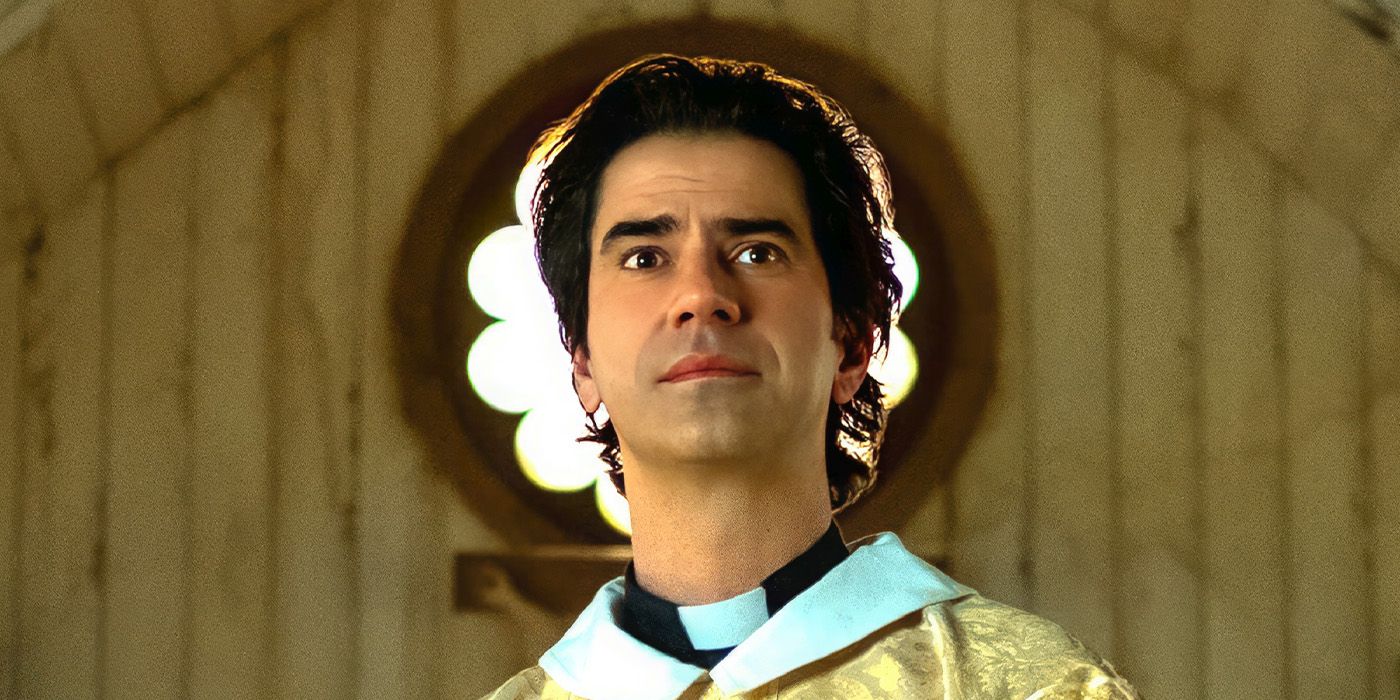
Riley isn't the only semi-newcomer who defies Crockett Island's expectations. Father Paul Hill (Hamish Linklater) replaces the parish's ill Monsignor and revives the community with his disarmingly approachable charisma — especially once he starts conducting what they interpret as Biblical miracles. As the priest feeds their hunger for hope, his unexpected presence incites far more moral damnation than it does eternal salvation.
'Midnight Mass' Is Mike Flanagan at His Most Visceral and Intimate
Midnight Mass is the most coherently realized and profoundly wrenching of Flanagan's endeavors, largely because it thrums with his personalized hallmarks. His team crafts a pure Gothic folk horror fraught with religious menace, something both graceful and dreadful at once. Whether cinematographer Michael Fimognari salts the earth with cinematically gruesome set pieces or sets momentous montages to Neil Diamond songs, the technical sophistication is marvelous to behold. Production designer Steve Arnold creates an entire island from scratch, one that fits the required moody aesthetics, yet in its recognizably worn-down details, pulses with nostalgic life.
The acting troupe Flanagan assembles is also nothing short of exceptional, from Gilford's arrestingly vulnerable anguish, Erin Greene (Kate Siegel) emerging as the emotional centerpiece, and the mesmerizing Sheriff Hasan (Rahul Kohli), a widowed single father and practicing Muslim with the wisest words about theological practices. All jokes about Hot Priests aside, Linklater's subtle work is the series' biggest revelation. Paul's determined conviction, desperate rationalizations, and soothing gentleness reels in characters and viewers alike until we're clinging to his every hypnotic word.
It wouldn't be a Mike Flanagan project without his curiosity about the human condition, either. His thematic preoccupations have never been as relevant or harmonious; ornate Catholic rituals, vampire iconography, addiction and recovery, shame, redemption, corruption, and personal accountability parallel with ease. This series' true meat and potatoes lie in the characters' one-on-one conversations about the unanswerable mysteries with which we all grapple. There are few sinner-saint caricatures during these poetic interludes — only Flanagan's intricate character work as he forces his wonderfully foible ensemble to reckon with the agony of living.
And in an existence without clarity, religion can provide solace. A communal environment rooted in the creeds of compassion and forgiveness — loving thy neighbor as thyself — can be a beautiful antidote to humanity's worst impulses. When good intentions pave the road to hell, or self-righteous proselytizers weaponize texts into a justification for their bigotry, then it becomes an arena for destructive hatred. Flanagan recognizes, with bone-chilling intuition, how the church is just as capable of being hallowed ground and a source of harrowing trauma. For those who were raised sitting in pews in front of pulpits, who have actively deconstructed evangelical fundamentalism and wrestled through our perspectives on faith, Flanagan's masterpiece re-opens old scars. Midnight Mass' foundations are too painstakingly potent to dissolve into saccharine, but it does offer a bittersweet catharsis: if we're all lost at sea, then tending to one another as the world ends is both the least and greatest thing we can do.
KioskNews shows a cleaned-up reading view extracted from the publisher’s page — the original always lives on their site, not ours.