Hannibal’s Book Ending Would Have Ruined Clarice Starling, And Ridley Scott Knew It
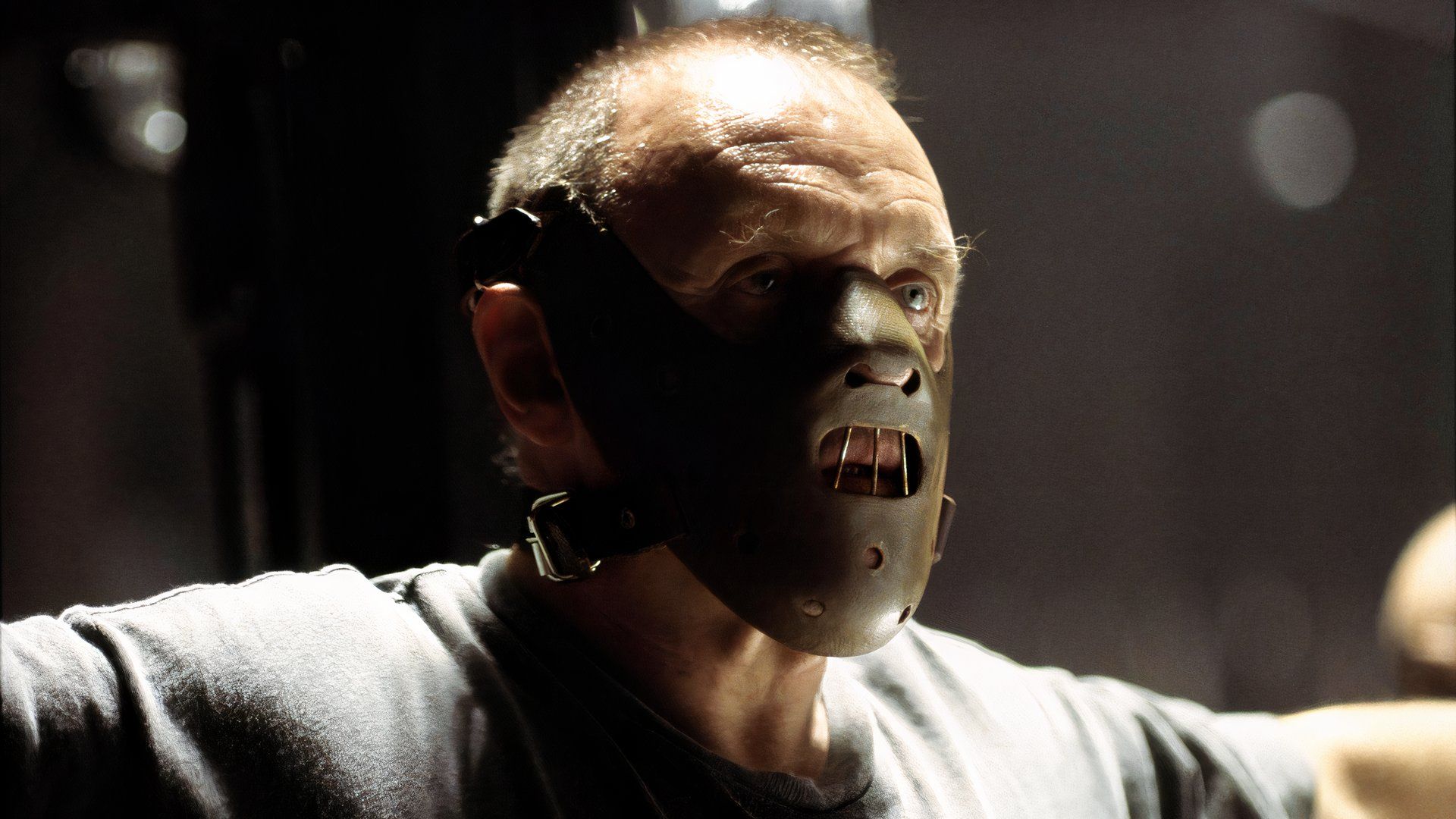

Padraig is a Senior Features Writer and has been part of Screen Rant since 2017. Padraig is a writer, editor and retired Game of Thrones extra who has been writing about movies and TV online for over a decade. He has also written for The Irish Times, Den Of Geek, Little White Lies and many more. It's pronounced Paw-rick, BTW.
Whatever the flaws of Ridley Scott's Hannibal, he knew all too well that faithfully adapting the book's controversial ending would have ruined Clarice Sterling for audiences. The Hannibal movie franchise has always been a deeply strange one. While Michael Mann's adaptation of Red Dragon is now considered a classic, it was a box-office dud in 1986 and took years to be rediscovered.
The Silence of the Lambs, on the other hand, was a gigantic critical and commercial hit. In a rare feat for a horror movie, it swept every major award at the 1992 Oscars, and a sequel was assured. The resulting Ridley Scott movie Hannibal was indeed another hit, but received mixed reviews, and audiences were disappointed Jodie Foster didn't reprise the Clarice Starling role.
Anthony Hopkins quickly returned for the lame prequel Red Dragon in 2002 - which readapted Manhunter - and the film series signed off with the risible Hannibal Rising. Swinging back to Hannibal, Scott's film already faced an uphill struggle. It was a sequel audiences had waited a decade to see, but author Thomas Harris' novel had already drawn divided reactions; in fact, it was the reason director Jonathan Demme and Jodie Foster passed on Hannibal.
What Happens At The End of The Hannibal Book
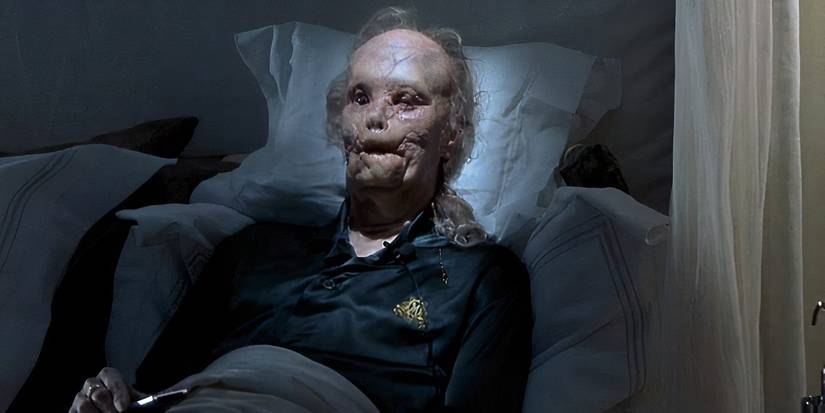
Foster has spoken of her decision many times in the years since, even stating in a 2005 GamesRader interview, "I saw Hannibal. I won’t comment," which is especially stinging after she expressed love for both Manhunter and Red Dragon. The Hannibal book may have been a bestseller, but its treatment of Clarice and the ending where she and Hannibal become lovers was, to put it very mildly, controversial.
After being refused billing alongside Anthony Hopkins and Julianne Moore on Hannibal's poster, Mason Verger actor Gary Oldman decided to go totally uncredited in the movie.
For context, the final chapters see Hannibal and Clarice escaping the compound of Lecter's vengeful former patient, Mason Verger. In quick order, Hannibal digs up the body of Clarice's murdered father and, thanks to a cocktail of drugs and therapy, allows her to let go of her various childhood traumas. Lecter then kidnaps and makes a literal meal out of slimy Justice Department official Paul Krendler.
He even offers a piece of Krendler's brain to Clarice at this elaborate banquet - which she accepts. Hannibal ends with the two becoming lovers and running off together, and by all accounts, they have a pretty good life. While there are fans of Harris' work who defend the direction Hannibal goes in, having Clarice essentially get brainwashed and abandon her principles to run off with a cannibal serial killer did not sit well at all.
The Changes Ridley Scott Made For The Movie
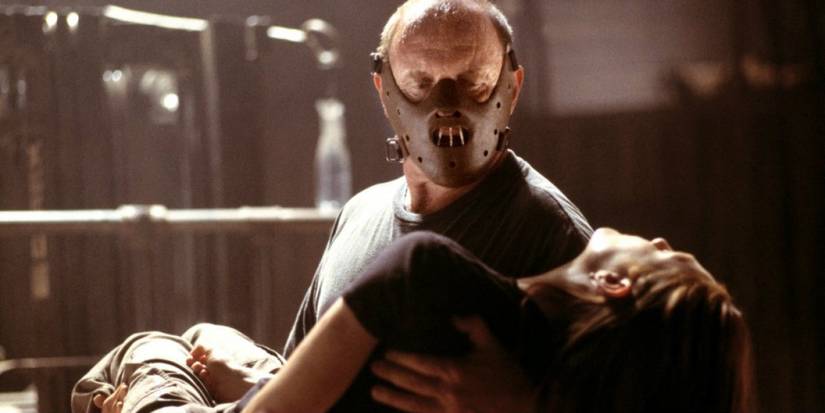
After coming off a run of duds in the 1990s, Ridley Scott hit a major winning streak in the 2000s, starting with Gladiator and Black Hawk Down. While Silence of the Lambs helmer Jonathan Demme passed on the sequel after finding the novel too lurid, Scott loved it. That said, as he told The Guardian in 2001, he had issues with adapting that ending.
While he understood that Hannibal himself was always in love with Clarice, "I couldn't take that quantum leap emotionally on behalf of Starling." With permission from author Thomas Harris, Scott and his creative team set out to craft a finale that honored the book, but also made sure Clarice (played by Julianne Moore) didn't succumb to Hannibal's "charms."
In truth, the ending of Ridley Scott's Hannibal feels clunky and somewhat anticlimactic with regard to Clarice and Hannibal's relationship. It feels like it's setting up a third and final chapter that has never - and likely will never - happen. Still, it retains the whole brain-eating section, with Ray Liotta giving a hilariously subdued performance as the doomed Krendler, who keeps talking even when pieces of his brain are cut away.
The eventual Hannibal TV series starring Mads Mikkelsen did a much better job capturing the purple prose of Harris' writing and exploring the twisted emotional love story between Lecter and profiler Will Graham (Hugh Dancy). That ending just didn't feel right for Jodie Foster's Clarice, though, and as Scott himself underlined, it was hard to make the emotional leap where that ending could ever make sense.
Source: GamesRadar, The Guardian
-
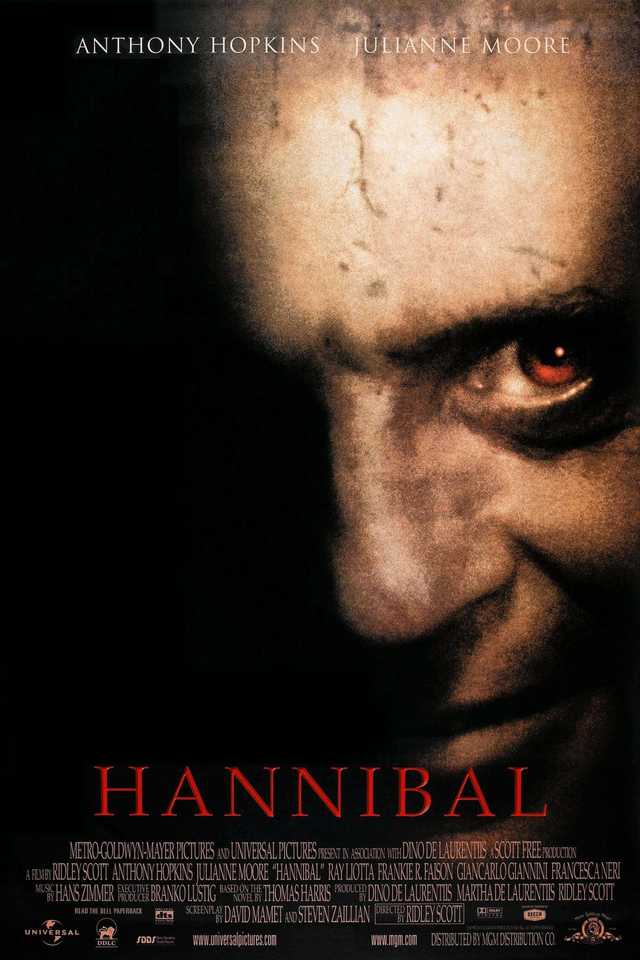
Hannibal
- Release Date
- February 9, 2001
- Runtime
- 132 Minutes
Hannibal is a thriller that sees Anthony Hopkins reprising his role as Dr. Hannibal Lecter, a brilliant psychiatrist and cannibalistic serial killer. Directed by Ridley Scott and based on Thomas Harris's novel, the film follows the intriguing dynamics between Lecter and FBI agent Clarice Starling, played by Julianne Moore, as she seeks to capture him while he remains at large.
-

- Created by
- Thomas Harris
- First Film
- Manhunter
- First TV Show
- Hannibal
- Cast
- Brian Cox, Anthony Hopkins, Jodie Foster, Julianne Moore, William Petersen, Scott Glenn, Laurence Fishburne, Hugh Dancy, Ted Levine, Stephen Lang, Lara Jean Chorostecki
- TV Show(s)
- Hannibal, Clarice
- Character(s)
- Hannibal Lecter, Clarice Starling, Will Graham, Jack Crawford, Frederick Chilton, Buffalo Bill, Freddy Lounds, Alana Bloom
Based on the series of novels by Thomas Harris, Hannibal is a multimedia franchise that centers around the titular charismatic cannibalistic serial killer and the investigators who always remain one step behind him. The first film adaptation of the character came in 1986 with Manhunter, where Brian Cox took on the role, but since then, Anthony Hopkins and Mads Mikkelsen have taken their turns as the antagonist. Hannibal shot into mainstream success with the Oscar-winning The Silence of the Lambs in 1991 and its subsequent sequels until Bryan Fuller began his adaptation for television.
KioskNews shows a cleaned-up reading view extracted from the publisher’s page — the original always lives on their site, not ours.