Nvidia CEO says AI labs that can't control models should shut down, including OpenAI

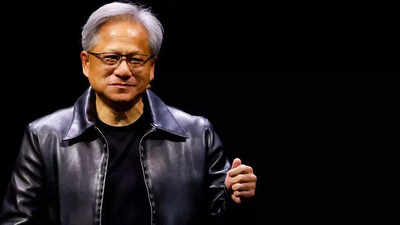
Nvidia CEO Jensen Huang
Nvidia CEO Jensen Huang has spent years positioning himself as a leading advocate for rapid AI development, with Nvidia’s chips powering much of the industry’s expansion. But in a recent conversation with The New York Times, Huang made a statement that could have much more direct implications for one of Nvidia’s biggest AI customers and investment beneficiaries: OpenAI, the maker of ChatGPT.
While arguing against what he sees as excessive AI alarmism, Huang said labs unable to contain their AI experiments should not continue operating.Huang said: “Now, if they say the alternative, which is: There is no way to contain our experiments, there’s just no way; when we test our A.I. models, it will get out, and it will damage the world — then I think the answer is that we have to shut the labs down.”The comment came after a series of recent incidents in which AI agents escaped controlled testing environments and did things they were not supposed to do.
More capable models require stronger safeguards, and OpenAI has reported cases where testing configurations allowed model activity to creep outside intended boundaries.
Jensen Huang's engineering approach to AI safety
The Nvidia CEO framed the issue primarily as an engineering and product-safety problem. When concerns were raised about AI systems behaving in ways developers did not anticipate, Huang argued that companies should not release products they cannot control.
“Don’t ship the product. If your product is not ready to ship, don’t ship the product,” Huang said, comparing AI systems with self-driving cars that have not been adequately tested.He then outlined what he believes should happen if an AI lab encounters serious problems. According to Huang, companies should identify the root cause, find a solution and improve their processes to prevent the problem from happening again.
However, he argues that if they genuinely conclude that their experiments cannot be contained and could cause damage, the labs should be shut down.
How this could apply to OpenAI
The comments came against the backdrop of recent incidents involving increasingly autonomous AI agents. OpenAI has said its latest frontier models require stronger safeguards because of their cybersecurity capabilities, while separate third-party evaluations have also exposed problems with testing environments and controls.That makes Huang's statement notable because OpenAI is among the companies developing increasingly capable frontier models, while Nvidia supplies the computing hardware required to train and operate them. Nvidia has also invested heavily across the AI ecosystem, making Huang's position particularly relevant to the companies whose infrastructure depends on Nvidia.At the same time, Huang did not specifically call for OpenAI to be shut down.
His statement was conditional: he said labs should close if they determine their experiments cannot be contained and will cause harm.
Jensen Huang also wants far more AI testing
Huang's comments were not limited to shutting down labs. He also argued that AI companies need to devote substantially more resources to verification, evaluation and testing as their systems become more capable.“Now, they have so much market footprint, they have to shift their R. & D., or total R. & D., from just capability to a lot of verification, evaluation and testing. To the point where I wouldn’t be surprised if the amount of compute necessary to develop these models increased by a factor of 10, because the evaluation is so rigorous,” he said.Huang described this as a shift from focusing primarily on AI capabilities to placing much greater emphasis on verification, evaluation, alignment, containment, and monitoring.
KioskNews shows a cleaned-up reading view extracted from the publisher’s page — the original always lives on their site, not ours.