6 Stephen King Horror Movies That Are Perfect From Start to Finish

A New York native, Joe graduated from an avant-garde theater school upstate, where he was obsessed with sketch comedy. There, he and his lunatic friends founded The Sketchies — which still lives on at Skidmore College today. Living in New York City, a screenwriter friend of his then taught him how to write for film. This awakened a new passion in Joe. Since then his scripts have garnered over 200 festival selections, nominations, and wins all over the globe (including the BlueCat Best Feature award). Several of his screenplays have been made into feature films — some of them not that bad! Overall, he loves to create unique, hilarious, touching, and bizarre stories.
Sign in to your Collider account
While there are over 60 movies that are based on Stephen King books (with King working on a bunch of the screenplays of said films), and the majority of these films are moderately scary to hide-under-the-covers petrifying, there are a handful that will have even the most hardened horror fan sleeping with the lights on. Successfully adapting any novel into a film can be quite tricky, but all the filmmakers involved with these six stunning works of wicked wonder certainly knew exactly what they were doing in bringing these disturbing stories to the silver (bullet) screen.
Here are six of the films based on King’s books that do not miss a single beat, where nary a frame isn’t sumptuously displayed for the audience’s unbridled viewing pleasure. A lot of King’s stories and subsequent films focus on the supernatural, as evidenced by many on this list, but there are also truly terrifying works in his cannon that simply present the worst that humanity has to offer. Regardless of how King spun the wondrous story web that led to each of these beloved films, here are six of his most pristinely presented pictures, oozing with creepy charisma from first shot to last.
6 'The Dead Zone' (1983)
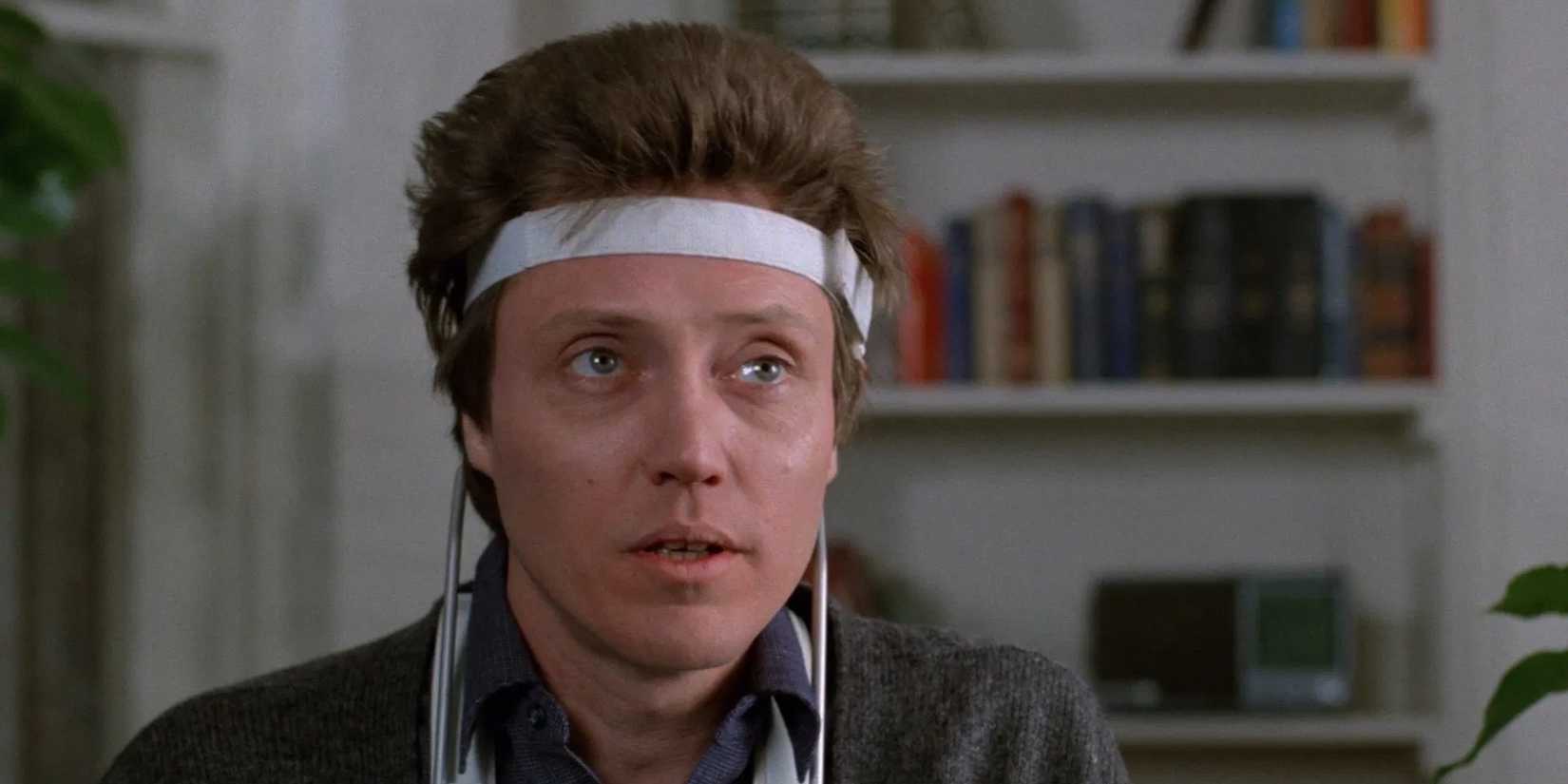
As mentioned, there are oodles of King works that are centered on at least one aspect of the supernatural, and how that otherworldly thing affects his main characters. The Dead Zone is just such a yarn, that also delves deep into the motivations of various humans, both good and (extremely) bad. Director David Cronenberg, who is most well-known for his slithering entries in the body horror catalog, does some of his best work here in bringing this sometimes pensive, often exhilarating morality play to life.
The plot focuses on Johnny Smith (Christopher Walken, who is not even that weird in this one) after he is roused from a coma that he’s been in for a good long while. For some inexplicable reason, he now has psychic powers. Johnny can, after touching an individual, see what’s going to happen later in their life. Good, right? Well, yes and no. Ultimately, he encounters a politician on the rise, Greg Stillson (an incredibly smarmy, unctuous Martin Sheen), and after getting a firm handshake from him, sees that he eventually will bring about nuclear war and Armageddon. Volunteering himself as a sacrificial lamb, Johnny will do whatever it takes to bring Stilton down. With an equal allotment of poignant moments and skin-crawlingly eerie ones, this is a very well-rounded, intellectually and horrifically satisfying flick.
5 'Gerald’s Game' (2017)

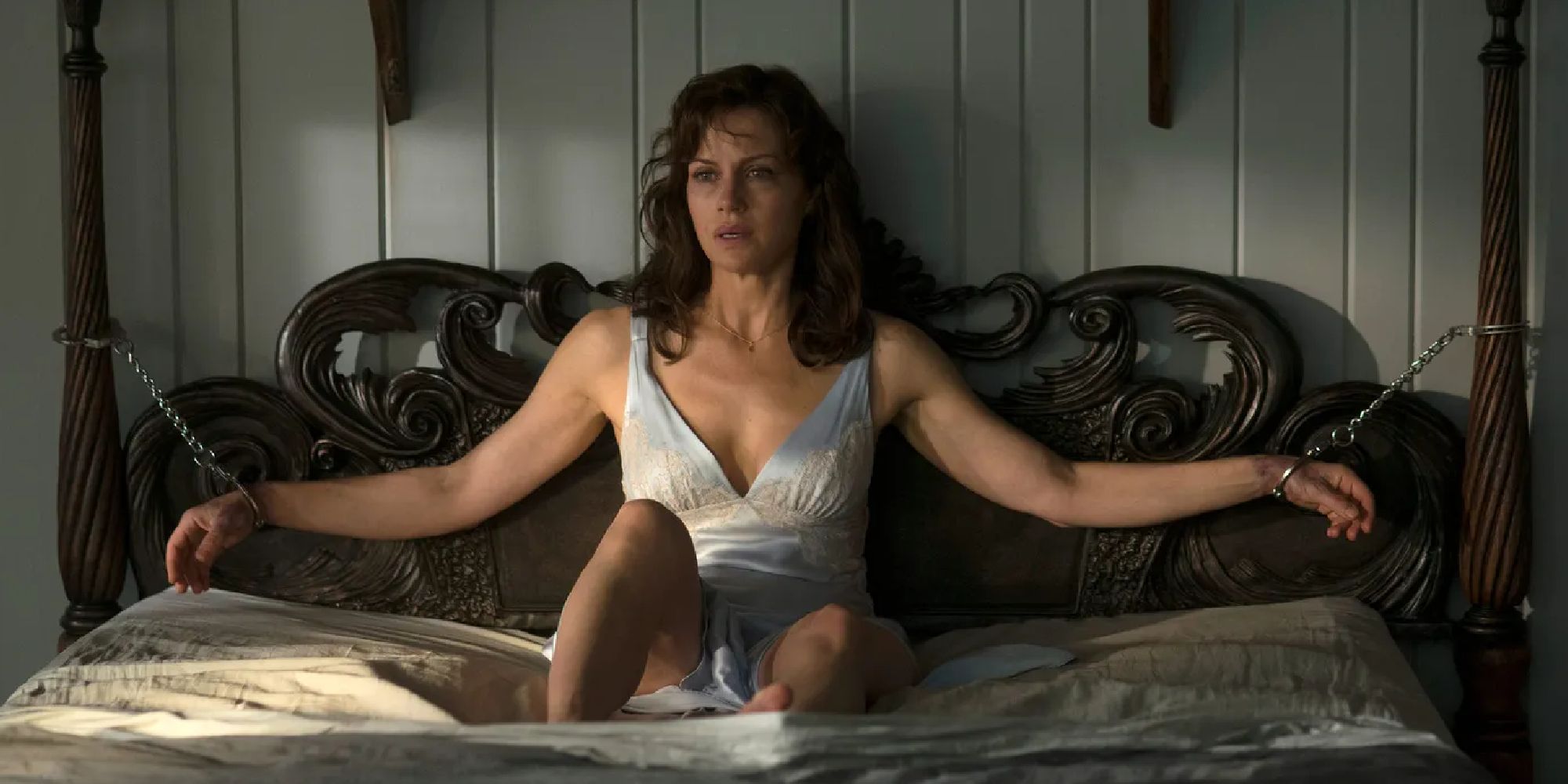
King tantalizes the senses with this book, and horror director extraordinaire Mike Flanagan does a phenomenal job of delivering the same provocative goods in Gerald’s Game. Various, highly specific types of fears are covered in both the book and the movie: first, abandonment, then, extremely close proximity to a corpse, having to self-mutilate, a menacing ogre, and unfathomable images brought on by a lack of essential life necessities. These are just a handful of the scary circumstances laid out and then methodically dissected in this anxiety-laden story.
The tale is about a seemingly happy and sexually liberated couple who venture to a vacation house to engage in a little “spicing” up of their relationship. Gerard (Bruce Greenwood) has a bit of the “sado” in him, and Jessie (Carla Gugino) doesn’t seem to mind…being tied down… So, Gerard handcuffs Jessie to a thick bed frame, pops some “performance enhancing” drugs, promptly has a heart attack, and keels over and dies…right on top of Jessie. She’s obviously stuck there, and the key is quite out of reach. Now she must find a way out of this sticky situation before she dies of thirst, hunger, and the steady mental unraveling that comes with this whole freakish situation. To further complicate matters, a huge, monstrous dude, the Moonlight Man (Carel Struycken), seems to be breaking into the house and…checking her out. Is this real or imagined? The uncomfortable and nerve-rattling diurnal elements of this film keep the viewer on their seat’s edge, while the dark and scary ones cause the spectator’s heart to periodically seize up… With one of the better solo horror/thriller performances ever, Gugino is really the linchpin that drives this film home — with a heart-wrenching portrayal that is the very definition of “fearless.”
4 'Carrie' (1976)
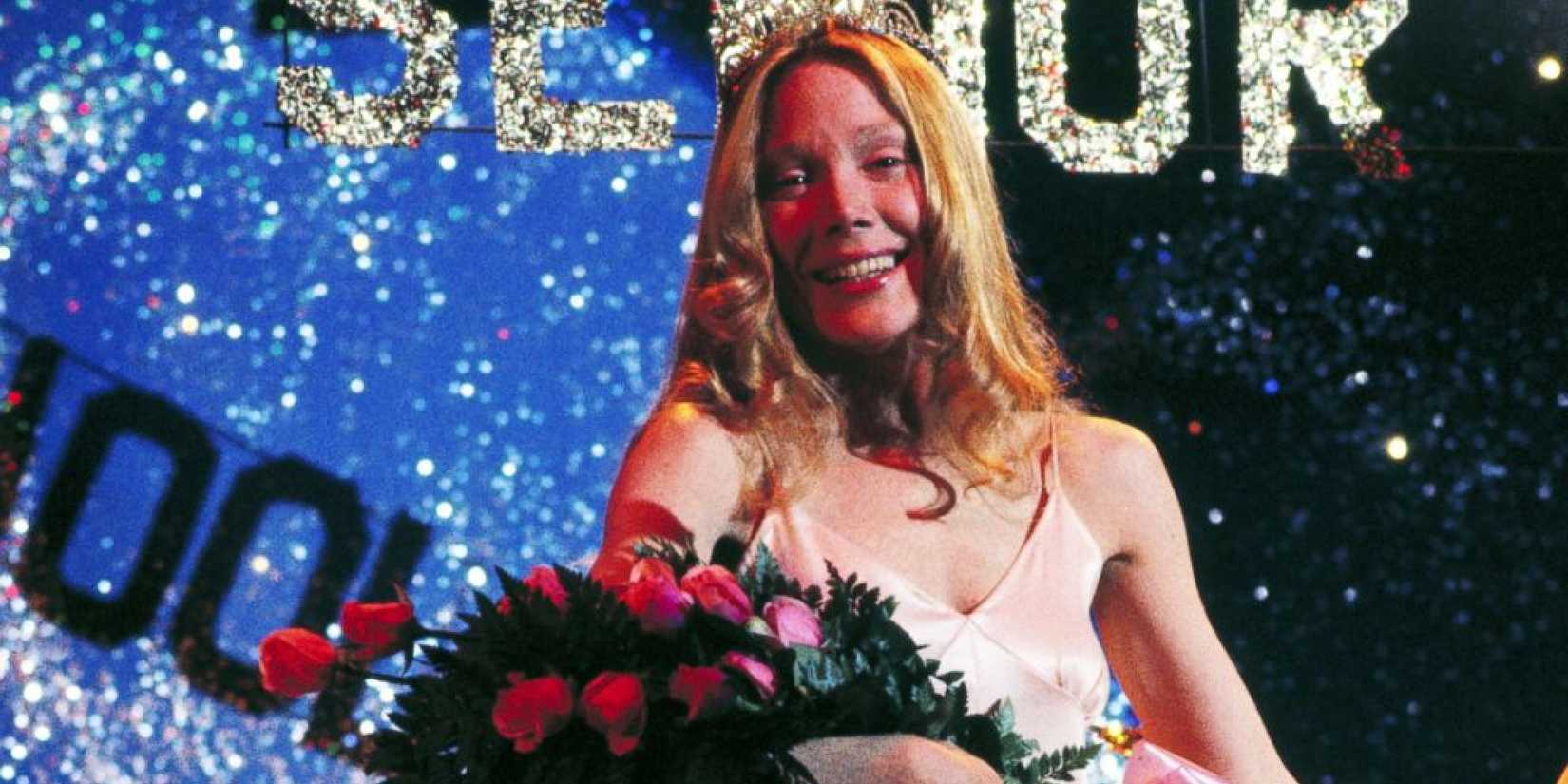
Everyone remembers the final sequence of Carrie (how could one not?), but not everyone recalls just how creepy a film this was in general (although, tons of people’s memories have been recently refreshed, thanks to the new stunning series of the same name, helmed by Mike Flanagan). Staying relatively close, plot-wise, to the novel, the story is at its scariest when the titular Carrie is witnessed interacting with her mother…
The plot line focuses on Carrie White (the seminal Sissy Spacek role), a special teen who is meek on the surface, but contains a raging inferno inside her. Mercilessly taunted and bullied at school, her soft-spoken persona belies the fact that she has telekinetic powers the likes her teachers and schoolmates have never seen. Carrie endures countless acts of cruelty, such as the classic gym class menstruation/getting pelted with feminine hygiene products scene and the countless times her religion-obsessed mom, Margaret (Piper Laurie), locks her in a closet, so Carrie can “repent” her (completely normal) “sins.” The whole film has a really nice crescendo to it, where the audience can feel the barometric pressure of Carrie herself continuously rising, just like a tropical storm gaining in intensity. Brian De Palma does a great job of coaxing an amazing performance out of Spacek, and also presenting Carrie’s tormentors as varying degrees of awful. Alas, when Carrie feels like she has finally caught a darn break and is “elected” prom queen…well, suffice it to say that the dry cleaning bill on her (homemade) dress would’ve been pretty exorbitant. Fully realizing her arc (after decimating everyone at prom with her reactive telekinetic fit of fury), the pig-blood-soaked Carrie returns home, only to find Marge there, knife in hand, ready to eradicate the demonic abomination she birthed. In a dazzling display of religious symbolism, Carrie uses common kitchen utensils to pin Margaret to the door, Christ-pose-style. Overall, this is an oddly touching, somber film that reminds us all to: a) not bully people, b) embrace differences, and c) keep sharp cutlery away from those who can move objects with their minds.
Collider Exclusive · 8 Questions · 2 Minutes What Is Your Biggest Horror Nightmare? Elm Street · Chucky · Scream · The Conjuring
Four horror franchises. Four completely different ways of scaring you. One waits until you fall asleep. One makes sure nobody believes you. One is already in your group of friends. And one is in the house with your family. Answer eight quick questions about how you actually watch horror, and find out which nightmare was built for you.
😴Elm Street(Freddy Krueger)
🧸Chucky(Child's Play)
📞Scream(Ghostface)
🕯️The Conjuring(The Warren Files)
01
Which horror scene makes you cover your eyes? Four classic images. One of them is worse than the others for you.
02
You are home alone and you hear a noise. First thought? Everybody has one. It arrives before you have decided anything.
03
Which horror movie rule would you break first? Everybody thinks they would survive. Almost nobody actually does.
04
Something genuinely frightening happens. What do you do? Not in a film. In your actual living room, tonight.
05
How do you actually watch a horror film? Be honest about this one. Nobody is checking.
06
Somebody offers you serious money. Which do you still refuse? The amount does not matter. There is one on this list you are not doing.
07
Which feeling stays with you a week after the film? Good horror does not stop when the credits do.
08
Something wakes you at 3am. What is the worst possibility? Eight questions in, this is the one that decides your nightmare.
The Lights Just Went Out Your Nightmare Is…
Four franchises, four completely different ways of getting underneath your skin. This is the one built out of your particular fear, why it works so well on you, and what it would leave behind.
Elm Street
Your nightmare does not wait outside the door. It waits for you to close your eyes, which you are going to have to do eventually, because nobody has ever won that particular argument.
- Freddy is horror's cruellest idea: a threat that lives in the one place you cannot guard, cannot lock, and cannot avoid forever.
- You are the one who is fine during the film and wide awake at two in the morning. Your own head is where this does its damage.
- These films understood exhaustion as a horror engine. The kids on Elm Street do not lose because they are weak. They lose because they are tired.
- You can lock every door in the house. You still have to sleep.
Chucky
Your nightmare is not really the doll. It is the face of the person you tell, and the way they decide, very kindly, that you have imagined all of it.
- Chucky works precisely because he is absurd. That is the trap: the more accurately you describe him, the less anybody is going to believe you.
- You are the one shouting at the screen because the characters are not listening. You know that feeling from real life too.
- The franchise is at its best when the adults in the room are the real obstacle, and you have met those adults.
- By the time somebody finally believes you, you will have handled most of it on your own.
Scream
Your nightmare has your number, knows your name, and has almost certainly been inside your house before. The worst part is that you already know them.
- Scream is the only one of these where the killer takes the mask off and turns out to be somebody who was at the party.
- You are the person who calls the twist out loud before it lands. You watch people the same way you watch films.
- The franchise made the rules of horror part of the plot, which means the survivors are the ones paying attention. You would be paying attention.
- Everybody is a suspect, including the person who just offered to walk you home.
The Conjuring
Your nightmare is not really about you. It is about the people asleep down the hall, and the feeling that whatever is here is not interested in leaving.
- The Conjuring films are domestic horror. The house, the family, the perfectly ordinary room that quietly stops feeling ordinary.
- Your instinct is to get everybody into one room. Your fear is protective rather than personal, which is rarer than it sounds.
- This is the one franchise where belief is the weapon. The people who come through it are the ones who are not alone and refuse to be.
- Whatever is here did not come for you. It came for the household, and you are the one standing in the hallway.
3 'Pet Sematary' (1989)

Sometimes dead is definitely better. A tragic moral lesson wrapped up in a bone-deep terrifying nightmare, Pet Sematary will haunt your dreams. Based on one of the creepiest books ever written, this film touches on some heady issues (just as relevant now as in the late 80s) and does so with some of the most unnerving images committed to celluloid. The spelling of the title betrays a childlike naivety, but there’s very little innocence to be found in director Mary Lambert’s putridly chilling picture.
Yet, the plot starts off innocently enough. A couple and their young kids move to a somewhat backwoods part of Maine, so that the patriarch, Louis Creed (Dale Midkiff) can work at the nearby university, as a doctor. Once there, he tries to treat a student, Victor Pascow (Brad Greenquist), who’s been hit by a car…with minimal success. Soon Victor, whose brain is literally leaking out, delivers some prophetic messaging to Louis about not giving in to the temptation of some sort of ground by going past his “barrier.” Victor is absolutely petrifying to behold, and this haunting movie is off to the revolting races. Soon, the Creed family cat, Church, is hit by a car (while everyone else in the fam is away except Louis). So, Louis’s avuncular neighbor, Jud Crandall (Fred Gwynne) helps Louis bury the flattened feline…in a Micmac burial ground that raises the dead. It’s only a matter of time before other members of the Creed clan end up in the cemetery and return, more rotten than ever. From the glassy-eyed Victor to Rachel Creed (Denise Crosby)’s meningitis-afflicted sister, Zelda (Andrew Hubatsek), basically everyone depicted onscreen in this flick is horrifying. With a firm message about accepting what we can not change, this film has one tremendously terrifying trajectory, providing scares and classic King-Maine lore the whole way through.
2 'Misery' (1990)

Claustrophobia. Paranoia. Existential doom. These are just some of the delightful emotions that the protagonist of Misery endures…in roughly the first fifteen minutes of the movie. With two of the best horror performances ever, a chillingly clever script, and some of the most memorable shadow visuals ever captured onscreen, this terror-inducing flick is one miserable winner.
Paul Sheldon (James Caan) is a writer, and he’s got a process. Every time he scribes another installment of his much beloved romance series Misery (beloved, of course, by his obsessive fans, but not him so much anymore), he engages in a three-part ritual. As he nears the book’s completion, he moves into a hotel in Colorado to pen the final chapters. After he’s done, he lights up a stogie, and then uncorks and finishes a bottle of champagne. This little ceremony is a key part of this overarching story, as the concept of “the ritual” eventually becomes very important. So, once Paul gets into a doozy of an accident (don’t drive after drinking a bottle of champagne, kids), he’s taken in by a woman claiming to be, not only a nurse who is committed to helping Paul fully convalesce, but also his “number one fan.” Soon it’s revealed that this jubilant lady, Annie Wilkes (Kathy Bates), is lousy with psychosis and prone to spells of feeling rather “blue.” Annie is indeed enraptured with Paul’s books, and when she finally reads Paul’s latest, she is none-to-pleased with the outcome of her favorite heroine (Misery kicks the bucket). Ergo, Annie “hobbles” Paul and keeps him her prisoner — until he can write a new version of the tale, that is. Now, here is where the ritual aspect comes up again. Paul must spend his agonizing hours in Annie’s quaint little prison-house, but he ritualistically works out his upper body in secret and painstakingly devises an intricate plan to achieve freedom. Rob Reiner’s directing is also superb in this film, the way he uses shadows falling on Annie’s face in certain moments of utter despair, and then lights her up again in times of romance novel-inspired rapture. From the opening sequence where Paul joyously finishes his “final” Misery book, to the closing moments, where a freed Paul realizes that he will always be looking over his shoulder for the horrific, nightmare-fuel that is Annie, this film is the perfect execution of a perfect novel.
1 'The Shining' (1980)

Is there a better film adaptation of a horror novel than Stanley Kubrick’s The Shining? Well, Stephen King himself may think so, but for many members of the viewing public, it’s the gold standard (93% popcorn meter, 84% tomato meter on RT). King has some (even now, lingering) issues with the character portrayals (Jack and Wendy, respectively, Jack Nicholson and Shelley Duvall, in particular), yet, in the context of scary movies, the main character is terrifying, horrifying, and wildly entertaining to watch unfold (and unravel).
The story follows frustrated writer Jack Torrance (Nicholson) who takes a job as a caretaker in a haunted hotel during the winter off-season. There, he goes bonkers and tries to axe his family into itty-bitty oblivion. Now, from a cinematic point of view, it’s hard to beat this film in terms of elevated horror. Regardless of how one views the actors' performances (looking in your direction, Mr. King…), the innovative use of new cinematographic styles, the sweeping art direction of the place (just how the hotel looks is scary, with nary a taxidermic bird or spooky old grandfather clock in sight), the brilliantly lush color palette, the profound scoring, the way the supporting spectral characters are presented, and, of course, the hallway of blood, are all executed with precise detail, that consistently chills audiences to the bone. The movie opens with an unsettling credit sequence, with the Torrance family car winding its way through majestic (and pointedly remote) roads to the hotel, thrills and evokes existential dilemmas for about two hours, and then closes with one of the coolest scenes to ever involve a hedge-maze (and, oddly enough, there are quite a few of them in the cinematic world). The book ends with the hotel’s boiler blowing up, killing Jack and leveling the whole place, but the parting shot of a very frozen Jack may just be one of the dopest ones in film (that also delivered the best meme for when it’s brick outside). The very final image, where Jack is seen in a photograph of a party in the hotel, from 1921, is eerie and trippy all on its own. Has Jack always been the caretaker here? Was he phantasmagorically absorbed, and projected back through time? It’s a stunning way to end a spectacular (in the very definition of the word) film that contains multitudes of spine-tingling images and pithy whips of dialogue, with undeniably intriguing questions raised…
KioskNews shows a cleaned-up reading view extracted from the publisher’s page — the original always lives on their site, not ours.