Andrew Garfield's 'The Uprising' Is Not the Robin Hood Origin Story We Need

Meredith Loftus is a TV Lists Editor at Collider. As part of the Lists team, she creates both trending and evergreen list topics in order to engage Collider's active audience. Prior to this, she was a Features Author focused on both movie and TV topics. In addition to her editing role, she has covered major events for Collider, including San Diego Comic-Con and D23. Meredith has also conducted interviews with creatives across the entertainment industry. Some of her favorites include Margot Robbie, Luke Thompson, Yerin Ha, Gilmore Girls' Scott Patterson, Jon M. Chu, and the cast of Superman & Lois.
Audiences like to rally behind Andrew Garfield. From his breakout performance as Eduardo Saverin in The Social Network to his surprise return as "Peter-Three" in Spider-Man: No Way Home, there's something about him that makes him easy to root for. We've followed him into the Pacific Theater of World War II in Hacksaw Ridge and through the streets of New York City in The Amazing Spider-Man. Will audiences follow him to medieval London to demand justice for a brutal tax collected from the poorest of the land? That's what Paul Greengrass is counting on in his latest movie, The Uprising.
The Uprising marks the first time that either Greengrass (best known for action hits like the Jason Bourne films) or Garfield have explored this specific period of English history, with Garfield's role spotlighting a rebellion that isn't as widely known outside of university history classes. Despite its timely message, however, the recent marketing change to the film's title hinders its ability to stand on its own as a historical drama.
What Is 'The Uprising' About?

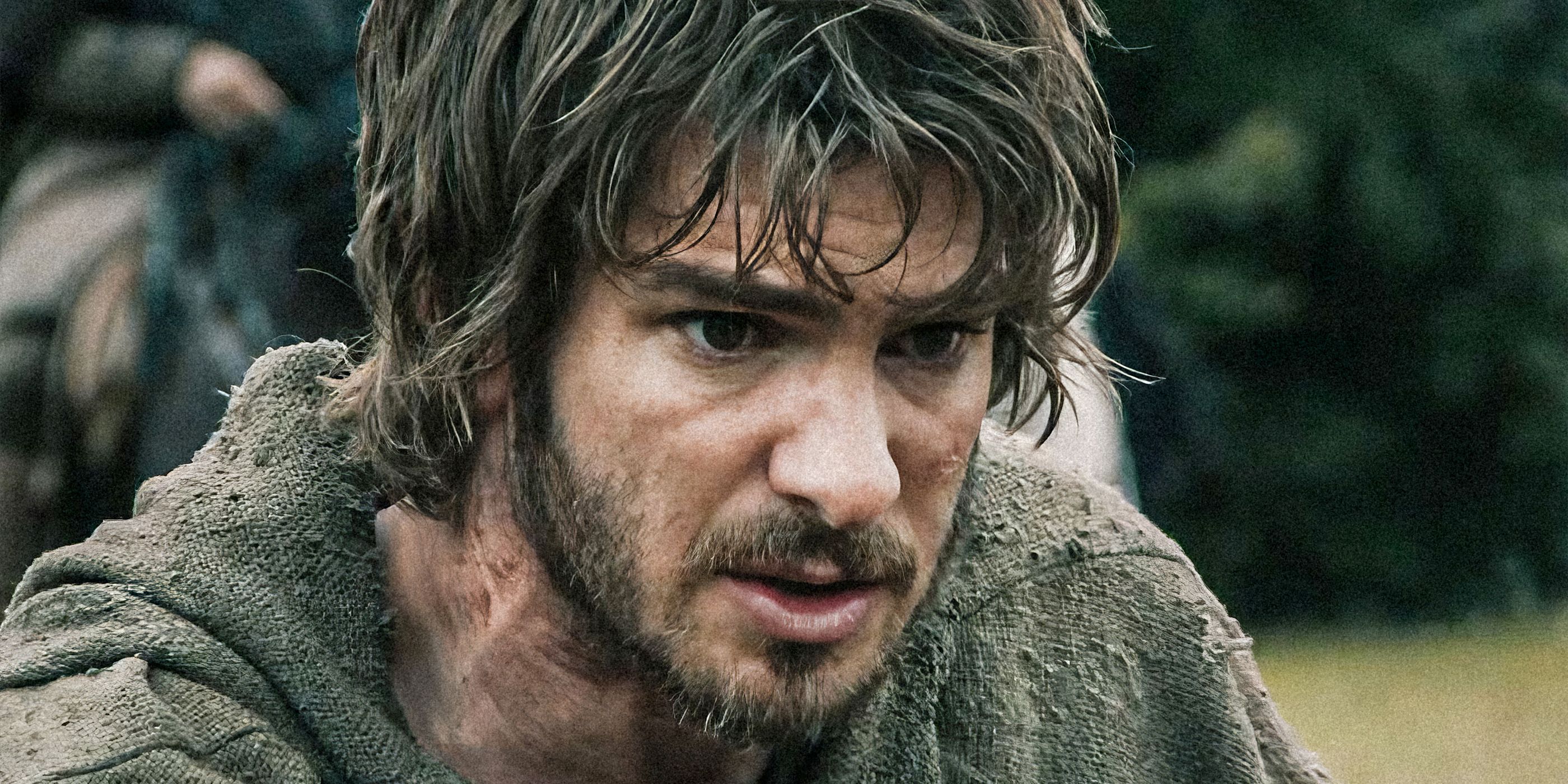
The Uprising is Greengrass' interpretation of the Peasants' Revolt of 1381, which arose in the wake of devastation from the Black Death and harsh taxation on England’s poor. Garfield stars as a man simply known as "Ploughman," who, after watching in horror as the king's soldiers violate the rights of his fellow villagers, snaps at the tax collector and fights back. His actions ignite a revolution among the peasants of England, as word of his deeds reach the ears of radical priests like John Ball (Jamie Bell) and former soldiers like Wat Tyler (Cosmo Jarvis); the Peasants' Revolt is also referred to as Wat Tyler's Rebellion. This revolt eventually marches to London, demanding to see a Corpus Christi miracle from their fourteen-year-old king, Richard II (Woody Norman) — that miracle being the king's freedom from his council's coercion and the people's freedom through self-governance. Although Ploughman's revolution appeared to have won the day, chaos and betrayal brought it to its knees.
There's a grit and griminess to The Uprising that grounds the film to the time period. While there are some fairly noticeable VFX shots of the mob as it reaches London, production designer Nikolaj Danielsen captures a realistic, non-romantic vision of English life in the 1380s. Greengrass refuses to sanitize the setting nor the violence on both sides of the conflict, and it works. Not to be missed is composer Volker Bertelmann score; he brings his signature style to the film's music, enhancing the peasants’ plight and desperation for justice.
Andrew Garfield's Ploughman Is a People's Champion Who Gets Lost in His Own Story


Andrew Garfield's Ploughman is the spark that lights this revolution. History might refer to Wat Tyler, but this nameless peasant is the heart of the rebellion: He's the one to rally and unite others, and it's his words to the messiah-like monarch that bridge a pathway for their demands to be met. Garfield imbues the role with the gravitas of a grieving man at his limits, tempering it with the humility of a farmer not trying to be the face of the movement. But Garfield often gets lost in the sheer number of side characters. As the revolution grows, Ploughman begins to fade into a crowd filled with the likes of Bell, Jarvis, and Thomasin McKenzie. Speaking of McKenzie: her Alyce brings an intensity to the film, as she's quick to embrace the bloodshed and seeks the heads of the council members. Alyce is one of the few characters given the space for her backstory to inform her present actions.
At the same time, there are also some supporting characters who could've been given a little more to do. For instance, Tom Hollander, whose villainous Sir Robert Hales is formidable yet exasperated by the temperamental teenage king. Hollander has no problem playing memorable antagonists, like Cutler Beckett in the Pirates of the Caribbean movies and Isaacs in Hanna. But by the time he makes his exit from the narrative, it doesn't feel like the movie gave him enough to do.
This can also be said for Dónal Finn, who is having a breakout year between this, Young Sherlock, and The Other Bennet Sister. Finn is a local priest in Ploughman's village, who witnesses Ploughman fighting back and later informs him how his actions inspired other villages. Although the two share a conversation that convinces Ploughman to meet with the growing number of rebels, the priest elects to stay behind, which feels like a missed opportunity. It could've been a unique arc to watch a man of faith, a witness to Ploughman's original revolt, grow disillusioned by the mob mentality that evolves. A character who does witness this kind of transformation is Richard II's mother Joan of Kent, played by Katherine Waterston. She watches both her son and Ploughman evolve into the men they would become.
'The Uprising' Should've Trusted Its Audience To Make the Robin Hood Connection

During the final 30 minutes of the film, a question began to form in my head: Wait, is this a Robin Hood origin story? Admittedly, I'm less familiar with the Peasants' Revolt; plus, many of the usual figures in the Robin Hood tale weren't present, like Prince John and the Sheriff of Nottingham. Still, the loose parallels of Sherwood Forest, unjust tax collectors, and a greedy, tyrannical monarch had my mind turning. Not even two days after the screening I attended, Focus Features unexpectedly added the tagline "The Rise of Robin Hood" to the film's title in a new trailer. Although my suspicions were proven correct, it does transform this movie into a blend of history and legend.
Most Robin Hood tales revolve around the time of King Richard I and King John, which is roughly at the turn of the 11th century. The Peasants' Revolt of 1381 was two centuries later. However, the earliest mentions of Robin Hood in English folklore appear in the 1370s in the poem Piers Plowman. It's from this thread that The Uprising pulls in order to insert itself in the famed outlaw's extensive filmography.
With the addition of the tagline, The Uprising has added a new expectation to itself. Rather than just being a dramatization about a real-life uprising with nods to the legendary outlaw, the film is now a "Robin Hood movie." In fact, it's the second Robin Hood movie to hit theaters this year, after A24's The Death of Robin Hood. There are key figures and places that most Robin Hood stories share, as well as references to the outlaw’s preferred weapon. Audiences coming to see the latest Robin Hood movie may be disappointed that The Uprising cares more about the real-life historical events that led to the legend than sequences of the famous rebel assembling his Merry Men.
Perhaps the point is that legends can arise from anywhere. The Ploughman isn't given a proper name, yet his actions inspired a movement, and later folklore. The truth is that The Uprising works on its own without the overt Robin Hood connection. For a movie set in the 14th century, there are plenty of parallels to our current era. The gap between the haves and the have-nots continues to widen each day, with the billionaires at the top just as removed as Richard II's council is, as they tax the peasant class without mercy. The plot remains a relevant reminder that revolutions are born out of everyday people, and of what a people united can accomplish. The Uprising also serves as a foreboding warning of the bloodshed that follows leaders when their power is left unchecked. The story's themes are timely, while the allusions to the timeless legend are subtle enough that it's a pleasant reward.
Overall, The Uprising is a well-made historical drama with pertinent themes. As a Robin Hood story, it will leave much to be desired. Rather than letting it stand on its own, the new tagline suggests that the studio doesn't trust its audience to see it without obvious IP at the forefront. It’s a shame, since its message — anyone can step up and refuse to stand by as oppression reigns, anyone can don the hood — would have given audiences plenty to think about without thinking about how it stacks up to other Robin Hood films.
The Uprising releases in theaters September 11.

The Uprising
The Uprising is a historical drama with timely themes that doesn't need to rely on Robin Hood connections.
6 10
- Release Date
- September 11, 2026
- Runtime
- 128 Minutes
- Director
- Paul Greengrass
Cast
-

Ploughman
-

John Ball
- Writers
- Paul Greengrass
- Producers
- Gregory Goodman, Jason Blum, Joanna Kaye, Lars Sylvest, Paul Greengrass, Joe Neurauter
- Main Genre
- Drama
- Executive Producer(s)
- Cliff Lanning, Deborah Acoca, Alastair Burlingham, Kwesi Dickson, Gary Raskin, Jay Taylor
Pros & Cons
- Paul Greengrass captures the gritty realism of 1380s England.
- Andrew Garfield is surrounded by a strong supporting cast.
- The film's themes are pertinent to today's social climate.
- Andrew Garfield takes a backseat to his co-stars.
- Some of the supporting cast aren't fleshed out enough.
- The movie's marketing gives the film an impression that it's a Robin Hood movie when there are only subtle nods to his origin.
KioskNews shows a cleaned-up reading view extracted from the publisher’s page — the original always lives on their site, not ours.