ETF gains split as stock picks face fresh test
RALLY REALITY: Although AI-linked shares have lifted the local market to new highs, investors are looking beyond hype for proof of sustainable profitability
By Crystal Hsu / Staff reporter


Taiwan’s fast-growing actively managed exchange-traded fund (ETF) market is facing a test of managers’ stock-picking skills as volatility and closer scrutiny of artificial intelligence (AI) investments widen performance gaps across the sector.
The 20 Taiwan-focused active ETFs in the latest performance rankings posted an average return of just 0.60 percent over the past three months, with fewer than half generating gains.
The gap between the best and worst performers reached 17.61 percentage points, according to the Securities Investment Trust and Consulting Association. Cathay Taiwan High Dividend Momentum Active ETF (00400A) topped the rankings with a 7.91 percent return, outperforming the category average by 7.31 percentage points, the association’s data showed.
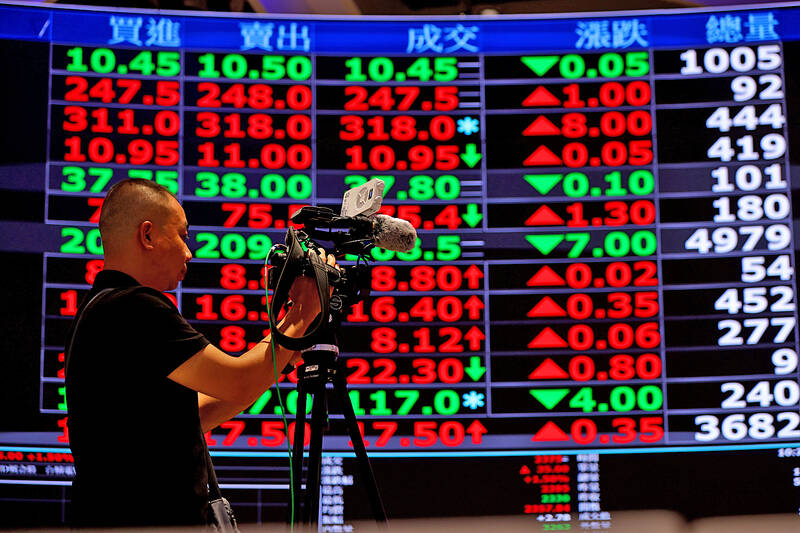
A journalist films the Taiwan Stock Exchange (TWSE) index graph at the Taiwan Stock Exchange office in Taipei on June 29.
Photo: EPA/Ritchie B. Tongo
The divergence comes as investors increasingly demand evidence that heavy spending on AI infrastructure can translate into sustainable revenue and earnings growth. Even within the same supply chain, differences in order quality, profit margins and earnings prospects can lead to sharply divergent share-price performance.
Taiwan’s active ETF market has expanded rapidly, with 40 funds managing a combined NT$988.6 billion (US$30.41 billion) at the end of last month, nearing the NT$1 trillion milestone. Together, the funds had more than 4.25 million beneficiary accounts, association data showed.
Despite overlapping portfolio holdings, active ETFs have delivered widely differing returns, as performance depends not only on which stocks managers select, but also on when they buy, how much they invest and when they adjust their positions.
Cathay fund manager Liang En-yi (梁恩溢) said recent volatility reflected investors’ reassessment of corporate prospects as the AI investment theme entered a phase in which earnings must justify expectations.
Although AI-related stocks have propelled Taiwan’s equity market to new highs this year, investors are looking beyond the hype to determine which companies can turn AI demand into sustainable profits, he said.
The supply chain spans semiconductors, servers, cooling systems and power infrastructure, with demand and earnings growth varying across segments, he added.
Rapid shifts in investor preferences make it increasingly critical for fund managers to adjust their portfolios as industry conditions change, Liang said.
A market correction does not necessarily mean growth opportunities have disappeared, but it can expose differences in companies’ earnings prospects and valuations, he said.
For active managers, the challenge is to identify companies whose earnings can justify their valuations while managing the risks of concentrated positions in a volatile market, Liang said.
KioskNews shows a cleaned-up reading view extracted from the publisher’s page — the original always lives on their site, not ours.