How music is her way of helping seniors find connection, purpose and strength
As the song Moonlight in the City played during a recent Mid-Autumn Festival programme at Ren Ci Hospital, a 71-year-old patient found herself transported back to a time when her children were young and playing with lanterns.
Her daughter joined in, adding memories of her own. For a few minutes, illness and hospital routines faded into the background. They were simply mother and daughter, reminiscing about the life they had shared.
It was a simple exchange, but for Gwen Neo, 26, it captured what music therapy can make possible.
Watch this video to find out more about what Neo does as a music therapist.
As a music therapist with Ren Ci Hospital’s psychosocial services department, Neo uses music to support her patients’ needs. Depending on the individual, that could mean supporting their emotional well-being, helping them express themselves or connect with others, or working towards functional goals.
That can mean choosing a familiar song to help someone open up, adapting a session around a senior’s physical abilities or watching out for the smallest signs of engagement from someone who is non-verbal or bed-bound.
The work may not always produce dramatic results. But for Neo, helping someone feel seen, heard or connected can be progress in itself.
Q: What first drew you to music therapy?
I first came across music therapy through a newspaper article when I was 14. It made me realise there was actually a profession that brought together two of my interests – music and healthcare.
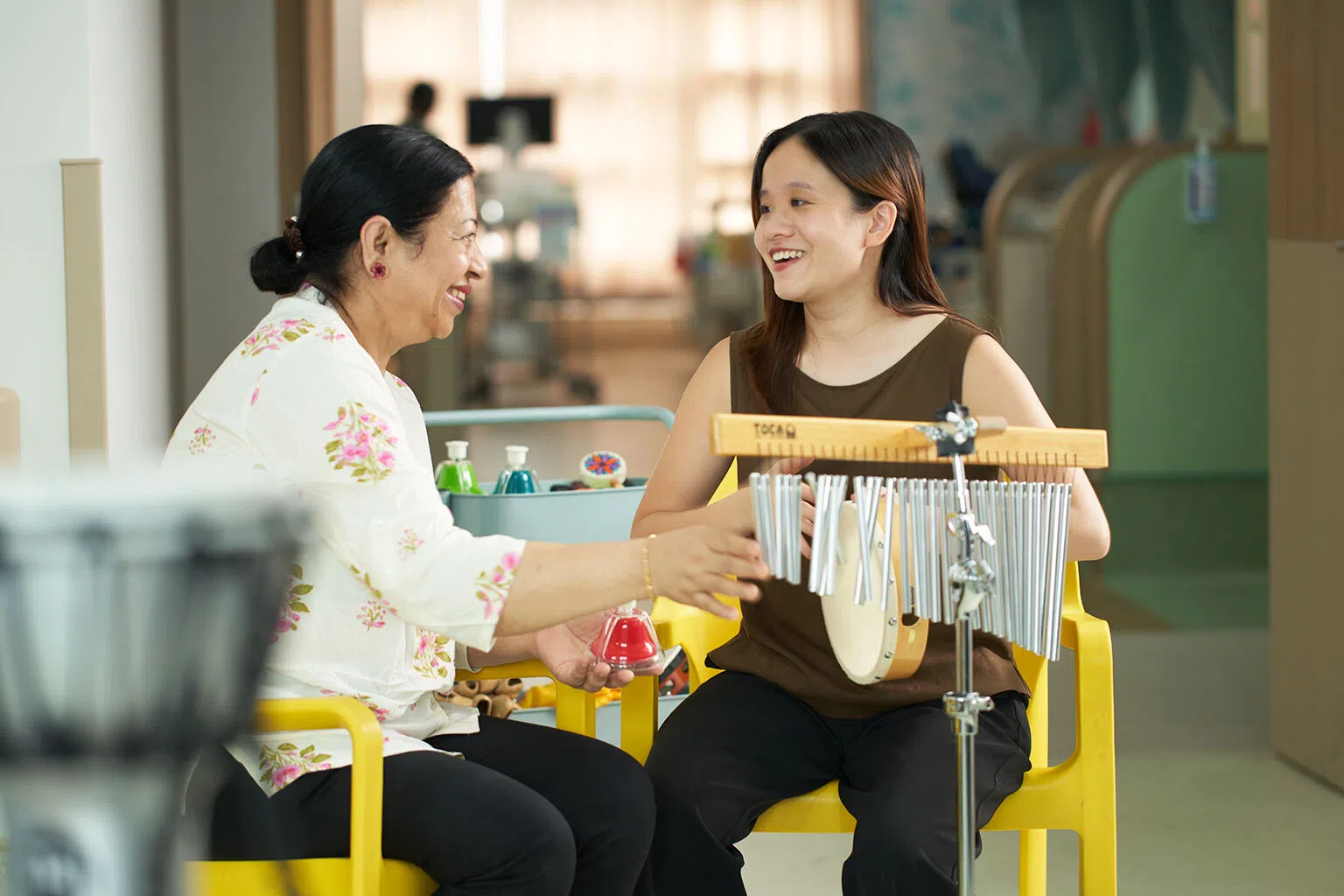
Neo adapts music therapy sessions to each senior’s needs and physical abilities, looking out for subtle responses such as eye contact or small movements.
PHOTO: SPH MEDIA
Healthcare already felt very personal to me because I grew up with a family member who was chronically unwell. I saw the hospital visits, appointments, procedures and discomfort she had to go through. As a child, there was often a sense of helplessness and a wish that things could somehow be different.
Music was also a big part of my life growing up. We listened to songs from the 1970s to 1990s at home and in the car, and had a collection of CDs that we kept replaying. Everyone would sing and dance along.
What stayed with me was how, despite the challenges we faced as a family, music gave us moments when we could put everything else aside and simply enjoy being together.
Q: How did you train to become a music therapist?
After graduating from the School of the Arts in 2018, I continued exploring how music could intersect with education through my undergraduate studies in Education Studies with Music at Durham University in the UK.
By then, I already knew I wanted to pursue music therapy, so I moved quite quickly into postgraduate training. As there was no established music therapy programme in Singapore at the time, I continued to stay in the UK and pursued a two-year master’s degree in music therapy at Anglia Ruskin University.
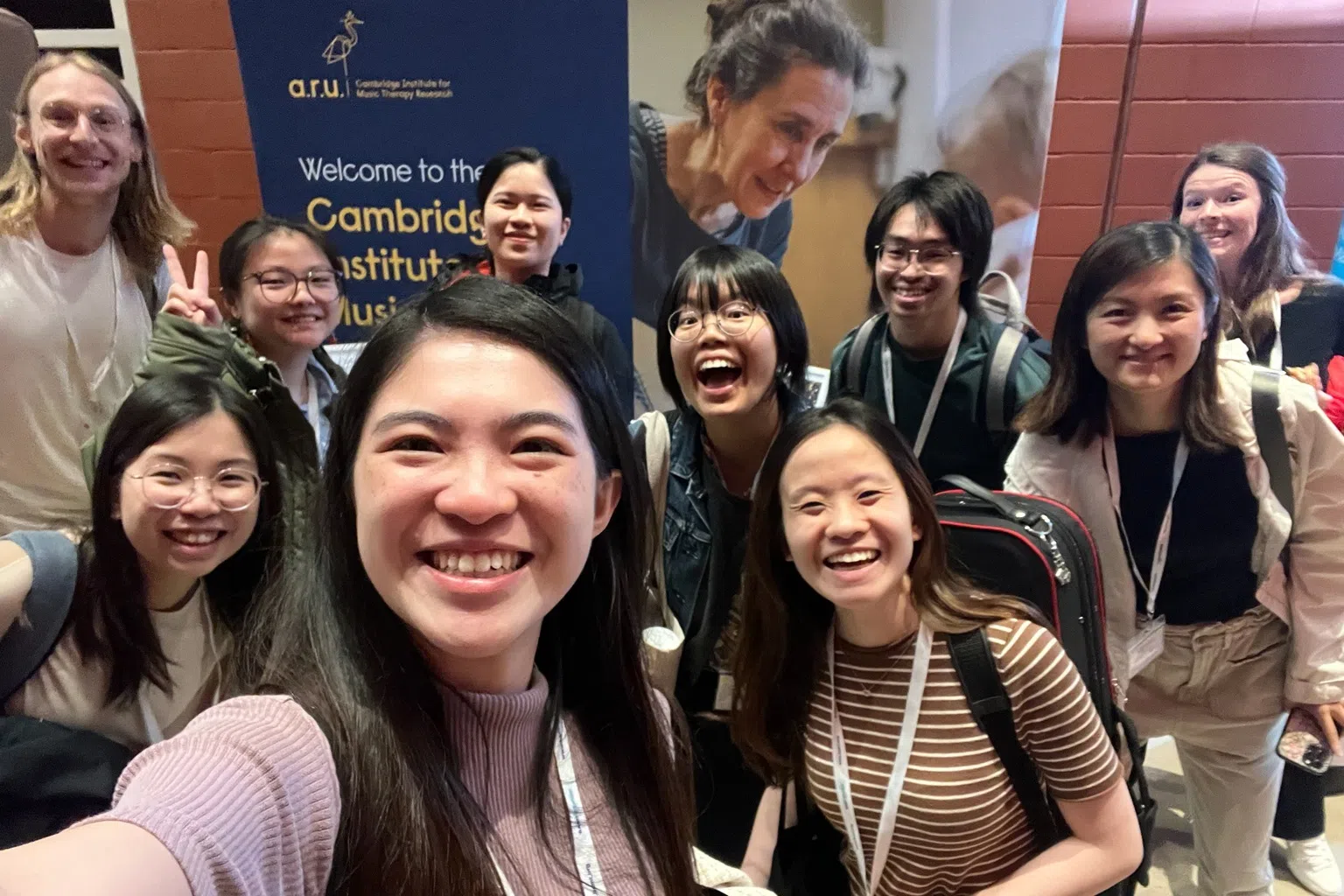
Neo (in the striped top) with course mates at a music therapy conference during her two-year master’s programme in the UK.
PHOTO: COURTESY OF GWEN NEO
The training involved much more than developing musical skills. There were many hours devoted to reading, clinical placements, supervision and personal therapy, alongside subjects such as psychology, human development, counselling approaches, health and disability studies and different therapeutic frameworks.
Music is an important part of the training, but music therapy is ultimately about understanding people, relationships and the therapeutic process, and learning how to use music meaningfully in a clinical setting.
Q: What goes into planning a music therapy session?
The initial referral often comes from the wider care team, which can include doctors, nurses, medical social workers and other allied health professionals. I take input from everyone involved, including family members, where appropriate.
During my assessment, I pay close attention to how the senior presents, including their verbal and non-verbal cues. From there, I identify a few areas that music therapy may be able to support, depending on their needs, care plan and circumstances.
There can also be a lot of preparation before I even enter the therapy space.
For one group of seniors from different language backgrounds, I wanted to use Teresa Teng’s Goodbye My Love as the closing song for the session. To make it more inclusive, I quickly learnt and prepared both the Malay and Chinese versions before the session that afternoon.
Being able to adapt like that is part of the job, but it also makes it rewarding.
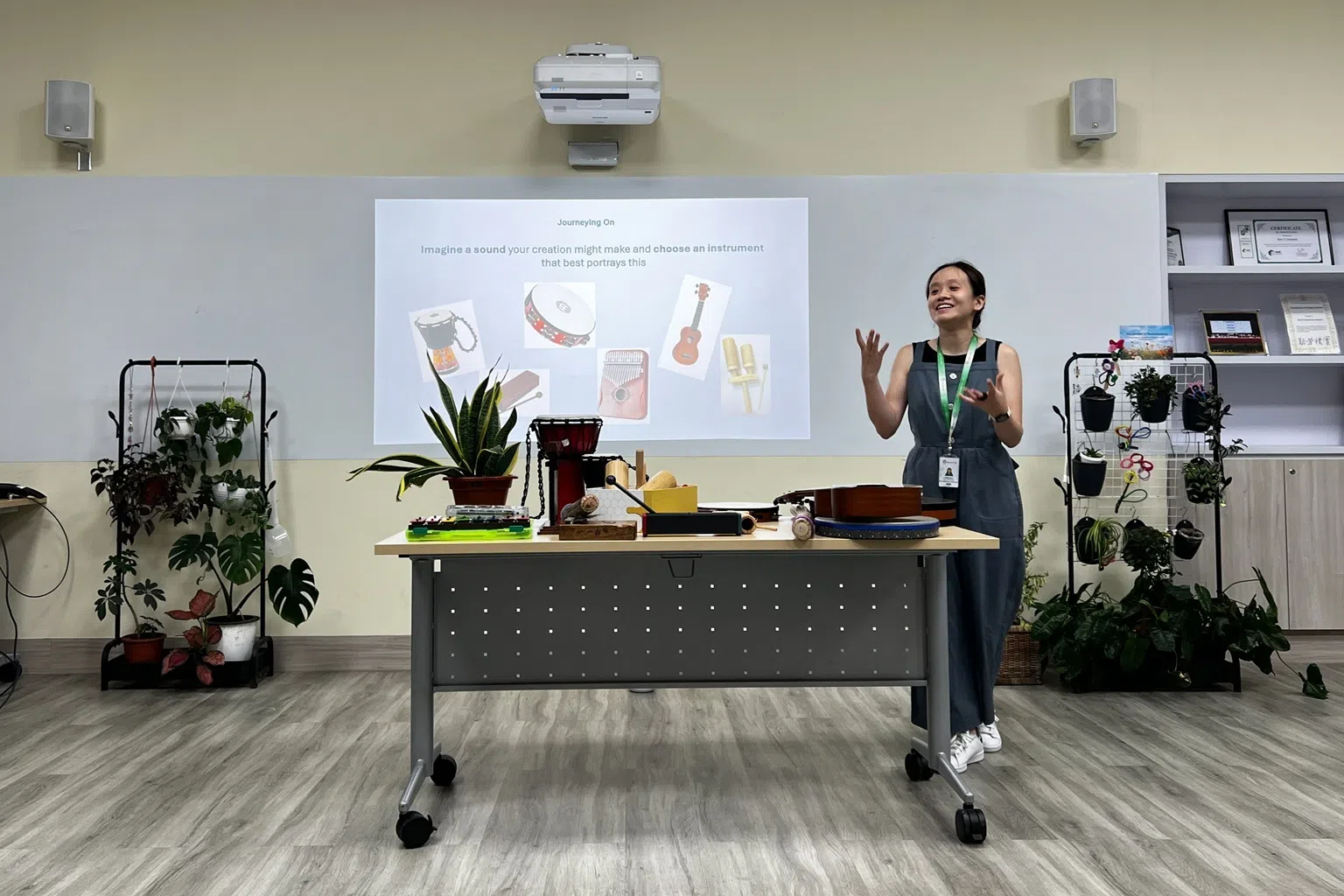
Neo co-facilitating a memorial session for staff in Ren Ci Hospital’s palliative ward.
PHOTO: COURTESY OF GWEN NEO
Q: How does music therapy fit into the wider care a patient receives?
We work closely with other allied health professionals on everything from individual and group therapy programmes to memorial services.
Music therapy can complement other disciplines by creating opportunities for expression, connection and emotional support, while facilitating meaning-making for those receiving intervention.
For one nursing home resident living with stiff-person syndrome – a rare neurological disorder that can cause muscle stiffness and painful spasms – music therapy was not focused on reducing her symptoms.
Instead, it gave her a safe space to explore difficult thoughts and emotions around her identity, purpose and what it meant to live with her condition.
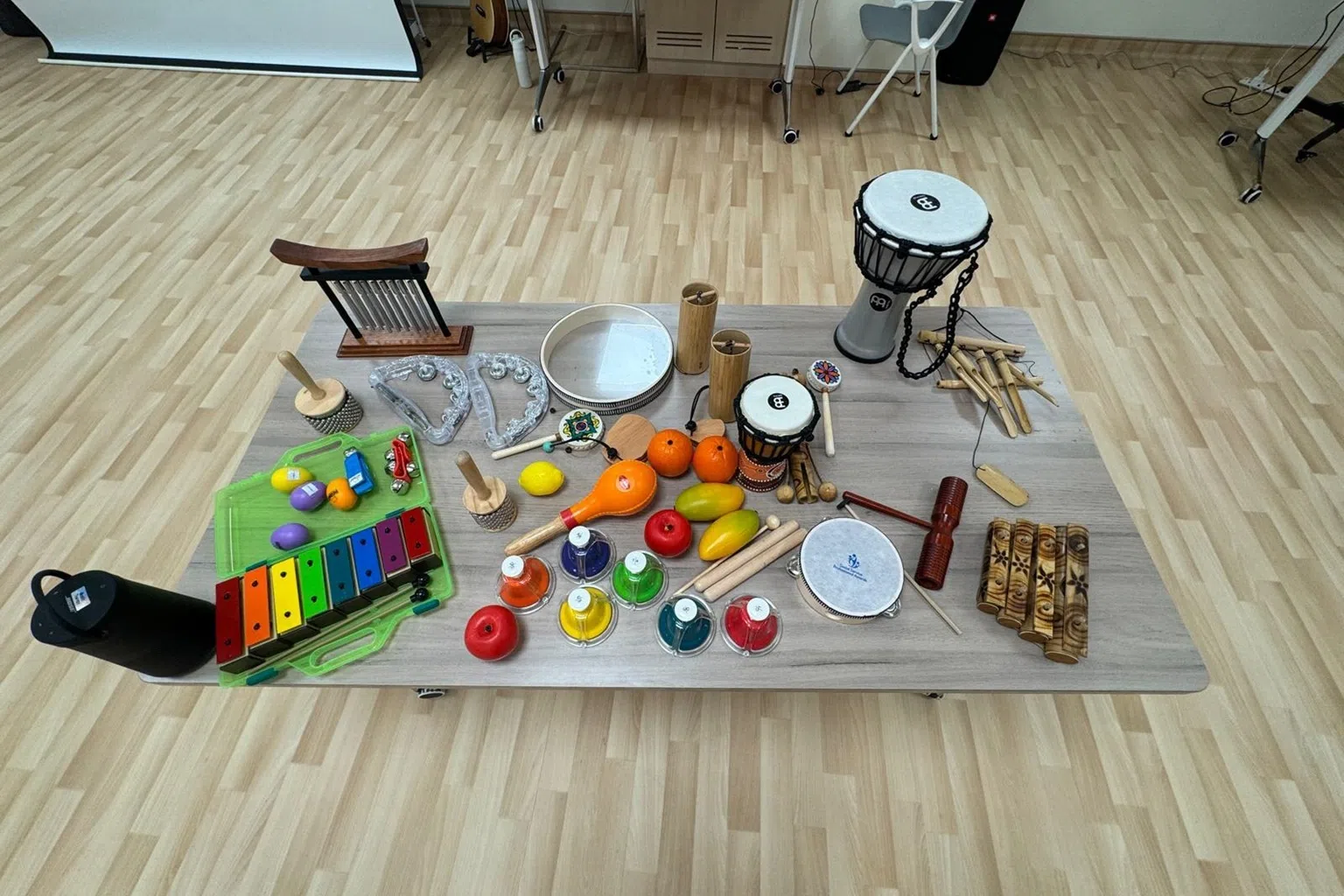
A range of instruments allows Neo to adapt group music therapy sessions to patients’ needs and physical abilities.
PHOTO: COURTESY OF GWEN NEO
Q: How do you know if music therapy is helping, especially when a patient cannot communicate verbally?
I am often looking for very subtle responses. It could be a change in facial expression, eye contact, blinking, smiling or even small movements of the fingers or toes.
Sometimes these happen spontaneously, while at other times they come in response to a musical prompt.
They may seem small from the outside, but they can tell us a lot about how someone is engaging with the music, the people around them and their environment.
In long-term care, I have also learnt not to think about progress solely in terms of outcomes. Change happens in a person’s own way and in their own time.
Some of the best sessions are simply those where a senior feels seen, heard or empowered to face what they are going through.
Q: Do you have to be an accomplished musician to pursue this career?
You need to be comfortable using instruments and your voice, and be willing to learn new repertoire and techniques. But people enter the profession with different musical backgrounds.
In a session, any skill you have might be called upon at any moment, so being flexible and intentional is very important.
Ultimately, musical ability is only one part of the role. Supporting the person in front of you takes precedence above everything else.
That is also what working in long-term care has taught me about healing. Medicine plays an invaluable role in supporting people with chronic illness, but healing can take many forms.
Sometimes, the most meaningful work is helping someone find connection, purpose and strength in the midst of a reality that cannot always be changed.
Community care professionals like Gwen Neo use the power of music to help seniors express themselves, connect with others and find joy in everyday moments. This Community Care Day, show your appreciation for them by personalising a “Thank You” card here.
KioskNews shows a cleaned-up reading view extracted from the publisher’s page — the original always lives on their site, not ours.