Exhibition: Taiwan’s first city walk biennale
The first Tainan Art Biennale opens across a close-knit network of various inviting city center artistic and cultural spaces
By Shane O’Reilly / Contributing Reporter


Following in the footsteps of the Taipei Biennial (台北雙年展) and Taichung’s numerous biennials, the first Tainan Art Biennale launched on Oct. 31.
Its overarching theme of “Unfolding Circuits” narrates a tale of connectivity and expression, tying together the city’s architecture, geography and cultural history promoted across 16 core venues.
Tainan’s size makes a biennial ideal, with almost everything within easy reach, and as such it is being advertised as Taiwan’s first city walk biennial.
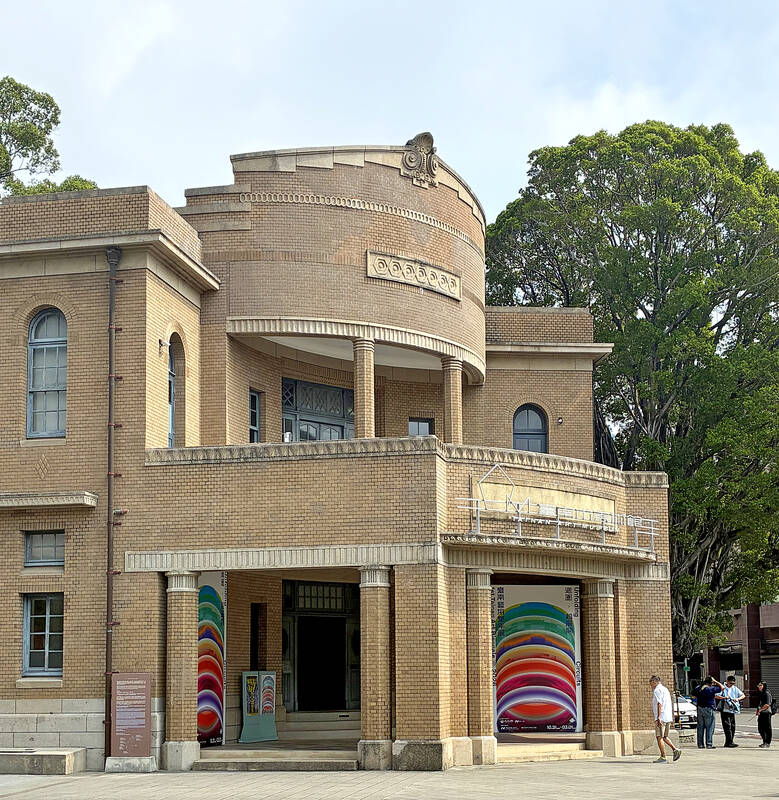
The epicenter of Tainan’s first biennial, the Tainan Art Museum.
Photo: Shane O’Reilly
The theme is also indicative of Tainan’s layout, unfolding across the city center’s web-like grid outward from its memorial roundabout epicenter across a network of roads, lanes and artistic spaces showcasing traditional and contemporary art.
OVERVIEW
Wrapping around the Tainan Art Museum’s resplendent inner courtyard, home to a monolithic banyan tree and a breezy cafe, are two levels of art that flow along a pentagonal floor plan.
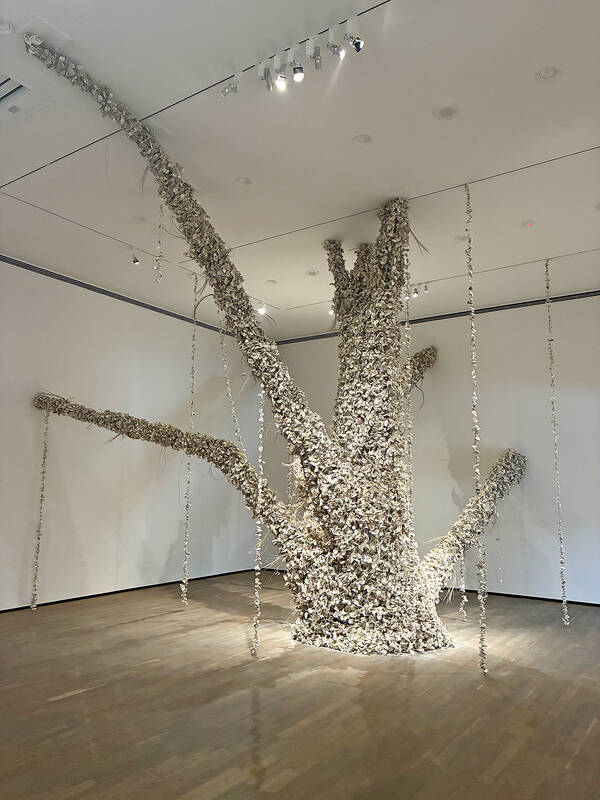
Sugihara Nobuyuki and Nakamura Ayaka’s The Old Banyan of the Sea, the Siraya Tree, at the Tainan Art Museum.
Photo: Shane O’Reilly
Spread throughout these floors are a multitude of rooms, nooks, crannies, annexes, and a plethora of little doors and layered curtains hiding dark rooms and video installations (with one embedded in an under-stair recess).
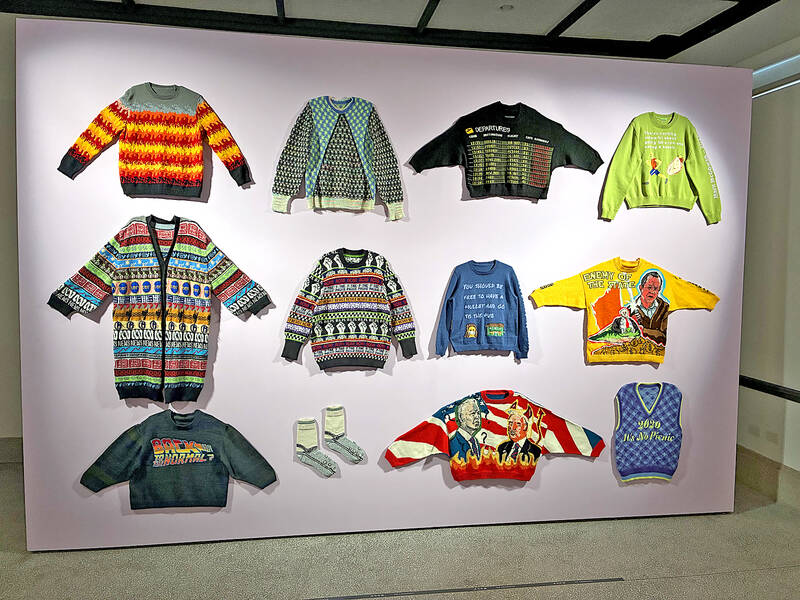
Highlights run from Malaysian textile masterworks to hand-knitted garments of political protest, a Prototype Art movement overview to an interpretive oyster shell sculpture from Japan and several painted works representing the Atayal indigenous people.
Thoughtfully curated and cohesive, Tainan Art Museum was bold and brimming with standout works.
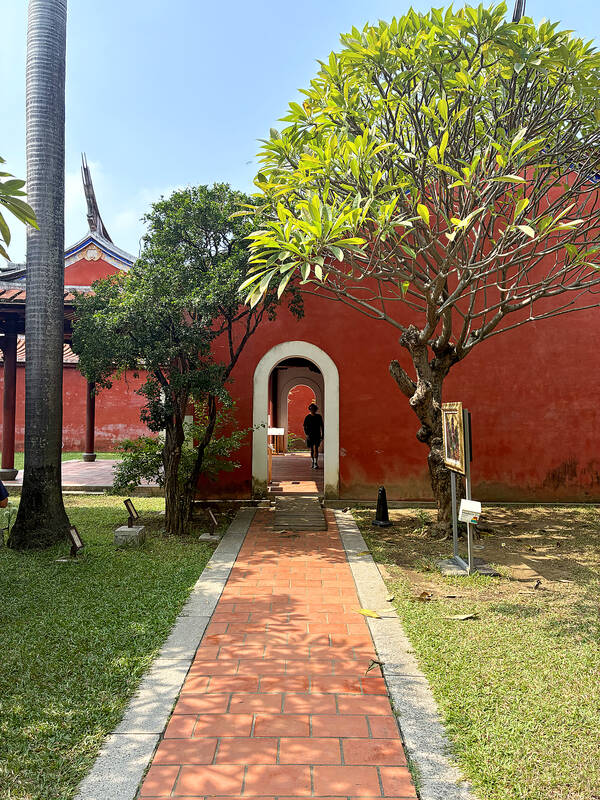
A slice of bucolic beauty and wonder found within the Tainan Confucius Temple grounds.
Photo: Shane O’Reilly
Denoted on the biennial map as ‘The Preparatory Office of the National Museum of Modern Art Tainan,’ MOMA Tainan delivers a very different energy, however, with a notable lack of biennial signage and marketing.
Its curations include a luminous chromatic display of the retrospective works of Shen Che-Tsai (沈哲哉) and The Vanished Art and Design of Taiwan, focusing on Taiwanese art and design from 1895 to 1960.
While not entirely out of place, neither lived up to a gallery of this magnitude, and the biennial’s usually impactful atmosphere was missing.
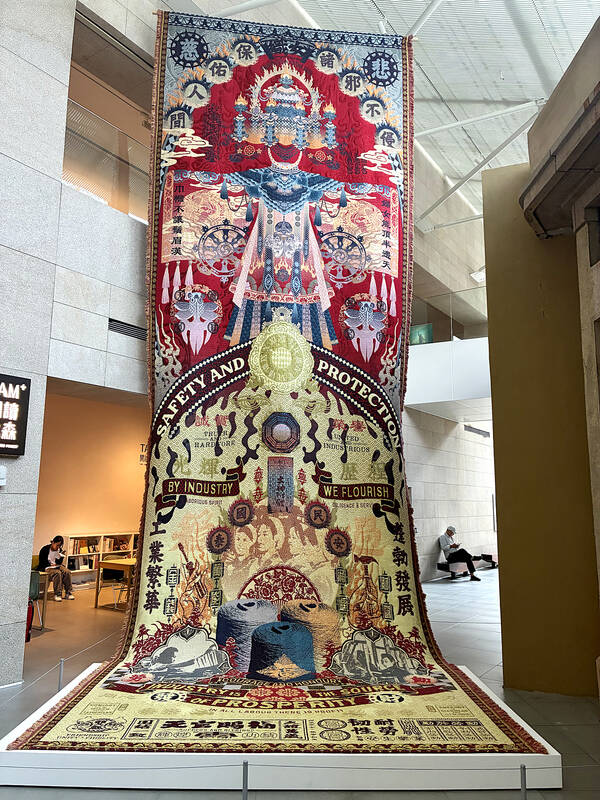
Spirit of Labour: Zhi Nu by Marcos Kueh at the Tainan Art Museum.
Photo: Shane O’Reilly
Perhaps such a beautifully whitewashed architectural triumph, flooded with natural light, with 2,700 square meters of dedicated exhibition space, could have been put to better, more spectacular use?
While both were enjoyable experiences, it feels a little disingenuous to refer to the Tang Te-Chang (湯德章) Memorial Park (湯德章紀念公園) and the Tainan Confucius Temple as “Core/Main Venues.”
The former has nothing new on show until Dec. 5, when Sou Fujimoto’s The Loop (迴圈/打開的環), a massive, interactive structure assembled on-site over two weeks, finally opens.
Emma Buswell’s After Arachne at the Tainan Art Museum.
Photo: Shane O’Reilly
The latter, a beautifully preserved and well-established city landmark with great historical and educational value, felt strangely underutilized, with only one large site-specific biennial installation.
As the city’s first biennial, there were bound to be teething problems. But, niggles aside, what remains is a largely successful and certainly very affordable cultural showcase.
The first Tainan Art Biennale delivered a resonant mix of both local and international art in tandem with the idiosyncratic and inimitable city that binds it all together.
EXPLORATION
Those with limited time who aim to see all the main venues in a day should move from north to south along the spine of the city center.
From the B.B. ART gallery to the Aiguo Women’s Hall (or the Former Tainan Patriotic Women’s Hall) provides an area dense with major highlights.
The total walking time without stopping would be about 10 minutes, which is very reasonable with 8 significant sites in the area.
The purchase of a day ticket from the Tainan Art Museum (臺南市美術館) also allows the purchase of their biennial book and map at the reduced rate of NT$100.
The ticket provides free entry to sites: the Tainan Art Museum, MOMA Tainan 南國美, and the Tainan Confucius Temple (臺南孔子廟).
For your information
Art Biennale notes:
What: Tainan Art Biennale Where: Various venues, but a good place to start is the Tainan Art Museum (臺南市美術館), 37 Nanmen Rd, Tainan City (臺南市南門路37號) When: Until March 1 Admission: One-Day Pass is NT$200 and the Two-Day Pass is NT$300 On the Net: (English and Chinese) tainanbiennial.org
KioskNews shows a cleaned-up reading view extracted from the publisher’s page — the original always lives on their site, not ours.