Billing, retrospective tariffs: Gurgaon residents to raise concerns with power regulator
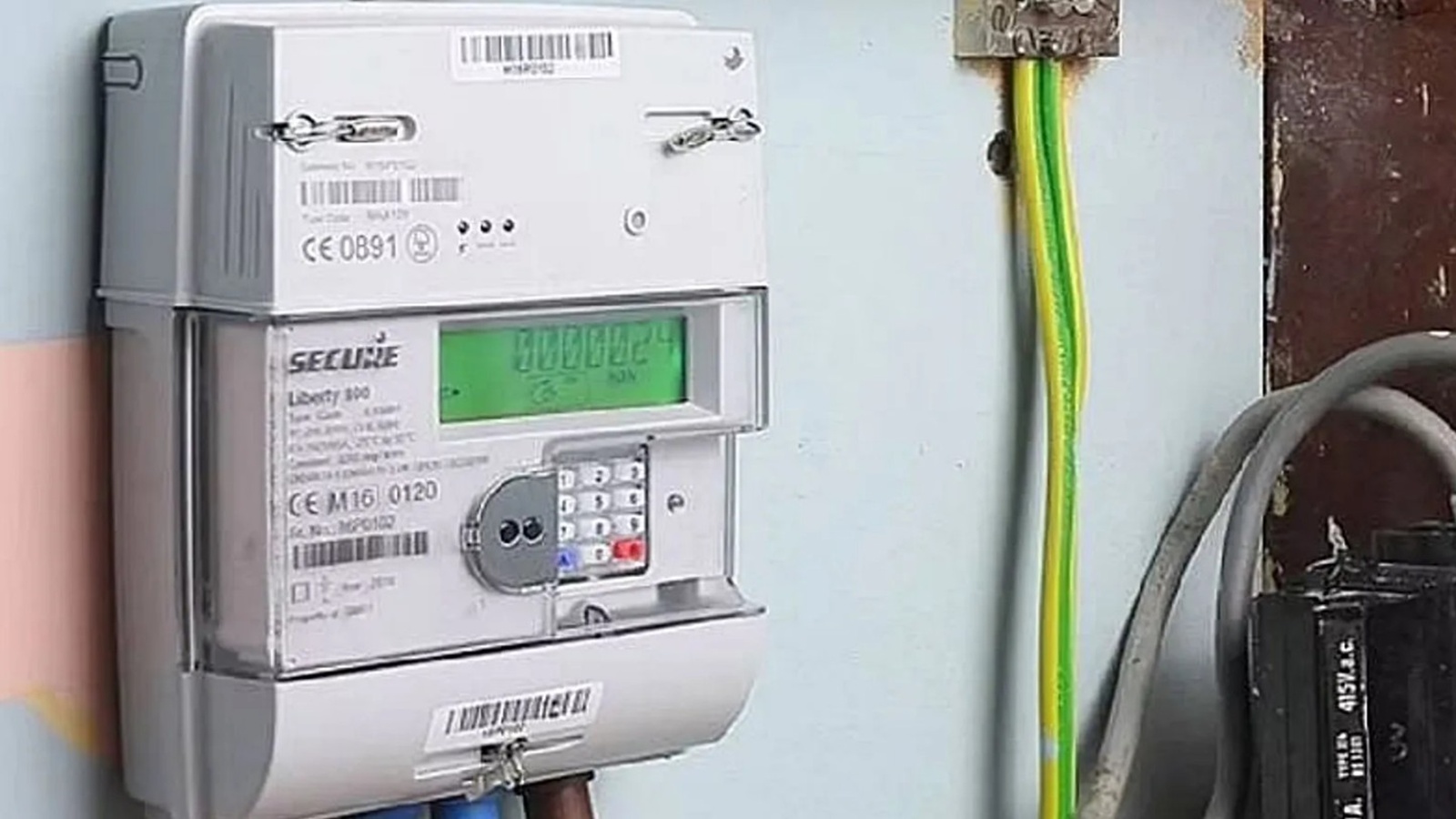
The Commission granted time until October 7 for the discom to submit its reply, scheduling the next hearing for October 12. (File Photo)
Operational challenges related to the Unified Billing System (UBS) and mounting retrospective non-domestic or commercial power penalties are among the concerns that the Resident Welfare Associations (RWAs) — representing group housing societies along the Dwarka Expressway — in Gurgaon are planning to raise before the Haryana Electricity Regulatory Commission (HERC) as the regulator seeks details on compliance.
This comes after the HERC, the state power regulator, initiated suo motu proceedings on August 25 into the “deliberate, continuous, and systemic non-compliance” of the HERC (Single Point Supply) Regulations, 2020, and the delayed rollout of a new system — Unified Billing Software — mandated by a 2022 circular. During the hearing, counsel for the Dakshin Haryana Bijli Vitran Nigam (DHBVN) submitted that the compliance rested with developers and RWAs, seeking time to gather field data. The Commission granted time until October 7 for the discom to submit its reply, scheduling the next hearing for October 12.
In response, representatives from over 15 RWAs — across Sectors 99 to 113 in the Millennium City — convened on Saturday evening to deliberate on the regulatory fallout. While the RWAs welcomed the regulatory push to bring order to residential electricity distribution, they asserted that the billing software suffers from fundamental operational flaws and shifts administrative failures onto residents.
The deadlock
Under the existing Single Point Supply (SPS) framework, DHBVN supplies bulk electricity to a housing society through a single primary meter, billing the society collectively.
The RWA, or the developer, remains responsible for maintaining the internal distribution network, reading individual sub-meters, and billing flat owners.
A major point of friction with this system, however, involves the split between domestic supply (DS) tariffs for residential units and non-domestic supply (NDS) or commercial tariffs that are applied to the common amenities such as clubs, community halls, and retail outlets in the societies.
“DS and NDS category billing is the real problem,” said P N Mishra, General Secretary of the RWA at Suncity Avenue, Sector 102. “DHBVN has penalised our society with ₹97 lakh in arrears for not raising bills accordingly, but it is not our fault. We have requested DHBVN for unified billing, and we send commercial consumption readings separately, but the department is not helping. That is why we want to be a part of the HERC proceedings.”
Story continues below this ad
The discom, according to several RWAs, has routinely issued retrospective commercial bills dating back four to five years, even in societies where load was already formally declared in approved electrical plans.
‘Software flaws, pilot failures’
At the same time, residents have also disputed the readiness of the Unified Billing Software. “We want to adopt the Unified Billing System, but we strongly doubt the software will resolve our issues,” said Sunil Sareen, a resident of Imperial Gardens in Sector 102. “Not a single society in Gurgaon has successfully transitioned to this software so far.”
Rajesh Kumar of Mahindra Aura in Sector 110 highlighted that his society had attempted to onboard the system. “The software was opted by our society, but it still did not resolve the billing system. We were hopeful, but it failed,” he said.
Sunny Singh Daultabad of the Dwarka Expressway Gurugram Development Association pointed out that managing SPS reconciliation requires regulatory and technical acumen that elected RWA members often lack. “SPS billing is a highly technical and financially sensitive exercise involving metering, tariff categorisation, reconciliation, and recovery. It is effectively being handled by RWA office-bearers who are ordinary residents without domain expertise,” he said.
Demand for direct connections
Story continues below this ad
During Saturday’s meeting, the RWAs contended that the discom should transition flat owners to direct connections and individual billing, wherever legally and technically viable, limiting RWA oversight strictly to common area power consumption.
The RWAs have stated that their planned joint petition before the HERC will document the ground realities and structural impediments faced by societies, prior to the Commission’s October 12 hearing. As they plan to raise the concerns with the regulators, these are the other demands that they want to raise:
– Relief on retrospective tariffs: RWAs seek an urgent audience with the Managing Director of DHBVN to roll back retrospective NDS arrears where loads were already sanctioned in approved plans.
—Trial runs and Standard Operating Procedures: They want the DHBVN to conduct dummy runs, issue a comprehensive written standard operating procedure (SOP), and provide formal technical training before making software adoption compulsory.

Abhimanyu Hazarika is a Senior Correspondent with The Indian Express, based in Gurgaon. He covers southern Haryana. Education - Post-Graduate Diploma in Print Media, Asian College of Journalism (Class of 2020) - B.A. (Hons) Liberal Arts with a major in Political Science, Symbiosis School for Liberal Arts (Class of 2019) Professional Experience Before joining The Indian Express, he worked with Bar & Bench (legal journalism) and Frontline magazine, where he developed experience in court reporting, legal analysis, and long-form investigative features. Reporting Interests His work centres on civic accountability, environmental policy, urban infrastructure and culture, crime and law enforcement, and their intersections with politics and governance in and around Gurgaon. Recent Coverage (2025) - Crime: Reported on the recovery of 350 kg of explosives and an AK-47 from a rented house in Faridabad, linked to the 2025 Red Fort car explosion case (November 11, 2025). - Environmental policy: Covered protests outside a Haryana minister’s residence against a Supreme Court order that environmentalists argue could allow mining and real estate development on large parts of the Aravalli hills (December 21, 2025). - Pollution control measures: Co-authored coverage of the Rekha Gupta government’s enforcement of vehicle restrictions at Delhi-NCR borders (December 21, 2025). - Road safety and infrastructure: Examined response lapses in the Delhi-Mumbai Expressway hit-and-run case and ongoing investigations into high-speed road crimes in Gurugram. - Animal welfare policy: Reported on concerns regarding the low budget allocated for stray dog sterilization by the Municipal Corporation of Gurugram (November 30, 2025). - Urban culture: Featured the social media-driven popularity of a new Magnolia Bakery outlet in Gurugram (December 15, 2025). Contact X (Twitter): @AB_Hazardous ... Read More
Stay updated with the latest - Click here to follow us on Instagram
KioskNews shows a cleaned-up reading view extracted from the publisher’s page — the original always lives on their site, not ours.