Parliament returns with a big agenda and a fight brewing between Carney and labour unions
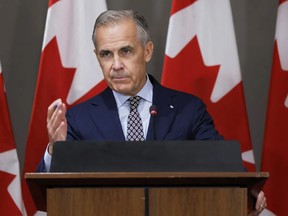
OTTAWA – Parliament is set to return after a three-month long summer break on Monday and the Liberal government’s agenda will be jammed packed this fall.
Sign In or Create an Account
Prime Minister Mark Carney is running high in the polls, and his government maintains a majority of seats in the House of Commons, which gives the Liberal leader ample room to implement his policies.
Topping the legislative agenda for the fall session will be legislation designed to accelerate the federal approval processes around all major projects, changes to the Canada Labour Code and moves to strengthen supply chain certainty.
Government House Leader Steve MacKinnon would not elaborate further on Friday about what’s in the legislation, citing parliamentary privilege, but said the bill will help Canada “attract investment, create jobs, and trade with the world.”
Carlene Variyan, Liberal strategist and partner at Summa Strategies, said the bill is a follow-up to the investment summit last week in Toronto, where Carney pitched Canada as an attractive place to invest for global investors. The prime minister aims to attract $500 billion in private investment by the end of the decade. Carney also announced at the summit that Ottawa will seek private investment to operate the country’s four biggest airports.
“This supply chains bill will be a critical part of the prime minister’s ongoing efforts to ensure that Canada is viewed as a place that makes sense to invest in, that’s competitive to invest in, relative to other countries,” said Variyan.
Labour unions have already voiced their opposition to making changes to the Canada Labour Code, noting that the expedited consultations and review seem to be motivated by corporate interests.
Erin Morrison, NDP strategist and vice-president at Texture Communications, said Carney is walking into a fight with the country’s largest labour unions.
“(Jobs) Minister Patty Hajdu was doing a consultation, although I hesitate to call it a consultation because it was so short and surface level, that there is fear of the possibility of impacting the right to strike,” she said. “If that is the case, the NDP will be fighting tooth-and-nail this fall.”
Morrison said this could ultimately hurt Carney’s economic agenda, because he needs workers onside to build the infrastructure and projects his government is targeting.
“We’ve been out consulting all summer on this, we’ve listened, we’ve made some adjustments,” Carney told his caucus on Friday in Ottawa. “The bottom line, though, is this: for projects, federal projects, and supply chains, our standard will be simple: one project, one review, one year.”
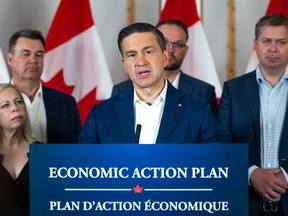
Conservative Leader Pierre Poilievre huddled with his caucus this past week in Penticton, B.C., to talk about strategy for the upcoming parliamentary session.
Poilievre faces an uphill battle with Canadian voters, a recent poll published by the Angus Reid Institute showed that 13 per cent of respondents who voted Conservative in the 2025 federal election, would now vote for Carney if given the chance.
Even the deputy leader of the party, Melissa Lantsman, acknowledged that her and her caucus colleagues are “not in the position that we want to be in.”
The Conservative leader remains focused on affordability concerns, which runs a close second to the U.S. trade war in terms of issues Canadian voters care about.
On Monday, Finance Minister François-Philippe Champagne will table a bill that extends the holiday on the gas excise tax until the end of January, after the Conservatives called on the federal government make the pause on the tax permanent.
Yaroslav Baran, Conservative strategist and co-founder of Pendulum Group, said Champagne can expect the Conservatives to hammer the Liberals on their fiscal track record.
“One can argue that in broad strokes, Mr. Carney is this governing with a considerably more Conservative agenda than his predecessor,” he said. “But if you look at the public accounts, deficits and debt are skyrocketing, and that’s going to be a very obvious opening for the Conservatives.”
The federal budget will be tabled during the fall session, which will provide an update on the country’s finances.
Poilievre told his caucus members at his caucus retreat that he has found $150 billion in savings the Liberals can capitalize on, with proposed cuts to foreign aid, federal bureaucracy and government’s proposed high-speed rail project.
The federal government has made several new spending announcements over the summer months, including a national AI strategy, a food security strategy, a West Coast pipeline project and a cooperative prosperity agreement with the province of British Columbia.
Carney told his caucus on Friday that his government will “maintain its fiscal advantage” while also acknowledging the cost of borrowing for governments is increasing globally as bond yields rise.
Economists will be watching for how the government accounts for its new spending initiatives and how that impacts Canada’s deficit track going forward, though oil prices are expected to be an upside for government revenues.
Budget watchers will also be looking for the federal government’s NATO defence spending plan and how it plans to achieve a four per cent of GDP spending target by 2030, as outlined by Carney himself this past spring.
Champagne wrapped up his pre-budget consultations earlier this month. At the investment summit, the government announced a “Productivity Super-Deduction” which will lower Canada’s marginal corporate effective tax rate on new business investment from roughly 13 per cent to 6.4 per cent. Carney also announced his government intends to privatize the operations of Canada’s four largest airports.
“The big question mark to me, and what I think a lot of political watchers will be watching for this fall, is what the budget looks like,” said Variyan.
She noted that the government has already announced significant spending initiatives, including a $51-billion Build Communities Strong Fund for infrastructure and significant defence spending commitments.
“I don’t see very much left in terms of big-ticket spending items for this fall budget, which means they’ll need something else to put in the shop window to create that sense of momentum and of doing things,” she added.
If you look at the public accounts, deficits and debt are skyrocketing, and that’s going to be a very obvious opening for the Conservatives
The U.S. trade war will also continue to loom large on Canadian domestic politics. Carney decided pause negotiations on a deal on sectoral tariffs with the U.S. last month, citing several last-minute demands from American negotiators that made a deal untenable.
As a result, both countries have slapped each other with tariffs on nearly $28 billion worth of goods.
While polling suggests the majority of Canadians support Carney walking away from the deal, the economic fallout from tariffs on key sectors of the Canadian economy could persist and worsen.
Baran said the Conservatives will continue to pressure the government on achieving a good agreement with the U.S.
Mexico and the U.S. are currently in the process of negotiating a bilateral agreement, with Reuters reporting that the two parties are working towards a deal before the U.S. midterm elections on Nov. 3.
Variyan said Mexico reaching a deal before Canada will not sway the prime minister’s negotiation strategy with the U.S. administration.
“I think that the prime minister has shown this summer that he’s not afraid to walk away from the table when a deal is offered that isn’t in our best interests, and so the dynamic will play out in the news cycle as something that creates some pressure,” said Variyan. “But I don’t think that you’ll see this prime minister let himself be too swayed by that chatter, and he’s an eye on the prize kind of guy.”
In the meantime, the Liberal government will continue its trade diversification agenda.
Canada will host a summit with the European Union leadership in October in Montreal, which will be a forum to discuss the EU extending a potential “associate membership” to Canada. It remains unclear what this membership will consist of, but Carney has promised any arrangement will be subject to debate and a vote in Parliament.
Baran said the details will be very important, noting that Conservatives would be open to more trade with the bloc, more foreign direct investment deals and more opportunities for Canadian students to study in the EU.
However, the Conservatives would be opposed to the burdens of EU membership.
“The flags the Conservatives have already planted in the ground is no EU taxes, no EU regulations, and no EU immigration policy,” he said.
Canadians can also expect the government to finalize two free trade agreements by the end of 2026, one with Brazil and one with India, which could bring new opportunities and new markets in digital trade, agriculture and manufacturing.
The House of Commons returns on Monday with six vacant seats, three of which are in Quebec. Contests of interest will be the seats of former Liberal environment minister Steven Guilbeault and former NDP MP Alexandre Boulerice, both Montreal-area ridings.
“The Liberals’ advantage is, of course, that they have far more funds right now to run a by-election than the NDP does,” said Morrison. “It will be a challenge for the NDP to hold the seat if the Liberal juggernaut and financial giant really wants it.”
Still, Morrison said the NDP remains popular in that riding, and she said the NDP could still win.
Variyan said the Liberals are not under any illusions that Guilbeault’s seat will be an easy one to keep.
“My understanding is that it’s not a campaign that the Liberal party will be able to sleepwalk their way through in the byelection,” she said. “They will need to put effort and resources into (it) and have a candidate who is a strong campaigner in order to hold the seat.”
Conservative MP Larry Brock also officially resigned his Ontario seat on Friday, which means a seat in Brantford, Ont., is also up for grabs.
The big question mark to me, and what I think a lot of political watchers will be watching for this fall, is what the budget looks like
Historically, the seat has been a Conservative stronghold, but some pollsters have mused that the riding could become competitive under this political climate.
“I’ve seen speculation that this riding might be a fight,” said Baran. “I haven’t seen any polling myself, that says it will be a fight.”
Poilievre is expected in Brantford, Ont., on Sunday, where he will hold a rally.
Ultimately, opposition parties will be faced with the challenge of staying relevant during this parliamentary session, given Carney’s popularity in the polls and his government’s majority in the House of Commons.
Baran said given that Carney is governing on a centre-right agenda, the Conservatives have really only two options; either going more far right than Carney, which Baran does not recommend, or taking on a role as an accountability watchdog.
“You have set these lofty goals, are you delivering on them,” said Baran. “Frankly, there is plenty of space to be critical of the government on those measures.”
Morrison said there is an opportunity for the NDP to take up space on the left, now that Carney has abandoned some of those more progressive voters.
“For the NDP, they now have a wide road on the left side, occupying not just all of the traditional NDP voters, but the progressive Liberals as well, who will be having some sense of voters’ remorse over Mark Carney’s choices, particularly if we see things like attacks on working people and the privatization of major airports,” said Morrison.
“That is a huge challenge when you have a small caucus, smaller party budget, so (NDP Leader Avis Lewis) and his team really have to throw their back into it to make sure that if if the values are there, if the opportunity is there, that they’re able to capitalize,” she added.
National Post
Our website is the place for the latest breaking news, exclusive scoops, longreads and provocative commentary. Please bookmark nationalpost.com and sign up for our newsletters here.
Join the Conversation
This website uses cookies to personalize your content (including ads), and allows us to analyze our traffic. Read more about cookies here. By continuing to use our site, you agree to our Terms of Use and Privacy Policy.
KioskNews shows a cleaned-up reading view extracted from the publisher’s page — the original always lives on their site, not ours.