Philippine capital’s ‘acutely unhealthy’ air due to Indonesian haze spurs warnings
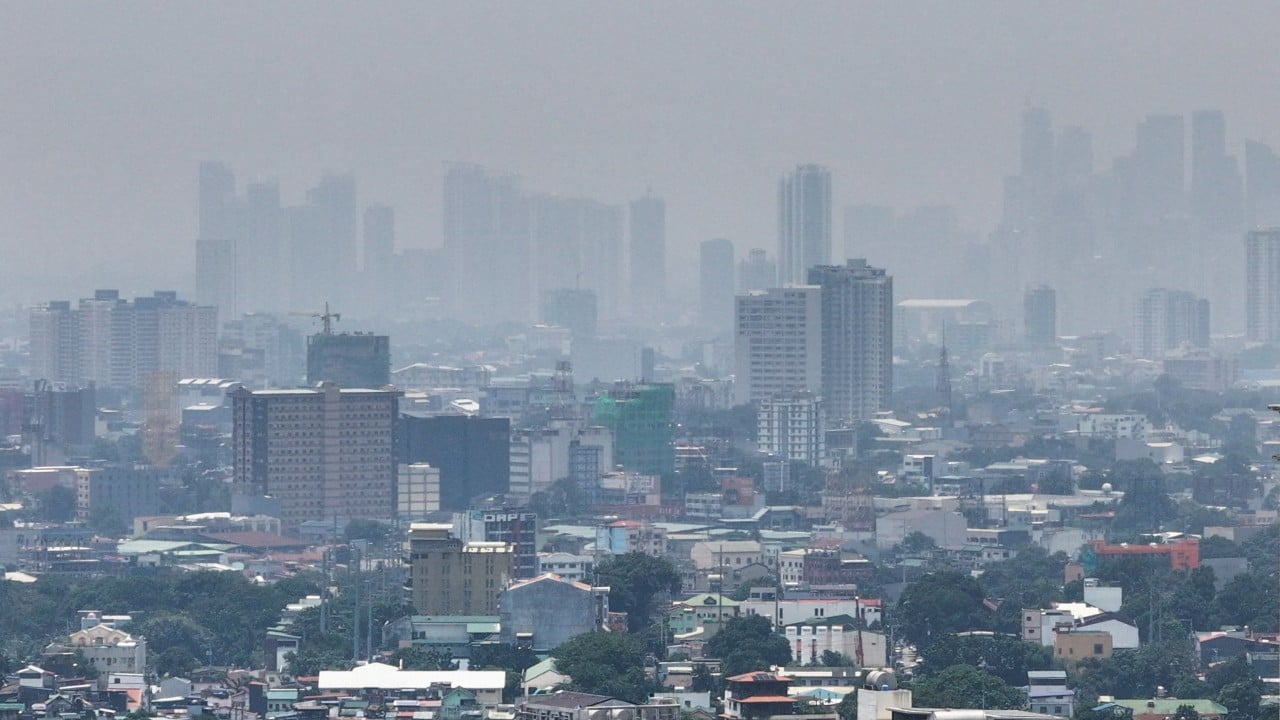
Smoke from Indonesian wildfires blanketed Manila on Tuesday, turning fires nearly 2,000km (1,242 miles) away into a public-health warning for the Philippine capital and reviving concerns over Southeast Asia’s recurring transboundary haze problem.
The haze, carried by southwesterly winds from fires in Kalimantan, the Indonesian part of Borneo, prompted health experts to urge people to wear N95 masks outdoors as air quality deteriorated across parts of Metro Manila.
In parts of the capital region, the air quality index reached “acutely unhealthy” levels, the Department of Environment and Natural Resources warned on Sunday, based on readings from its monitoring stations.
The warning has prompted Quezon City, part of the Philippine capital region, to suspend classes in all schools.
Gerry Bagtasa, a Japan-trained atmospheric physicist at the University of the Philippines’ Institute of Environmental Science and Meteorology, told ABS-CBN that the haze was dangerous because it was made up of tiny particles carried by southwesterly winds.
Based on satellite images, he said the pollutants had come from intensifying wildfires in western and southern Kalimantan.
KioskNews shows a cleaned-up reading view extracted from the publisher’s page — the original always lives on their site, not ours.