Australia's under-16 social media ban faces enforcement challenges
Months after placing restrictions on many social media platforms for children under the age of 16, Australia is discovering that it's one thing to write a law, and another to make sure it's obeyed.
Australia is trying to control something that has transformed the lives of young people: the way they communicate, the information they're exposed to, even their entire experience of childhood. The dangers of social media for children are well-documented, including mental health problems, bullying and sexual predators.
Australia's social media ban has roots in a plan announced by Peter Malinauskas, the premier of the state of South Australia. He first announced plans for restrictions on social media platforms in his small home state of South Australia two years ago.
"[Social media companies] are dictating who sees what, when in a way that is unregulated, unchecked, and ultimately driven by the profit motive," Malinauskas said. "When a corporate operator is engaging in social engineering, then I think the government's got a role to play to stop it."
Why some lawmakers and parents want the ban
Malinauskas was urged into action by his wife, Annabel West, and felt that he'd have the backing of "the overwhelming majority of Australian parents" to take on Big Tech companies. And, according to polls, the vast majority of Australians are on his side.
When Malinauskas announced that his state would legislate, the Australian national government quickly followed suit, with bipartisan support. Malinauskas said he knows the ban isn't a perfect solution, and that kids will find ways around it.
"But they're doing it less than what they otherwise would if you didn't have a community standard in place," he said.
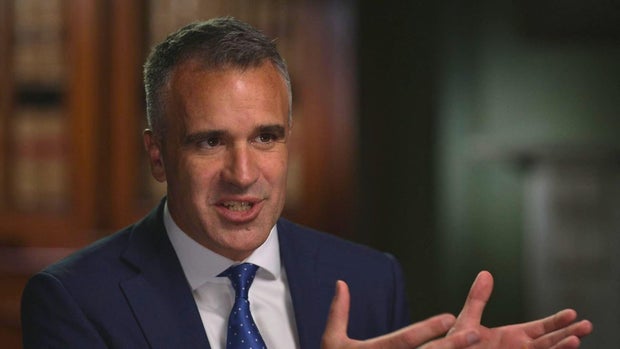
Malinauskas also feels it's important to stop kids from getting hooked on social media in the first place.
"Trying to get in early to stop it before the rot sets in was part of the objective," he said.
Parent Wayne Holdsworth has visited more than 100 Australian schools to talk about the hazards of social media. In 2022, his teenage son, Mac, was manipulated into sharing an intimate photo of himself on social media. Mac thought he was communicating with a fellow teen, but it was a criminal in his 40s who threatened to share the photo publicly if Mac didn't pay. The criminal followed through, sending the photo to Mac's friends and family members.
Mac took his own life the following year.
"We elect the government to ensure that we're safe, and that includes children. And they have not been safe, because there's been organizations that have come into Australia that have damaged them," Holdsworth said. "And finally, Australia, first country in the world, introduced legislation to prevent those tech giants damaging our children."
In the first three months of the ban, the number of 10- to 15-year-olds holding at least one account on age-restricted social media fell by around 20%, according to research from Australia's online safety watchdog.
Fights against the law
Not all Australians support the ban. Noah Jones, a teen who's become the face of the fight against the legislation, was 15 when the ban went into effect. Now, he's a witness in a legal challenge in Australia's high court, made on the grounds that the ban violates the right to political communication.
"It's just unfair," Jones said. "I understand drinking laws, consent, all stuff like that, but why should we be blocked from information?"
He feels social media is a necessity in this day and age.
"Social media is the modern town square," Jones said. "It's where information's being passed around, and everyone uses it."
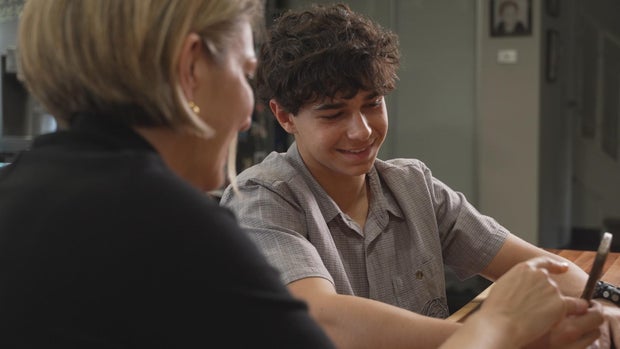
He has a message for the other countries thinking about implementing social media bans of their own: Don't do it.
"There's a lot of better ways to fix the content and problems on social media, and one of those ways is not silencing free speech," he said.
Is Australia's ban actually keeping teens off social media?
There are also questions about how effective the restrictions are. Jones demonstrated how one social media platform scanned his face with artificial intelligence and decided he was old enough to keep his account. Others made it even easier — all he had to do was lie about his age.
Three months after the social media ban came into effect, 50% of children under 16 who still held accounts said they hadn't even been asked to confirm their age by social media platforms, according to Australia's independent eSafety commissioner.
What the tech companies say
In the U.S., tech titans have been brought in front of Congress to face families who said their young relatives had been exploited, abused or killed through social media. This year, Meta and YouTube were found liable for creating products that led to harmful and addictive behavior by young users in a landmark social media addiction trial. Both companies have appealed the ruling.
Meta, the company behind Facebook and Instagram, told 60 Minutes it's complying with the Australian law but said "blanket social media bans are ineffective because they push teens to unregulated corners of the internet." The company said it's working to protect child safety with measures built into its social media platforms.
Snap, which developed Snapchat, said it's taking the Australian law seriously. The company rejects claims that its product is designed to addict children or that it places profit over safety.
TikTok said its platform is "built with safety at its core" in order to "foster a safe and positive space."
Investigating social media companies for noncompliance
Julie Inman Grant, who is in charge of enforcing the ban as eSafety commissioner of Australia, said she hasn't seen the hoped-for level of compliance from social media platforms.
"We know they have the technology to do that, because I met with their engineers and product people in September of last year to find out what their capabilities were," she said.
She claims the ban has become a global test case, with other countries following Australia's lead. A U.K. law should kick in next year, and Norway, Spain and Canada are all working on similar legislation.
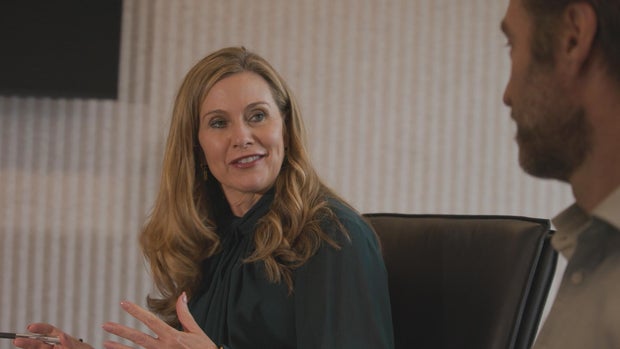
Inman Grant previously worked for Microsoft and Twitter but switched sides, frustrated that tech companies weren't doing more to protect users.
Her office is investigating several social media platforms for potential noncompliance in Australia. If she can prove a case, companies could face civil penalties of around $70 million each.
"Sometimes it isn't the regulation or the fines that motivate them. It's their reputation. They don't want to be seen as the company that's deliberately hurting kids," Inman Grant said.
Inman Grant believes some social media platforms are failing to fully comply with Australia's law because they want to stop it from succeeding.
"They were lobbying capitals all over the world to say that it was never going to work," she said. "They spent more time trying to convince other governments not to follow suit than they did to try and comply and implement the technologies in the right way."
Malinauskas, who pushed for the social media ban in the first place, said tech companies have no excuse for not implementing the law.
"The duty is on them. Let's be clear about this," he said. "These companies have demonstrated that they are some of the most innovative, clever, well-resourced companies in human history. If they know what breakfast cereal I'm eating, if they know what my regular run in the morning looks like, I'm pretty sure they can work out who's 13 and who's 16 pretty easily."
KioskNews shows a cleaned-up reading view extracted from the publisher’s page — the original always lives on their site, not ours.