‘The Good Daughter’ Showrunner Explains What the Finale’s Biggest Twists Mean for Sam and Charlie

Sign in to your Collider account
Editor's note: The following contains spoilers for The Good Daughter.
Summary
- Karin Slaughter adapted her own novel as showrunner of 'The Good Daughter' and stayed hands-on to keep the book's spirit.
- It was important to Slaughter to keep the characters true to the book, but had to shape the story to play out over six episodes.
- The story of 'The Good Daughter' aims for catharsis and hope when it comes to overcoming tragedy, and leaves the sisters in a better place.
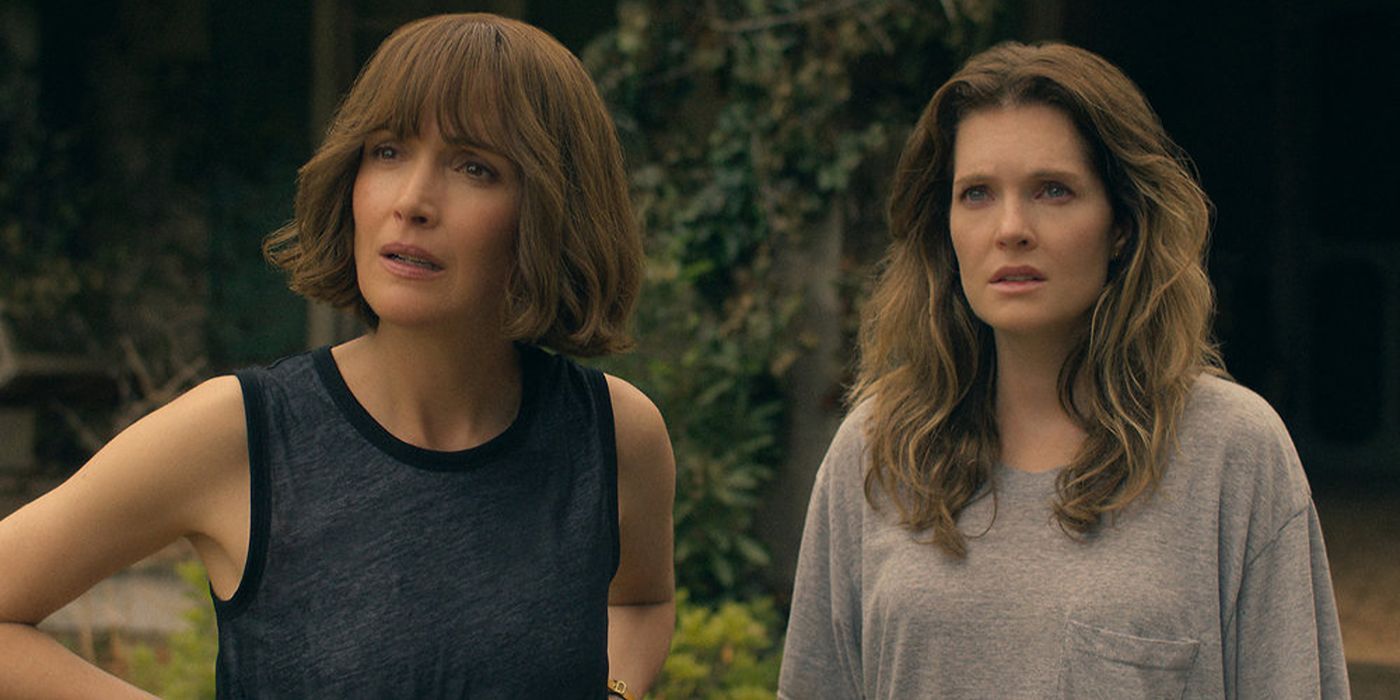
With the six-episode Peacock series The Good Daughter, author Karin Slaughter knew she had to be the one to adapt her 2017 novel and take the reins as showrunner. Having spent so much time developing the sister bond between Charlotte and Samantha, figuring out how tragedy would shatter their family dynamic before piecing it back together, and unraveling all the twists and turns on their way to newfound hope, she felt responsible for getting it right. What resulted is a suspenseful thriller rooted in a deeply emotional story about a single night of violence that rippled through so many lives, altering them forever.
Collider recently got the opportunity to chat with Slaughter about her experience putting so much of herself into bringing The Good Daughter to the screen. During the interview, she discussed wanting to capture the heart of the story and characters with the adaptation, watching Rose Byrne and Meghann Fahy bring estranged sisters Sam and Charlie together after 20 years, the energy Brendan Gleeson brought to the set while playing their father, revealing all those layers of secrets, figuring out exactly how much to show of the heaviest moments, and the importance of leaving these sisters in a better place. She also talked about how she feels about the ABC series adaptation of Will Trent, which will return with Season 5 in 2027.
Karin Slaughter Fully Committed to Adapting Her Own Novel for the Peacock TV Series ‘The Good Daughter’
"Writing all the scripts, being on set for 71 days, learning all the ropes, and figuring out how to make things work was really part of the endeavor for me."
COLLIDER: There’s definitely no better way to stay true to the source material and ensure that what you want the show to be is what it becomes then to be the showrunner, writer, and co-executive producer of the adaptation of the story you wrote. Was that something that was always very important for you to do, especially for this story?
KARIN SLAUGHTER: Yeah, 100%. I’ve had stuff adapted before, and I love it. I thought they did a great job with Pieces of Her. Will Trent is still going strong. I think they’re doing an amazing job with that. But with this, I thought, “If you’re going to do it, then you need to really commit to doing it.” Writing all the scripts, being on set for 71 days, learning all the ropes, and figuring out how to make things work was really part of the endeavor for me. I’m very much a control freak. I like to think of myself as a benevolent dictator. Just being really hands-on gave me the ability to make sure that the scripts matched the book and the show matched the scripts.
When you adapt a book from 2017 into a TV series in 2026, do you want to change things or create any new or different surprises for viewers who will have read the book and come to this with that knowledge?
SLAUGHTER: Yes and no. The most common complaint is, “The show changes things and it’s not like the book.” So, what was most important to me is that I capture the heart of these characters. Anybody who’s read the book will immediately recognize the characters. They haven’t changed in any demonstrable way. But you do have to figure out how to have this plot work in six episodes and to have something at the end of every episode that leads you into the next one, so by necessity, things have to change. With the book, I get 500 manuscript pages to tell you how people are thinking. But with a script, I have to express that through dialogue. So, it’s necessary to change things, but what I wanted to hold onto was the spirit of the book so that there was some cohesion.
You have so many layers to the reveals at the end of this story. Did you want to throw anything in to just completely surprise people who had read the book?
SLAUGHTER: The thing about writing a show is that it’s so collaborative. What I think of when I’m writing in my head is so different from readers think about because they’re bringing their own experience and their own lives into the reading of the story. Then you take that and you create a script, and you give it to someone who is your set designer that’s going to find these remarkable locations you’ve never thought about, or you’re going to give these lines to someone like Rose Byrne or Meghann Fahy or Brendan Gleason and watch them put a different interpretation on it because they are incredible artists and they find their own way into a character.
It was really interesting watching Rose because of the fact that she’s just Rose Byrne. She brought this warmth to Sam that you don’t really have in the book. It was really incredible to watch how she balanced that tightrope of keeping true to the character, but also adding her own spin. When I write a book, it’s my name on the book and it’s my final say. If I want a thousand people or one person in a chapter, that’s what’s going to happen. But as an executive producer, I start making these calls of, “Okay, if we had three people instead of five people, then we could save money so that we could put more into this effects shot.” I had to think about budgeting and the logistics of things in such a different way, and that was a real challenge and it was exciting to figure out those different puzzle pieces.
I loved Brendan Gleeson in this and can’t imagine anybody else playing Rusty.
SLAUGHTER: He really interrogated the script. We had these very in-depth conversations about what Rusty was thinking. I would watch Brendan take those conversations or bits of information and you could see it in his face. For every muscle I have in my face, he’s got 20 more, and can control them all. We did some changes to make them look younger and some de-aging to make him look younger in some of the scenes. It was just remarkable in post thinking, “Wow, if we take away this one line from his face, it changes his entire performance.” We had to be so careful about how we edited him to make sure that performance came through because he gave us gold. Our jaws were on the floor watching him turn into Rusty.
‘The Good Daughter’ Uses Emotional Tension To Tell the Story of Estranged Sisters Trying To Overcome Tragedy
"They really captured that familiarity wrapped in discomfort in such an electric way."

This is a flawed but loving family. You can tell that they love each other, even when there are times that they just can’t be around each other. These sisters are estranged because of what happened, but before that, this was a tight family. What did you love most about watching that brought to life and seeing what Rose and Meghann did together?
SLAUGHTER: It’s interesting because we showed our young actors, Drew [Cheek] and Audrey [Grace Marshall], who play the younger versions of them, their footage so that they could pick up on mannerisms and reflect that relationship as kids. They were teenagers in the show when this tragic thing happens, and the thing about memory is that it’s told through consensus. So, the fact that they don’t talk about what happened, that they are estranged, and they’re putting the pieces together of that day so that they have a clearer picture of what actually happened, is where some of the tension comes from in the narrative. We talk a lot about plot having tension, but there’s a lot of emotional tension in this, and Rose and Meghann just instinctively got that.
This is a hyper-articulate family that talks all the time, but they never say what they need to say. Their words are their shields against each other and they’re always trying to top each other and they’re always going for the joke. They’re the sorts of people you wouldn’t want to get into an argument with, especially because Charlie has this surgical precision with her speaking, and they just stepped right into that. We first started filming with the girls and Meghann and Harper [Steele], so we had almost a month of just us gals on set. A lot of our heads of department were women, our director was a woman, and our cinematographer was a woman. There was a lot of lady energy.
And then, we were a little nervous because here comes Brendan, and we didn’t know what he would be like or if he would change the vibe. But everybody loved him. The Rusty you see on screen that you love is Brendan. Brendan is such a raconteur. He’s got eternal stamina. We would cut at three in the morning and he’d be like, “Who wants tacos?” And we’d be like, “We’re going to sleep.” And then, Rose came and she had to fit into all that. We were anxious and wondered, “Is she going to be like, ‘I only want white roses in my trailer’?” But she was so down to earth and such a lovely person and so well-prepared.
Rose comes from a big family, so she understands sibling dynamics. She just clicked with Meghann. There was so much chemistry. That scene when they first see each other in the hospital was one of the first scenes that we filmed of them together and they really captured that familiarity wrapped in discomfort in such an electric way. Steph [Green], the director, and I were standing at the monitors watching it like, “How did we get so lucky? They’re just so great together.”
There’s something so interesting about their dynamic because Charlie recognized that Sam needed the story of what happened to them to be a certain way, so she’s just lived it that way, even though it wasn’t true.
SLAUGHTER: They both think they’re protecting each other. Sam thinks she’s protecting Charlie when she’s trying to get her to move to New York and trying to create this life for her, away from the bad stuff that happened. And Charlie has this secret. I think that’s very common in families. You don’t really ever break that mold completely, of who you were as a child inside your family. Some families remember the version of you they had the most control over, and that’s definitely true, as far as Sam and Charlie. Sam just thinks of Charlie as this person she needs to take care of and is her responsibility, and she’s messy and all these other things, which is not necessarily true. On the flip side of that, Charlie thinks of Sam as this hyper-competent, always in control, always in charge, straight down the line, but when we meet her, she’s actually grieving. She’s lost the love of her life. Her life is spinning a little out of control. There’s a reason why, after all this time, she came home.
It takes until close to the end of the season before we learn the details of what really happened to Sam and Charlie in the woods. How did you decide the best way to handle all of that? When it came to what you would tell us and what you would show us, did you know exactly what you wanted that to be? You were also working with young actors doing very heavy material, so how was all of that shaped?
SLAUGHTER: It started with conversations. When we were talking to directors, one thing that I really liked about Steph was that she was very forward-thinking about how we would protect these young girls. She’s a mother. I’m not a mother, but I felt the same way. We saw very eye-to-eye on making sure these girls were protected. We used body doubles. We were very clear with the parents about what was going on. The kids knew what was going on. They knew the story. We weren’t hiding anything from them. Every day, when we would have something difficult, we would go over the rule that if they were uncomfortable, they’d get to stop. I brought puzzles to the set, so they could work on putting together puzzles in between takes. We just held them so precious in our hearts because we wanted to protect them and make sure that they were okay at all times. We made sure we had their teacher, the intimacy coordinator, and a mental health person, not just for the girls, but for everybody.
The actors who played the bad guys, those were heavy roles to do, especially because they loved the girls as much as we did. We just wanted to make sure everybody was okay. From a writing standpoint, I thought it was very important to hint but not show. When I was thinking about how I wanted this to go, I really envisioned where Charlie would go in her mind that felt safe, and that was Sam. That was being the person Sam wanted her to be. Charlie hated running on the track. She always screwed it up. She was not going to be like Sam, that person driven to win.
And so, she goes to this moment where Sam accepts her and sees who she is, and they’re running together. I think that amplifies how horrible the estrangement has been for her because that safe person is gone right, through some fault of her own. There’s complicity on both sides. But also, I was very mindful of a phrase that you hear in trauma recovery, and that’s, “Speak from the scar and not the wound.” They needed time for that wound to heal a little bit, so that they could both look at it and talk about it without the pain being too all-encompassing that they couldn’t go on.
I actually thought it was really very moving that Rusty never judged or questioned his daughter when she told him what happened to her. Charlie tells him what happened and he just listens and puts the agency in her hands, telling her that it’s up to her if she ever wants to talk about it. Was his reaction very important to you?
SLAUGHTER: A thousand percent. As someone who’s written a lot of books, the violence is not as important as what happens after. That’s where the hope comes from. There are two important lines, but the first one that Rusty has is, ‘Whatever you did to survive is exactly what you should have done.” That’s something that we need to tell all survivors. It’s the only crime where we’re like, “Well, what did you do?” No one says, “Why did you get murdered?” And then, he says to Sam, “A father loves his daughter the way she needs to be loved.” Those two lines go hand in hand. His reaction is so important because he’s the most important man in Charlie’s life. The fact that he’s a good man and he listens to and supports her is why she ends up with someone like Ben, who’s a good man that listens to and supports her.
It’s this moment that bonds them together. I put in so much work, in the book and on screen. I had so many meaningful conversations with Brendan because, not that he had this, but there’s a very masculine desire to go out and punish those guys. But Rusty is a defense attorney, and he’s represented men who have been accused of rape, so he knows what happens on the stand. We have this idea of justice and doing the right thing and reporting. But when they do report, we say, “Well, why did you take so long?” He knows what the system can do to a person who has experienced that, so he comes to that conversation with that understanding. His only goal is, “What can I do for my daughter to help her in this moment?”
The Reveal of Mason’s Involvement Was Meant To Be Very Cathartic for Sisters Sam and Charlie in ‘The Good Daughter’
"What Rose and Meghann did, I got goosebumps watching it."

We learn about Mason’s involvement after we know Charlie’s truth. What was it like to see how all of that played out between him and the sisters?
SLAUGHTER: From a structural standpoint, it’s meant to be very cathartic. This happened to them as children, but now they’re adults with adult understanding and adult language, and they can articulate to this person exactly what this act did to them. Jake [McDorman] was remarkable that day. He was remarkable every day. He’s such a nice guy. But that performance he gave and the turn he makes with, “I was a victim too, I saved you," come on! You’re the hero of this story? Really?! What Rose and Meghann did, I got goosebumps watching it. We were in Locust Grove in South Georgia in August and it was 9000 degrees. I don’t know how they were able to move. We were all like snails because we were so hot and we were covered in mosquitos, but they just brought it. Also, Michael [Dorman] was amazing.
I know from my work as a novel writer that you can write a mediocre novel and people will be like, “This is mediocre.” But if you write a novel that has an amazing opening and the ending is crap, people will hate you. So, I said to Steph, “We need to focus as much, if not more, on the end as we do on the beginning. People have to go away feeling like justice was done.” You get that with that cathartic scene. You also get it with Kelly because it feels fair, what happens. You get this sense that Sam has gotten to this moment where she can breathe again. She’s fulfilled her mother’s sense of fairness, and she’s resolved this with Rusty. And Charlie gets the sense that this chapter of her life that she’s kept open and that’s been bleeding for so long, she can finally close that and move on.
After everything that happens between Mason and Sam and Charlie, I loved that Sam decided to use that recording with him admitting to having taken the weapon and that you brought that back into the story.
SLAUGHTER: When I first started talking about adapting this, I said, “It has to make sense.” I hate when I see a thriller and you get to the end and you think, “What just happened? None of this make sense.” I kept clue sheets. I had them for the actors. I had them for Steph. And then, when we went to post, which took as long as shooting, I gave the editors the clue sheet. Sometimes they would be like, “Oh, crap, now we see why we can’t truncate this in Episode 1 because it pays off in Episode 5.” It’s the showrunner’s job to hold onto all those narrative threads through every step of the process. It’s a lot of work, but it’s much more satisfying.
With the unraveling of the shooting, we learn that it was Judith that was there alongside Kelly. Was Judith’s fate always inevitable? Was there no other way for that to turn out?
SLAUGHTER: Yeah. The thing about Judith is that I wanted to write someone who was religious. A lot of times, religion plays as shorthand for a bad guy, but she’s really conflicted. She lives by her values, and in the end, dies by her values. Her fatal flaw is that she knows she did a bad thing, but she doesn’t think the bad thing is what happened to Douglas. She thinks the bad thing is what happened to [the child]. She apologizes to Charlie by saying, “I would have done it some other time if I’d known you were going to be there.” It had to make sense. That’s why Paula Malcomson was my first and only choice. She’s so good in this. You believe her as all these different sides of her. She’s this woman who thought she had gotten a cool guy, with the coach at the school. What a love story. But he turns out to be an evil prick. She took care of Charlie. She was really good to Charlie. She was a good teacher. She tried to be good in the church. She did everything she was supposed to do, and none of it worked out. I wanted to make her believable and complicated, but also someone who lived by their values.
When you initially wrote this story, did it feel good to leave these sisters in a better place after everything that they were put through?
SLAUGHTER: Yeah, absolutely. The most important thing in my writing is to make sure I leave people with hope. I very carefully balance that dark and light. That’s why you have a lot of humor after something bad happens. People need to feel like, “Okay, this is going to work out.” It gives us something we don’t really get in real life, which is a sense that justice has been done and the good people get up and go on with their lives.
Will Fans Ever See Sara Linton in the ‘Will Trent’ TV Series?
"I cannot answer you."

Now that it’s moving into its fifth season in 2027, how have you felt about Will Trent? Characters have come and gone, and fans are still asking if they’re every going to see Sara Linton. What has it been like to see how that show has continued over the seasons?
SLAUGHTER: I love it. I love it as a viewer. I get the scripts. I’m an executive producer. I occasionally give a light note. They’re doing a great job. Looking at the last four seasons and what I’ve seen of Season 5 that’s already done and the scripts that are in line for the rest of the season, they’re just doing an amazing job. It’s so clever, it’s interesting, it’s fun. I love Ramón Rodríguez as Will. Everybody loves Betty. She’s the real star. I just think they’re doing a tremendous job. To be able to do something like that, year after year, is quite an accomplishment. But to do it really well is a gift.
Is it funny to you to hear how often people ask about Sara Linton?
SLAUGHTER: They ask constantly, and I cannot answer you. But don’t worry.
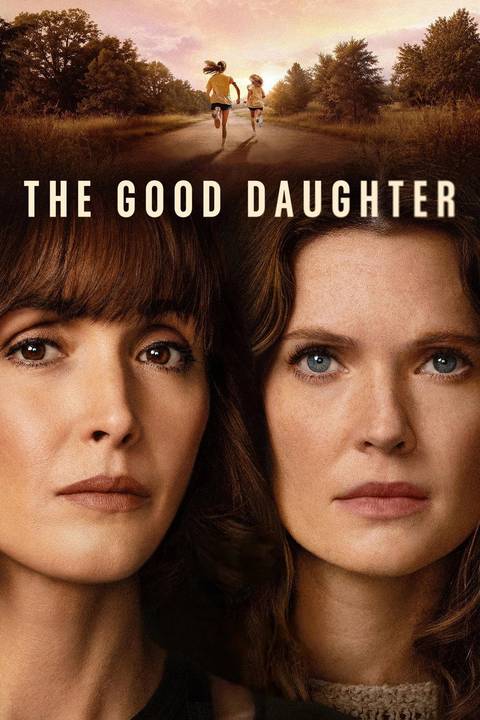
The Good Daughter is available to stream on Peacock.
- Release Date
- November 12, 2026
- Network
- Peacock
- Showrunner
- Karin Slaughter
- Directors
- Steph Green
- Writers
- Debbie Ezer, Karin Slaughter
KioskNews shows a cleaned-up reading view extracted from the publisher’s page — the original always lives on their site, not ours.