A broken system: Can Israel fix its electoral rules before its democracy crumbles? - analysis
From the 2019-2021 era of several elections and the current mixed results, it is more apparent than ever that Israel’s electoral system needs to be fixed.
Some of the following ideas may need to wait until the main battle in Israeli politics is no longer between Prime Minister Benjamin Netanyahu’s camp and the anti-Netanyahu camp.
The first fix is term limits.
When the day comes that Netanyahu is no longer in the game, which cannot be too far away, as he is 77, term limits should not be controversial, whether he wins the current round or not.
Many democracies have them, and they prevent the system from getting overly focused on any one leader, no matter how charismatic.
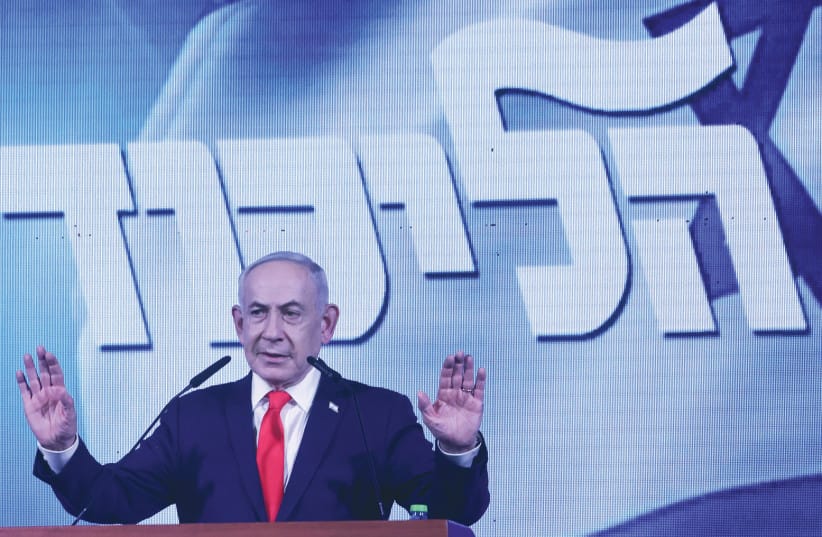
This also creates balance between the competing sides of the political system.
Two terms, each of four years, like the US system, could work, but a one-time six-year term limit, or two terms, each of five years like in France, could also work. A decade should probably be the cutoff.
A two-party system, or an electoral threshold that could effectively limit the system to three or four parties, would also fix a lot of the bizarre side fights.
Currently, the majority of the country’s political parties are sectarian in one way or another and focus more on their narrow sector’s interests than the country’s interests as a whole.
One can like or dislike Likud and Yashar, but both parties have constituencies that cross different sectors and have platforms focused on the main national issues confronting the country.
Fewer large parties will also force the mainstream to incorporate minority sectors, and the minority sectors to spend more time thinking about the broader national good.
Direct elections for the prime minister could be considered if a two-party system were in use. But it should not be used with more than two parties, as the experiment with such a hybrid in 1999 led to many people splitting their votes between the big party for prime minister and smaller parties for the Knesset.
In other words, it led people to vote on a more sectarian basis with their separate Knesset vote.
Depending on how well or poorly the top parties work to incorporate representatives of the various Israeli sectarian groups, it might be necessary for the first election under the new system to set minimum quotas for representation of sectarian groups in those large parties.
For example, the goal is not to eliminate the influence of haredim (ultra-Orthodox), Israeli-Arabs, Sephardi Jews, Russian Jews, and other minority groups, but to bring them under the umbrella of larger parties and national issues.
At a second stage of reform, connecting Knesset members to specific zones and constituencies within Israel, instead of individual Knesset members being entirely dependent on their party’s leader choosing them, will fix multiple issues.
While it would seem to be moving in the opposite direction from forcing smaller parties to join larger ones, the move is more complex than that.
Individual Knesset members will still be part of their larger party, and which roles they get in the cabinet or on Knesset committees will still depend on party leadership, which advances a national vision over a small-minded sectarian one.
But top party leaders will need to have some greater respect for individual Knesset members standing for a set of principles, as opposed to being able to entirely blackmail them to vote for the personal interests of the top leaders.
To the extent that individual Knesset members will be picked by a local constituency, in addition to being linked to a large party, those Knesset members will find it easier to stand up for certain basic values and to resist top party leaders who try to abuse their power and treat individual Knesset members as their toys.
This is a problem on both the Left and the Right.
Israel needs a constitution
THE NEXT two fixes probably come after the above, as they will require the larger parties already having clearer control without having to “sell out” on sectarian issues to small parties.
These fixes must go together, even if they might not be sequenced at the same time if partially splitting them is necessary for political negotiations.
Israel needs a constitution.
A full constitution might even be possible once the sectarian parties are mixed into the larger parties.
But even if a full constitution is not possible, Foreign Minister Gideon Sa’ar proposed a compromise mini-constitution on January 9, 2025, which could have achieved bipartisan support.
The compromise increased both the government and opposition influence over judicial appointments vs the judiciary’s influence, but in tandem permanently limited the power of the executive and legislative branches to arbitrarily pass quasi-constitutional basic laws for narrow, short-term, personal, and overtly political goals.
In an ideal world, non-political jurists would pick judicial appointments.
But in 2026, Israel’s Right and Left do not trust each other, so the best way to reduce mistrust (at least until these wounds heal) is to evenly stack the deck politically to ensure the court will have nominees from both sides.
Once the executive and legislative branches’ powers are limited, the High Court of Justice will be less likely to act as a brake on going rogue.
But the High Court is where the selection of government officials by politicians should mostly end.
The Election Commission’s political officials have become a farce.
Every election cycle, they try to disqualify each other, waste resources, and delegitimize the process.
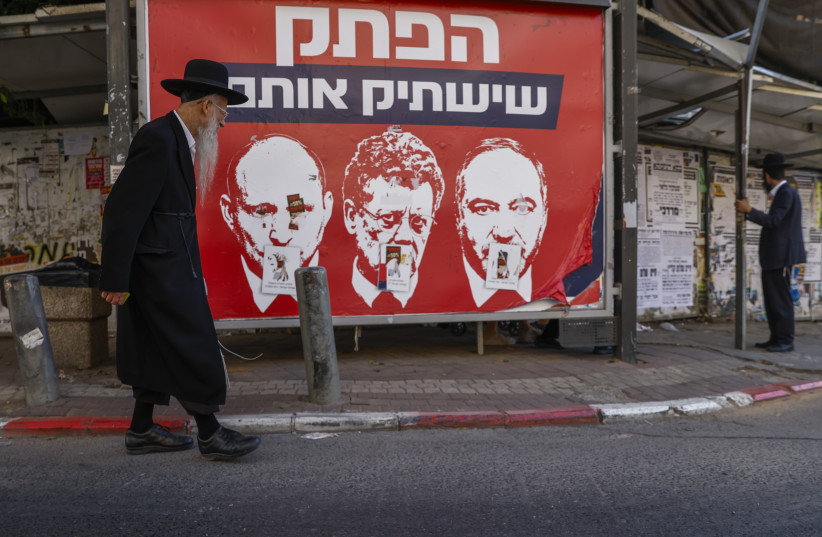
Strong democratic systems cannot protect human beings from tearing down their own democracy
The latest threats to refuse to accept the election results (which neither side even clearly won) because of a probe into dozens to a couple thousand possible polluted votes out of over five million show how lost the Election Commission political officials are.
The Knesset selects the State Comptroller. Pressure was placed on Knesset members to violate the secret ballot, which is why there has been no State Comptroller for several months now.
This proves why jurists, lawyers, and other nonpoliticians who owe nothing to the political class and can focus more on the good of the state should be selected by these officials.
A political official should have the final say over the attorney-general, police chief, Bank of Israel chief, and possibly the Shin Bet (Israel Security Agency) and IDF chiefs. But the shortlist should come from apolitical professionals in the relevant fields, with only candidates meeting unique standards being eligible.
For example, in the IDF, anyone who has not been a major general and who has not filled one of the key command roles should not be eligible.
And a designated apolitical official should have the right to approve a candidate if the political class gets stuck and tries to leave roles vacant for such critical officials as the comptroller.
Strong democratic systems cannot protect human beings from tearing down their own democracy and elections. But having apolitical electoral officials and strong systems generally gives democracies a much better fighting chance.■
KioskNews shows a cleaned-up reading view extracted from the publisher’s page — the original always lives on their site, not ours.