Chinese neighbours go viral over 200-year land dispute dating back to Qianlong era

A Chinese court recently heard a land dispute between neighbours who have been fighting over the same issue for two centuries and across multiple generations, stunning social media users.
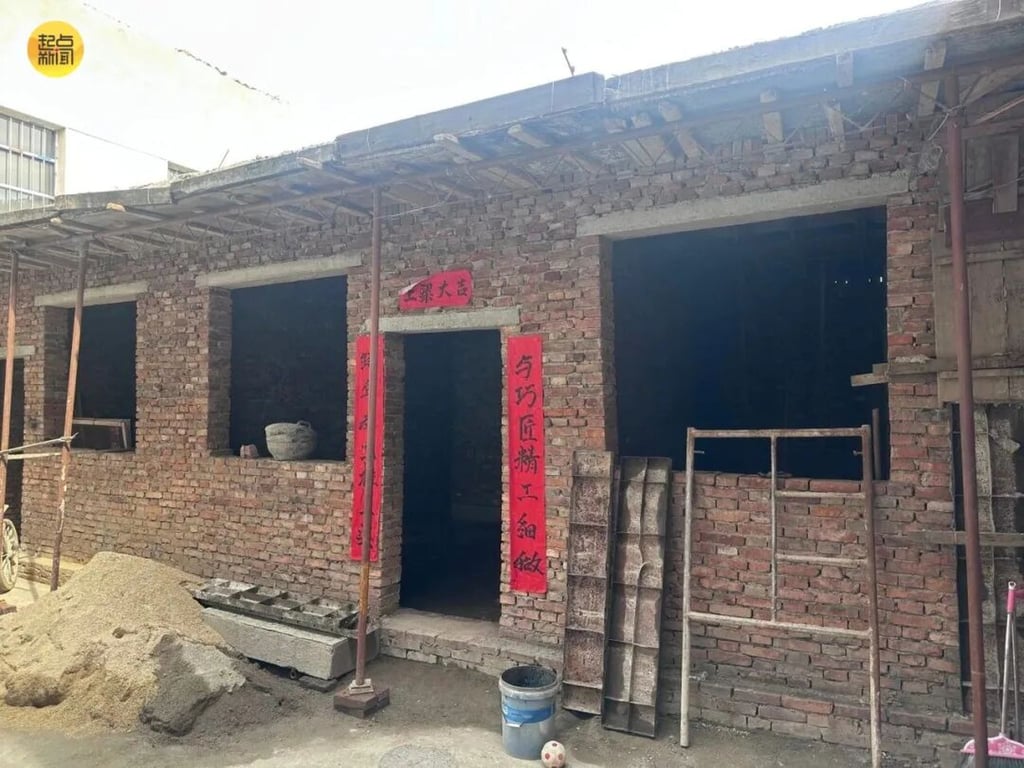
The court in Yanta district, Xian, in northwestern China’s Shaanxi province, recently presided over a case concerning a land boundary between two neighbouring families, surnamed Du and Zhang.
For the past two decades, the neighbours have repeatedly disputed the boundary.
When the Dus tried to renovate their kitchen and raise a wall, the Zhangs repeatedly objected, citing concerns about light and drainage. The disagreement led to frequent verbal and physical clashes.
The police and the village committee tried to mediate dozens of times, but the deadlock remained unresolved.
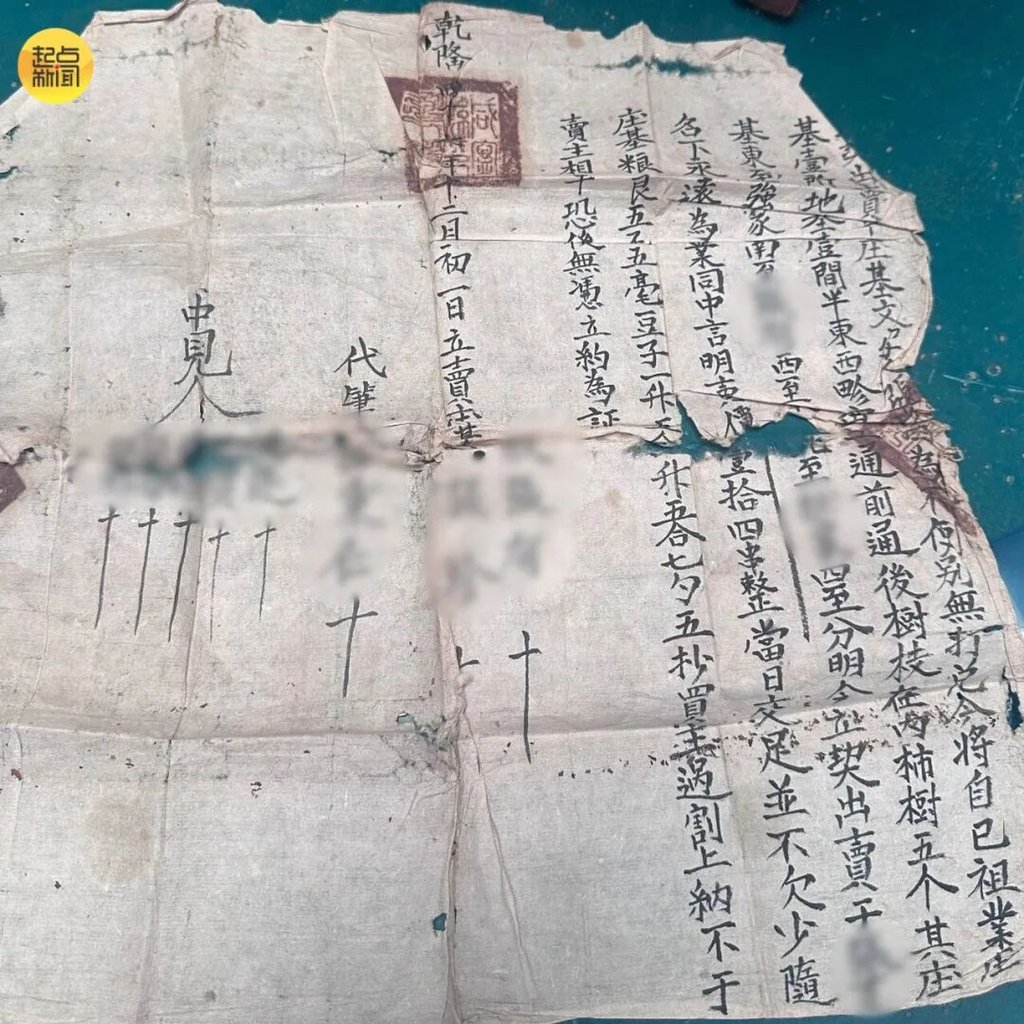
During one mediation session, the Zhangs presented a piece of evidence that astonished everyone: a land deed dating back to the 46th year of the Qianlong Emperor’s reign (1735–1796), during the Qing dynasty (1644–1912).
On the yellowed, torn page, the well-preserved handwritten ink was still clearly legible. Zhang said it was an agreement between the families that set the boundary between their homes, marked by a persimmon tree in the courtyard.
The Zhangs also believed the agreement should be honoured by future generations.
The authorities then realised that the neighbours’ dispute had been going on for more than 200 years.
Over the past two centuries, successive generations of the families had repeatedly clashed over the boundary, including once shortly after the People’s Republic of China was founded in 1949.
But the court did not determine the boundary between the two households solely on the basis of the 1781 deed.
Instead, it drew on a verse from another Qing dynasty document: a letter from politician and scholar Zhang Ying, who urged his family to yield in a land dispute with a neighbour.
In the letter, Zhang wrote: “A letter from afar just for a wall, why not give up three feet? The Great Wall still stands today, but Qin Shi Huang is nowhere to be seen.”
According to the story, Zhang’s family was moved by the letter and voluntarily moved their wall back three feet. Their neighbour followed suit, also moving their wall back by three feet.

The two walls then formed a six-foot-wide lane, which is now a tourist attraction in Tongcheng, in central China’s Anhui province.
The authorities also took repeated measurements at the homes to develop a renovation plan that would satisfy both families.
Eventually, the Dus successfully renovated their kitchen, and the Zhangs accepted the outcome peacefully.
“Love cannot last for 200 years, but lawsuits can,” one online observer remarked.
“The land they occupy must have very good feng shui, allowing them to survive all the vicissitudes and still have the money and energy to fight,” another quipped.
KioskNews shows a cleaned-up reading view extracted from the publisher’s page — the original always lives on their site, not ours.