‘I didn’t want to write about this’: the man who first saw chimps waging civil war
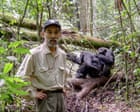
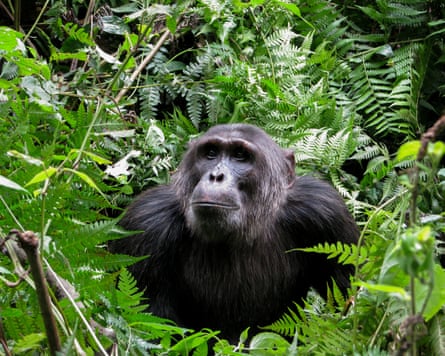
John Mitani can still remember the first time he set foot in Uganda’s Kibale national park. The old-growth east African rainforest enveloped him, its canopy stretching to heights of 40 metres. Fruit trees bowed under the weight of African star apples and bountiful Ficus mucuso figs. And then there were the chimpanzees. Furry black blobs darted through the jungle, their raucous calls often deafening.
It was the summer of 1995, and Mitani, a primatologist from northern California, had just come from working with the chimps living in the Mahale mountains of Tanzania. At the time, Mahale was home to the largest known population of chimps, with about 100 individuals. But there were rumours that this section of Kibale – only accessible via a 12-hour drive from the capital, Kampala – might host an even more unusual abundance of apes.
“It only took a few days to realise that something weird was going on at this place,” Mitani, now 72, recalls. “There were chimps everywhere.”
He was then a professor at the University of Michigan, and with his colleagues would eventually count nearly 200 chimpanzees living together peacefully in the forests of Ngogo, a research area in the central section of Kibale first established in the 1970s for the study of red colobus monkeys. Such a large chimp troop was then unheard of in primatology.
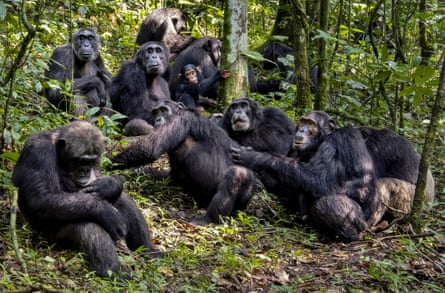
Later that year, Mitani co-founded the Ngogo Chimpanzee Project with the Yale university primatologist David Watts, using a $500,000 (£380,000) award from the US National Science Foundation. Three decades on, the project is one of just 12 long-term studies worldwide of chimpanzees in their natural environment, and has transformed what we know about one of our closest relatives.
It took years to build trust with the population, Mitani says. The chimps were not accustomed to human presence and were quick to run away whenever researchers approached. Days were spent chasing them over hills and down valleys. “It was fun, exciting and exhilarating. It was also a challenge.”
The first ape to break the ice was a 25-year-old male with an easily identifiable cleft palate that Mitani would later name Hare. During his second year at Ngogo, Mitani was observing chimpanzees in a massive fig tree when Hare descended. Mitani assumed he would run away as he had done in the past. Instead, the chimp walked slowly toward the next fruit tree, permitting Mitani to follow.
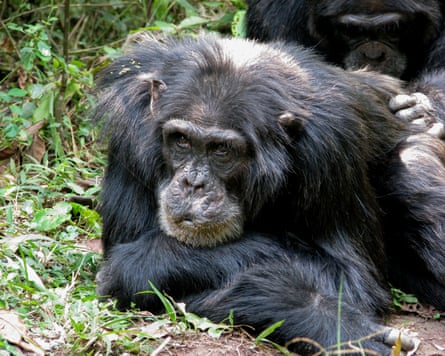
“When I realised what was happening, I almost started to cry. After working so hard for so long, it was tremendously gratifying to have gained Hare’s trust,” Mitani wrote in the 2022 anthology Chimpanzee Memoirs.
Mitani estimates he has spent 85 months of his life hiking the forests of Ngogo, or approximately seven years. What began as a few basic structures and tents has grown into a large – albeit rustic – research camp that has housed the nearly 90 researchers who have worked with the Ngogo project over three decades.
The findings that have emerged from Ngogo over the years have stunned the scientific world, similar to the discoveries first made at Gombe in Tanzania by Jane Goodall in the 1960s and 1970s. Mitani and his colleagues documented the lowest mortality ever recorded for a wild chimp population, suggesting that good habitat conditions could lengthen life expectancy to close to that of human hunter-gatherers.
They found that unrelated males could form strong alliances and cooperate, moving beyond the accepted paradigm that only close kin would work together. Hunting and meat-eating (particularly munching on the red colobus monkeys) were found to be important for male social bonding, not just nutrition.
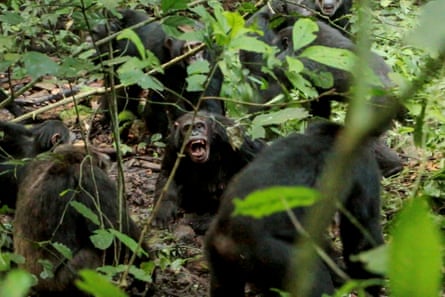
But the most notable – and disturbing – finding of Ngogo began on a June day in 2015. Mitani and his fellow researchers were observing a cluster of the group when the chimps began to display nervous behaviour and scattered at the sounds of approaching group members. “All of a sudden, the individuals I was following just ran down the hill for no apparent reason,” Mitani says. “Chaos erupted. They started to run around and chase each other.”
That moment, in retrospect, was the first sign of what would become a years-long bloody conflict – chronicled in the 2023 Netflix series Chimp Empire – between a once close-knit group of chimps. In a study published this April in the journal Science, Mitani and his colleagues describe what may be the first “civil war” among wild chimps.
By 2018, two distinct chimp groups had formed in Ngogo. Nine males and 19 infants have been killed during the conflict. Scientists later found that the unexpected result of this lethal aggression was that female fertility doubled and offspring survival increased substantially at Ngogo.
But for Mitani, who has spent much of his life among the Ngogo chimps, witnessing the split was far more personal. “I was in denial. I was still in this mindset that they were doing so well together as a big group,” he recalls.
“It’s been hard to watch. In the first 20 years, going back to see the chimps was fun. I always looked forward to these visits. But it’s gotten to be increasingly difficult to go back and see this, to see these killings continue.”
So much so, he adds, that it took him more than a decade to write the paper on the dark events they had borne witness to in the forests of Ngogo. “I think I was dragging my heels because maybe I didn’t really want to write about this.”
Still, Mitani pushes back against the takeaway that the civil war says anything about humans’ evolutionary propensity for violence and in-fighting. This behaviour, he adds, has not been witnessed among bonobos, with whom we also share a common ancestor dating back approximately 8m years.
“Many of us who study chimps emphasise the similarities, and for good reason,” Mitani says. “But when it comes to the behavioural similarities, sometimes I think my colleagues stretch things a bit too much. If there is one thing I’ve learned from studying chimps all these years, it is that they are not us.”
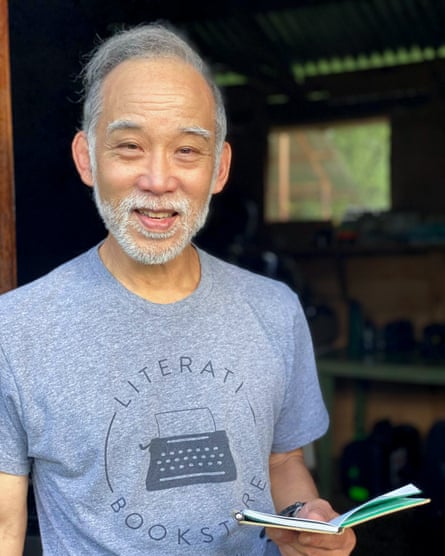
Though the greatest threat the Ngogo chimps now face is, in a way, themselves, Mitani says the presence of researchers on the ground over many decades has helped to conserve these populations. Researchers work with the wildlife authority to remove snares for other wild game that occasionally trap a chimp by mistake, for example.
But Mitani, who now lives between Michigan and Arizona, worries for the future of research at Ngogo. The project has received the bulk of its funding from the US National Science Foundation’s behavioural and cognitive sciences division. Under the Trump administration’s proposed 2027 budget, that funding is due to be eliminated.
“The chimps there have many more important stories to tell us,” Mitani says. “This is one of the reasons I am so concerned about the war on science and truth in this country.”
He will return again to Ngogo this month – and for as long as he is able. “The funny thing is that the hills at Ngogo get increasingly steeper every year. And the distance between the trails seems to get longer. But I feel blessed that I still can do it.”
If there is any legacy to his life’s work, he hopes that being able to impart some knowledge of the complex lives of these animals will give people a better appreciation of the chimpanzees. That maybe that will inspire people to ensure we continue living on a planet alongside them. “That would be the grand, big hope.”
Find more age of extinction coverage here, and follow biodiversity reporters Rebecca Ratcliffe, Phoebe Weston and Patrick Greenfield on the app for all the latest news and features.
KioskNews shows a cleaned-up reading view extracted from the publisher’s page — the original always lives on their site, not ours.